Beyond the Glass Ceiling: How High-Achieving Women Can Thrive in Leadership
You’ve made it. The corner office, the founder title, the life everyone told you would feel like a victory. So why does it feel more like a performance?
You’re perpetually “on,” smiling through the exhaustion, haunted by a quiet, persistent thought: “If I stop performing, I will disappear.”
This isn't a personal failing. It’s the jarring disconnect between the world’s applause and your own internal reality—a symptom of a broken leadership model that rewards burnout and punishes authenticity.
Key Takeaways
The Glass Cliff, Not Ceiling: Discover why reaching the top often means being placed in a precarious, high-risk role, making burnout a more immediate threat than breaking through.
The Neuroscience of Burnout: Understand that executive burnout is a physiological response to an unsafe environment, not a personal weakness. Your nervous system is locked in a survival state.
From Performance to Sovereignty: Learn to shift from chasing external validation to cultivating internal authority. This is the key to sustainable, long-term leadership.
The RAMS Method: Get introduced to a four-part framework (Results, Attitude, Mastery, Systems) to dismantle the architecture of burnout and build a foundation of embodied power.
For women in leadership roles, true power isn't about working harder within a broken system. It’s about installing a new internal operating system that prioritizes nervous-system sovereignty, allowing you to lead from a place of wholeness and enduring strength.
The Hidden Pattern - Why Your Success Feels Like Survival
The problem isn't that you can't handle the pressure. The problem is that the leadership model you're operating in is biologically unsustainable. It's a gilded cage, rewarding you for behaviors that are slowly draining the life out of you.
Imagine your nervous system as a highly sensitive alarm system. In a healthy environment, it sounds the alarm for real threats, then returns to a state of calm. But for many women in leadership, that alarm is stuck in the 'ON' position. The constant scrutiny, the subtle biases, the pressure to over-perform—they all register as threats.

This constant state of high alert—this is the Silent Collapse. It's not a dramatic implosion but a slow, quiet corrosion of your energy, clarity, and sense of self, hidden behind a facade of impeccable performance. It’s the loneliness that comes from being celebrated for a version of yourself you no longer recognize, a loneliness we've explored as the silent crisis facing even the most successful women.
This environment is engineered to produce burnout, and for women who break through the glass ceiling, a more treacherous obstacle appears: the ‘glass cliff.’ This is the phenomenon where women are promoted into precarious, high-risk leadership roles, often during a crisis. The reward for reaching the top isn’t a corner office; it’s a tightrope walk where the slightest misstep means a long fall.
The data confirms this isn't just a feeling; it's a trend. A 2026 analysis shows women holding just 31% of senior leadership roles in U.S. companies, a drop from 35% in 2024. And even then, they are often siloed into support functions like HR (46%) rather than the ultimate decision-making seat of CEO (28%).
This isn't a personal weakness. It's a predictable biological response to an unsustainable environment. Sustainable leadership has nothing to do with hustle and everything to do with nervous system regulation. This isn't woo-woo theory; it's biological fact.
The RAMS Reframe - A New Operating System for Power
If you think the antidote to burnout is working harder, you’ve been sold a lie. The solution isn’t to try harder within the broken system. It’s to install a new operating system altogether.
This is where the RAMS Method comes in. It’s not a list of self-care tips. It is a structured, repeatable process for dismantling the architecture of burnout and building a foundation of embodied, sovereign power. It stands for Results, Attitude, Mastery, and Systems.


The journey from burnout to sustainable power requires a radical shift. The old model champions chasing external validation. The new paradigm of embodied leadership prioritizes internal stability as the non-negotiable foundation for external effectiveness. Understanding this difference is the first step toward reclaiming your sovereignty.
R Is for Results Redefined
The old paradigm taught you that “results” mean hitting KPIs and crushing market expectations. This fuels the exhaustion cycle. The first pillar of RAMS is to reclaim the very definition of Results. Instead of chasing what others demand, you define success on your own terms.
From External Metrics to Internal North Star: The core question shifts from, "What do they want from me?" to "What do I truly want to build?"
From Performative Action to Aligned Impact: Your moves are no longer driven by fear but by a rock-solid sense of purpose.
From Exhaustion as a Badge of Honor to Energy as a KPI: Your energy becomes a non-negotiable metric.
A tech CEO I worked with was celebrated for her company’s explosive growth but was privately falling apart. By redefining her "Results," she shifted focus from growth-at-all-costs to building a thriving culture. Revenue stabilized, but her team’s loyalty—and her own well-being—skyrocketed. This is the essence of overcoming burnout at work.
A Is for Attitude Shift
“Attitude” is not about "positive thinking." It’s the default state of your nervous system. For most high-achieving women, that state is hypervigilance—a constant threat detection mode. The second pillar of RAMS is about making a radical shift in this physiological state, from reactive survival to grounded presence.
"Your power is not in how you react to the chaos around you, but in your ability to hold your center within it. That is not a mindset; it is a physiological state you must cultivate." - Baz Porter, Leadership Architect
The goal is to move from anxiety-driven decisions to intuitive, clear-headed strategy. This shift changes everything.
M Is for Mastery of Your Inner World
True mastery is sovereignty over your internal world—your emotions and nervous system. This is about developing practical, physiological tools to regulate your state in real-time.
Key Practices for Inner Mastery:
Somatic Awareness: Recognizing physical stress tells (tight jaw, shallow breathing) before they escalate.
Breathwork Protocols: Using targeted breathing to down-regulate your nervous system in high-pressure moments.
Emotional Granularity: Precisely naming an emotion to reduce its intensity, as studies from Northeastern University have shown.
A founder I work with used a subtle breathing technique to stay grounded during a hostile investor meeting. She answered with calm authority, secured the deal, and walked out feeling powerful, not depleted.
S Is for Systems for Sustainability
The final pillar is where you consciously architect your life and work to protect your energy. You must build personal and professional scaffolding that makes embodied leadership your default.
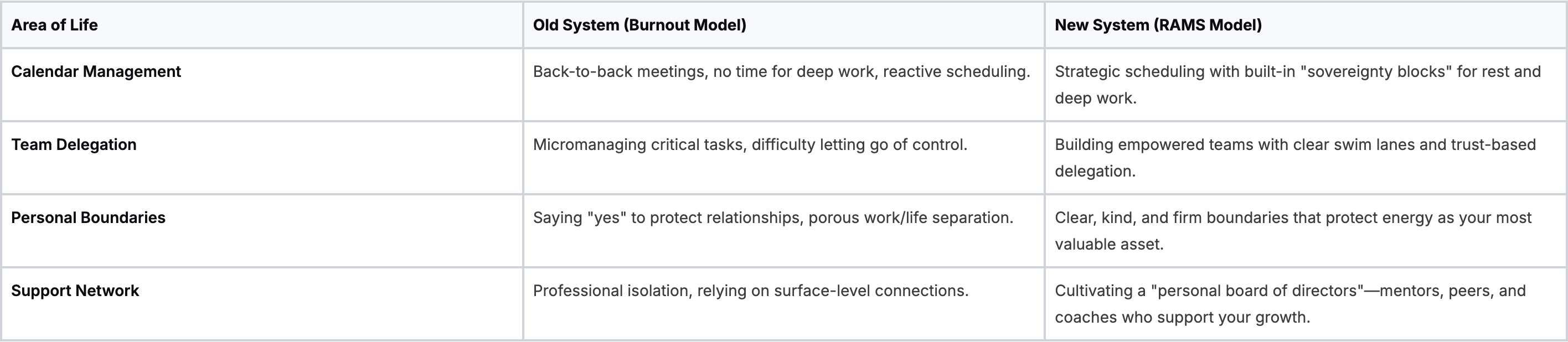
By implementing these systems, you stop relying on sheer willpower. You create an environment where your best self can emerge naturally. For a deeper look, you can read more about the revolutionary RAMS Method explained.
The Return to Sovereign Leadership
The feeling of being trapped on a glass cliff isn't just your struggle; it’s a symptom of a larger, systemic breakdown. The old leadership models aren't just failing you—they're failing entire organizations.

There's a growing consensus that the world runs better with more women at the helm. A stunning 60% of people across 29 countries believe the world would be better if more women held key positions, according to the full 2026 Ipsos survey report. Yet the same survey reveals a stark contradiction: a slim majority (52%) also feels efforts toward gender equality have "gone far enough."
This is the systemic gaslighting you face. The system demands your unique contribution while resisting the changes required to support it. This is why progress for women in leadership roles has stalled. The 'Women in Multilateralism 2026' report shows women hold just 27% of chief statistician roles in national offices and 28% in international organizations. You can dig into the full report from GWL Voices.
The way forward isn’t about learning more skills to fit into that broken system. It’s a radical act of self-reclamation. True leadership begins with nervous-system sovereignty.
A Return to Yourself
This journey is about coming home to yourself. It’s about shedding the heavy armor and stepping into a way of leading that is authentic and embodied.
When you operate from a foundation of internal stability, your decisions become sharper, your impact multiplies, and your presence becomes unshakable. You stop reacting to the chaos and start commanding the room from a place of quiet, centered power.
This is the core of sovereign leadership. It’s the deep, cellular knowing that your worth is inherent—not tied to your last win. It’s the freedom to lead without sacrificing your well-being. This requires both internal work and external positioning, like mastering your personal branding for executives. For those ready to articulate their vision, learning how to write a thought leadership book can be a powerful next step. The current model is failing; this is why transformational leadership training is so critical for building new structures, not just surviving old ones. The illusion of progress is visible in most women in leadership statistics.

Your Next Logical Step
You're at a crossroads. You can keep pushing against the same walls, or you can build a new foundation. This starts with one clear move: understanding your unique burnout signature.
Take the first step toward reclaiming your power. The Leadership Sovereignty Diagnostic is designed to give you immediate, personalized insight into where your energy is leaking and how you can begin the work of rebuilding.
This isn't a sales pitch. It’s an invitation to continue the journey back to your most powerful, authentic self. If you're ready to explore a more comprehensive path, learn more about our core leadership programs.
Frequently Asked Questions
Let’s cut through the noise. These are the real questions I hear from the high-achieving women I work with every day—women navigating the treacherous path of leadership. Here are the straight answers you deserve, designed to give you clarity and help you build a career that’s not just sustainable, but sovereign.
How Can I Lead Authentically in an Environment That Rewards the Opposite?
Forget trying to change the toxic environment overnight. Authentic leadership isn’t about waging an external war; it’s about rebuilding your internal fortress first. It all begins with mastering your own nervous system. When you can stay grounded and centered under fire, you stop being a puppet to a biased system. You start making decisions from a place of unshakeable clarity and power.
Your authentic leadership style doesn't just appear—it’s what emerges when you’re no longer running on a chronic threat response or begging for scraps of approval. It's the difference between being hijacked by a situation and choosing your response. This builds a presence so solid that, eventually, others have no choice but to respect it.
Is It Possible to Be Ambitious Without Burning Out?
Absolutely. But you have to sever the tie between your ambition and the soul-crushing hamster wheel of external validation and over-performance. Real, sustainable ambition isn’t fueled by the fear of disappearing if you stop achieving. It’s driven by an internal vision that burns steadily, with or without an audience.
This isn’t just a mindset shift; it’s a strategic overhaul:
Redefine Your Win: Ditch the external scorecards. Focus on delivering results that actually mean something to you and align with your core values.
Guard Your Energy Like a Dragon: Stop treating rest as a reward. Make recovery a non-negotiable part of your high-performance strategy. It’s a weapon, not a weakness.
Build Your Support Empire: Architect your life and learn to delegate ruthlessly. Your energy is your most valuable asset—protect it at all costs.
Let's be clear: Burnout isn't a personal failure. It's the inevitable symptom of a broken system.
What Is the First Practical Step to Take if I Feel Overwhelmed?
The very first move is to get radically honest about where your energy is actually going. You can't patch the holes in your boat until you know where the leaks are. Before you can dream of building new systems, you have to diagnose what’s draining the life out of your current one.
Start with a simple "energy audit." For one week, become a detective. Track every activity, meeting, and interaction. Which ones leave you feeling energized? Which ones leave you feeling like you’ve been run over by a truck?
This simple act of diagnosis is powerful. It replaces vague feelings of overwhelm with cold, hard data. It shows you the hidden cracks in your foundation. With this awareness, you can make one small, strategic change—like finally killing that recurring meeting that drains your soul—instead of trying to boil the ocean. This single step is the beginning of taking your power back. It’s the first move toward reclaiming your sovereignty.