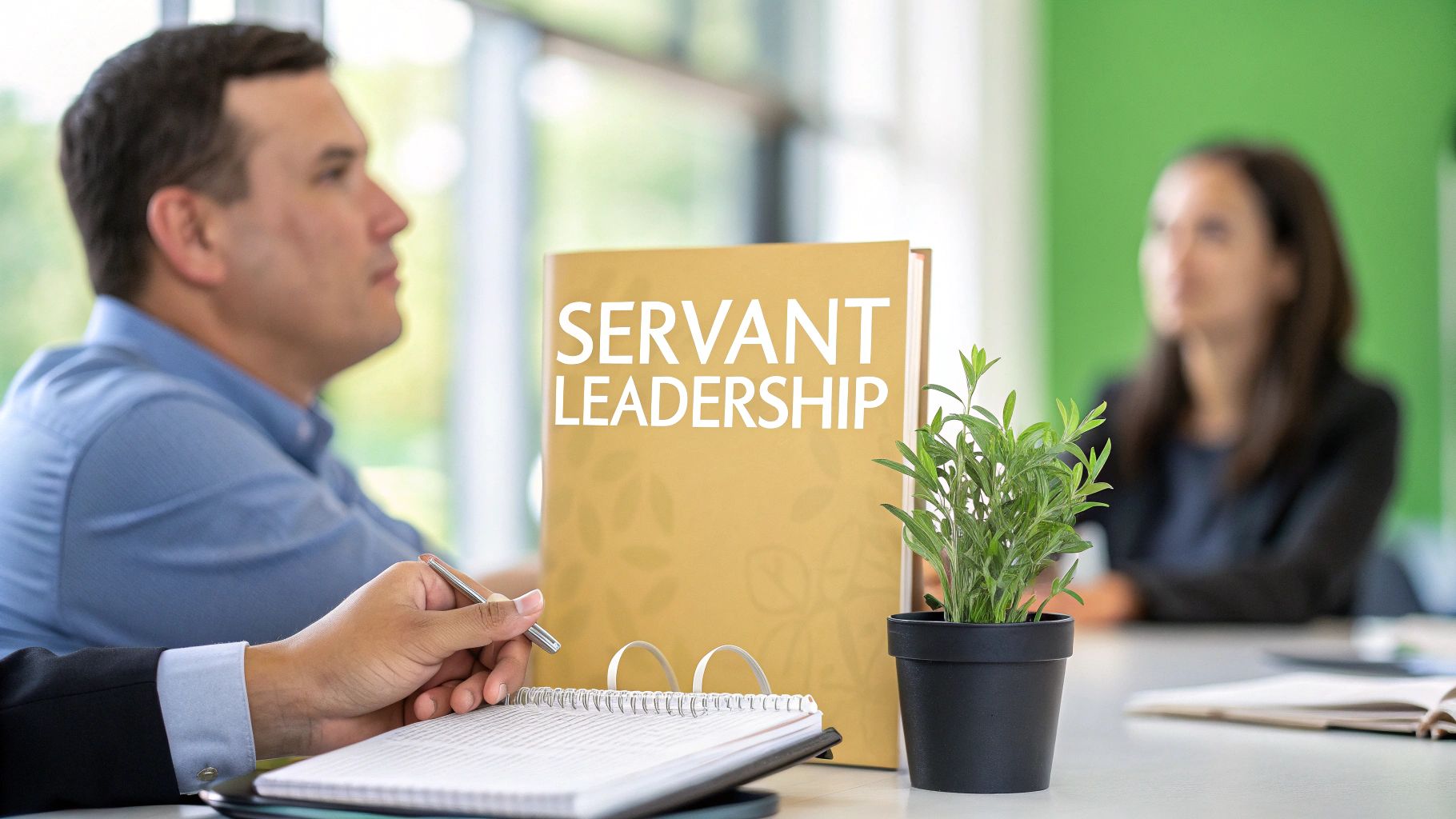
What Is Servant Leadership Style: The Antidote to Burnout?
The awards, the promotions, the relentless drive—they paint a picture of undeniable success. You’ve built an incredible career, a testament to your ambition. Yet, behind the public achievements, a quiet, creeping exhaustion has started to take hold. You’re leading a team, making critical decisions, but you feel isolated, disconnected, and perpetually tired. That inner voice, the one that whispers, "If I stop performing, I'll disappear," is getting louder.
This is the Silent Collapse. It's the moment the adrenaline of achievement gives way to a deep, systemic fatigue. The very drive that built your career now feels like it's dismantling your well-being, piece by piece.
Key Takeaways
A Shift in Power: Servant leadership flips the traditional pyramid. Instead of the team serving the leader, the leader exists to serve the team by removing obstacles and fostering growth.
The Neuroscience of Safety: This style moves your team out of a chronic "fight-or-flight" stress state and into a "rest and recover" state, unlocking higher-level problem-solving and innovation.
Sustainable, Not Soft: It's not about being passive. It's about combining unwavering support with high standards to build a resilient, accountable, and high-performing team.
An Inside-Out Job: True servant leadership is an external reflection of your own internal steadiness. It requires self-awareness and nervous system regulation to be truly effective.
The Definitive Answer: What is Servant Leadership?
The servant leadership style is a leadership philosophy where the primary goal of the leader is to serve their team, rather than command it. This approach prioritizes the growth, well-being, and development of employees, creating an environment of psychological safety that boosts engagement, innovation, and long-term performance.
The Hidden Pattern of High-Achievement
Our culture glorifies the "lone hero" leader, the one who single-handedly crushes goals and is always "on." This archetype forces you into a corner where asking for help feels like admitting failure. You've become so skilled at solving everyone else's problems that your own needs have become a distant afterthought. The real cost of success isn't just burnout; it's the slow erosion of your authentic self.
Think of it like being the sole operator of a lighthouse. Your job is to keep the light burning brightly to guide every ship safely to shore. You work tirelessly, checking the bulb, polishing the lens, and fueling the generator. But you're so focused on the light that you forget to check your own supplies. The ships are safe, but inside the lighthouse, you're running out of food, water, and warmth. This is the leadership trap: you become a beacon for others at the cost of your own sustainability.
This unsustainable pace traps you in a draining cycle:
Constant Pressure: The unending need to project an image of perfect control and competence.
Growing Isolation: The inability to be vulnerable builds a wall between you and your team.
Diminishing Returns: The harder you push, the less fulfilled you feel, leading to a massive energy drain.
The hard truth is that the traditional, top-down leadership model—the very one that likely got you to where you are—is not built for long-term emotional or physical sustainability. It demands a constant sacrifice of your own life force, with very little replenishment.
Acknowledging the hidden cost of success is the first step toward finding a way to lead that actually replenishes you instead of draining you dry.
The RAMS Reframe to Servant Leadership
To break this cycle, we must reframe leadership not as a position of command, but as an act of cultivation. This is where servant leadership, grounded in a regulated nervous system, becomes a strategic advantage. It moves you from being the overworked lighthouse keeper to a master gardener who cultivates a thriving ecosystem.
The RAMS Method (Results, Attitude, Mastery, Systems) provides the framework for this shift. It grounds your leadership in a sustainable internal architecture, allowing you to serve your team from a place of strength, not sacrifice.
The Neuroscience Behind Sustainable Leadership
Most traditional, high-pressure leadership models run on chronic stress, keeping both the leader and their team perpetually stuck in sympathetic nervous system activation—"fight-or-flight." This state floods the body with cortisol, leading to burnout, foggy thinking, and a shutdown of creativity. You simply cannot access your best thinking when your body believes it's under constant threat.

Servant leadership succeeds because it does the opposite. It intentionally builds an environment of high psychological safety, which activates the parasympathetic nervous system—our "rest and recover" state. When the nervous system feels safe, the brain’s prefrontal cortex comes fully online, unlocking:
Higher-Level Problem-Solving
Emotional Regulation
Creative Thinking
By prioritizing the team's well-being, a servant leader isn't just being "nice." They are making a strategic, biological intervention to unlock the peak cognitive performance of their entire organization.
This reframes leadership. It’s no longer about extracting performance through force but about creating the physiological conditions where excellence emerges naturally. It all starts with understanding your own nervous system architecture.
Contrasting Leadership Styles: A Clear Breakdown
To truly grasp the shift, let's compare the two approaches directly.

This is a world away from the authoritarian control that dominates too many corporate cultures. It shares a lot of DNA with another powerful model: what is authentic leadership.
How Servant Leadership Creates Sustainable Power
True, sustainable power isn't about control. It's about cultivating an ecosystem where your team thrives. When they succeed, the organization succeeds, and—crucially—your own energy is replenished, not drained.
When your primary focus is on removing obstacles and championing your team's growth, you ignite a powerful cycle of reciprocity. They feel seen, valued, and trusted. According to research from Greenleaf's own center, this approach leads to tangible business benefits. Learn more about the impact of servant leadership and its effect on the bottom line.
From Director To Developer: Practical Shifts
Putting this into practice comes down to small, consistent shifts in how you speak and act.
Rethinking Team Meetings: Instead of driving the agenda, open with: "What is the single biggest obstacle I can remove for you this week?" This instantly shifts the dynamic from reporting up to receiving support down.
Reshaping Performance Reviews: The conversation moves from evaluation to a collaborative blueprint for growth. Ask: "What skills are you most excited to develop this year, and how can I best support you on that path?"
Handling Mistakes with Grace: When a project derails, the first question isn't, "Who is to blame?" It's, "What did we learn, and what do we need to fix in our process?" This builds the psychological safety required for real innovation.
A crucial question to ask yourself after delegating is this: "Is this person more or less dependent on me now?" A true servant leader’s goal is to systematically build the team's capability, making them stronger and more self-sufficient over time.
This mindset is the absolute bedrock for anyone serious about building high-performing teams that are both effective and incredibly resilient.

The Return to Sovereignty
For years, high performers have been sold a lie: that leadership is an act of sheer will, of pushing through exhaustion. This isn't leadership; it's a slow burnout disguised as ambition. The shift to servant leadership isn't just another management tactic. It's a profound act of personal reclamation. It's about returning to your most authentic, powerful, and sustainable self.
True, lasting leadership isn’t about forcing outcomes. It's about creating the conditions where success can't help but emerge. You stop being the bottleneck and become the catalyst. By shifting your focus from your own output to the cultivation of your team's growth, you reclaim your own power. This doesn't just strengthen them; it replenishes your energy.
Ultimately, this is a path toward leading from a place of wholeness, not sacrifice. It demands a radical connection to your own internal state. To lead this way, you must master your own internal landscape first. That's why learning how to be more self-aware is the non-negotiable first step.
The core takeaway is this: sustainable leadership is an inside-out job. The more you serve the growth of your team, the more you serve your own return to a balanced, sovereign state of being.
You don't have to choose between immense professional power and your own well-being. By adopting the principles of a servant leader, you create an ecosystem where both you and your team can thrive. This is how you build a legacy that is not just successful, but deeply fulfilling.
Unpacking the Hard Questions
Even when the idea of servant leadership clicks, high-achievers often wonder how to adopt this style without losing their edge. Let's tackle the most common concerns.
How Can I Still Hold My Team Accountable?
This is the big one. There's a persistent myth that serving your team means letting them off the hook. Nothing could be further from the truth. Accountability and service are two sides of the same coin. A servant leader holds their team accountable to the high standards they help create. Instead of a top-down, "did you do it?" approach, you foster shared ownership. You ask, "What's getting in the way of you delivering on this commitment?" This frames you as an ally in their success, not a judge of their failure.
Is This Leadership Style Effective in Fast-Paced Industries?
Absolutely. In fact, it’s more effective in high-pressure environments. A command-and-control style creates bottlenecks. Servant leadership, on the other hand, distributes decision-making and frees people on the front lines to act with agility. When you clear roadblocks and ensure your team has the resources they need, you build their capacity to respond to challenges quickly.
Will Serving My Team Cause Them to Lose Respect?
This fear comes from a misunderstanding of where real power comes from. True respect isn't earned through authority; it's earned through competence, integrity, and a genuine investment in the success of others. When you consistently help your team win, you build incredible trust and loyalty. They won’t see you as weak; they’ll see you as a powerful advocate—a leader worth following.
Where to go next. If the pattern in this piece reads like your own, the Silent Collapse Diagnostic™ is a quiet place to begin. And if you want the deeper why beneath the work, read the Sovereign Manifesto.