Ditching the Dream Job? How to Switch Careers at 35 and Thrive
That feeling isn't just a bad week. It's the silent alarm telling you the ladder you’ve been climbing is leaning against the wrong wall.
It’s the growing chasm between the successful career you meticulously built and the person you are today. We call this the "Silent Collapse," the moment a high-achiever realizes their external success feels internally hollow. Recognizing it is the first, most critical step toward a powerful, intentional career pivot.
Key Takeaways
You're Not Starting Over: A career change at 35 is not a reset button. It’s a strategic pivot where you leverage a decade of experience, leadership, and emotional intelligence—assets a 22-year-old simply doesn't have.
Identity Before Action: The most common mistake is jumping to LinkedIn before doing the internal work. A successful switch requires a ruthless audit of your values and non-negotiables to build a new professional identity that aligns with who you are now.
Financial Runway is Freedom: Anxiety kills strategic thinking. Building a 6-12 month financial bridge isn't about restriction; it's about buying yourself the time and space to make decisions from a place of power, not desperation.
The Pivot is an Inside Job: This transition is more than a professional shift; it's an identity shift. You must develop a resilience toolkit to manage imposter syndrome, regulate your nervous system, and stay the course when uncertainty hits.
Switching careers at 35 is a strategic turning point, not a mid-life crisis. You are at the perfect intersection of proven experience and hard-won clarity, giving you the power to architect a future that delivers both high achievement and deep, personal fulfillment.
The Hidden Pattern of the Silent Collapse
The internal script is exhausting. "I should just be grateful," you tell yourself, even as burnout begins to fray your edges.
You did everything right. You followed the playbook, climbed the ladder, and collected the accolades. But the view from up here feels… empty. This is the mid-career crossroads, the moment of "Silent Collapse." It’s a surprisingly common yet intensely personal experience for high-achievers who wake up one day and realize the path they're on no longer leads where they truly want to go.
Let’s be clear: this is not a sign of failure. It’s a signal that you’ve evolved.
The same ambition and skills that built this powerful foundation are now demanding a new direction—one defined by purpose, not just performance metrics. Feeling unmotivated isn't a character flaw; it’s a crucial data point telling you there’s a misalignment between your core values and your day-to-day reality.

Why 35 Is a Strategic Advantage, Not a Setback
Many women mistake this moment for having to start from scratch. That couldn't be further from the truth. You're not starting from scratch; you're starting from experience.
The desire for a professional shift at this age isn't just a feeling; it’s a well-documented pattern. Research on career journeys finds that a staggering number of workers pivot multiple times. According to one study, by age 36, a full quarter of professionals are already making their second career pivot.
This isn't instability. It’s a normal, healthy part of a dynamic professional life. It's your chance to leverage the wisdom you've accumulated. For many, exploring new educational paths is a key part of this. You can learn why Access Courses Are Ideal For Career Changers In Their 30s, 40s, And Beyond.
What often feels like a risk is actually a powerful strategic advantage when you know how to leverage it.

Recognizing these advantages is the key to shifting your mindset from one of fear to one of tactical execution.
The RAMS Reframe for a Strategic Pivot
A career pivot that sticks isn’t about landing a new title. It’s about consciously claiming a new professional identity. This requires a proven framework. The RAMS Method (Results, Attitude, Mastery, Systems) provides the architecture for this transition, moving you from introspection to intentional action.
R: Results - Redefine Your Professional Identity
Before you touch your resume, you must do the internal work. A career is what you do. Your professional identity is who you are. Getting clear on the difference is the first major win.
For a decade, your identity has been welded to your role. "I'm a Director of Marketing." "I'm a Senior VP." We must dismantle this. Your value isn’t housed in a title. It comes from the unique cocktail of strengths and hard-won experiences only you possess.
The real work isn't about what you're leaving behind. It's about deciding, with intention, what you are building toward. This is how you move from a place of reaction to one of deliberate creation.
Your Core Values Audit: Grab a notebook and get brutally honest.
Peak Experiences: When did you feel genuinely alive at work? Were you mentoring a team? Solving a complex problem? Given total creative freedom? Get specific.
Drain Points: What tasks or situations consistently leave you depleted? Is it the endless budget meetings? The office politics? Write it all down without judgment.
Non-Negotiables: If you were designing your ideal role, what 3-5 conditions are mandatory? Think company culture, autonomy, impact, and flexibility.
This audit gives you a powerful filter. You're no longer thinking, "I need a change." You're operating from a place of precision: "I'm looking for a role that offers creative autonomy, a collaborative culture, and a flexible schedule." For a deeper dive, learn more about how to be more self-aware in our guide.

A: Attitude - Confront Imposter Syndrome Head-On
As a high-achiever, you’re used to being the expert. Now, you're willingly stepping into a new arena. This is fertile ground for imposter syndrome.
The internal monologue is brutal: "Who am I to even attempt this?" or "They'll find out I'm a fraud." Your most powerful weapon here is evidence. Those pilot projects and new certifications are tangible, undeniable proof of your growing competence. Every small win builds a new foundation of confidence based on recent action, not old job titles.
M: Mastery - Uncover Your Transferable Executive Skills
Women, in particular, are notorious for downplaying transferable abilities. We need to stop listing what we did and start articulating the powerful capabilities underneath.

This reframing isn’t just for your resume—it’s for your own confidence. You are redeploying a sophisticated skill set into a new arena that's a better fit.
S: Systems - Architect Your Financial Bridge
Let’s talk about money. A career pivot needs a financial runway. Facing this head-on eliminates anxiety and gives you the freedom to make choices from a place of power, not desperation.
At 35, you're not alone. Bureau of Labor Statistics data shows that professionals aged 35-44 average 2.9 career changes. With a staggering 46% of people in this age bracket actively looking for a new job, planning your finances isn't just a good idea—it's essential.
Building a financial runway isn't about restriction; it's about buying yourself time and options. It is the ultimate act of self-investment in your future.
Career Switch Financial Planning Framework
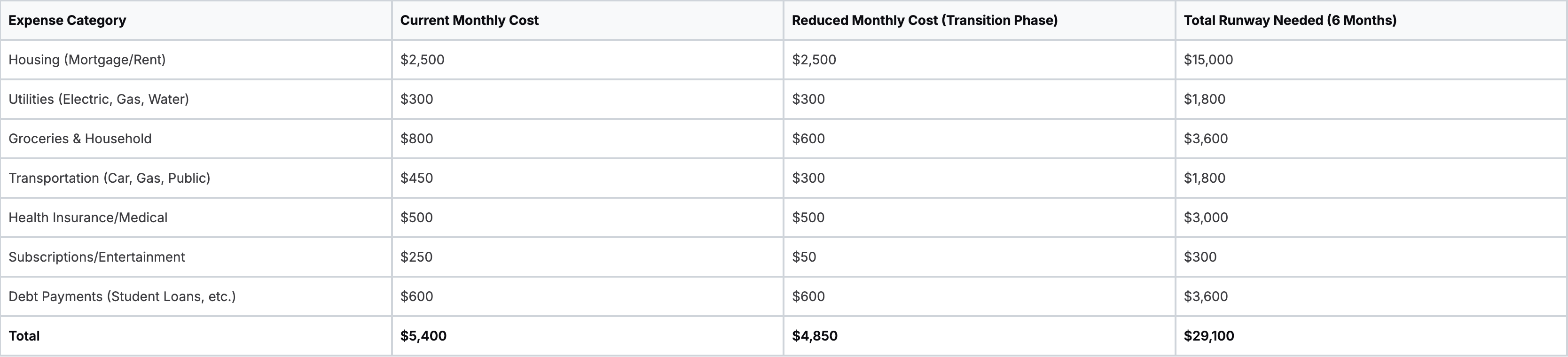
This framework gives you a concrete target. Aim to have 6-12 months of these reduced living costs saved. This buffer allows you to upskill, network, and negotiate without crushing pressure. If great offers start rolling in, our guide on how to handle multiple job offers can help. As you map out these steps, getting expert advice on how to change careers successfully can provide a solid roadmap.
The Return to Nervous-System Sovereignty
A bulletproof strategic plan is non-negotiable. But it won’t protect you from the intense emotional undertow of an identity pivot. This is the real work—learning to manage inner turbulence so you can execute your plan with clarity and stamina.

The Myth of Disloyalty
A surprising number of women I work with get blindsided by a deep-seated feeling of guilt, as if leaving their job is a betrayal.
Let's get one thing straight: your career belongs to you. Your company is a business; it will always make business decisions. You must act as the CEO of your own career.
This transition is not an act of disloyalty to your past. It is an act of profound loyalty to your future self. No one else is responsible for your fulfillment. That ownership is yours.
This mindset shift is critical. You aren't just changing jobs; you're taking sovereign control of your professional destiny. For a deeper look, read our article on building resilience in the workplace.
Your Resilience Toolkit for the Journey
Resilience isn’t about gritting your teeth. It's about having practical tools to regulate your nervous system when stress and uncertainty spike.
Practice Embodied Check-Ins: A few times a day, stop for 60 seconds. Close your eyes, take three deep breaths, and notice the physical sensations in your body. This tiny act breaks the stress cycle and grounds you in the present.
Schedule 'Integration Time': Block off non-negotiable time in your calendar—even just 15 minutes a day—for things that require zero strategic thought. Think walking without a podcast, listening to music, or just sitting in silence.
Curate Your Support System: Be ruthless about who you let into this process. You need a small, trusted "board of directors"—advisors, mentors, and cheerleaders. You do not need a large audience of skeptics.
This inner work is the engine that will power you through the toughest parts of your transition, ensuring you arrive whole and confident.
The Return to Yourself
This process was never really about just finding a new job title. It was about orchestrating a powerful return to yourself. The decision to switch careers at 35 isn't an admission that you got it wrong. It’s the ultimate expression of your evolution.
You are standing on the edge of a future built not on someone else's definition of success, but on a deep, unshakeable sense of your own purpose. This is the heart of embodied leadership—the ability to stay centered and decisive because your professional life is finally in lock-step with your core identity. I call this nervous-system sovereignty.
Your career switch isn't the finish line. It's the beginning of a leadership style grounded in who you are, not just what you do. This is the only real foundation for sustainable success.
Your next step is bringing this vision to life with the right support. To fully reclaim your purpose and integrate this new identity, it's crucial to continue this journey. You can dive deeper into this leadership philosophy in our article on embodied sovereignty.
Wrestling with the Big Questions About a Career Change at 35
Even with a perfect plan, late-night worries surface. Let’s tackle the big ones head-on.
"Will I Have to Take a Massive Pay Cut?"
Not necessarily, and definitely not forever. A temporary dip is possible, but your decade of experience in strategic planning, leading teams, and managing budgets is pure gold. It’s powerful negotiation leverage. The key is to frame your move as a redeployment of high-value executive skills into a new industry, not starting from scratch. You're a seasoned leader applying expertise to new problems.
"Is It Too Late to Just Start Over?"
You are not starting over. You are starting from a position of immense strength. A career switch at 35 is a strategic pivot. You bring a professional maturity, a battle-tested network, and a nuanced understanding of how businesses work—assets a younger professional hasn’t had time to build. Employers often see this blend of a fresh perspective with seasoned professionalism as a unique asset.
"How Do I Make My Old Experience Seem Relevant?"
Your experience is your single greatest currency. Deconstruct your achievements into transferable skills. Stop thinking in job titles and start thinking in impact. Instead of "managed a marketing team," you "drove revenue growth by aligning cross-functional teams and executing complex, multi-channel campaigns."
The goal is to shift your narrative from what you did to what you can do. This reframe makes your value undeniable, pulling your expertise out of an industry-specific box and making it universally desirable.
You’re not an outlier. Data shows this age is a prime time for a successful career change. The 35-44 age bracket is the most active in job hunting (46%). What’s driving them? The search for a better salary (39%) and a burning desire to escape profound dissatisfaction (20%). You can see more trends in these career change statistics. Your move isn't a crisis; it's a strategic step taken by countless successful leaders.
The journey to switch careers at 35 is about more than a new job. It's about reclaiming your sovereignty and building a future that aligns with the person you've become.
If you're ready to move from burnout to embodied leadership with a proven system, explore how the RAMS Method can guide you. Take the next step with Baz Porter and start architecting a career that delivers both success and deep fulfillment.