Why Your Leadership Development Is Failing: 10 Best Practices for Women Beyond Burnout
You’ve built a career on relentless performance. Checkmarks on a never-ending list of achievements. But lately, the silence after a boardroom win feels heavier than the victory itself. There’s a quiet, gnawing sense that the person presenting the strategy isn’t the person who lives your life. This is the 'Silent Collapse'—the moment high-achievers realize their success is fueled by a system that demands their burnout. It's the high cost of performing leadership instead of embodying it.
Key Takeaways
Embodiment Over Performance: Shift from exhausting performance-based leadership to a sustainable, embodied presence by integrating your nervous system's intelligence with your strategic mind.
Systems, Not Symptoms: Lasting change requires deconstructing the root causes of burnout (Attitude) and building new operational frameworks (Systems) for energy management and decision-making.
Sovereignty as a Strategy: The ultimate competitive advantage is nervous-system sovereignty—the ability to remain grounded and clear under pressure, which cannot be automated or outsourced.
Data-Driven Self-Awareness: Use tools like 360-degree feedback and EQ assessments not as critiques, but as essential data to close the gap between your intended impact and your actual influence.
This article isn’t about climbing higher; it’s about leading deeper. It provides a definitive guide to the leadership development best practices that address the core drivers of executive burnout in high-achieving women, moving beyond surface-level skills to foster deep, sustainable, and embodied leadership. We will dissect ten specific practices designed to restore your sovereignty by aligning your internal state with your external impact.
To truly address this internal collapse, it's critical to first understand the psychological impact of burnout and how to rebuild resilience. This internal erosion isn't a sign of weakness; it's a signal that your current leadership model is unsustainable.
Forget climbing the ladder; this is about reclaiming your ground.
1. Executive Coaching and One-on-One Mentoring
Personalized, one-on-one guidance is one of the most powerful leadership development best practices for high-achieving women. Executive coaching and mentoring provide a confidential, structured space to dismantle internal barriers, clarify vision, and hone specific leadership competencies. This tailored approach moves beyond generic advice to address the nuanced challenges faced in demanding, often male-dominated, environments.

Unlike group training, this modality focuses entirely on the individual’s unique context, from navigating complex power dynamics to integrating professional ambition with personal well-being. It is particularly effective for addressing the "silent collapse" moments where external success masks internal burnout and a disconnection from one's authentic self. A skilled coach helps leaders identify blind spots that high-performance habits can often hide.
How to Implement This Practice
Select a Specialist: Choose a coach with documented experience in women's leadership, nervous system regulation, and the specific challenges of your industry.
Define Clear Metrics: Establish goals that go beyond KPIs. Include outcomes like improved decision-making under pressure, reduced reactivity, and a greater sense of personal fulfillment.
Maintain Consistent Momentum: Schedule bi-weekly sessions to build and maintain momentum, ensuring accountability is woven into the process.
Prioritize Sustainability: Make burnout prevention and nervous system sovereignty core objectives of the coaching engagement, not afterthoughts.
Baz Porter's RAMS Method Alignment: In a one-on-one setting, a leader works with a coach to systematically deconstruct her current operating model. She identifies the high-cost Attitude of relentless perfectionism, redesigns her Systems to protect her energy, and achieves Mastery over her physiological stress responses, leading to more sustainable and impactful Results. This transforms leadership from a depleting act of performance into an embodied state of being.
To understand how this tailored approach can unlock new levels of performance without sacrificing well-being, you can explore specialized programs in executive coaching for women.
2. Peer Advisory Groups and Women's Leadership Circles
For women in high-stakes leadership roles, isolation can be a significant, often unspoken, career impediment. Peer advisory groups and women's leadership circles are powerful leadership development best practices because they create a dedicated space for authentic connection and strategic problem-solving. These structured communities bring together women at similar levels of influence to share challenges, offer unbiased feedback, and champion each other’s growth in a confidential setting.
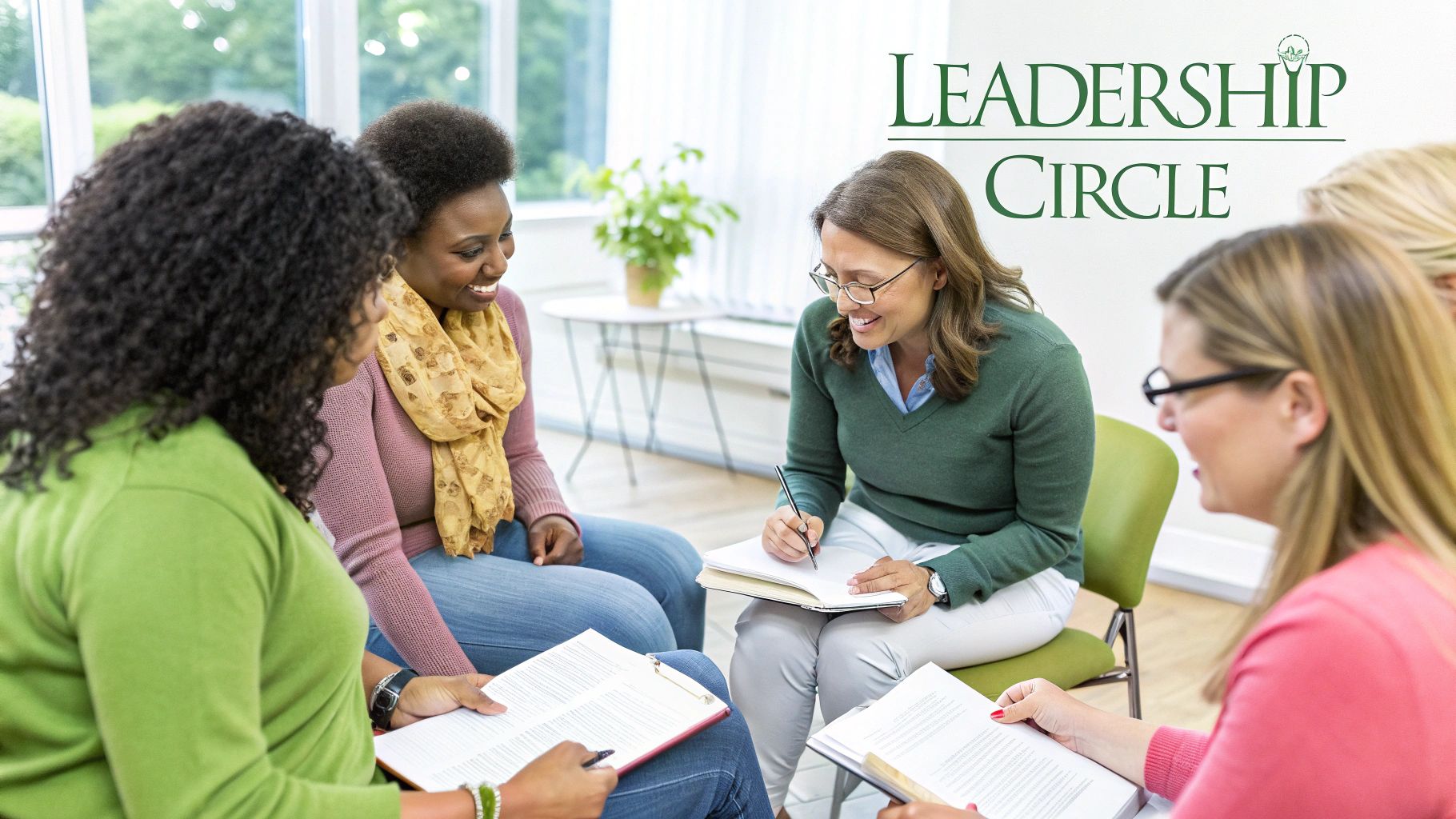
Unlike internal company networks, which can be constrained by politics and hierarchy, external peer groups like those facilitated by Chief or The Women Presidents' Organization allow for unvarnished vulnerability. They provide a vital sounding board where leaders can pressure-test ideas and navigate complex scenarios without fear of professional repercussions. This collective wisdom becomes a strategic asset, reducing the emotional and mental load of solitary decision-making.
How to Implement This Practice
Establish Group Norms: Begin by co-creating a charter that includes a strict confidentiality agreement, rules of engagement, and shared commitments to foster psychological safety.
Keep Groups Intimate: Limit membership to 6-10 participants to ensure everyone has ample airtime and can build deep, meaningful connections.
Utilize a "Hot Seat" Format: Structure meetings around a rotating "hot seat" where one member presents a specific challenge, and the group dedicates its time to brainstorming solutions and offering diverse perspectives.
Prioritize Both Structure and Connection: Balance agenda-driven discussions with unstructured time for organic conversation, as both are crucial for building trust and community.
Baz Porter's RAMS Method Alignment: Within a peer advisory circle, a leader can safely articulate the high-cost Attitude of feeling like she must have all the answers. The group's collective experience provides alternative Systems for problem-solving and decision-making. Through shared stories and feedback, she achieves Mastery over her imposter syndrome, leading to more confident and collaborative Results as she leverages the power of her trusted network.
3. Values-Aligned Leadership Development (Authentic Leadership)
Moving beyond external expectations to lead from a place of core conviction is a cornerstone of sustainable success. Values-aligned leadership development is a transformative practice that guides leaders to identify, articulate, and operationalize their core values. This approach is especially critical for women who have mastered the art of succeeding in traditional, often masculine-coded environments by conforming, and now seek a more authentic and fulfilling way to lead.
When decisions, communication, and strategic direction are anchored in your deepest beliefs, leadership ceases to be a performance. It becomes a genuine expression of who you are, which builds profound trust and inspires loyalty in others. This practice helps dismantle the internal conflict that arises from misalignment, a common trigger for burnout among high-achievers who feel disconnected from the impact they are making.
How to Implement This Practice
Clarify Your Core Code: Work with a coach to conduct a comprehensive values clarification exercise, moving beyond generic terms like "integrity" to define what these values look like in action.
Conduct an Alignment Audit: Map your current responsibilities, key decisions, and professional commitments against your newly clarified values. Identify the most significant areas of misalignment.
Design a 90-Day Realignment Plan: Create a strategic plan to consciously close the gap between your actions and values. This may involve delegating misaligned tasks, reframing goals, or communicating new boundaries.
Embed Daily Reflection: Use short, daily practices like journaling to check in with your values. Ask: "Did my actions today reflect what I hold most important?"
Baz Porter's RAMS Method Alignment: A leader discovers her high-cost Attitude is a deep-seated need for external validation, which has pulled her away from her core values. She redesigns her decision-making Systems to include a "values check" before any major commitment. This allows her to achieve Mastery over the impulse to people-please, leading to Results that are not only successful but also deeply fulfilling and authentic.
To dive deeper into how this alignment can redefine your impact, you can explore the principles of what is authentic leadership.
4. Emotional Intelligence (EQ) Development
Technical skill and strategic intellect are no longer enough to lead effectively. Emotional Intelligence (EQ) has emerged as a critical leadership development best practice, especially for women navigating complex interpersonal and political landscapes. It is the ability to perceive, use, understand, manage, and handle emotions, both your own and those of others. For high-achieving women, developing EQ is the key to building resilient, inclusive teams and leading with an authentic authority that inspires trust.
This practice moves leadership from a purely analytical exercise to an embodied, relational one. It provides the tools to manage burnout triggers before they escalate, give feedback that lands with impact, and create psychological safety where innovation can flourish. Honing EQ allows a leader to read the subtle emotional currents in a room, pre-empt conflict, and build the deep rapport necessary to drive ambitious agendas forward, a crucial advantage in often isolating, male-dominated fields.
How to Implement This Practice
Establish a Baseline: Begin with a formal assessment like the EQ-i 2.0® to gain objective insights into your strengths and specific areas for development, from self-regard to empathy.
Prioritize Self-Awareness: Use daily mindfulness or journaling to connect with your internal state. Before reacting, practice pausing to name the emotion you are feeling.
Practice Regulation in Low-Stakes Scenarios: Rehearse emotional regulation techniques, like tactical breathing, in minor situations first to build the neural pathways needed for high-pressure moments.
Seek 360-Degree Feedback: Request specific feedback from peers, direct reports, and superiors on your emotional impact during meetings, presentations, and one-on-one conversations.
Baz Porter's RAMS Method Alignment: A leader uses EQ development to transform her approach. She challenges the Attitude that emotions are a liability, implementing Systems like daily emotional check-ins. She achieves Mastery over her reactive triggers, allowing her to respond with intention instead of instinct. The Results are a dramatic increase in team cohesion, psychological safety, and her own capacity to lead without depletion.
5. Executive Resilience and Burnout Prevention Training
High performance cannot be sustained on a depleted nervous system. Executive resilience and burnout prevention training is a critical leadership development best practice that shifts the focus from simply managing stress to building a sustainable internal ecosystem. This approach moves beyond generic wellness tips to provide systematic tools for identifying burnout signs, understanding their root causes, and implementing recovery practices tailored to the relentless demands of executive roles.
For women leaders, this training is especially vital. It directly addresses the unique stressors they face, such as the disproportionate emotional labor and the pressure to outperform in environments that weren't designed for them. Instead of viewing rest as a reward, this practice frames strategic recovery as a non-negotiable component of elite performance, akin to how a professional athlete prioritizes physical and mental regeneration.
How to Implement This Practice
Conduct an Honest Burnout Assessment: Start with a multidimensional audit of your physical, emotional, and cognitive energy levels. Identify specific triggers and chronic energy drains in your daily and weekly rhythm.
Establish Non-Negotiable Recovery Protocols: Define small, daily practices for nervous system regulation (e.g., a 5-minute breathwork session between meetings) and embed them into your calendar.
Set and Enforce Energetic Boundaries: Clearly define work hours, communication availability, and meeting-free times. Learn to protect your energy as fiercely as you protect your P&L.
Treat Energy as a Primary KPI: Track your energy levels and recovery quality with the same diligence you apply to business metrics. Adjust your systems based on this crucial data.
Baz Porter's RAMS Method Alignment: Burnout is a systems failure, not a personal one. A leader using this method first assesses the Results of her chronic depletion (e.g., brain fog, decision fatigue). She then dismantles the underlying Attitude that glorifies exhaustion as a badge of honor. Finally, she achieves Mastery by creating new Systems for proactive recovery and boundary enforcement, leading to sustained high performance without self-sacrifice.
To build a resilient foundation for your leadership, it's essential to understand the specific dynamics at play. You can find detailed strategies that explain how to prevent burnout at work.
6. 360-Degree Feedback and Multi-Rater Assessment
One of the most revealing leadership development best practices is the use of 360-degree feedback. This structured process gathers confidential, anonymous insights from a leader’s full professional circle: supervisors, peers, direct reports, and even external stakeholders. For high-achieving women, this tool is invaluable for illuminating the critical gap between their intended impact and how their leadership is actually experienced by others. It moves beyond self-perception to provide a holistic, data-driven view of their presence and influence.
This comprehensive assessment is particularly powerful for uncovering unconscious biases and gender-based perceptions that can subtly undermine a woman's authority. Where a leader might believe she is being direct and decisive, her team may perceive her as abrasive, a common gendered misinterpretation. A 360-degree review provides the concrete data needed to identify these perception gaps, turning abstract challenges into tangible areas for growth. It replaces guesswork with a clear, multi-faceted picture of reality.
How to Implement This Practice
Select an Aligned Tool: Choose a 360-degree assessment tool that measures competencies related to authentic leadership, emotional intelligence, and psychological safety, not just traditional performance metrics.
Facilitate with a Coach: Never deliver 360-degree results without the support of a trained executive coach. A coach helps the leader process the feedback without defensiveness and translate it into a constructive development plan.
Focus on Patterns: Instruct the leader to look for recurring themes and patterns across rater groups rather than fixating on isolated, outlying comments.
Create a Targeted Plan: Use the feedback to identify the top two or three most impactful areas for development and build a clear action plan around them, integrating it into coaching goals.
Baz Porter's RAMS Method Alignment: A 360-degree assessment provides the essential data to reboot a leader's entire operating model. The feedback might reveal a high-cost Attitude of micromanagement driven by a fear of failure. Armed with this insight, she can redesign her delegation Systems, practice the Mastery of trusting her team, and achieve far greater Results through empowerment and leveraged impact, reclaiming her time and energy.
7. Experiential and Adventure-Based Leadership Development
Traditional classroom learning often fails to translate into real-world leadership impact. Experiential and adventure-based leadership development is a powerful practice that bypasses intellectual defenses by immersing leaders in hands-on challenges, simulations, and physically demanding environments. This approach is designed to reveal authentic leadership styles under pressure, build profound team trust, and cultivate deep resilience.
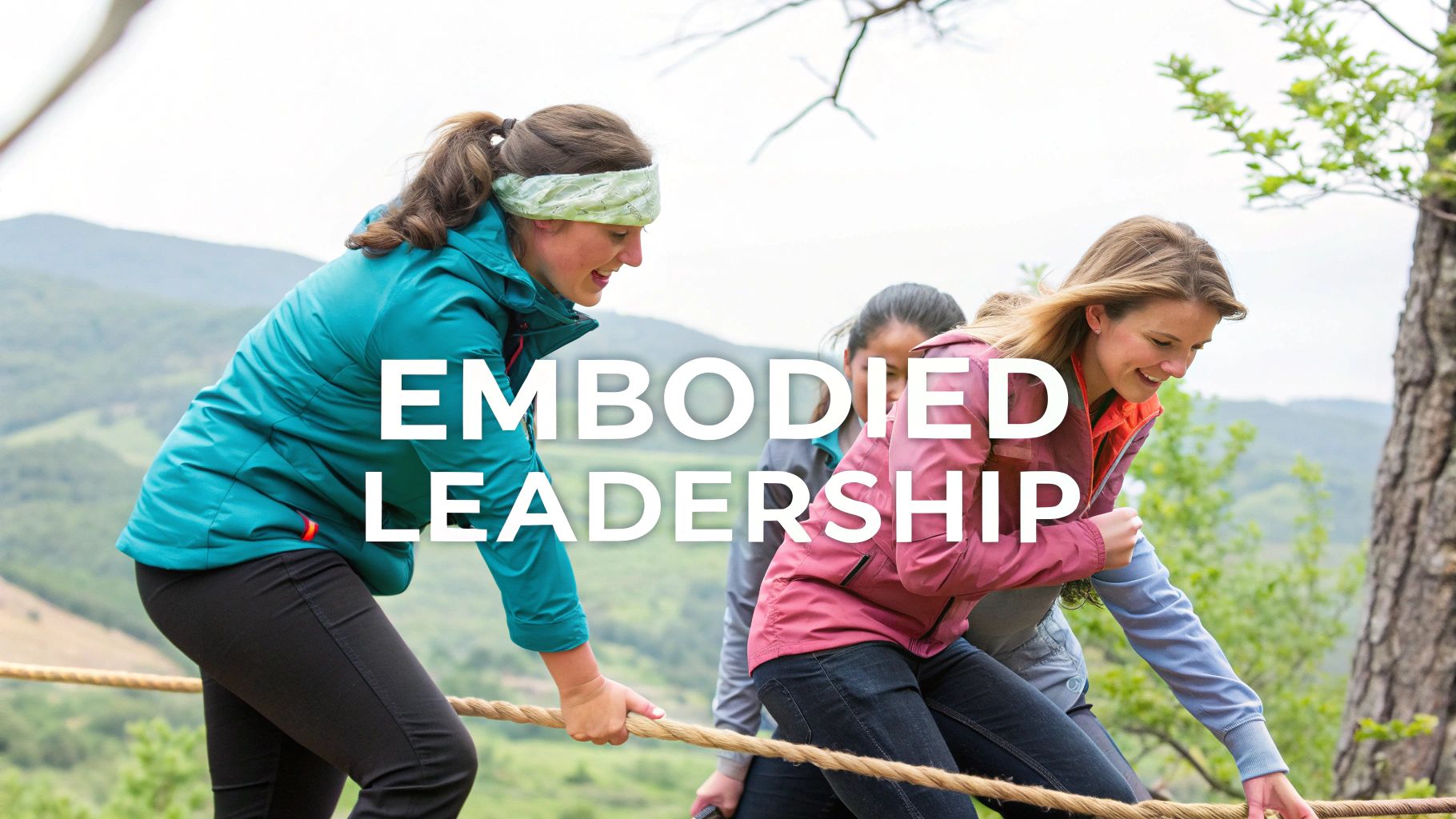
For high-performing women accustomed to intellectual mastery, these programs force a shift from thinking to being. Instead of analyzing a case study on trust, you build it by navigating a challenge where your physical safety depends on your team. This embodied learning creates lasting neural pathways and provides a visceral understanding of concepts like communication, risk assessment, and leading through uncertainty, making it one of the most effective leadership development best practices for sustainable growth.
How to Implement This Practice
Select for Relevance: Choose programs with facilitators experienced in executive development and gender dynamics, such as those offered by Outward Bound or the Center for Creative Leadership.
Prioritize Psychological Safety: Ensure the challenges are designed to stretch participants without re-triggering trauma. The goal is post-traumatic growth, not distress.
Integrate and Debrief: The real learning happens in the reflection that follows the experience. Schedule dedicated time to translate visceral lessons into workplace strategies.
Use as a Catalyst: Leverage the deep bonds formed during these experiences to create lasting peer accountability groups that continue long after the program ends.
Baz Porter's RAMS Method Alignment: Experiential challenges force a leader to confront her ingrained Attitude toward control and failure. By redesigning her Systems for collaboration in the moment, she achieves Mastery over her physiological fear response and learns to trust her team and herself. The Results are not just a completed task but an embodied confidence and a new capacity for leading through ambiguity that is unshakable.
You can see how a military-style approach to building resilience under pressure can be translated into the corporate world in this overview.
8. Strategic Succession Planning and Leadership Pipeline Development
A systematic approach to identifying and nurturing future leaders is a cornerstone of sustainable organizational health. Strategic succession planning moves beyond simply filling roles; it’s about intentionally building a diverse and resilient leadership pipeline. For women, this practice is critical for creating visible, viable pathways to the top, ensuring that talent isn't just recruited but is actively developed, sponsored, and retained for senior leadership.
Effective pipeline development addresses the systemic gaps that often sideline high-potential women. It replaces ad-hoc promotions with a transparent, equitable process that pairs promising individuals with the stretch assignments, mentorship, and sponsorship needed to thrive. This proactive approach not only benefits women leaders but also fortifies the organization against the talent drain caused by burnout and a lack of perceived opportunity, making it one of the most impactful leadership development best practices.
How to Implement This Practice
Audit for Equity: Conduct a thorough audit of your current leadership pipeline to identify where women are dropping off. Use this data to pinpoint and address systemic biases.
Identify Potential Early: Implement systems to recognize high-potential women early in their careers, not just when a senior role becomes available.
Prioritize Sponsorship: Move beyond mentorship to active sponsorship, where senior leaders use their influence to advocate for and create opportunities for their protégés.
Embed Sustainability: Ensure that development programs explicitly address burnout prevention and teach sustainable performance habits, equipping future leaders to lead without self-depletion.
Baz Porter's RAMS Method Alignment: A robust succession plan is a macro-level expression of RAMS. The organization reframes its Attitude from reactive hiring to proactive development. It creates Systems (like sponsorship programs and equitable promotion criteria) that build a diverse talent pipeline. Emerging leaders gain Mastery over new competencies through targeted assignments, leading to superior long-term Results for both the individual and the company. This ensures leadership continuity is built on a foundation of well-being, not burnout.
9. Mindfulness, Presence, and Embodiment Practices
Integrating mindfulness and embodiment is a critical leadership development best practice that shifts leaders from constant mental overdrive to an integrated, present state. For high-achieving women conditioned to prioritize intellectual rigor, this practice reconnects them to their body's intelligence, addressing the deep disconnection and burnout that often accompanies success. It moves leadership from a purely cognitive exercise to a fully embodied state of being.
Unlike traditional training that focuses on external skills, embodiment practices build internal awareness and physiological regulation. This allows leaders to stay grounded during high-stakes negotiations, make clearer decisions under pressure, and cultivate an authentic presence that inspires trust. For instance, developing a strong leadership presence often involves a deep understanding of one's physical self; proprioceptive training provides valuable insights into body awareness and control, essential for embodiment.
How to Implement This Practice
Start with Micro-Practices: Begin with 5-10 minutes of daily guided meditation or simple breath awareness. Consistency is more important than duration.
Anchor Presence Before Meetings: Before a critical meeting, take 60 seconds to practice a body scan or focused breathing to anchor yourself in the present moment.
Integrate Somatic Coaching: Work with a specialist to connect psychological patterns with physical sensations, unlocking deeper self-awareness and regulation.
Build a Culture of Presence: Introduce brief mindfulness moments at the start of team meetings to foster a collective sense of calm and focus.
Baz Porter's RAMS Method Alignment: Embodiment directly enhances the RAMS framework. A leader recognizes her Attitude of chronic mental analysis is unsustainable. She implements new Systems like daily meditation and somatic check-ins. This builds Mastery over her nervous system, allowing her to stay present instead of reactive. The Result is a leader who commands rooms not through force, but through a deeply grounded and authentic presence.
To discover how these practices can fundamentally change your leadership approach, you can learn more about practical techniques for nervous system regulation.
10. Cross-Cultural and Inclusive Leadership Development
In a globalized and diverse workforce, leadership effectiveness is no longer defined solely by tactical execution but by the ability to connect with and empower people across different cultures, perspectives, and identities. Cross-cultural and inclusive leadership development is a critical practice that moves beyond surface-level diversity metrics. It equips leaders to cultivate environments of genuine belonging and psychological safety, which are essential for innovation and sustainable performance.
For high-achieving women, mastering inclusive leadership is a strategic advantage. It provides the skills to navigate complex cultural expectations, build highly engaged teams, and leverage diverse viewpoints without compromising their authentic presence. This practice addresses the systemic barriers that often hinder progress, shifting the focus from simply "fitting in" to actively shaping a more equitable and effective organizational culture. It is one of the most impactful leadership development best practices for the modern era.
How to Implement This Practice
Assess Cultural Intelligence: Begin with a baseline assessment of your own cultural awareness and biases. Use tools like the Cultural Intelligence (CQ) assessment to identify strengths and development areas.
Engage in Bias Awareness Work: Participate in structured training on unconscious bias. The goal is not shame but awareness, allowing you to interrupt automatic patterns in decision-making and team interactions.
Practice Intentional Inclusion: Intentionally build diverse teams and create processes that ensure all voices are heard. This includes everything from meeting facilitation techniques to project assignment protocols.
Sponsor Underrepresented Talent: Go beyond mentoring by actively advocating for and creating opportunities for high-potential individuals from underrepresented backgrounds.
Baz Porter's RAMS Method Alignment: A leader committed to inclusion examines the high-cost Attitude of defaulting to familiar networks and perspectives. She re-engineers her hiring and feedback Systems to mitigate bias and promote equity. Through this process, she achieves Mastery over inclusive communication and conflict resolution, leading to superior Results like higher team morale, reduced turnover, and increased innovation.
To build a truly effective and modern team, it is vital to understand the principles of creating an inclusive environment. You can explore a deeper dive into what is inclusive leadership to build these essential skills.
Top 10 Leadership Development Practices Comparison

The Return: Leadership Is Not a Role, It's an Embodiment
The journey through these leadership development best practices reveals a profound, unifying truth: sustainable leadership is not an external acquisition but an internal reclamation. We have explored a spectrum of powerful methodologies, from the targeted insights of Executive Coaching and the collective wisdom of Peer Advisory Groups to the deep, nervous-system regulation offered by Mindfulness and Embodiment Practices. Each one serves as a distinct pathway back to a central, unshakeable core of self.
The relentless pursuit of external validation, the constant battle against burnout, the feeling of being a high-functioning machine rather than an integrated human-these are not the hallmarks of success. They are distress signals from a system operating at a deficit. The practices detailed in this guide-like leveraging 360-Degree Feedback for self-awareness or building Executive Resilience-are designed to interrupt this pattern. They shift the focus from merely managing symptoms to fundamentally rewiring the operating system that produces them.
From Performing Leadership to Embodying It
The critical distinction is moving from performing leadership to embodying it. Performance is exhausting; it relies on a finite reserve of energy to maintain a facade for others. Embodiment is generative; it draws from an infinite well of authentic power that comes from aligning your actions, decisions, and presence with your deepest values.
This is the essence of Baz Porter’s RAMS Method woven throughout this article. It's about achieving powerful Results not by brute force, but through a regulated Attitude, a commitment to deep Mastery of self, and the implementation of sustainable Systems. The shift is tectonic. Instead of asking, "What do I need to do to be a better leader?" you begin to ask, "Who do I need to be?"
The Path Forward: Integration Over Accumulation
Your next step is not to add more to your already overflowing plate. The real work is integration. Choose one or two practices from this list that resonate most deeply with your current challenges. Perhaps it's committing to Emotional Intelligence (EQ) Development to navigate complex team dynamics or engaging in Experiential Leadership Training to break through a personal barrier.
The goal is to stop collecting strategies and start creating space. True leadership development creates more capacity, not more stress. It quiets the internal noise so you can hear your own wisdom. It builds a foundation so solid that external chaos no longer has the power to destabilize you. This is the return to nervous-system sovereignty. It’s the ultimate competitive advantage because it cannot be replicated, outsourced, or automated. It is you, in your fullest, most grounded, and potent form. This is the future of leadership, and it begins not with a new tactic, but with a return to yourself.
The principles discussed here are the bedrock of the work we do at Baz Porter. If you are ready to move beyond the conventional playbook of leadership development and build a legacy rooted in sustainable power and embodied presence, discovering how the RAMS method can be applied to your unique situation is the logical next step. Visit Baz Porter to learn how we guide leaders from a state of high performance to one of profound, sovereign influence.