How to Be Backed When You Speak Up
You said the thing. It was right. And the room moved on like you had not spoken at all. Silent Collapse™ is not losing your words. It is saying them and watching them land on the floor. You were not wrong. You were not weak. You were simply not backed. That gap, between being heard and being backed, is where capable leaders go quiet. You can close it. Start with the Manifesto.
Written by Baz Porter®
What this covers
- The short answer
- The hidden pattern
- The RAMS™ return across five pillars
- One leader's turn
- The architecture of your return
- Questions leaders ask
Key takeaways
- Being heard is attention. Being backed is weight. They are not the same.
- Backing is built before the meeting, not won inside it.
- A point with no second voice reads as a personal opinion.
- You line up one ally in advance. The room hears a coalition.
- The return is a system, not a louder voice.
The short answer
To be backed when you speak, build the backing before you open your mouth. Being heard means people register your words. Being backed means someone moves because of them. The first is noise. The second is weight. Most quiet leaders keep chasing volume. They say it again, louder, with more proof. That is the wrong lever. A strong point with no one behind it still dies in the room. The fix is structural. You secure one or two people before the meeting. You tell them what you will raise. You ask them to add their voice when you do. Then the room does not hear one opinion. It hears a position that already has support. That is the difference between speaking and carrying.
The hidden pattern
Here is what almost no one names. A point does not stand on its own merit. It stands on who seconds it. Voice researchers have shown this for years. Detert and Burris, writing in the Academy of Management Journal in 2007, found that whether a leader's input gets acted on depends less on the idea and more on the relational ground around it. The idea was never the problem. The isolation was.
So you go quiet, and you read it as a flaw in you. It is not. It is a flaw in your setup. You have been bringing good thinking to rooms where you stand alone. One voice is easy to wait out. Two voices are a signal. You felt the silence and blamed your delivery. The delivery was fine. You simply had no one lined up to carry the weight with you.
The RAMS™ return across five pillars
The RAMS™ method rebuilds backing as a system. Five pillars. You work each one on purpose.
Results
Stop measuring by how it felt. Measure by what moved. Did one decision shift because you spoke? That is the only score that counts. A warm nod is not a result. A changed plan is. Track it for two weeks. You will see exactly which rooms back you and which only tolerate you.
Attitude
Drop the belief that asking for backing is weak. It is not. It is how every seasoned operator works. The ones who look effortless are not louder. They are better connected. You think you should win the room alone. No one does. That belief is the thing keeping you quiet.
Authenticity
Backing does not mean performing. You do not trade your real view for allies. You bring your real view, and you bring people who share it. The position stays yours. The support is simply visible now. Being backed is the opposite of pretending. It is your true stance, no longer standing alone.
Mastery
Learn the pre-meeting move. Find the one person who already leans your way. Walk the point past them first. Ask a plain question. Will you back this if I raise it? Most will say yes. Now you have a second voice. This is a skill. You get sharper every time you use it.
Systems
Make it a habit, not a hope. Before any room that matters, name your point and name one backer. Put it in your prep notes. Two lines. The point. The person. Do this every time and backing stops being luck. It becomes your default operating pattern. A system beats a good intention in every meeting that counts.
The split is stark once you see it.
- Collapsed: you walk in alone and hope the idea wins.
- Sovereign: you walk in with a backer already secured.
- Collapsed: you say it louder when it falls flat.
- Sovereign: you lined up a second voice before you spoke.
- Collapsed: you read the silence as your failure.
- Sovereign: you read it as a setup problem and fix the setup.
- Collapsed: your point stands or dies on its own.
- Sovereign: your point arrives with weight behind it.
You do not need a louder voice. You need a voice that is not standing alone. Backing is built, not begged for.
If you cannot tell which rooms back you and which only hear you, name it. The free Silent Collapse Diagnostic™ gives you that read in sixty minutes. Take the diagnostic here.
One leader's turn
A managing director I worked with had stopped speaking first in her leadership meetings. She had the sharpest read in the room. She also had the quietest seat. Every time she raised something, it got a polite nod and no movement. She assumed she had lost her edge. She had not. She was raising everything cold, with no one primed to agree.
We changed one thing. Before each meeting, she sent a two-line note to one trusted peer. Here is what I am raising. Back me if you agree. The first week, her proposal on hiring passed inside ten minutes. The peer spoke second. The room felt the weight shift. She did not get louder. She stopped arriving alone. Within a month she was setting the agenda again. The voice was always there. The backing was the missing piece.
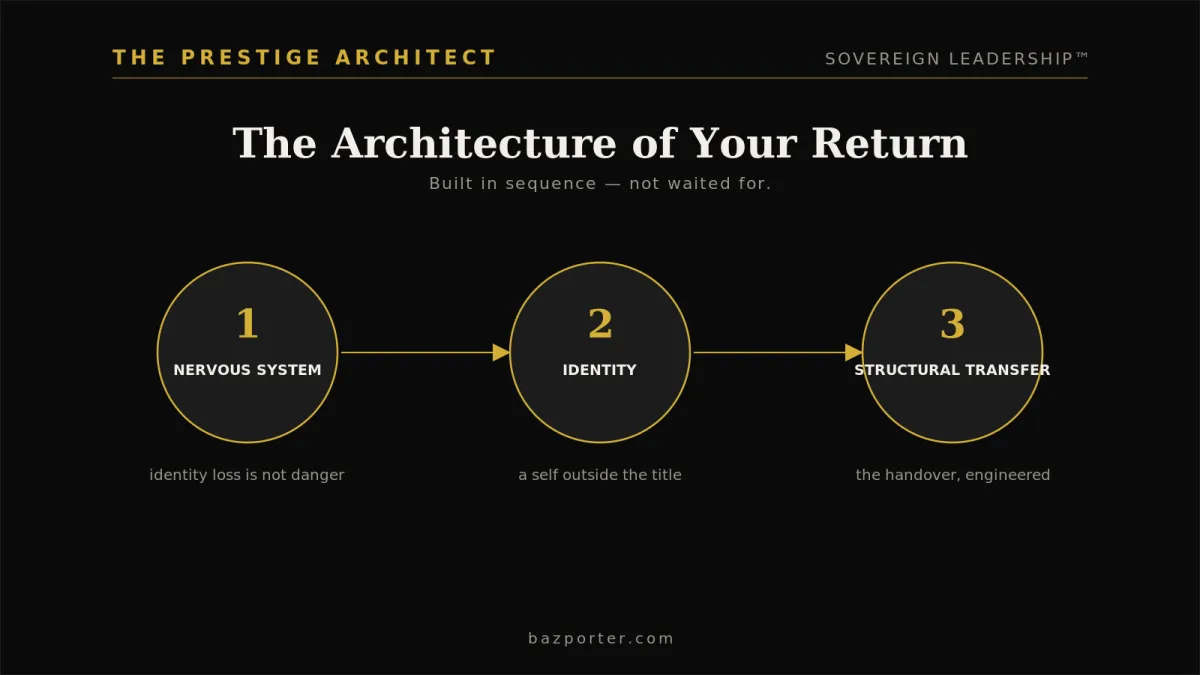
The architecture of your return
Your voice did not fail. Your setup did. And a setup is something you can rebuild. The research is clear that voice gets acted on through relational ground, not raw volume. Grant, in the Academy of Management Journal in 2013, showed that the leaders whose input lands are the ones who manage the room around the message, not just the message. You have the message. Now build the room.
This is the heart of the return. You stop treating backing as something you deserve and wait for. You start treating it as something you build, two lines at a time, before every meeting that matters. The free Fast Future Freedom Blueprint™ maps exactly where your voice is going unsupported and the first move to rebuild it. Start the Blueprint here.
Questions leaders ask
What is the difference between being heard and being backed?
Being heard means people register your words and acknowledge them. Being backed means someone acts, seconds you, or moves a decision because of what you said. Heard is attention. Backed is weight. Most quiet leaders have plenty of the first and almost none of the second, which is why they feel invisible even when people are listening.
How do I get backing without looking like I need approval?
You frame it as alignment, not permission. A quick note to a peer saying here is what I am raising, back me if you agree is a leader coordinating a position. It reads as strength, not insecurity. Seasoned operators do this constantly. The ones who seem to win rooms alone are almost always better connected, not braver.
What if no one in the room agrees with me?
Then the pre-meeting conversation is even more important, because it tells you that in private, before the point dies in public. If you cannot find a single backer beforehand, the issue is not your delivery. It is either the position needs reshaping or the room is the wrong one. Either way, you learn it early instead of in front of everyone.
Is lining up support before a meeting manipulative?
No. You are not trading favors or hiding your view. You are making sure a position you genuinely hold does not stand alone by accident. The stance stays entirely yours. You simply make the support that already exists visible in the room. That is coordination, which is a basic part of how decisions actually get made.
How long before this changes how the room treats me?
Most leaders see a shift inside two to four weeks of doing it before every meeting that matters. The first backed point changes the room's read of you fast. Once people see your input move decisions, they start turning to you earlier. The voice was never the problem. The weight behind it was, and weight builds quickly once you build it on purpose.
Written by Baz Porter®, The Sovereign Leadership Architect. He counsels capable leaders back to the voice that built everything they have.