High-Functioning Depression: The Collapse at the Top No One Sees
You hit every number. You lead the room. You go home and feel nothing. The team sees a leader at full strength. Inside, the signal is flat. This is Silent Collapse™ in its quietest form. High-functioning depression does not stop you from performing. That is exactly why no one catches it. The output stays high while the person behind it goes dark. This is not a character flaw. It is a clinical state hiding behind your results. Read The Manifesto.
Table of Contents
Key Takeaways
High-functioning depression hides behind output. You keep delivering, so no one sees the collapse underneath.
Executives carry it at a higher rate. Roughly 26% of executives report symptoms consistent with clinical depression, against 18% in the general workforce.
Performance is not proof of health. A leader can hit every target and feel nothing. The gap between the two is the marker.
The return is structural, not motivational. You rebuild the nervous system that judgment and feeling run on — you do not push harder.
What High-Functioning Depression Really Is
High-functioning depression is clinical depression that hides behind sustained performance. The leader keeps producing. The internal state goes flat, numb, or quietly hopeless. Because the output never drops, the condition stays invisible to everyone, often including the leader. It is depression, not weakness, and the high function is the disguise.
The Hidden Pattern: Why Success Hides the Collapse
The brain that runs a company is built to perform under load. That same wiring masks depression. Output becomes the cover story. You tell yourself a producing leader cannot be unwell. The numbers agree with you. The body does not.
The data is direct. Researchers at Indiana University used AI voice analysis on earnings calls and found vocal markers consistent with depression across thousands of executive instances (Indiana University, 2024). The signal was there in the voice while the performance held. That is the mechanism of Silent Collapse™: the body keeps performing while the internal operating system runs on empty.
Here is the trap. The success itself becomes the reason no one looks closer. Operational rule: high output is not a clean bill of health. Clinically, high-functioning depression maps closely to persistent depressive states — the low-grade, long-running version that never fully lifts (National Institute of Mental Health). The Sovereign Leadership Resource Hub holds the deeper map — Sovereign Leadership Resource Hub.
High-functioning depression is not the absence of success. It is success with the lights off inside.
The RAMS Reframe: Rebuilding the Leader Underneath
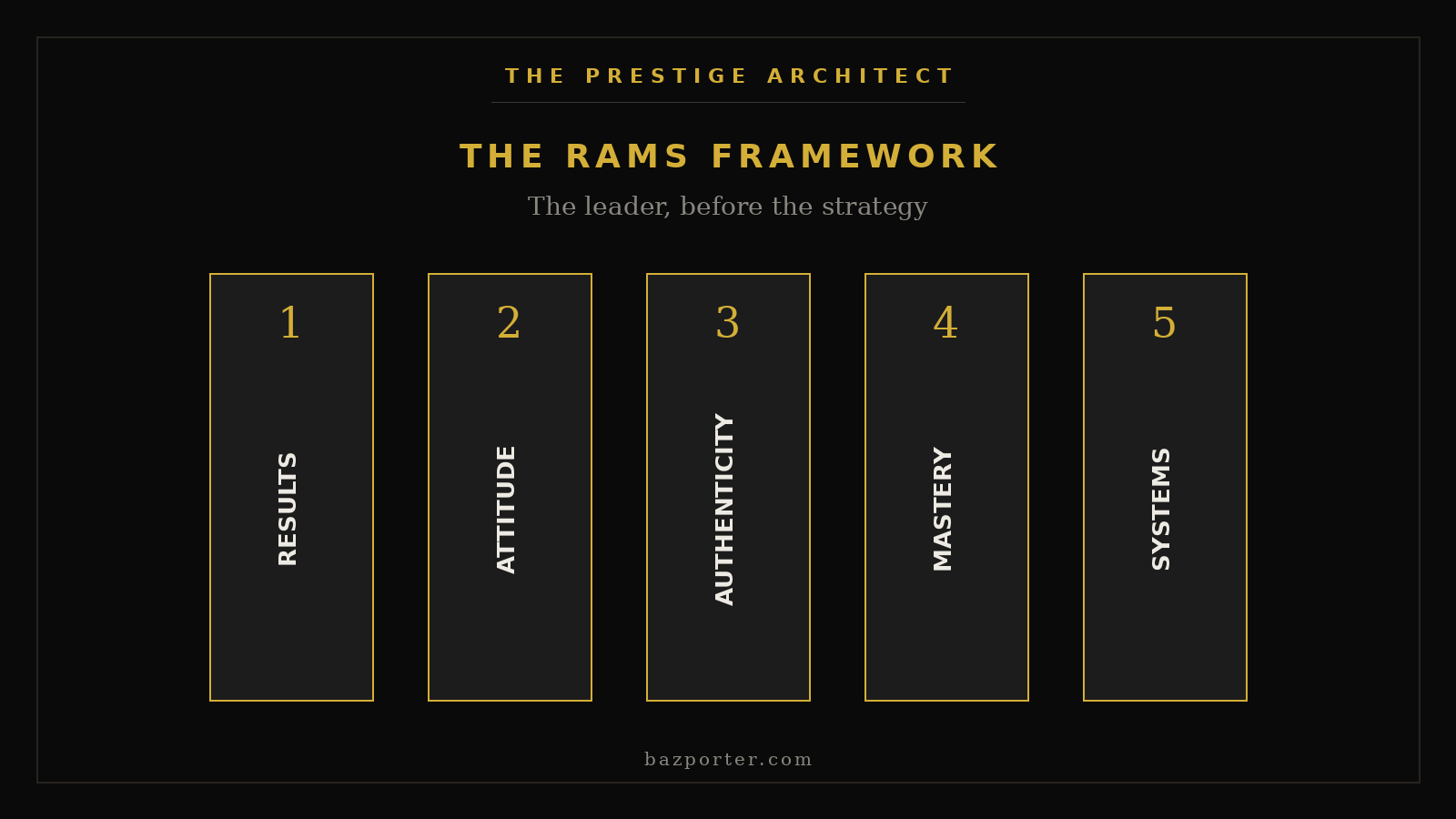
The RAMS Framework™ rebuilds the leader before the strategy. It runs on five pillars — Results, Attitude, Authenticity, Mastery, Systems. High-functioning depression touches every one. Here is how Sovereign Leadership™ answers it.
Results: The Output and Identity Gap
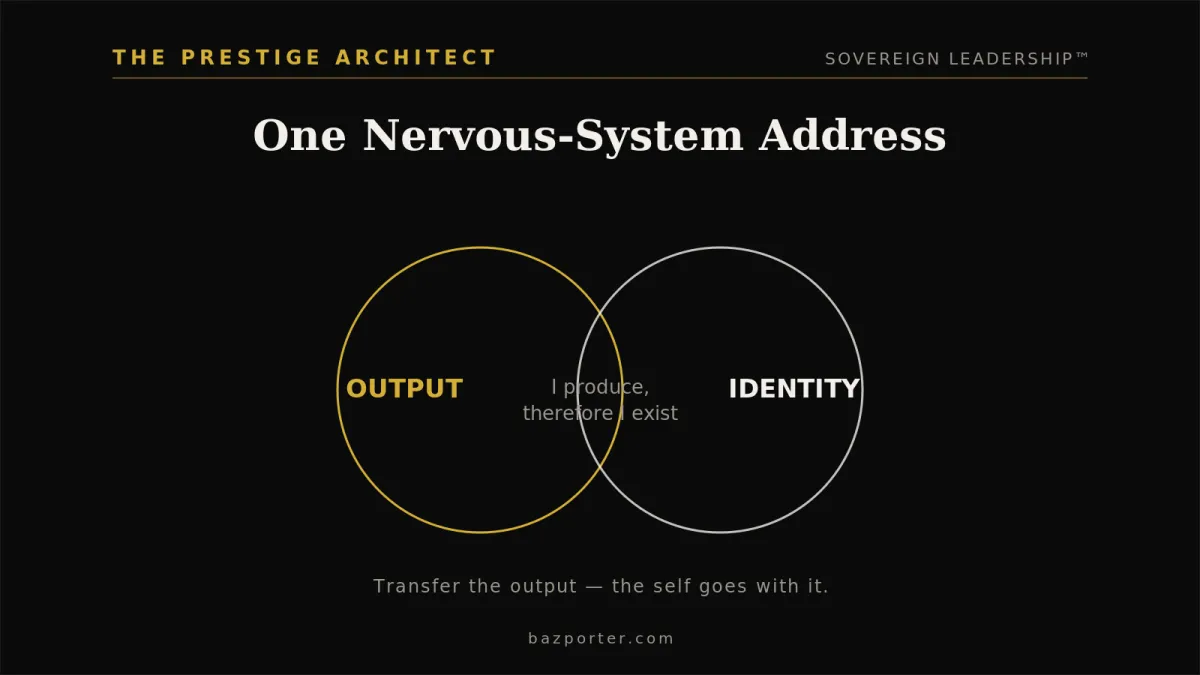
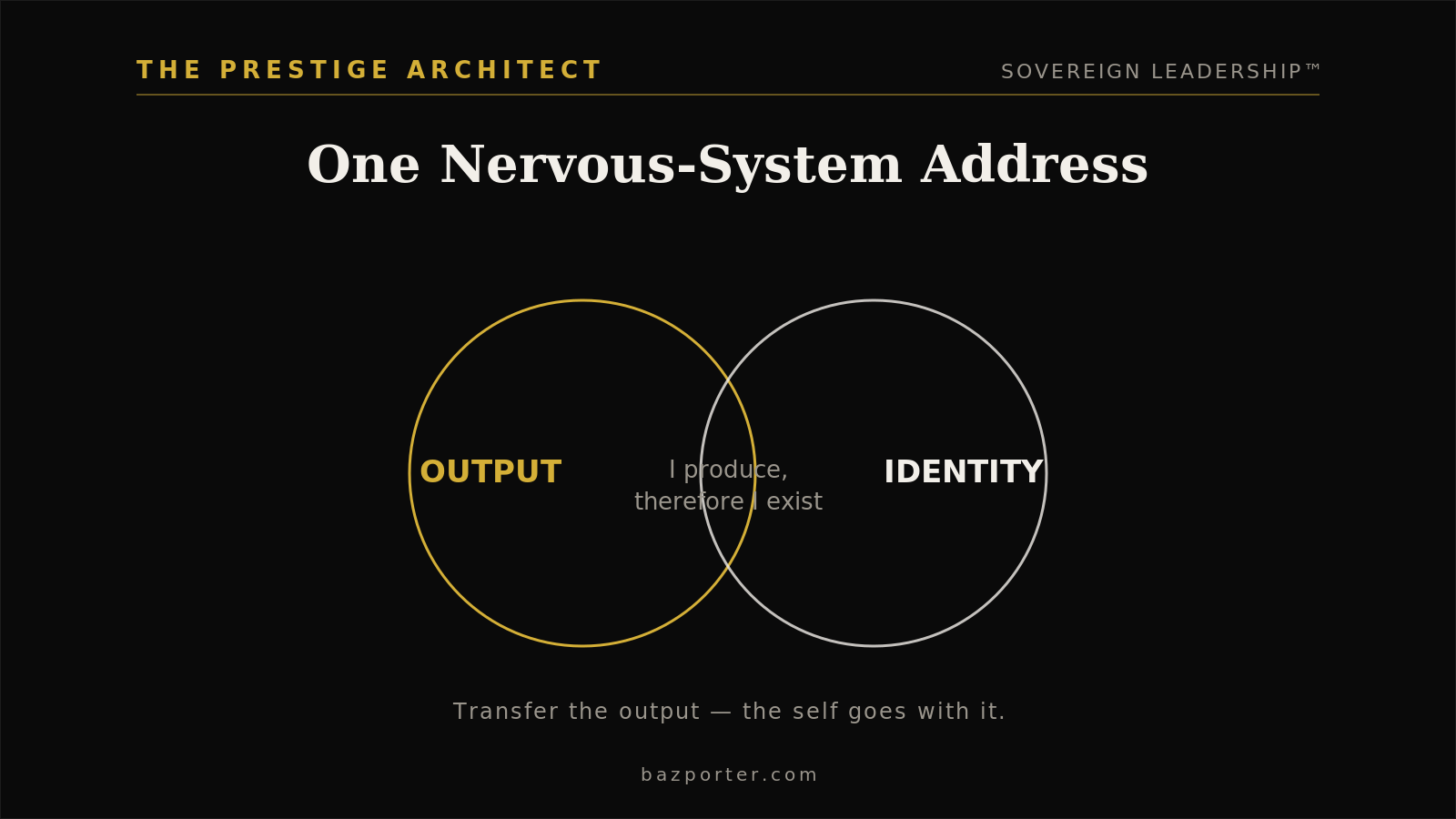
You measure your worth in output. So when the feeling goes flat, you produce more to fill the void. The gap widens. You achieve more and feel less. Command decision: stop using output as proof you are well. They are two different instruments.
Attitude: Where the Collapse Lives
Attitude is the internal operating system. This is where the collapse takes root. The depressed high-performer runs one quiet belief: "If I stop, everything falls apart." That belief keeps you producing through the numbness instead of treating it. The work is to separate your output from your survival.
Authenticity: The Private and Public Divide
In public you are composed and capable. In private the lights are off. That divide is the engine of Silent Collapse™. The wider the gap between the performed self and the lived reality, the deeper the depression sets. Closing it is not exposure. It is alignment.
Mastery: Naming It Is a Skill
Mastery here is not pushing through. Mastery is the capacity to name the state accurately and act on it. Most leaders have never built that skill, because naming it felt like admitting failure. It is the opposite. The leaders who recover are the ones who learn to read their own signal early.
Name the flatness. Numbness is data, not a mood to outrun.
Separate it from your worth. The condition is not a verdict on the person.
Get clinical support. High-functioning depression responds to real treatment, not willpower.
Systems: The Architecture of the Return
Systems is the pillar that holds the recovery. You do not return on motivation. You return on architecture — a regulated nervous system, support that is scheduled not improvised, and a structure that no longer demands you perform through the dark to stay safe.
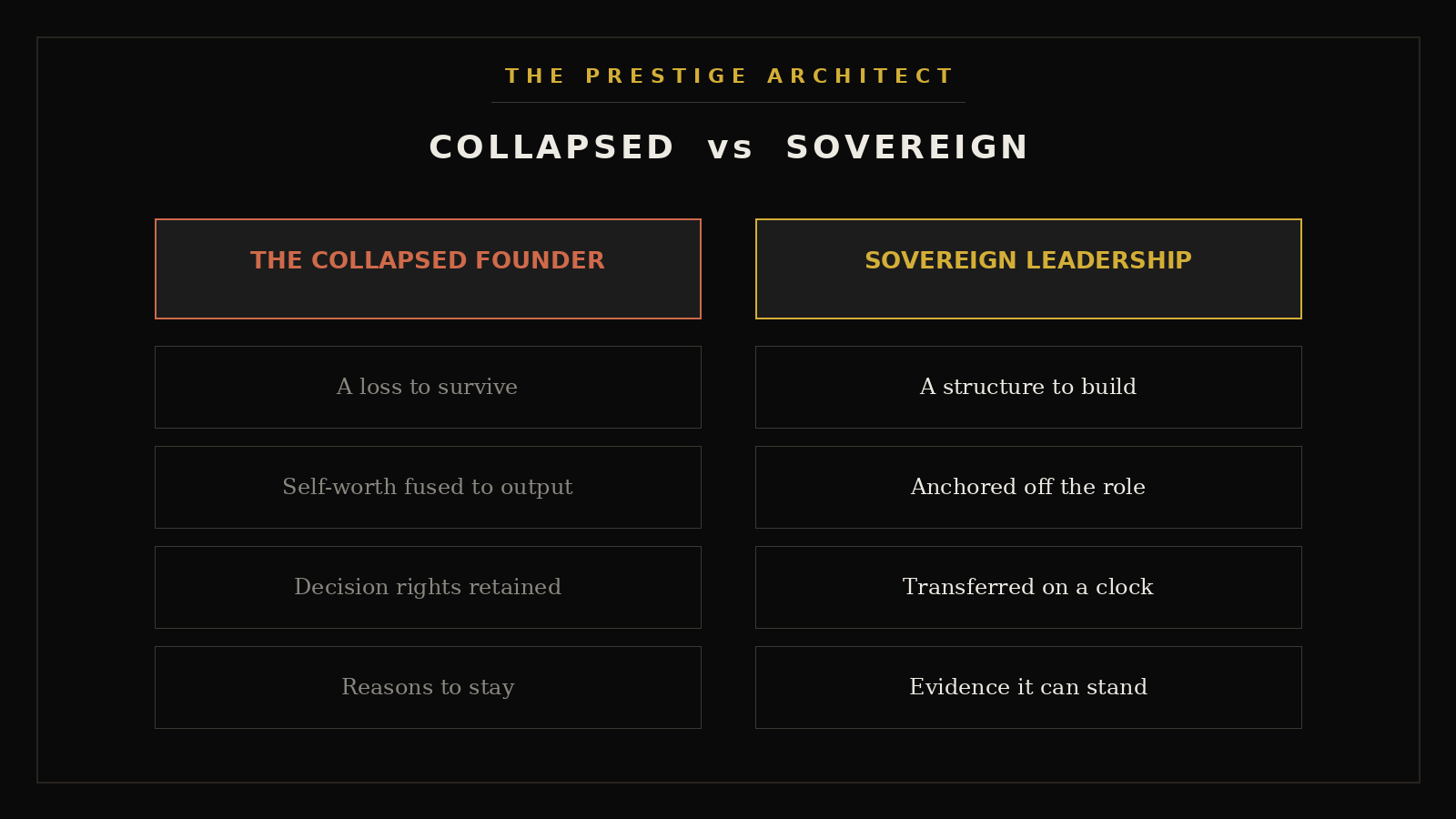
The Collapsed Leader vs Sovereign Leadership™
Output hides the condition → Sovereign: output and health read separately.
Numbness pushed through → Sovereign: numbness named and treated.
Composed in public, dark in private → Sovereign: the divide is closed.
Survives on performance → Sovereign: returns on architecture.
If you recognize yourself in the left column, name it before you fix it. Take the Silent Collapse Diagnostic.
Case Vignette: The Founder Who Looked Fine
One founder closed the best quarter in the firm's history and felt nothing. To the board, a leader at the top of their game. In private, flat for months. We did not add motivation. We rebuilt the architecture. Real clinical support, scheduled. A weekly structure that separated his worth from the revenue. Time where he was not performing for anyone. The numbness lifted in stages. The output held the whole way.
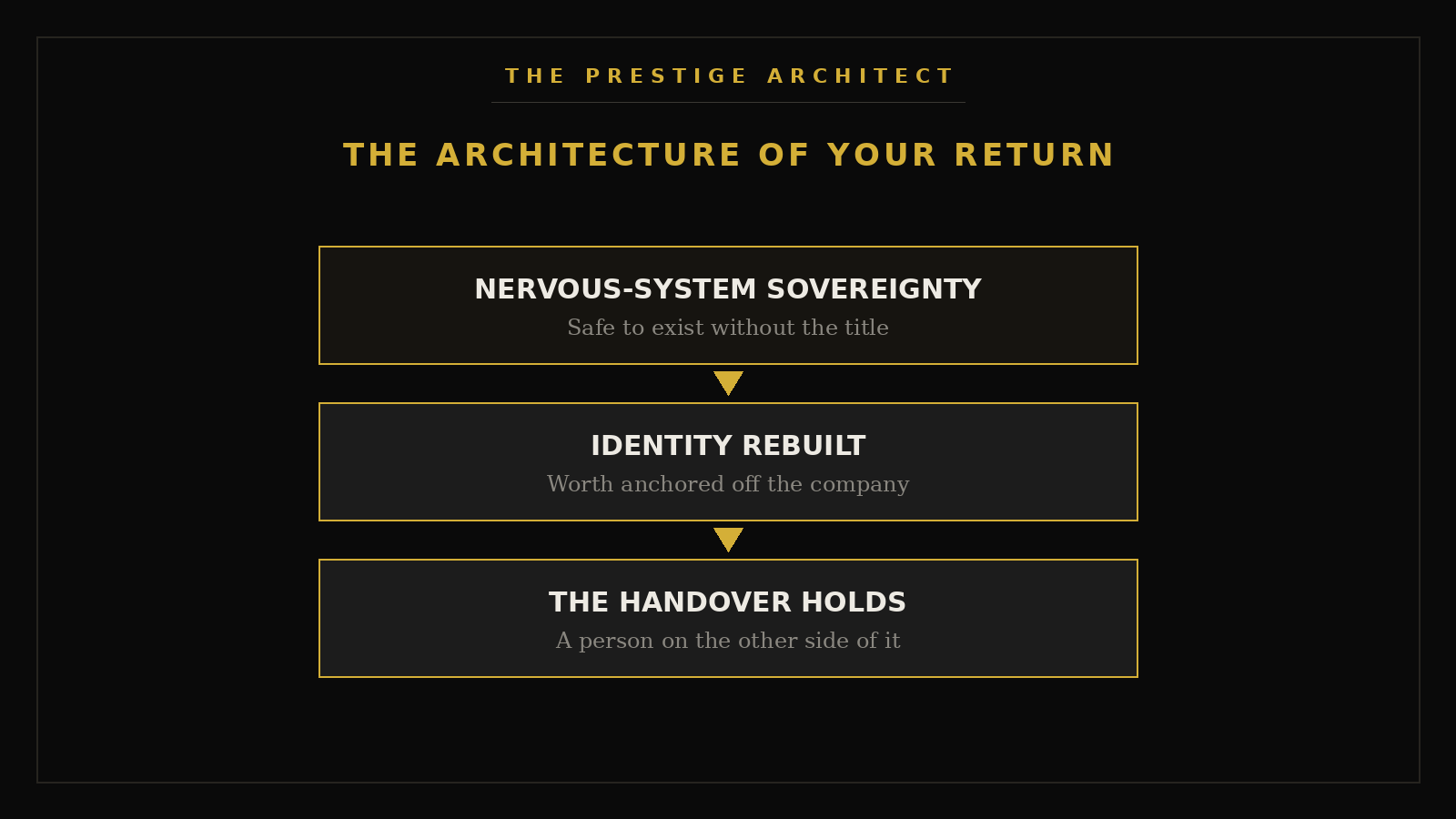
The Architecture of Your Return
High-functioning depression does not end with a better morning routine. It ends when the system around you stops requiring you to perform through the dark to feel safe. That is nervous-system sovereignty — a body that is regulated, supported, and no longer running on residue. You rebuild it the way you build anything that lasts: structurally, deliberately, from the inside out. The return is not inspiration. It is architecture. Apply to Work With Baz.
Frequently Asked Questions
Can you be depressed and still perform at a high level?
Yes. That is the defining feature of high-functioning depression. The output stays high while the internal state goes flat or numb. The performance is real, and so is the depression. One does not cancel the other.
Why do executives carry depression at a higher rate?
The role concentrates isolation, pressure, and constant high-stakes judgment. Around a quarter of executives report symptoms consistent with clinical depression. The stigma at the top then keeps most of them from naming it.
How is high-functioning depression different from burnout?
Burnout is exhaustion from sustained load. High-functioning depression is a clinical mood state that persists even when the load eases. They overlap, but depression does not lift with a vacation. It needs real treatment.
How do I know if my numbness is Silent Collapse?
When you keep performing at full output while feeling nothing inside, the numbness has moved into Silent Collapse™. The external results stay high. The internal signal goes flat. That gap is the marker, and it is worth taking seriously.
About the Author
British military veteran. Two-time international bestselling author. Founder, The Prestige Architect®. Host, Rise From The Ashes podcast, C-Suite Network. Boulder, Colorado.