
High-Functioning Depression in Executives: The Collapse No One Sees
You run the company. You hit the number. You look fine on the call.
Then the call ends, and you feel nothing.
This is high-functioning depression in executives, and it does not present the way people expect depression to present. There is no visible breakdown. There is a leader who performs at the top while something inside goes quiet. This is the early architecture of Silent Collapse™ — the private erosion under a public win. You are not weak. You are running on a system that was never built to hold you. Read The Manifesto.
Table of Contents
Key Takeaways
High-functioning depression in executives hides inside performance. The work stays sharp while the person goes flat.
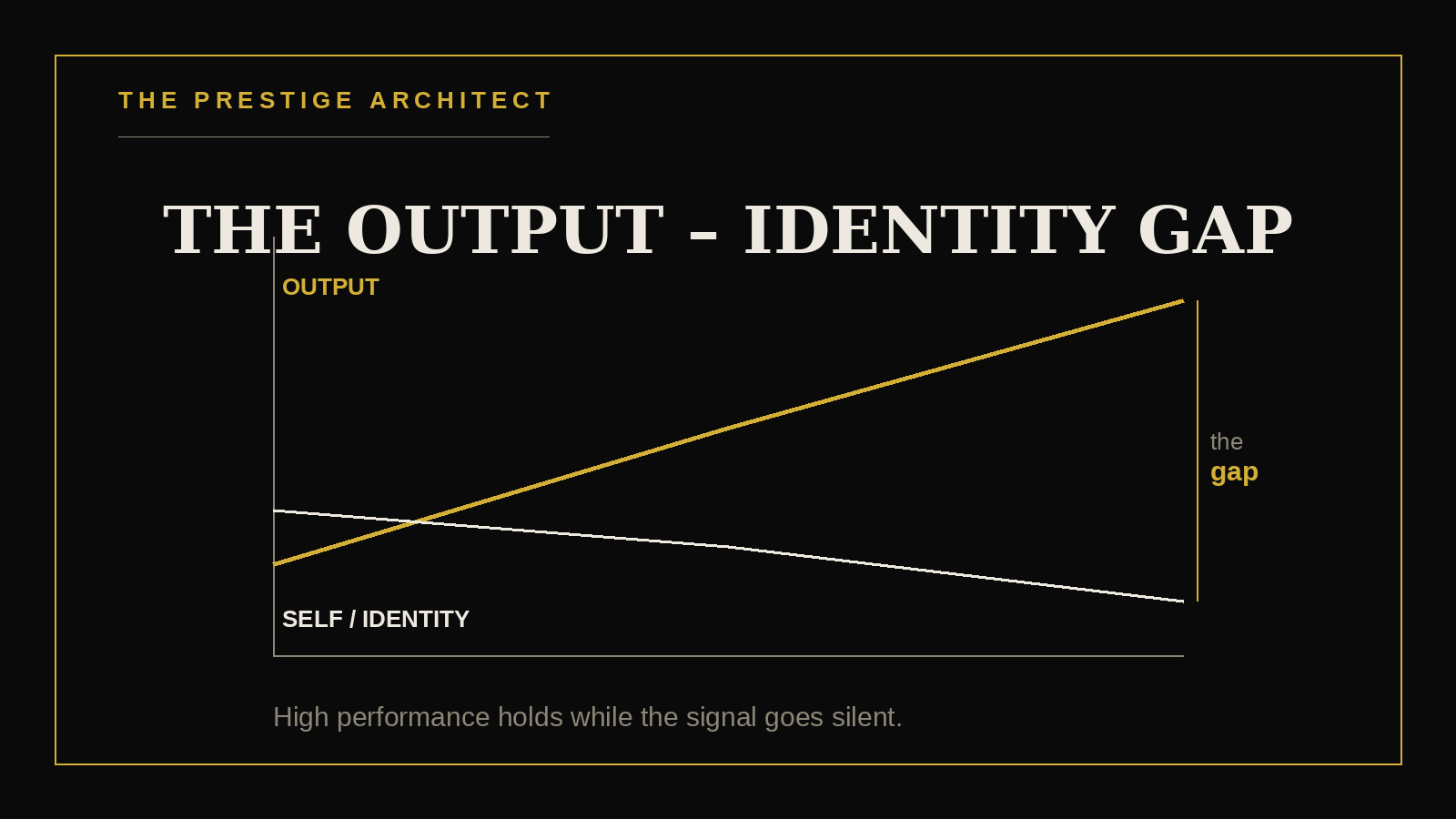
The gap is between output and identity — not effort. You keep producing. You stop feeling the point of it.
This is a nervous-system state, not a character flaw. The body is regulating, not failing.
The exit is structural. You rebuild the architecture beneath the performance, through the five pillars of the RAMS Framework™.
The Definitive Answer
High-functioning depression in executives is a persistent low mood and loss of meaning that hides behind sustained professional output. The leader keeps delivering. The internal signal — pleasure, purpose, connection — goes dark. Because performance holds, the condition stays undiagnosed. It is the clinical face of Silent Collapse™: success on the outside, erosion on the inside.
The Hidden Pattern Under the Performance
Depression at the top is more common than the boardroom admits. Research in the Journal of Occupational Health Psychology found that roughly 26% of executives report symptoms consistent with clinical depression, against 18% in the general workforce. The people with the most control report the most private darkness.
There is a reason. High performers build one dominant neural loop: threat detection and output. The brain learns that safety comes from producing. So it keeps you producing — even as it dials down the reward circuitry that once made the work feel like anything. Picture a generator wired to run the whole building. It powers every room. It has nothing left to light itself.
This is Silent Collapse™. Not exhaustion. A quiet reallocation of the nervous system toward survival and away from meaning. A McLean Hospital analysis of executive mental health describes the same pattern: leaders conceal symptoms to protect a reputation for strength, and the concealment deepens the harm.
Why the Symptom Stays Invisible
The isolation is structural. A Harvard Business Review report on chief executives found that roughly half report feelings of loneliness, and most of those believe it degrades their performance. The higher you climb, the fewer rooms exist where you can be unwell. So you perform wellness too. If you recognise the pattern, name it before you manage it — the Sovereign Leadership Resource Hub exists for exactly this recognition.
Depression at the top is not a weakness in the leader. It is a design flaw in the system the leader is running on.
The RAMS™ Reframe: Diagnose the Leader, Not the Mood
Most advice treats the symptom. Rest more. Delegate. Take the holiday. That addresses fatigue. High-functioning depression is not fatigue. It is an architecture problem in the leader beneath the strategy.
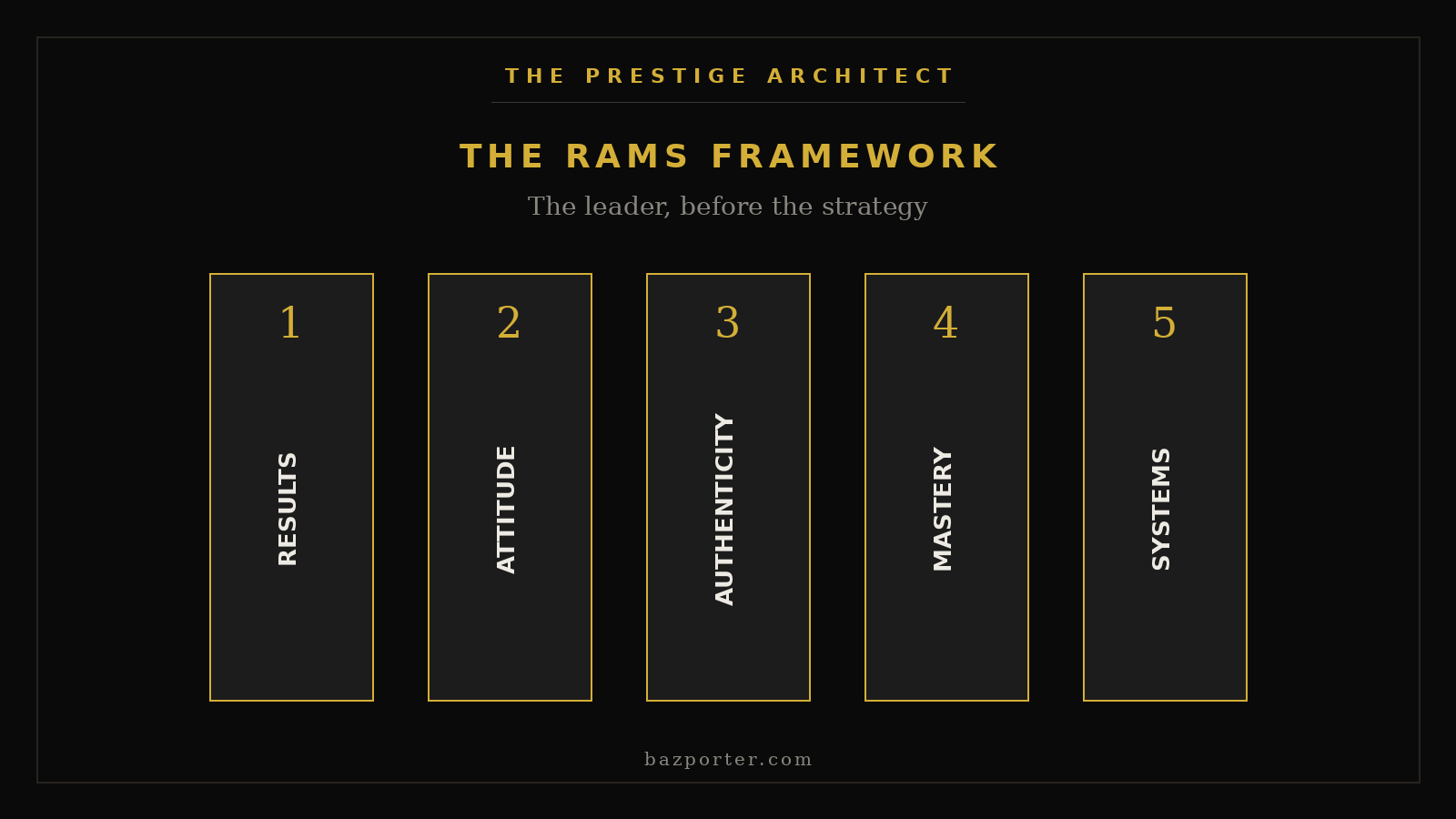
RAMS™ — Results · Attitude · Authenticity · Mastery · Systems — diagnoses the whole system, nervous system and business at once. Here is the reframe, pillar by pillar.
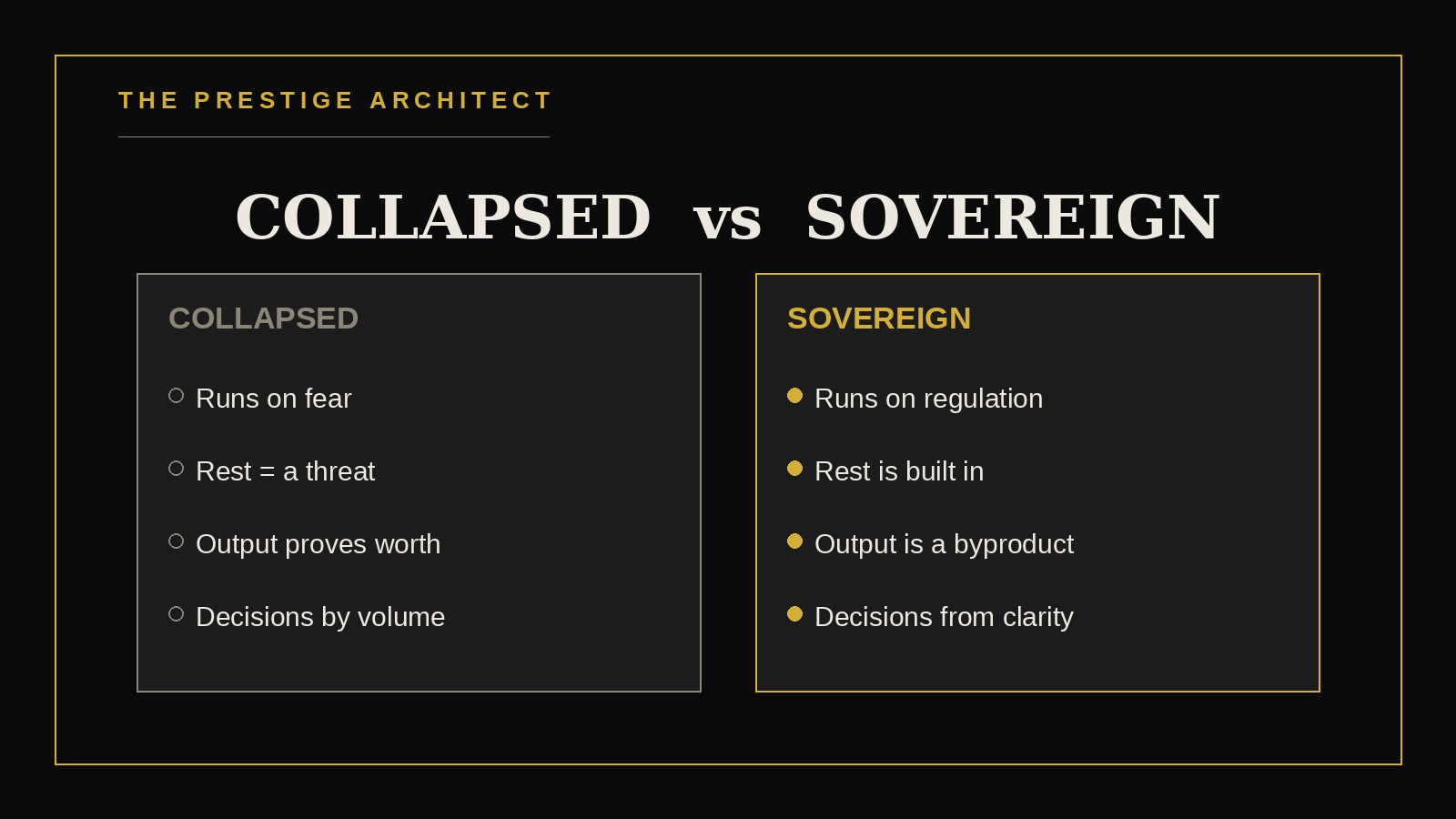
Collapsed vs Sovereign Leadership™ — across the five pillars:
Results. Collapsed: output proves worth. Sovereign: output expresses worth already held.
Attitude. Collapsed: manage the mood, hide the state. Sovereign: read the state, regulate the source.
Authenticity. Collapsed: perform the self that wins. Sovereign: close the gap between private and public.
Mastery. Collapsed: more skill, more volume. Sovereign: capability with a nervous system that holds.
Systems. Collapsed: willpower runs the machine. Sovereign: architecture runs the machine.
Results — The Output-Identity Gap
The number went up. The feeling went down. That is the tell.
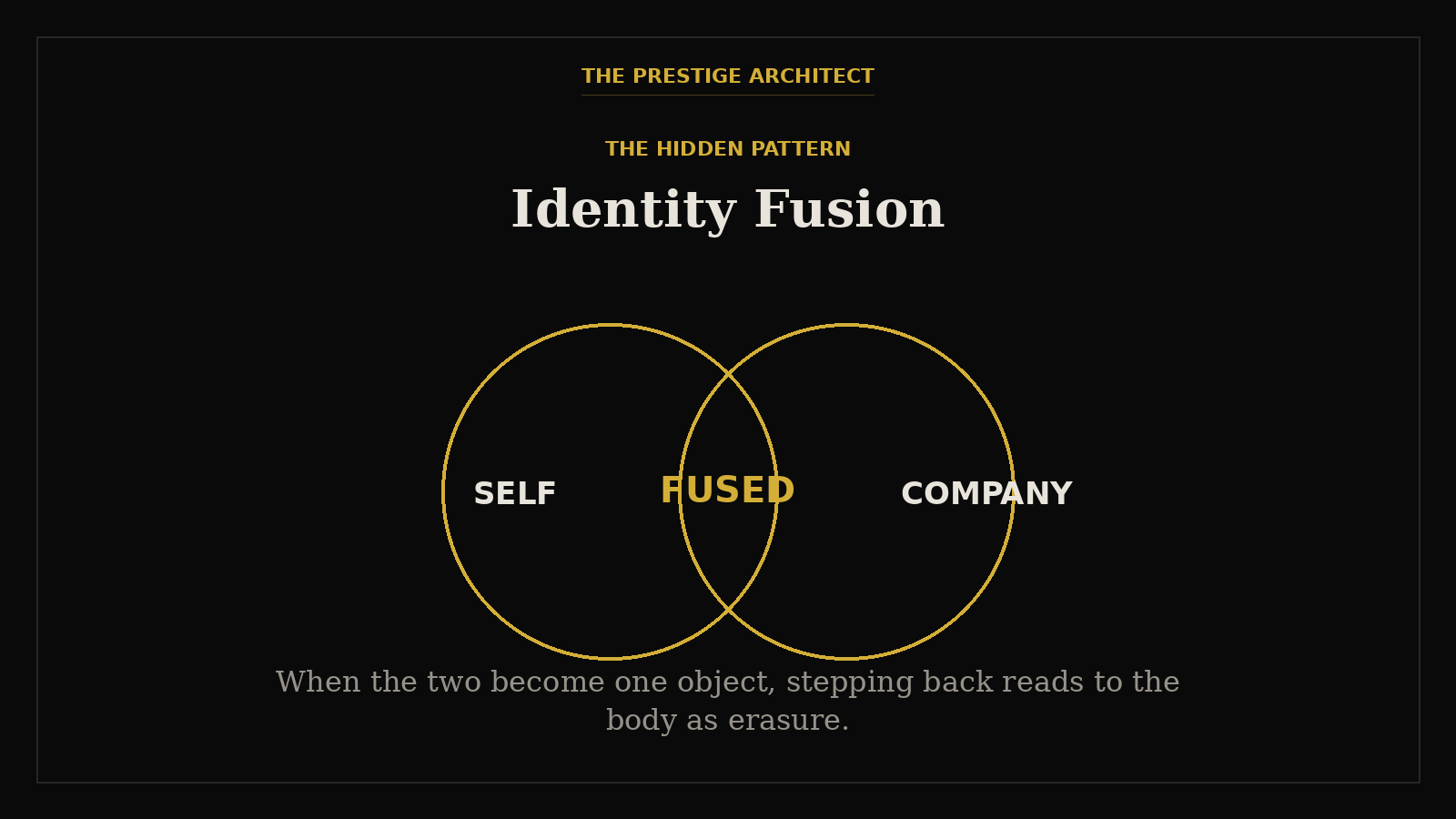
The mechanism: you fused identity to output years ago. Now the output arrives and the identity feels nothing, because it was never yours to begin with.
The cost: each win raises the bar and shortens the relief.
Operational rule: when the result lands and the feeling does not, stop treating it as a motivation problem. It is a wiring problem.
Attitude — Where the Collapse Lives
Attitude is not positivity. It is your internal operating system — the state you run before a single decision is made.
Collapsed leaders manage the mood. They push the face into place for the meeting.
Sovereign leaders regulate the source. They read the nervous-system state and work upstream of it.
Command decision: you do not think your way out of a dysregulated state. You regulate first, then decide.
Authenticity — The Private/Public Divide
The distance between who you are on the call and who you are after it is the exact size of the collapse. That divide is the engine of Silent Collapse™. Every day spent performing a self you do not feel widens it.
Mastery — Skill Is Not Sovereignty
You are already excellent. More competence will not touch this. Mastery here means sovereign capability — skill running on a nervous system that can hold the weight of it. A McKinsey analysis of leadership and well-being is blunt on the link between leader health and organisational outcomes: the state of the leader sets the ceiling for the system.
Systems — The Architecture of the Return
Willpower is the most expensive fuel you own. High-functioning depression is often a willpower engine that has run past its limit while the architecture stayed empty. The return is built, not felt into being.
If the pattern is yours, get the read before you build. Take the Silent Collapse Diagnostic.
A Case: The Founder Who Felt Nothing
A founder closed the largest deal of the company's life. Eight figures. She told me she sat in the car afterward and felt "administratively pleased and personally empty." Nothing was wrong on paper. Everything was wrong underneath.
We did not add rest. We rebuilt the architecture. We separated her identity from her output. We installed a regulation practice ahead of decisions, not after them. We closed the private/public divide one honest room at a time. The mood did not lift because she tried harder. It returned because the system underneath it changed. Within a quarter she reported feeling the wins again — not as proof, as experience.
The Architecture of Your Return
The return is not a mood. It is nervous-system sovereignty — a body that can hold success without going dark to survive it.
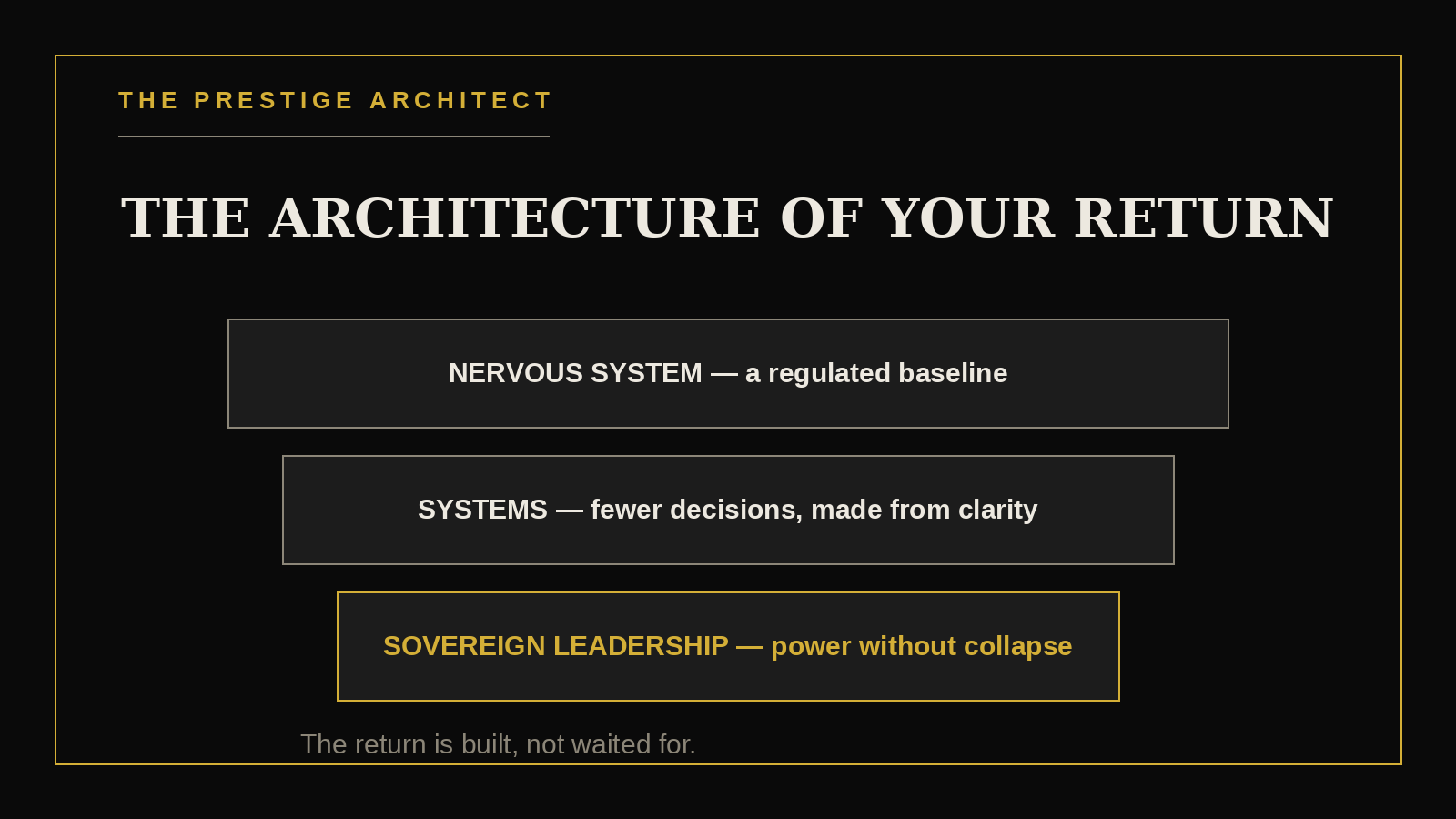
It is built in order. Read the state before you manage it. Separate identity from output. Regulate upstream of decisions. Close the gap between the performed self and the lived one. Replace willpower with architecture. That sequence is the RAMS Framework™, and it is the work of The Prestige Architect® — the rebuild of the identity infrastructure beneath high performance.
You do not need more strength. You need a system that stops asking you to disappear to keep winning. When you are ready to build it, Apply to Work With Baz.
Frequently Asked Questions
Can you be successful and clinically depressed at the same time?
Yes. High-functioning depression in executives is defined by exactly that combination — sustained output alongside a persistent loss of meaning and mood. Performance holds, which is why the condition stays hidden. Success is not evidence of internal health. It is often the mask over its absence.
Why do I feel nothing after a big win?
The reward circuitry that once registered the win has been down-regulated by years of threat-and-output living. The nervous system reallocated toward survival. The win still lands as data, not as feeling. This is a signal, not a defect — and it is reversible with a systems-first rebuild.
Is this burnout or something worse?
Burnout is exhaustion tied to a role. High-functioning depression is a loss of meaning that persists even when you rest. If time off restores you, it reads as burnout. If the flatness follows you into the holiday, it is closer to Silent Collapse™, and it needs architecture, not a break.
Do I need to step down or reduce my ambition to recover?
No. The goal is not less ambition. It is a nervous system that can carry the ambition without going dark. Sovereign Leadership™ is power that does not cost you yourself. You rebuild the architecture, then keep the standard.
British military veteran. Two-time international bestselling author. Founder, The Prestige Architect®. Host, Rise From The Ashes podcast, C-Suite Network. Boulder, Colorado.