High-Functioning Depression: When Success Feels Like Nothing
You hit every target this quarter. The board is satisfied. The bonus cleared. And you feel nothing. Not sad. Not proud. Just a flat, humming absence where the win should be. This is the first marker of Silent Collapse™ — the state where the outside reads success and the inside reads empty. It is not weakness. It is a nervous system that has been overridden for years. Before you read further, Read The Manifesto.
Table of Contents
Key Takeaways
Emptiness is a signal, not a flaw. High-functioning depression often reads as numbness, not sadness.
Function is not the same as health. You keep performing while the reward system goes quiet.
The cause is architectural. Years of overriding your own state dulls the nervous system that registers meaning.
The return is built, not felt. Sovereign Leadership™ rebuilds the internal system, then the feeling comes back online.
The Short Answer
High-functioning depression in executives is a state of sustained output paired with emotional absence. You meet every demand and register almost none of the reward. Clinicians link this numbness to chronic stress dulling the brain's reward pathways. The exit is not more effort. It is rebuilding the internal architecture that lets meaning register again.
The Hidden Pattern Behind the Numbness
Most leaders expect depression to feel like grief. It rarely does at the top. It feels like flatness. A quiet nothing where excitement used to live. The Cleveland Clinic describes this as functioning on the outside while feeling empty on the inside. The function is exactly what hides it.
Here is the mechanism. Chronic stress reshapes the reward system. Research published in Nature maps how sustained stress drives anhedonia — the loss of pleasure and drive — at the level of neural circuitry. Your body did not fail. It adapted. It learned to run on threat, and threat does not reward. It only survives.
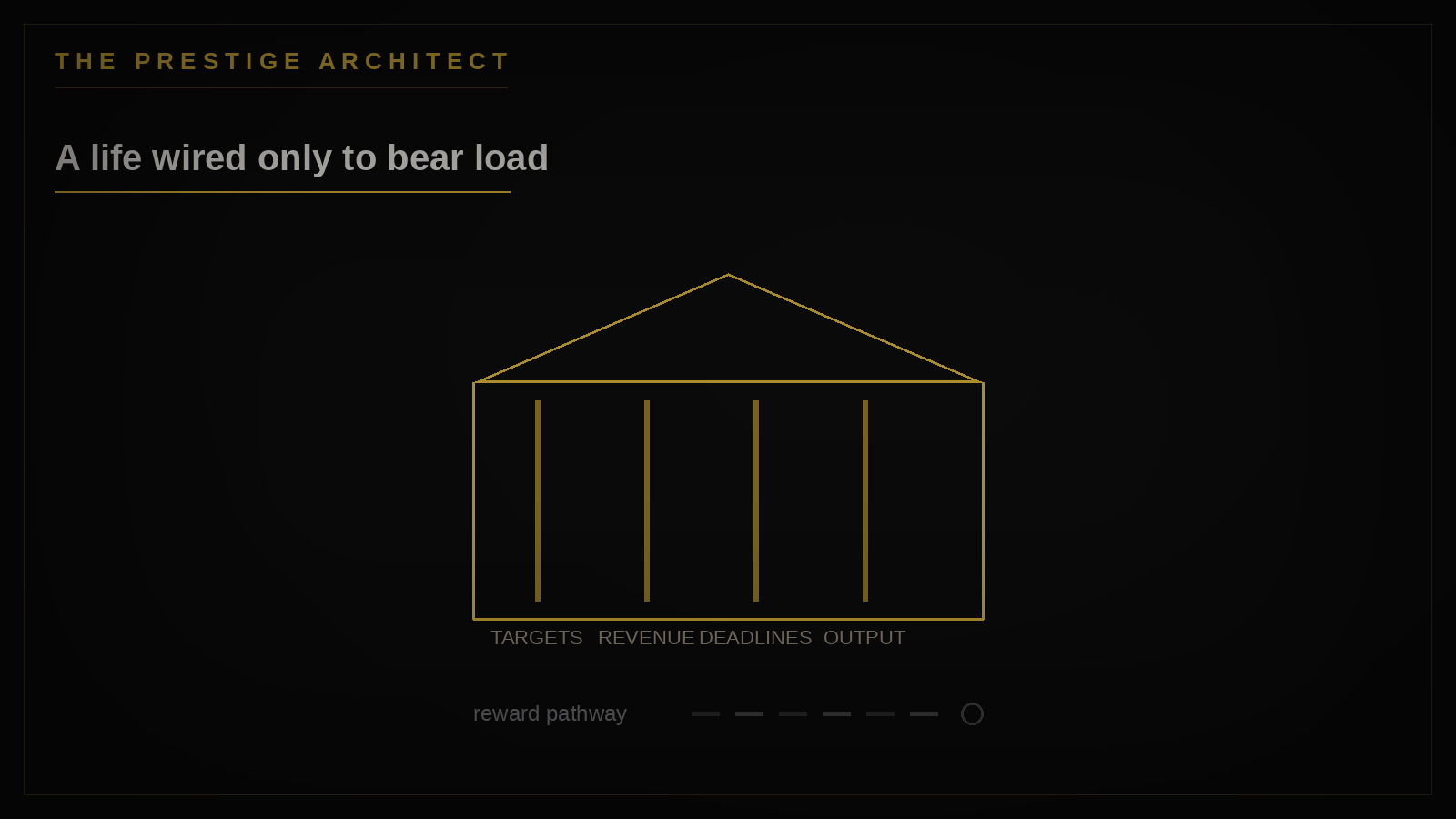
Think of a house wired for one thing: load-bearing. Every beam holds weight. None of it is built for warmth. You can live in that house for a decade and call it success. This is Silent Collapse™ — the slow structural cost of a life engineered for output and nothing else. The numbness is not the problem. The numbness is the smoke alarm.
High-functioning depression is not sadness. It is the sound a nervous system makes when it has been overridden for years.
Naming it changes what you do next. You stop treating the emptiness as a character defect. You start reading it as data. For the full framework behind this read, see the Sovereign Leadership Resource Hub.
The RAMS Reframe: Five Pillars of Return
The RAMS Framework™ rebuilds the leader before the strategy. Five pillars: Results, Attitude, Authenticity, Mastery, Systems. It operates on the nervous system and the business at once, because they run on the same wiring. When one is dysregulated, both are compromised.
Results — Output vs Identity
You measure results by output. The numbness lives in the gap between what you produce and who you are. Output is high. Identity is starved. Operational rule: a metric that rises while you go quiet is not a win. It is a warning.
Attitude — Where Collapse Lives
Attitude is the internal operating system — the default state you run before any decision. When that OS is set to threat, every result gets filtered through survival. Command decision: stop managing your mood and start auditing your baseline. The baseline is where the collapse lives.
Authenticity — The Private/Public Divide
This is the engine of Silent Collapse™. The performed self is thriving. The lived self is empty. The distance between them is the wound. Every day you hold the divide open, the numbness deepens. Closing it is not exposure. It is repair.
Mastery — Skill vs Sovereign Capability
You have mastered the skill of performing while depleted. That is real capability, and it is the wrong one. Sovereign capability is the ability to register your own state and act from it. Operational rule: a leader who cannot feel cannot steer.
Systems — The Architecture of Return
Feeling does not come back through willpower. It returns through architecture — the systems that regulate your nervous system on purpose. Sleep, load, recovery, and honest reporting are not soft. They are structural. If the emptiness has a name now, name the next step too: Take the Silent Collapse Diagnostic.
The table below shows the shift from collapsed function to sovereign function.
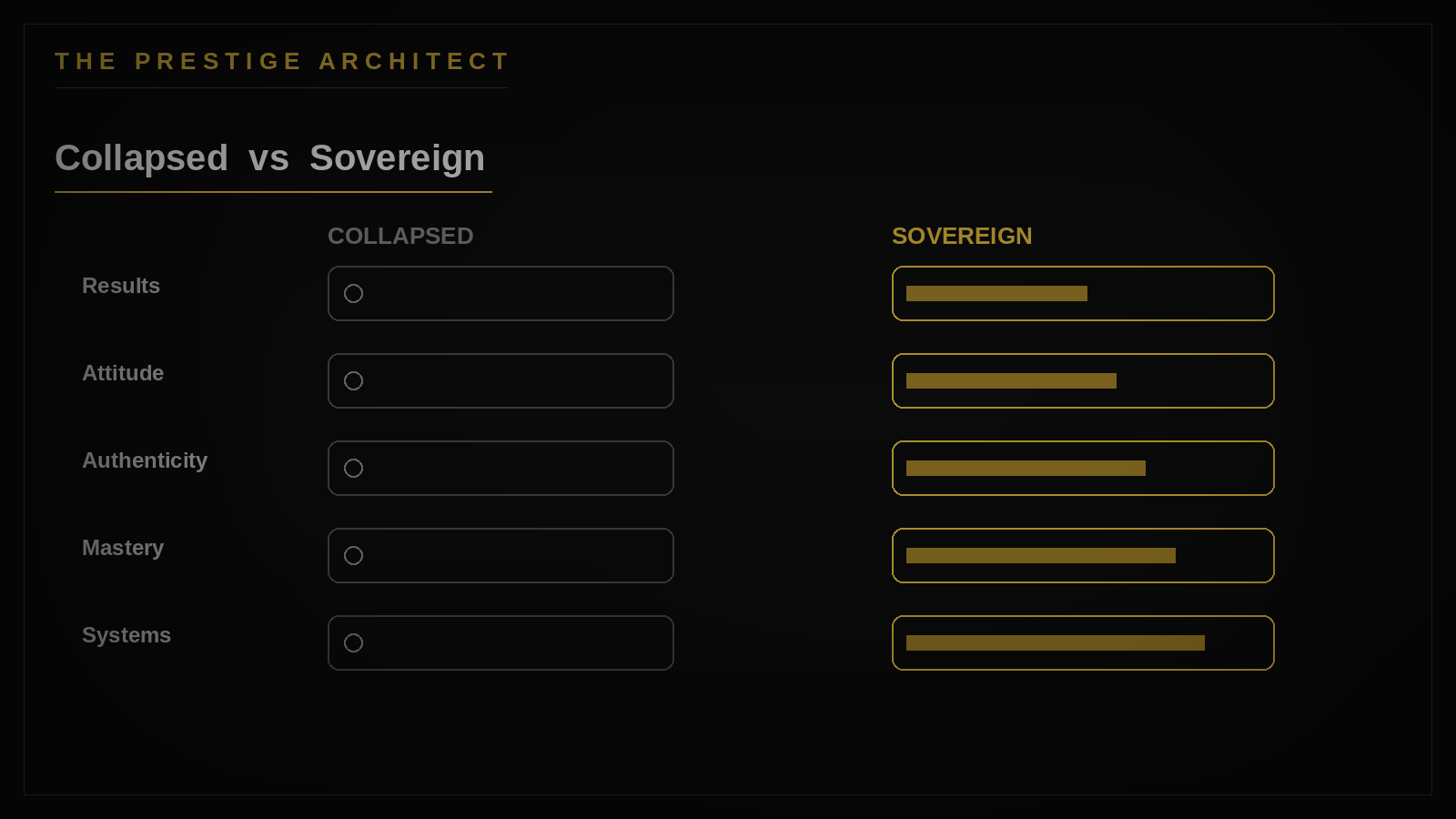
PillarCollapsed StateSovereign Leadership™ ResultsOutput rises, meaning fallsOutput and identity move together AttitudeDefault set to threatDefault set to regulated command AuthenticityPrivate/public divide held openPerformed self and lived self aligned MasterySkilled at performing depletedSkilled at leading from state SystemsLife wired only to bear loadLife wired to recover and register
A Case: The Executive Who Felt Nothing
One founder came in after a record year. Nine figures under management. He described the win in a flat voice, like reading a stranger's résumé. He was not sad. He was absent. We did not start with mindset. We started with his systems.
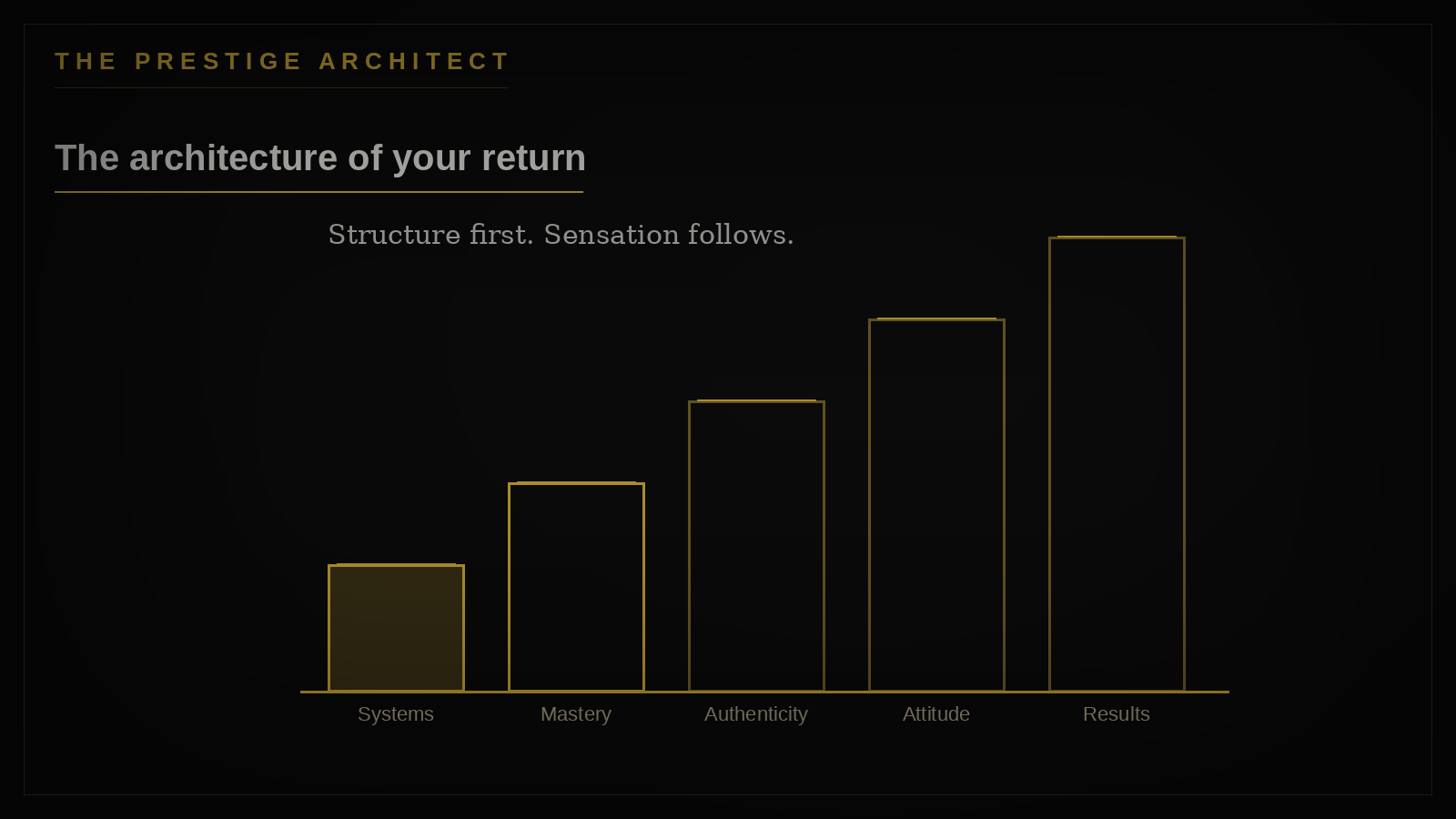
We mapped his load, his sleep debt, and the reporting he hid from his own team. We rebuilt the architecture pillar by pillar. Four months in, he told me he laughed at something small and it landed. The feeling returned after the system did. That is the order. Structure first. Sensation follows.
The Architecture of Your Return
The return is not inspiration. It is nervous-system sovereignty — the capacity to hold your own state under load without going numb to survive it. You do not think your way out of emptiness. You build your way out.
Start with one true audit: where is your baseline set, and what is it costing you? Then rebuild the pillars in sequence, Systems first, so the body has a floor to stand on. The feeling you lost is not gone. It is offline, waiting for the architecture that lets it register again. When you are ready to build it with structure, Apply to Work With Baz.
Frequently Asked Questions
Why do I feel nothing when everything is going well?
Sustained stress dulls the brain's reward pathways. You keep producing, but the system that registers pleasure and meaning goes quiet. The flatness is a physiological adaptation, not a character flaw.
Is high-functioning depression different from burnout?
Burnout is exhaustion from over-demand. High-functioning depression is emotional absence while still performing. They overlap, but the marker here is numbness, not fatigue. Both signal Silent Collapse™.
Can I recover without stepping down from my role?
Yes. The work is architectural, not a retreat. You rebuild the systems that regulate your state while you continue to lead. Most leaders return to full capability without leaving the seat.
Why does willpower not fix the emptiness?
Willpower is more output, and output is what drained the system. Feeling returns through recovery architecture, not effort. You cannot force a depleted nervous system to register reward on command.
What is the first step to take today?
Name the state honestly, then audit your baseline. A structured starting point is the Silent Collapse Diagnostic, which maps where your internal system is carrying hidden cost.
British military veteran. Two-time international bestselling author. Founder, The Prestige Architect®. Host, Rise From The Ashes podcast, C-Suite Network. Boulder, Colorado.