Why Founders Can't Let Go: The Exit Is an Identity Problem
Why Founders Can't Let Go: The Exit Is an Identity Problem
You built the thing. Now the thought of leaving it makes your chest tighten. You tell yourself it is about the numbers, the team, the timing. It is not. This is Silent Collapse™ wearing a succession plan as a costume. The exit you keep postponing is not an org-chart problem. It is an identity problem. And the gap between what you own and who you are is exactly where the dread lives. Read The Manifesto.
Table of Contents
Key Takeaways
The exit is an identity problem, not an org-chart problem. Founders stall because handing over the company feels like handing over the self.
Succession dread is a nervous-system signal. The body reads "leave" as "lose." That is biology, not weakness.
You cannot delegate your way out of an identity you never rebuilt. The fix is architectural, not administrative.
Sovereign Leadership™ separates who you are from what you run. That separation is what makes a clean exit possible.
The Short Answer
Founders can't let go because the company became the container for their identity. When the structure that organized your purpose, status, and daily meaning is removed, the self destabilizes. A 2026 systematic review of entrepreneurial exit names this directly: exit predicts measurable declines in founder well-being, and identity is the mechanism. The work is not a cleaner handover plan. The work is rebuilding the person underneath, so the exit costs you a role and not a self.
The Hidden Pattern: Why Letting Go Feels Like Dying
Most founders frame the exit as logistics. Find the successor. Document the systems. Set the date. Then the date arrives and the body refuses. This is not procrastination. It is a threat response.
Your nervous system spent years fusing two things: the company and you. The brand is your name. The wins are your worth. The calendar is your proof you matter. Researchers writing in Psychology Today describe the post-exit drop as a structural collapse, not a mood. The external scaffolding that held your identity is gone, and nothing was built to replace it.
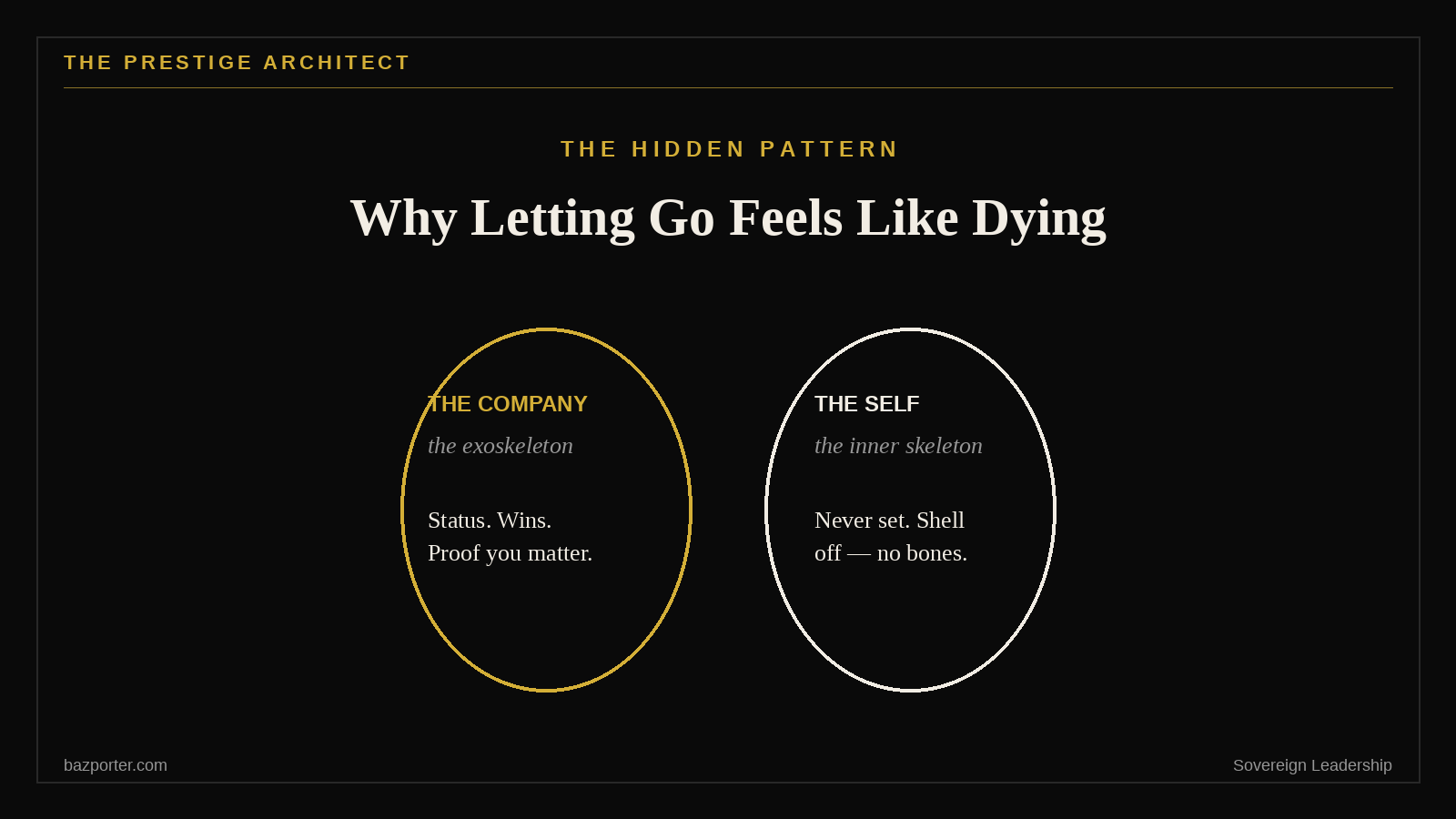
Here is the metaphor I give founders. The company is not your house. It is the exoskeleton you wore because the inner skeleton was never set. Take the shell off and you do not feel free. You feel like you have no bones.
The exit is an identity problem, not an org-chart problem. Founders don't fear retirement. They fear erasure.
This is Silent Collapse™: structural identity failure disguised as high performance. It hides well. From the outside you look decisive and seasoned. Inside, every conversation about stepping back triggers the same quiet alarm. The 2026 review found the same pattern across hundreds of founders — the well-being decline is real, and a strong network softens it but does not solve it. The solve is internal architecture. Visit the Sovereign Leadership Resource Hub for the deeper map.
The RAMS™ Reframe: Rebuild the Architecture Beneath the Exit
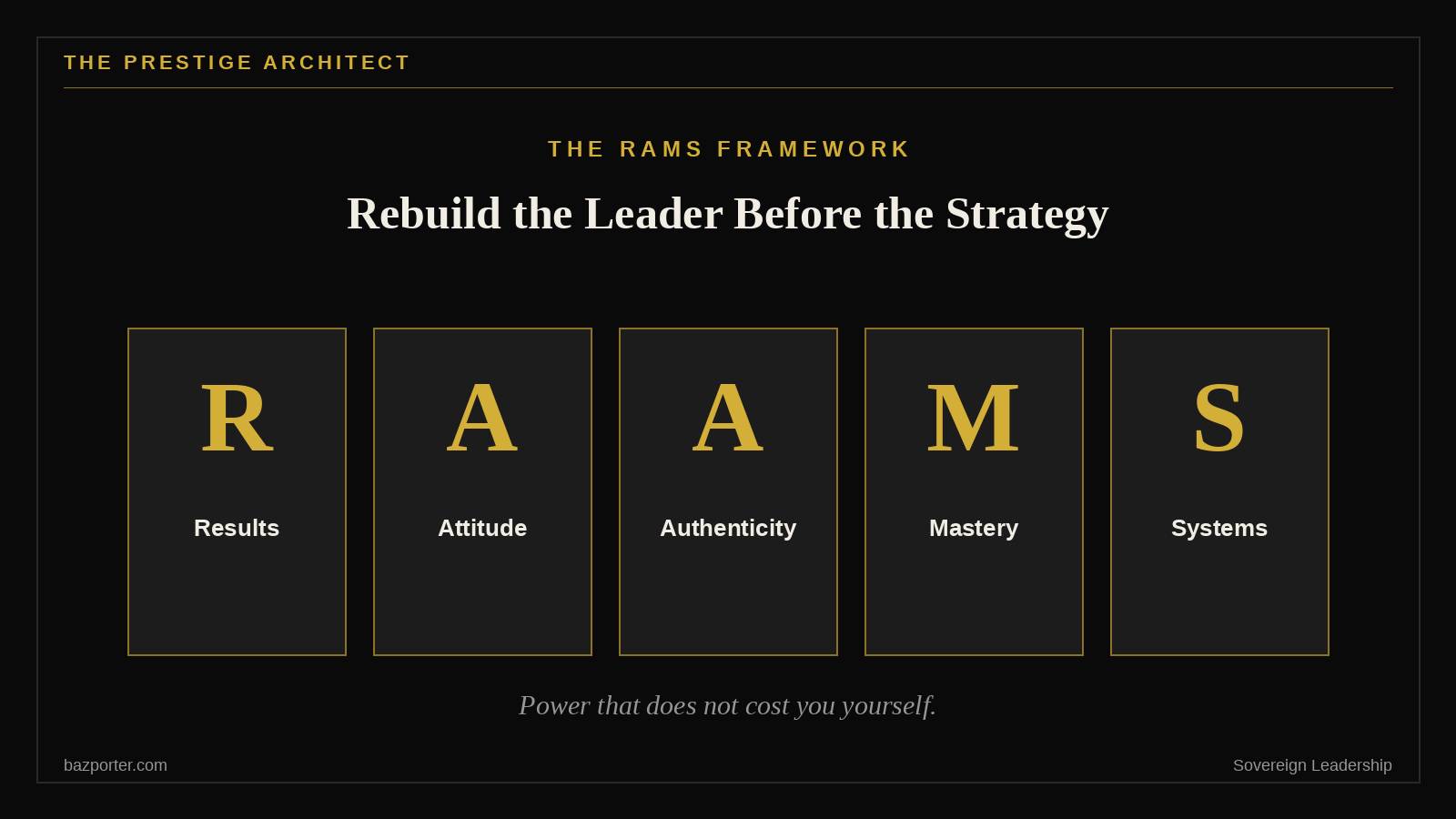
The RAMS Framework™ rebuilds the leader before it touches the strategy. Five pillars: Results, Attitude, Authenticity, Mastery, Systems. Each one names a part of the exit dread and gives it a structural fix. Sovereign Leadership™ is the outcome — power that does not cost you yourself.
Results — The Output-Identity Gap
You measure your worth in output. So when output transfers to a successor, worth seems to transfer too. That is the gap. Your identity is wired to production, not to being.
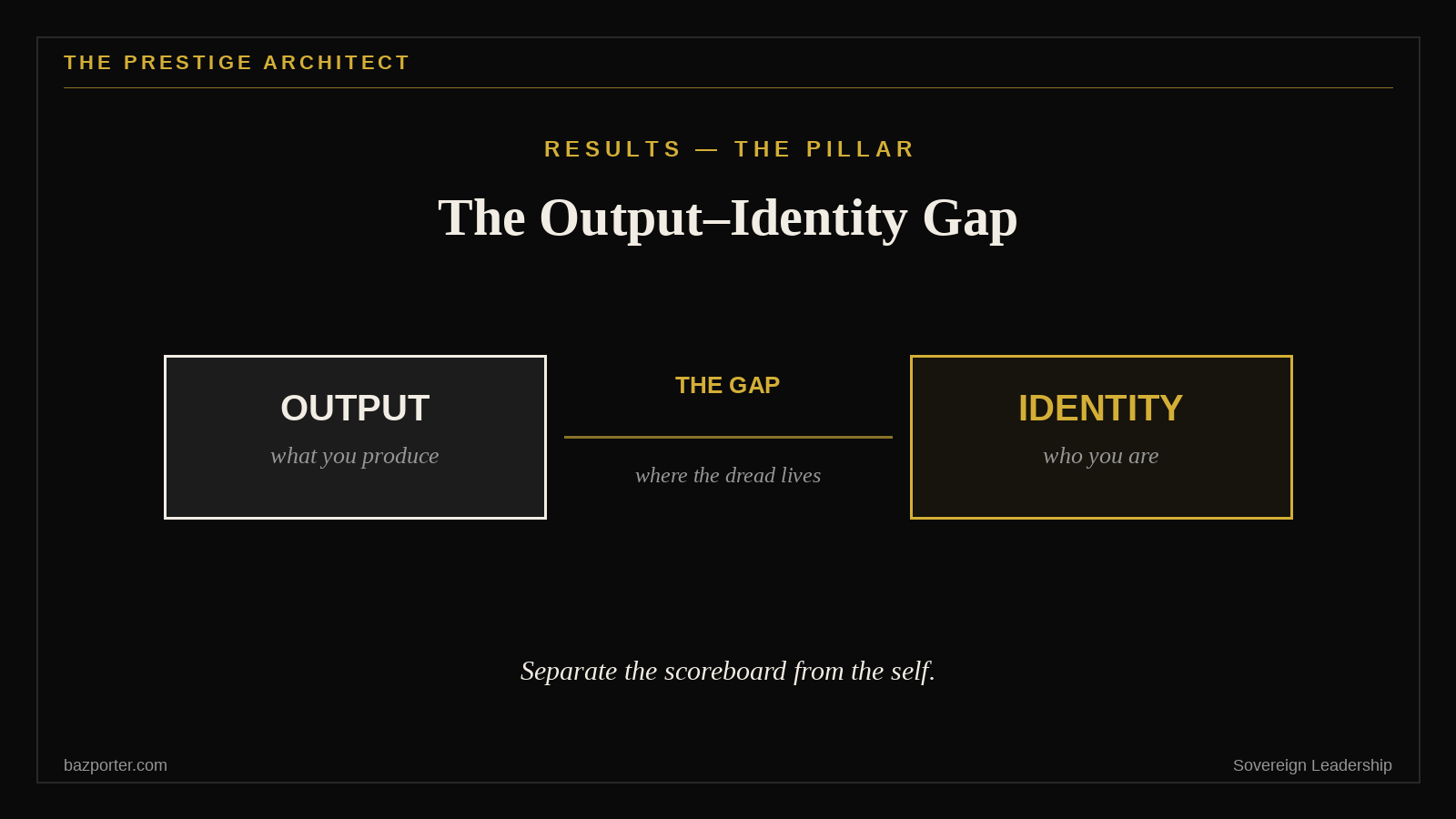
Operational rule: separate the scoreboard from the self. The company keeps producing. You are not the production line.
Attitude — Where the Collapse Lives
Attitude is the internal operating system. It is the running story under the strategy. For most founders the story says: "If I let go, it falls apart, and so do I." That belief is where the collapse lives. Change the operating system and the dread loses its fuel.
Authenticity — The Private/Public Divide
In public you announce the transition with confidence. In private you lie awake bracing. That divide is the engine of Silent Collapse™. The wider the gap between the performed exit and the felt one, the heavier the load. Closing it is the relief. If you recognize that divide, name it precisely. Take the Silent Collapse Diagnostic.
Mastery — Skill Versus Sovereign Capability
You are a master operator. That is the trap. Operating skill keeps you needed, and being needed feels like being safe. Sovereign capability is different. It is the capacity to be still and remain whole. Skill runs the company. Sovereignty lets you leave it.
Systems — The Architecture of the Return
Systems is the pillar that builds the exit. Not the legal handover — the identity infrastructure. A founder who has rebuilt the self can transfer the company without transferring their worth.
Collapsed Founder → Sovereign Leadership™:
Identity fused to the company → identity holds without the company
Exit feels like erasure → exit feels like completion
Stays needed to feel safe → stays whole without being needed
Brackets the dread in private → names the dread and resolves it
Postpones the handover for years → transfers on a clear timeline
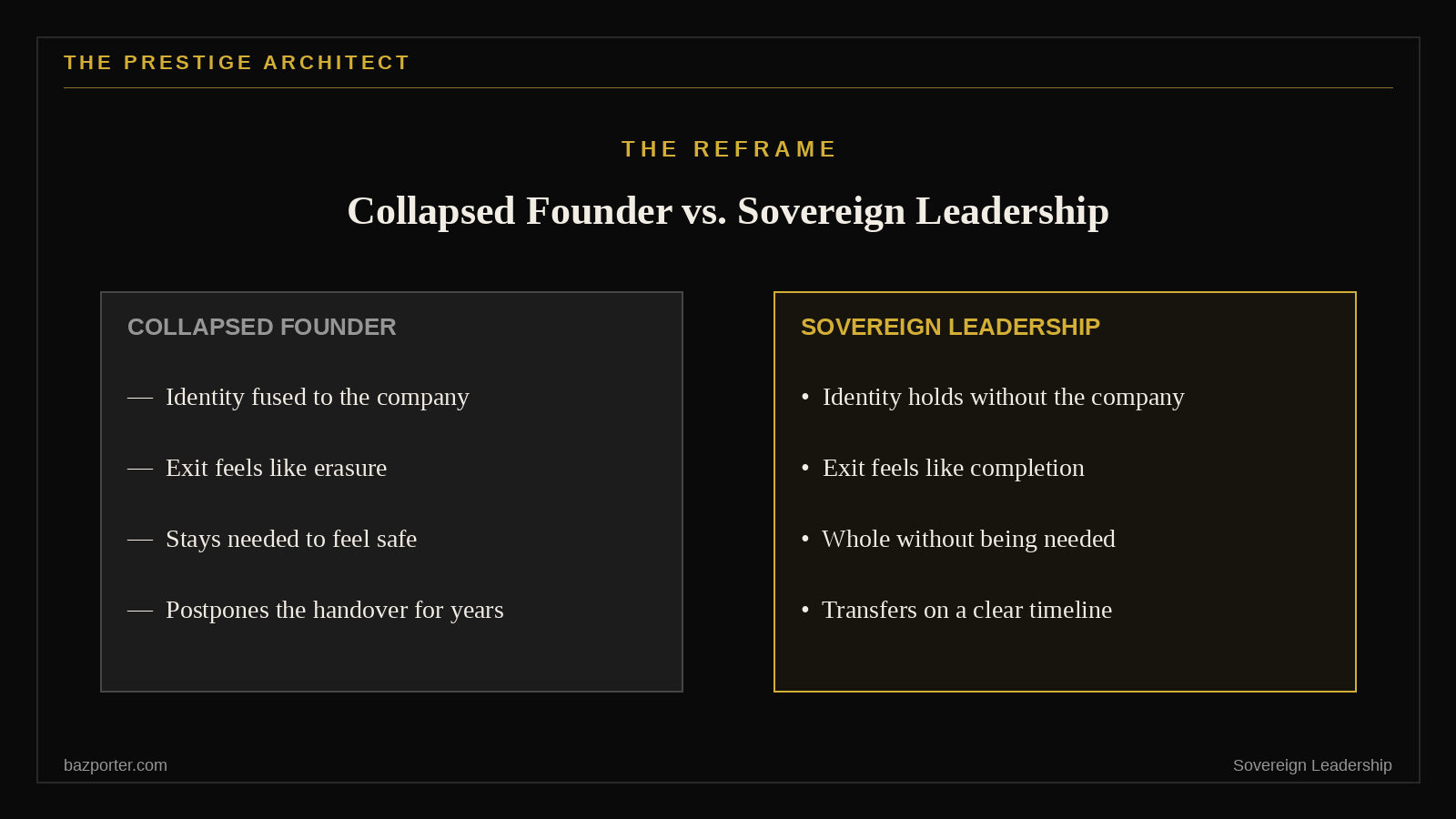
Command decision: stop optimizing the succession plan. Start rebuilding the person who has to sign it.
A Case Vignette: The Founder Who Stopped Bracing
One client ran a company for nineteen years. The buyer was ready. The price was right. He had stalled the close three times. On paper it was diligence. In the body it was terror.
We did not touch the deal. We rebuilt the architecture underneath it. We separated his Results from his worth. We rewrote the Attitude story that said leaving equals losing. We closed the private/public divide so the dread had words. Within two cycles his nervous system stopped reading the exit as death. He signed. He described it as the first full breath in a decade.
Nothing in the contract changed. Everything in the founder did. That is the whole work.
The Architecture of Your Return
The return is not a feeling. It is a build. You do not motivate your way past succession dread. You re-engineer the foundation that made leaving feel fatal.
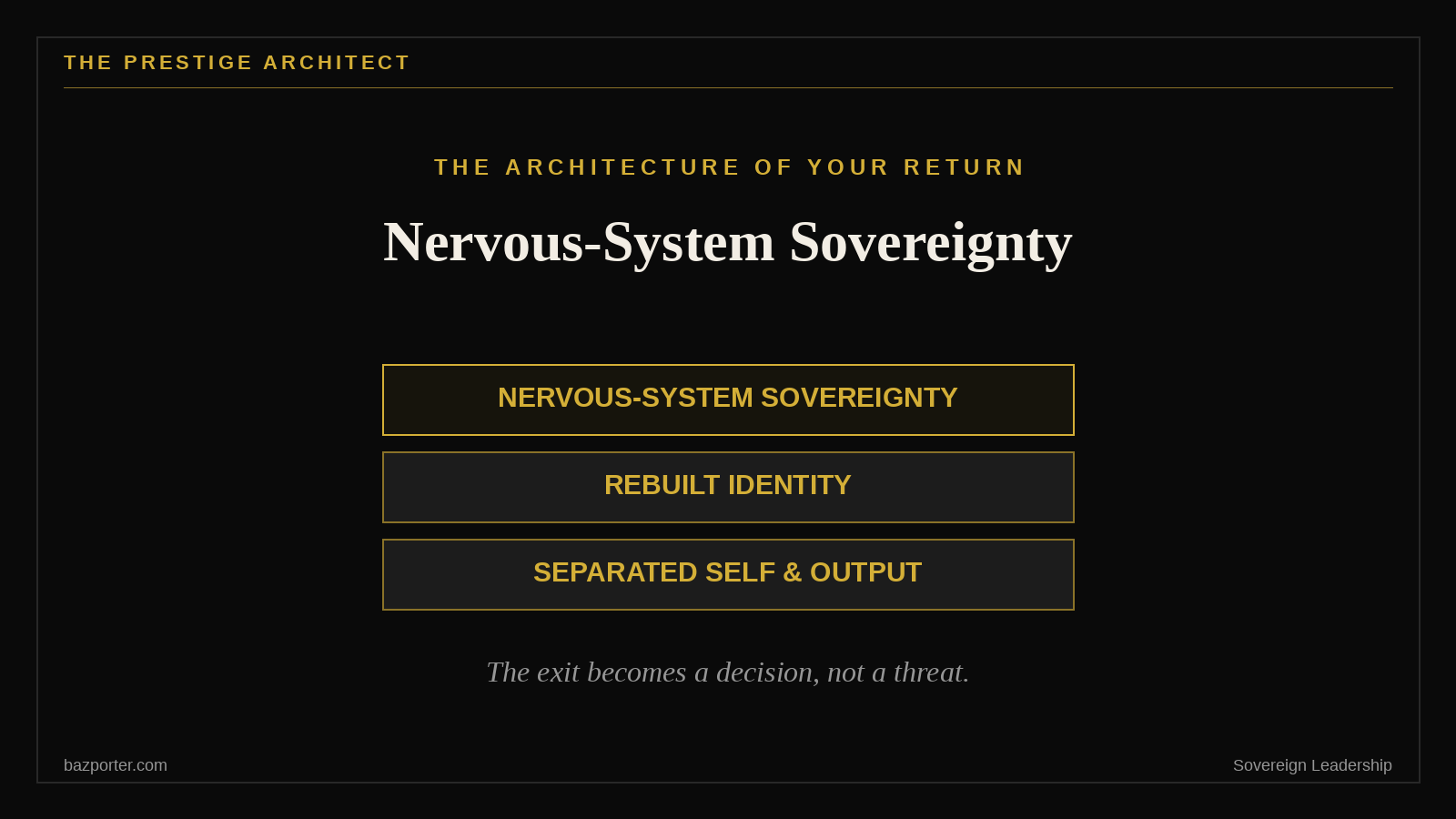
Nervous-system sovereignty is the load-bearing wall. When the body no longer equates "leave" with "lose," the exit becomes a decision instead of a threat. The company becomes something you built, not something you are. That is the line between a founder trapped by their success and a leader free inside it.
This is what The Prestige Architect® builds: the identity infrastructure beneath high performance, so power stops costing you the self. The exit is the final test of that build. Pass it and you keep everything that mattered and lose only the cage.
If you are ready to rebuild the architecture before the exit forces it, start the work directly. Apply to Work With Baz.
Frequently Asked Questions
Why do I feel anxious about an exit I actually want?
Because two systems disagree. Your strategy wants the exit. Your nervous system reads it as loss of identity and status. The anxiety is the conflict between them. It resolves when you rebuild an identity that does not depend on running the company.
Is succession dread a sign I should not sell?
No. Dread is not data about the deal. It is data about your foundation. Founders with a rebuilt identity feel readiness, not relief-mixed-with-terror. Treat the dread as a signal to do the inner work, not to cancel the transition.
Can I just delegate more and ease out slowly?
Slow transfer helps logistics. It does not touch the identity fusion. You can hand over every task and still feel erased on the last day. The fix is architectural — rebuild the self first, then the timeline takes care of itself.
How is this different from executive therapy or a succession consultant?
A consultant fixes the org chart. Therapy explores the past. This work rebuilds the present identity infrastructure — the RAMS Framework™ applied to the leader, not the company. It is systems-first and forward-facing, built to make the exit clean.
What is the first step if leaving feels like dying?
Name the divide between the public exit and the private dread. That precision is the start of the rebuild. The Silent Collapse Diagnostic maps where your identity is still fused to the company.
British military veteran. Two-time international bestselling author. Founder, The Prestige Architect®. Host, Rise From The Ashes podcast, C-Suite Network. Boulder, Colorado.