Founder Can't Let Go? The Exit Is an Identity Problem
Founder Can't Let Go? The Exit Is an Identity Problem
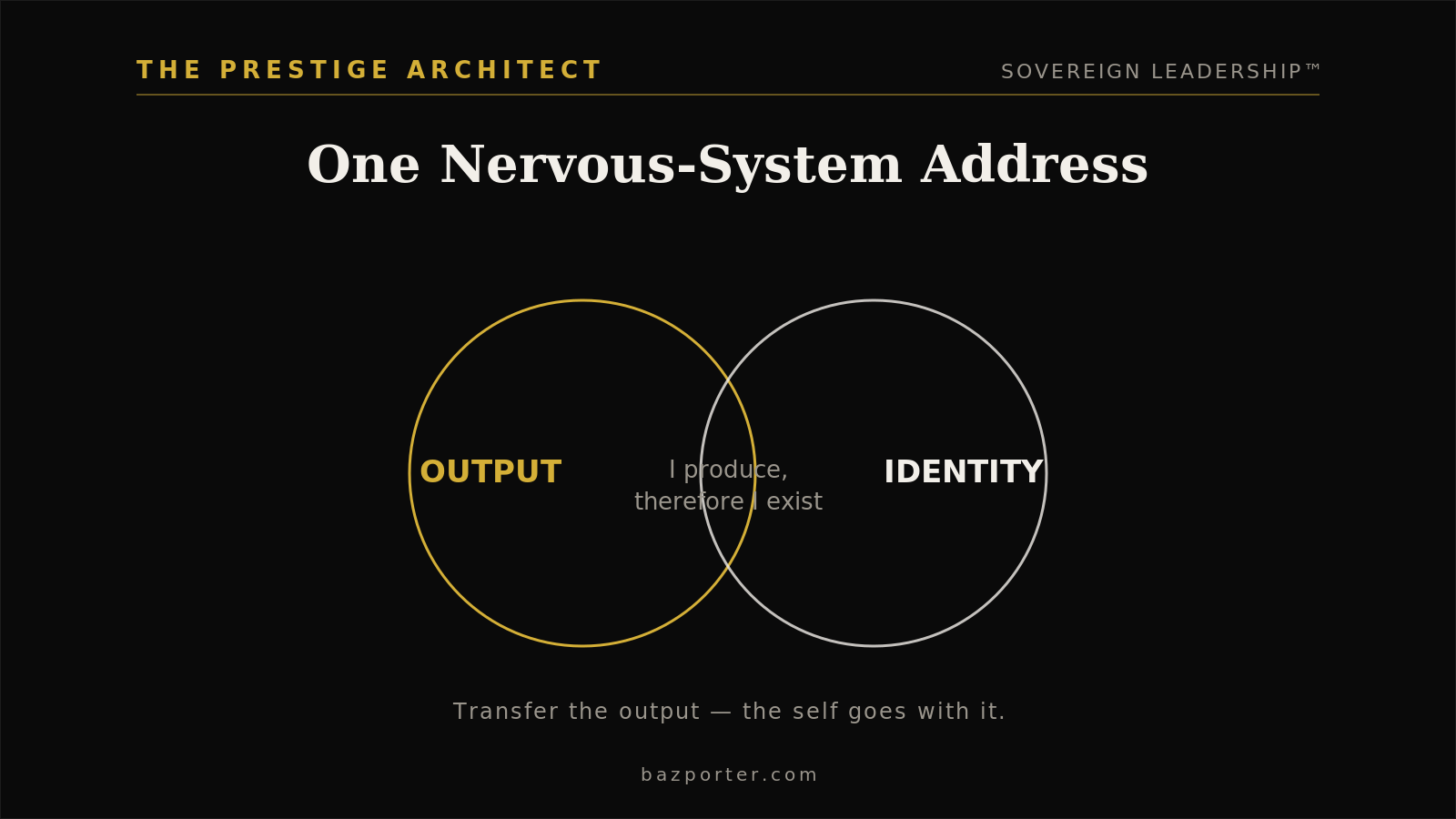
You built it. Now the handover date is on the calendar and something in your chest tightens. You tell people you are ready. Privately, you rehearse reasons to stay. This is the Silent Collapse™ of the founder who cannot let go — the quiet dread that the company running without you means you were never the point. The org chart is not the problem. The problem is that your identity and your company share one address. Before you touch a transition plan, Read The Manifesto.
Table of Contents
Key Takeaways
The exit is an identity event, not an org-chart event. Founders fuse self and company, so stepping down reads to the nervous system as loss, not progress.
The risk is measurable. Harvard Business Review reports founder-CEO handovers fail or stall two to three times more often than non-founder transitions.
Self-sabotage is a symptom, not a character flaw. Re-litigating settled terms is a founder's nervous system trying to stay in control.
The fix is architectural. You build an identity that stands without the title before the title changes hands.
The Definitive Answer
A founder who cannot let go does not have a succession problem. They have an identity problem wearing a succession costume. The company became the container for their worth, so releasing it feels like erasing themselves. The work is to separate the person from the position first — then the handover becomes an operational task instead of a threat to survival.
The Hidden Pattern: Why Letting Go Feels Like Dying
For decades the answer to "who are you" was the company. The two grew into one nervous system. So when the exit date arrives, the body does not read "well-earned freedom." It reads threat. Egon Zehnder's 2026 succession research describes founders experiencing legacy jitters — the dread that the organization will falter without them, or that their significance evaporates the moment they leave.
Watch what that dread does. Faced with losing control, some founders begin what looks like diligence and is actually defense: fixating on financial particulars, reopening terms they set themselves, delaying the date by one more quarter. This is the founder's nervous system trying to stay indispensable. Think of the company as a bridge the founder became. Ask the bridge to become a person again and every cell resists.
The founder does not fear the exit. The founder fears the silence on the other side of it — the moment the phone stops ringing and the question "who am I now" has no company to answer it.
This is the private face of Silent Collapse™: performance stays intact, the deck still closes, and underneath, the identity holding it all is quietly eroding. If any of this reads like your own inner voice, the recognition itself is the first honest data point. The Sovereign Leadership Resource Hub maps the rest.
The RAMS™ Reframe: Building an Exit You Can Survive
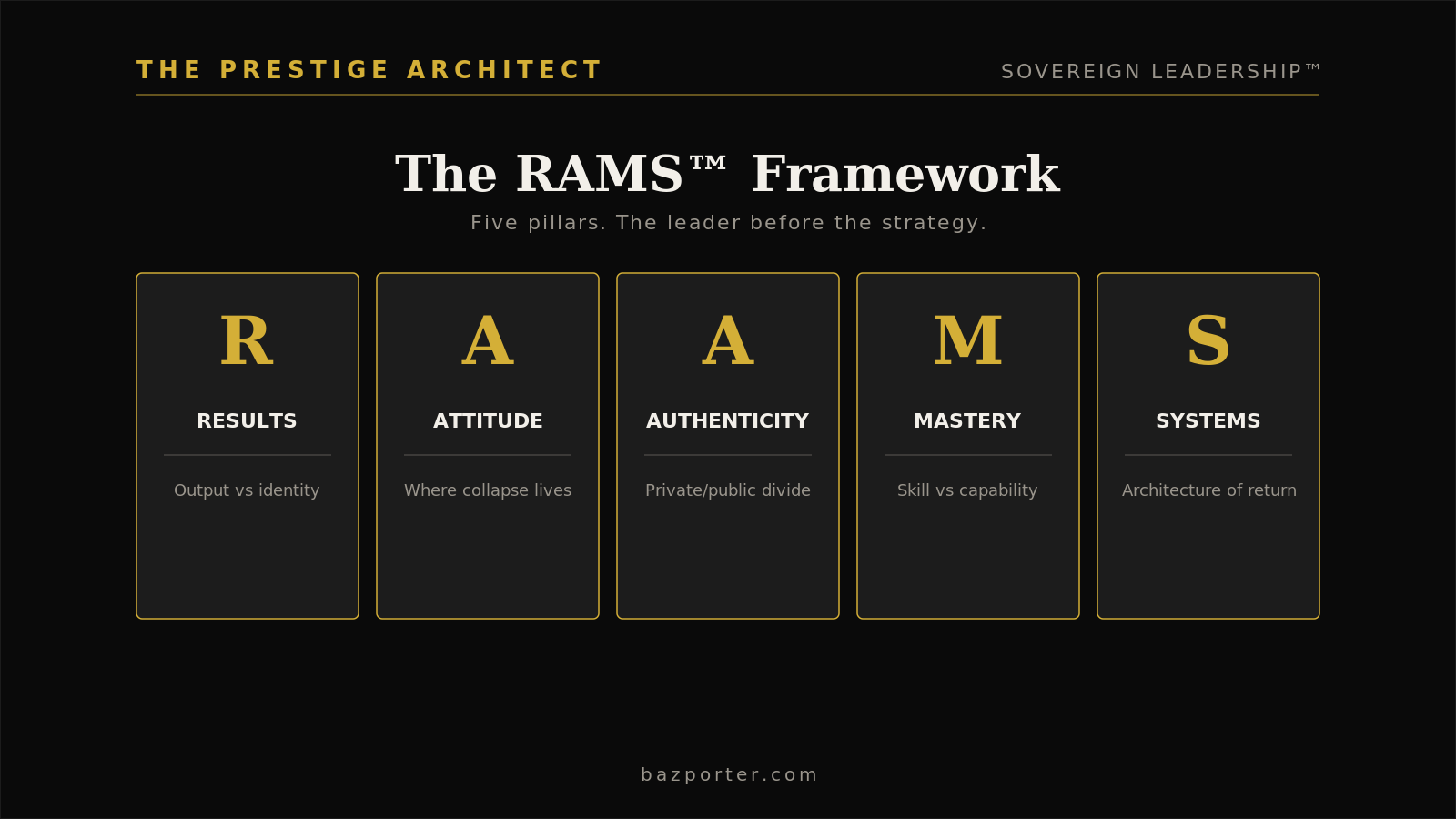
My work runs on RAMS™ — Results, Attitude, Authenticity, Mastery, Systems. It rebuilds the leader before it touches the strategy, because the body and the business run on the same architecture. Applied to the founder who cannot let go, each pillar names a different part of the grip — and how to release it without collapse.
Results — The Output-Identity Gap
You have measured yourself by the company's output for so long that the two feel identical. They are not. Output is what the company produces. Identity is who you are when it produces nothing for you. The gap between them is exactly the space a founder must rebuild before an exit.
Output: revenue, headcount, the logo people recognize.
Identity: the person who remains when the logo belongs to someone else.
Operational rule: if you cannot name three sources of worth that have no line on the P&L, you are not ready to hand over the P&L.
Attitude — Where the Dread Lives
Attitude is the internal operating system — the private script running under the confident exterior. For the exiting founder it usually reads: "If I let go, everything falls apart." That sentence is not a fact. It is a nervous-system reflex built over years of being the last line of defense. Left unexamined, it drives the quiet sabotage that stalls transitions.
Command decision: name the script out loud. A fear you can hear stops running the exit from the shadows.
Authenticity — The Announcement You Keep Sabotaging
Here is the divide that defines Silent Collapse™: publicly you announce the succession; privately you undermine it. You praise the successor in the meeting and reopen their decisions after it. The public self says "ready." The private self says "not yet, not ever." Closing that gap is the real transition. Authenticity is not confession — it is ending the distance between the founder you perform and the founder you are.
Mastery — Running It vs. Outliving It
You have mastered running the company. That is not the same as the capability to exist without it. Skill is knowing every lever in the business. Sovereign Leadership™ is holding a steady self while someone else pulls those levers differently than you would. One is competence. The other is capacity. The exit demands the second.
The measurable stakes are not soft. Harvard Business Review's 2026 analysis found founder-CEO handovers carry a failure or performance-downturn risk two to three times greater than non-founder transitions. The variable that decides it is rarely the strategy. It is whether the founder built the internal architecture to stand down. If your own architecture is unclear, Take the Silent Collapse Diagnostic.
Systems — The Architecture of the Return
Systems is where the release becomes structural instead of emotional. You do not white-knuckle your way out of a company. You build the identity infrastructure that lets the title leave without taking the person with it. Forbes framed it precisely in 2026: the best exits are built, not sold. Built means the founder engineered a self that survives the handover long before the handover.
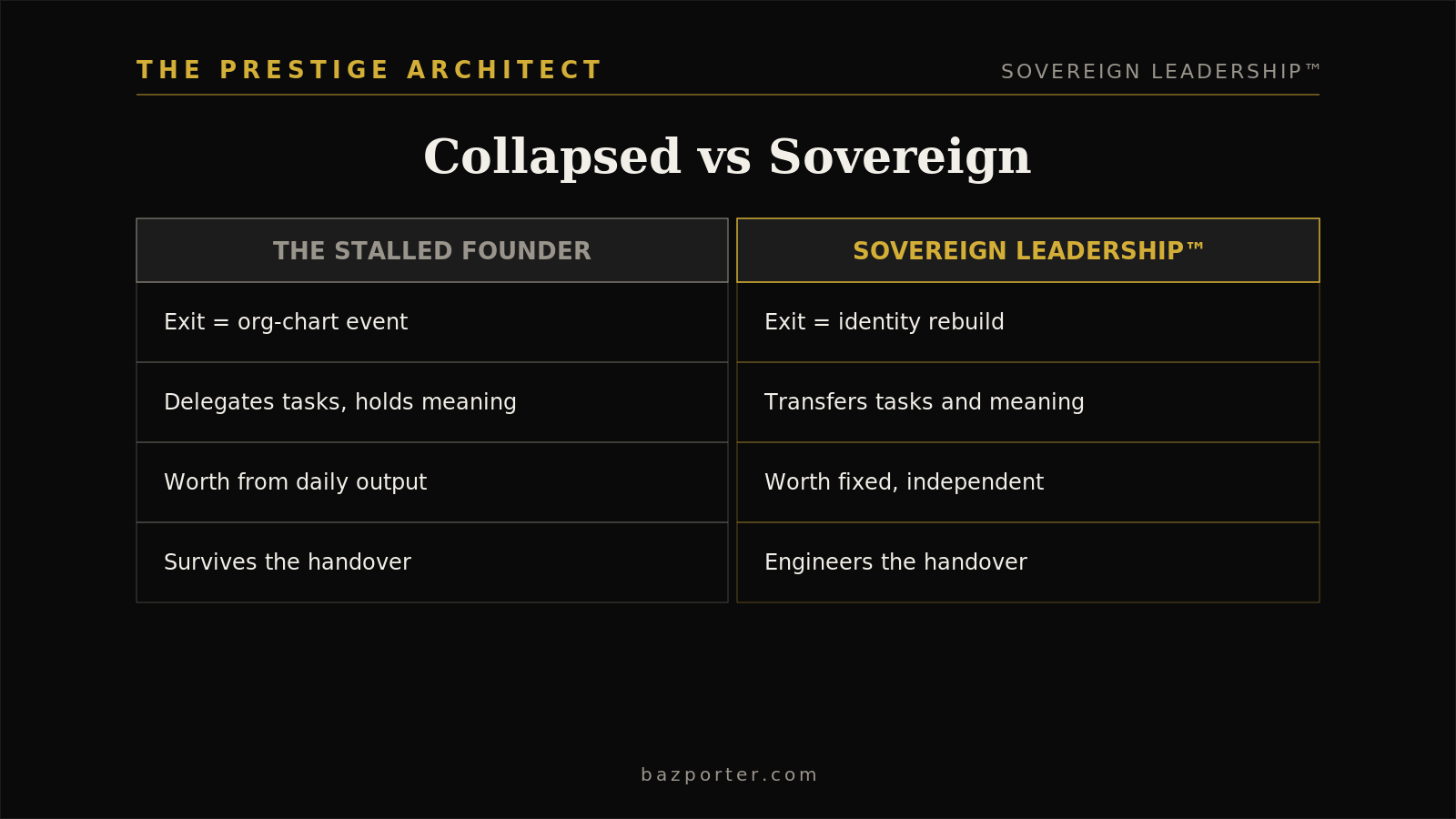
The contrast between the two is stark. Read each line as the same founder, before and after the rebuild — the collapsed founder on one side, Sovereign Leadership™ on the other:
Identity: fused to the company → predates and outlives the company.
The date: delayed to stay in control → held as a built commitment.
Settled terms: reopened under stress → left settled.
The silence after: feared → already filled with a waiting life.
Worth: measured by output → measured by regulated self-command.
Case Vignette: The Founder Who Stopped Quibbling
One founder — twenty-six years at the helm, deal fully papered — kept reopening the earn-out terms he had personally negotiated. Advisors read it as cold feet on price. It was not about price. We built the systems layer first: three anchors of identity with no line on the ledger, a defined post-exit structure for his week, and a named script for the dread. The quibbling stopped inside a month. Not because the terms improved — they did not change. Because the man no longer needed the company to know who he was. The exit closed on the original date.
The Architecture of Your Return
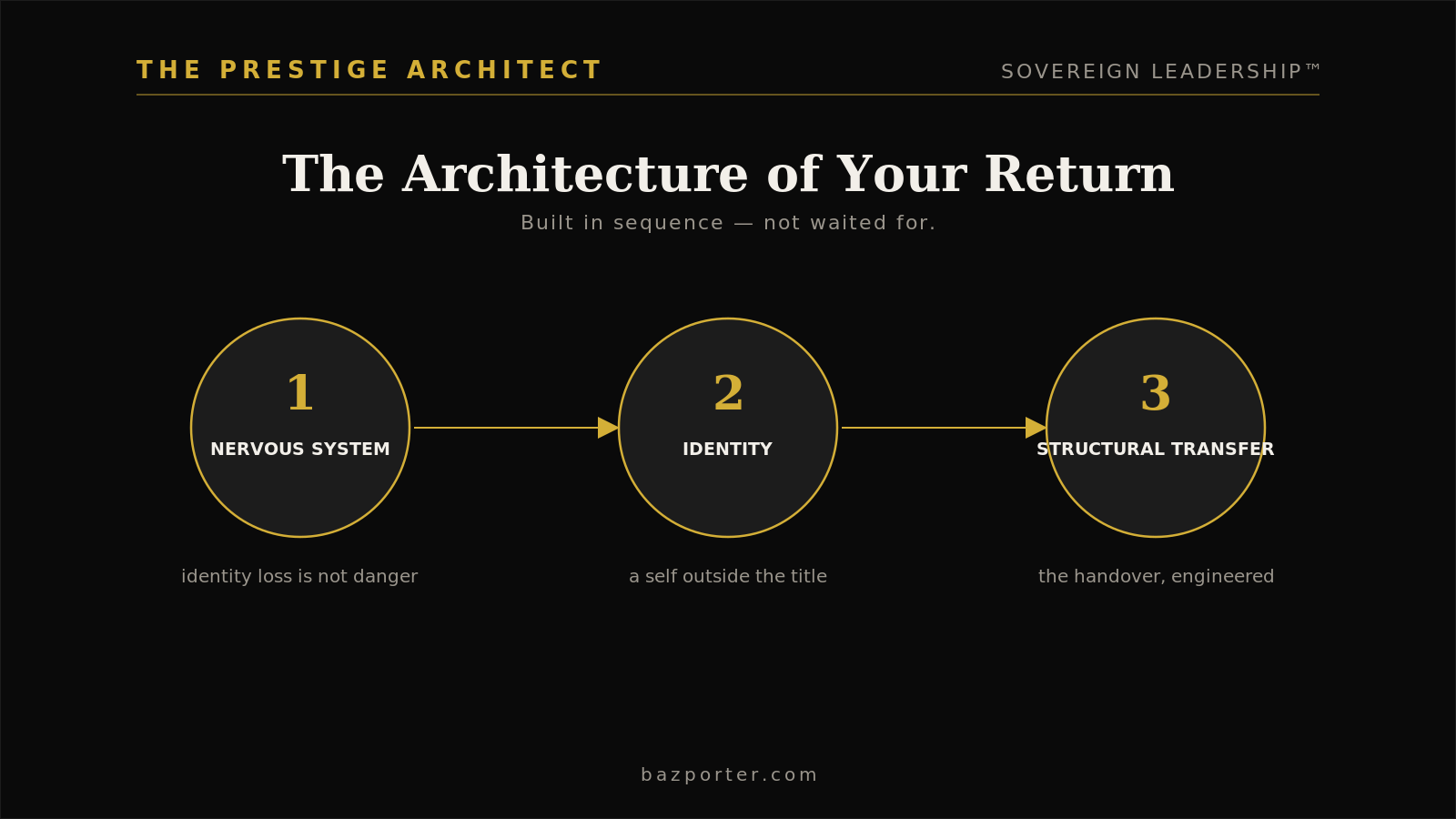
The return is not to the company. It is to yourself — the self that existed before the title and will exist after it. This is nervous-system sovereignty: the capacity to feel the loss of control and stay regulated inside it, rather than reaching for one more quarter to quiet the dread. You do not manage the exit. You build the person who can hold it. When the identity stands on its own architecture, the handover stops being a threat and becomes what it always was — a Tuesday. If you are ready to build that architecture with structure rather than willpower, Apply to Work With Baz.
Frequently Asked Questions
Why can't I let go of my company even though I planned to?
Because the plan is operational and the resistance is identity-level. Over years your sense of self fused with the company, so stepping down reads to your nervous system as loss rather than progress. The plan addresses the org chart. It does not address the person — which is where the grip actually lives.
Is founder succession anxiety normal or a sign of something worse?
It is common and it is a signal. When it drives self-sabotage — reopening settled terms, delaying the date, undermining a successor — it points to Silent Collapse™: intact performance over an eroding identity. The anxiety is not weakness. It is information about what you built your worth on.
How do I separate my identity from my business before I exit?
You build sources of worth that have no line on the P&L, define who you are on the other side of the title, and name the fear driving the grip. Separation is architectural work done before the handover, not a feeling you wait to arrive after it.
What actually makes a founder handover fail?
Rarely the strategy. Harvard Business Review's 2026 research ties elevated founder-transition failure to the founder's unresolved relationship with the exit itself — the emotional and identity dimension advisors routinely overlook while perfecting the paperwork. The internal architecture decides the outcome more than the deal terms do.
About the Author
British military veteran. Two-time international bestselling author. Founder, The Prestige Architect®. Host, Rise From The Ashes podcast, C-Suite Network. Boulder, Colorado.