Founder Succession Anxiety: The Exit Is an Identity Problem
You built it. Now you cannot leave it. Every plan to step back stalls at the same wall — a low, wordless dread that the whole thing falls apart the moment you let go. The org chart is fine. The numbers are fine. You are not. This is Silent Collapse™: the erosion of identity underneath intact performance. The board calls it succession. Your nervous system calls it a threat to survival. Most leaders read the difference as weakness. It is data. Read The Manifesto.
Table of Contents
Key Takeaways
Succession is not a logistics problem. It is an identity rupture wearing a logistics costume.
The dread is structural, not emotional. Your sense of self fused with the company you built.
Founder handovers fail far more often than hired-CEO handovers — and the cause sits below the org chart.
The exit only works when the identity underneath it is rebuilt first. Architecture, not willpower.
The Definitive Answer
Founder succession anxiety is not fear of a bad hire. It is the nervous system reading the loss of the company as the loss of the self. You did not just build a business. The business became the place where you exist. Remove it without rebuilding the identity beneath it, and the exit reads as a death, not a plan.
The Hidden Pattern: Why You and the Company Share One Nervous System
Researchers have a clinical name for what you feel. They call it founder identity fusion — the merger of self and organization into one structure. Your purpose, your status, your story, your place in the world all route through the company. The Academy of Management Journal documented how founders psychologically disengage, and how that process destabilizes identity itself (Wasserman, Academy of Management Journal). The exit does not threaten your role. It threatens your sense of being a person.
This is why the data is brutal. Harvard Business Review research in 2026 found founder-CEO handovers carry a risk of failure or performance downturn two to three times greater than transitions led by a non-founder. Noam Wasserman's The Founder's Dilemmas found 52% of founders are replaced by Series C — most of those, board-initiated firings, not clean exits (Harvard Business Review). The pattern is not bad luck. It is unbuilt architecture.
The founder's exit fails two to three times more often than a hired CEO's. Not because the org chart is wrong — because the founder and the company share one nervous system, and no one rebuilt the founder's first.
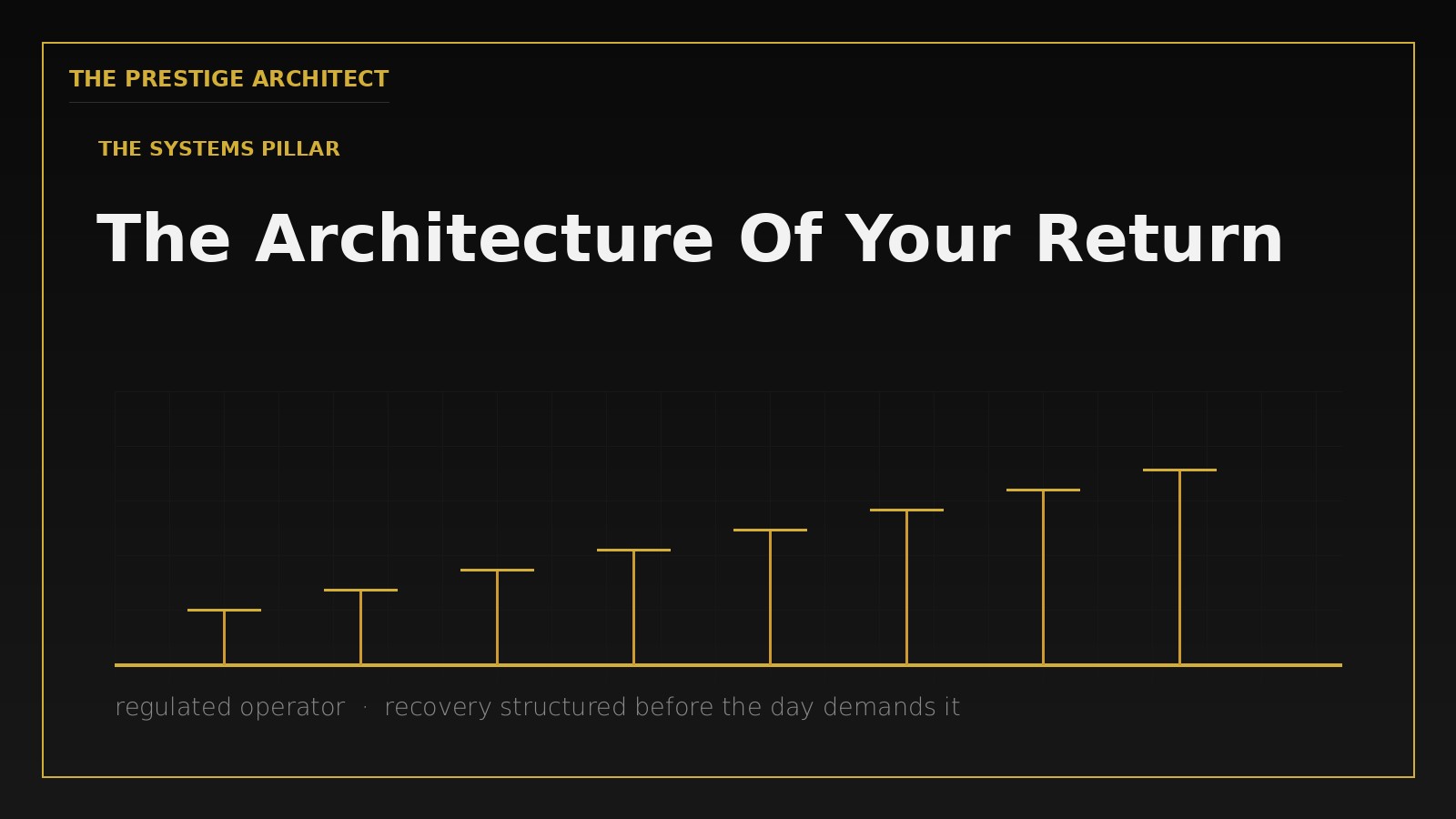
Think of it as a load-bearing wall. For years, you were the structure holding the weight. Pull the wall without building the new frame, and the house does not breathe easier. It buckles. The anxiety is your body reading the buckle before your mind admits it. Name it and it stops running you. This is the first move out of Silent Collapse™ and into Sovereign Leadership™. If you want the map before the method, start at the Sovereign Leadership Resource Hub.
The RAMS™ Reframe of Founder Succession Anxiety
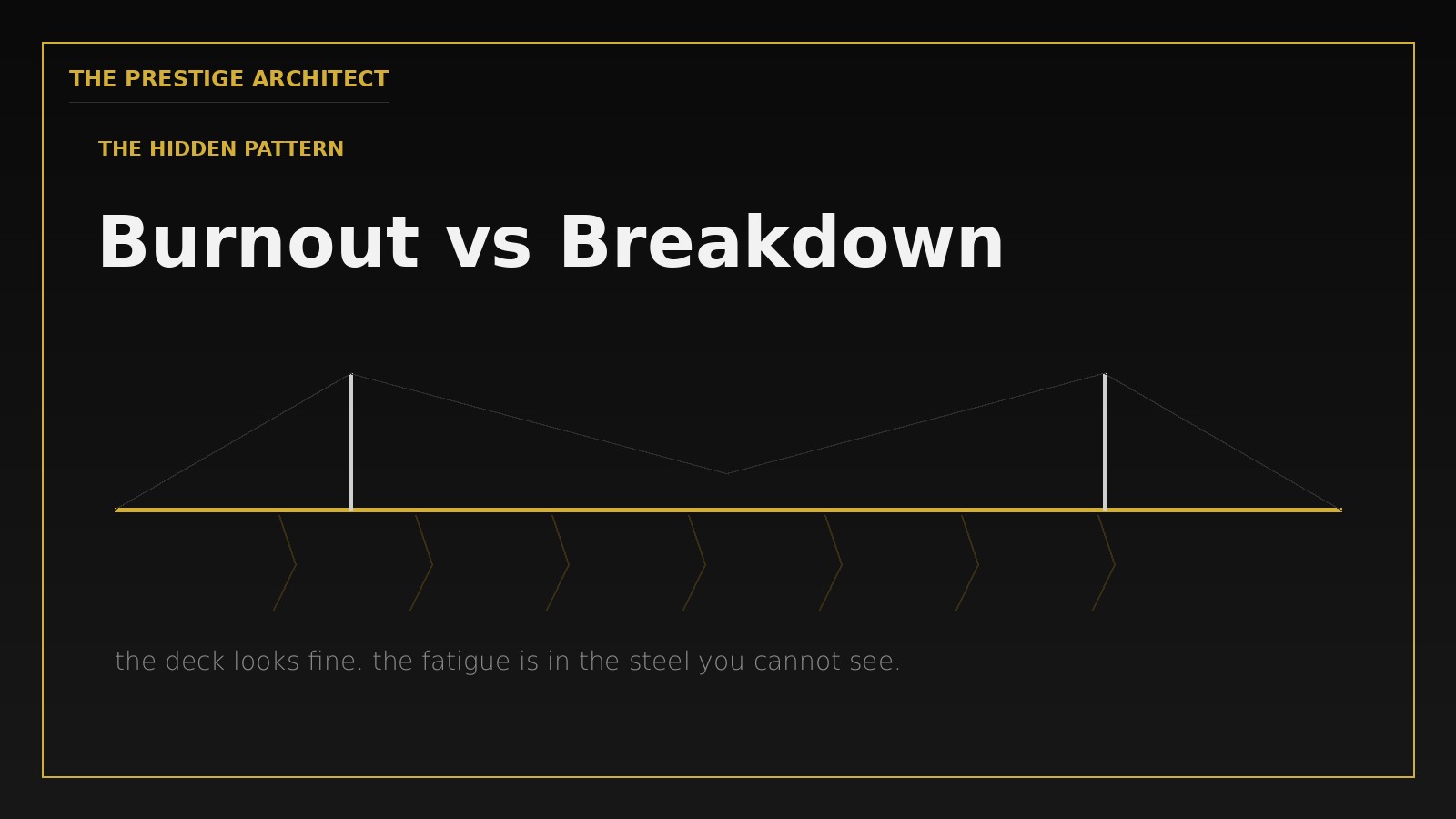
The RAMS Framework™ works the leader before the strategy. Five pillars — Results, Attitude, Authenticity, Mastery, Systems. The body and the business run on one architecture. Dysregulate one, and both fail. Here is the exit, rebuilt through each pillar.
Results: The Output–Identity Gap
You measure yourself by output. The company produces output. So when you imagine leaving, you imagine producing nothing — and being no one. That is the output–identity gap. Your worth got welded to your throughput.
The trap: "If I am not running it, I am not contributing. If I am not contributing, I do not matter."
The rebuild: separate the work you do from the worth you are. Operational rule: the handover is the result now. Building a company that runs without you is the highest-order output you will ever produce.
Attitude: Where the Collapse Actually Lives
Attitude is the internal operating system. The collapse lives here — in the private story that letting go equals losing control, and losing control equals catastrophe. That story ran the company well for a decade. It will sabotage the exit.
The tell: you insert yourself into decisions that no longer need you. The field calls it founder self-sabotage. The board sees interference. You feel relevant.
The rebuild: Command decision: treat the urge to re-enter as a symptom, not an instruction. The urge is the old OS protecting an identity that no longer needs protecting.
Authenticity: The Private/Public Divide
In public, you announce the succession plan with conviction. In private, you wake at 3 a.m. rehearsing why it cannot work. That divide is the engine of Silent Collapse™. The wider the gap between the performed self and the lived reality, the louder the dread.
The cost: you cannot architect a clean exit while performing certainty you do not feel.
The rebuild: close the divide first. The plan built on the real internal state holds. The plan built on the press release does not.
Mastery: Control Is Not Capability
You confused holding control with having capability. They are not the same. Mastery is not how tightly you grip. It is whether the system performs when your hands are off it.
The illusion: more oversight feels like more competence. It is more dependency, dressed as diligence.
The rebuild: sovereign capability is building leaders who do not need you. Operational rule: if it breaks the moment you leave, you did not build a company. You built a cage with your name on it.
Systems: The Architecture of the Handover
The calendar is not the problem. The architecture is. A real succession is a system — decision rights, knowledge transfer, identity scaffolding for the founder, a nervous-system protocol for the months after. Most exits fail because the founder plans the org chart and forgets the human holding it together.
Build: a transition that rebuilds the founder's identity in parallel with the company's leadership. Both, or neither.
The standard: the exit is engineered, not endured.
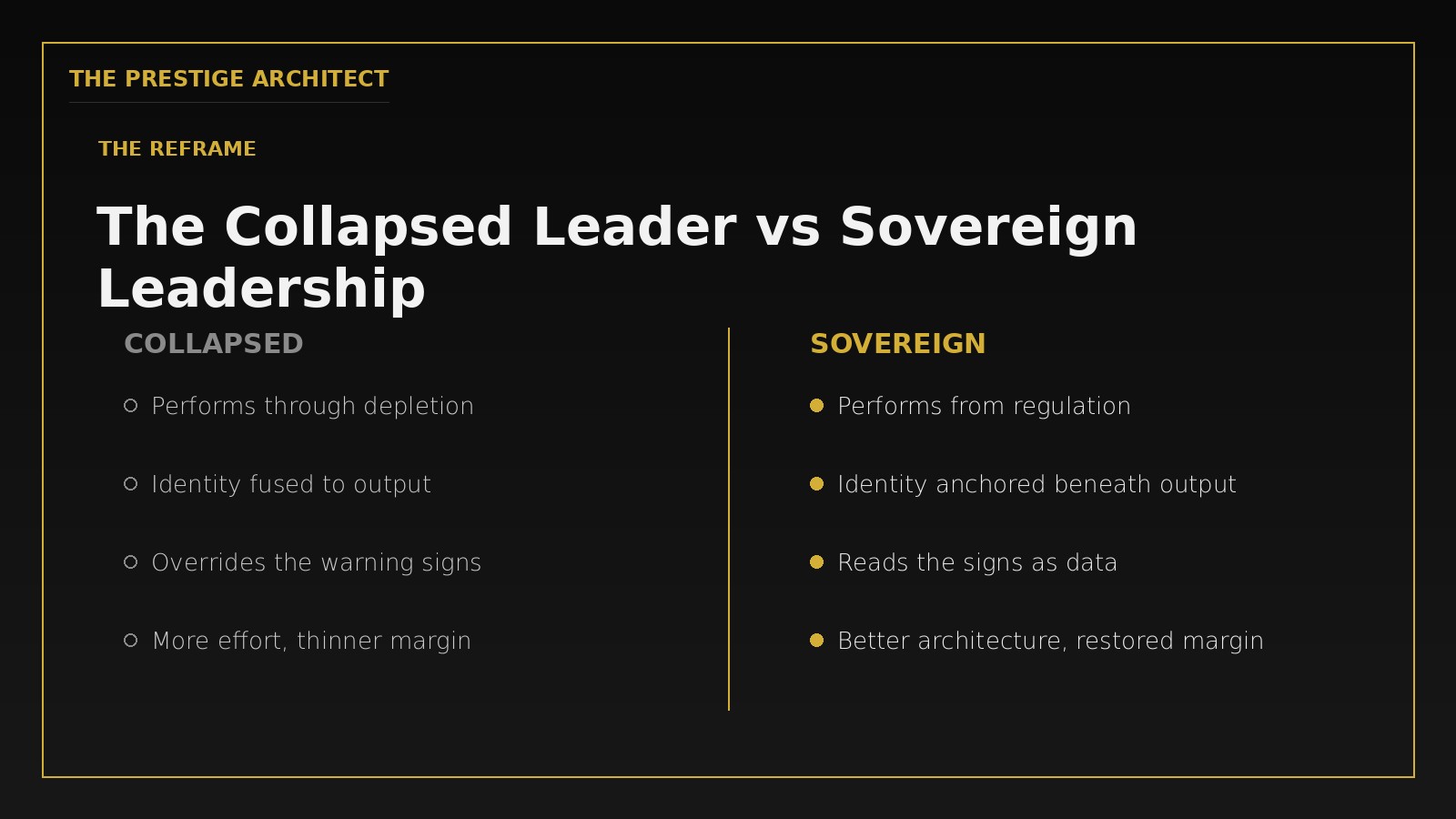
Collapsed Founder vs Sovereign Leadership™
The exit — Collapsed: a loss to survive. Sovereign: a system to engineer.
Control — Collapsed: proof of relevance. Sovereign: a dependency to retire.
Identity — Collapsed: fused to the company. Sovereign: rebuilt to outlast it.
The dread — Collapsed: a flaw to hide. Sovereign: data to act on.
Success — Collapsed: it needs me. Sovereign: it runs without me.
Before you architect the exit, find out how far the collapse has progressed. Take the Silent Collapse Diagnostic. It names the pattern with precision so you stop managing symptoms you cannot see.
Case Vignette: The Founder Who Would Not Sign
One client. Twenty-two years building the firm. The buyer was right, the price was right, the term sheet was on the desk. He would not sign. He told the room it was diligence. It was not. His identity had no address outside the building.
We did not work the deal. We worked the architecture. We separated his worth from his output. We built the identity scaffolding first, the handover second. We treated the 3 a.m. dread as a reading, not a verdict. He signed eight weeks later — not because he forced it, but because the founder underneath the company had somewhere to stand. Systems first. The signature followed.
The Architecture of Your Return
This is not a story about leaving. It is a story about returning to a self that exists without the company attached. Founder succession anxiety does not resolve through reassurance. It resolves through nervous-system sovereignty — a body that no longer reads the exit as a threat to existence.
You do not need more conviction. You need the architecture underneath the conviction. The exit becomes clean when the identity is rebuilt to stand on its own foundation. That is the return. Not inspiration — structure. When you are ready to build it deliberately, Apply to Work With Baz.
Frequently Asked Questions
Why do I feel anxious about succession when the business is doing well?
Because the anxiety is not about the business. It is about you. Your identity fused with the company over years. The exit reads, to your nervous system, as the loss of the self — regardless of how strong the numbers are.
Is founder succession anxiety a sign I am not ready to leave?
No. It is a sign the identity underneath the role has not been rebuilt yet. Readiness is not a feeling you wait for. It is an architecture you construct. Build it and the readiness follows.
Why do founder handovers fail more often than hired-CEO transitions?
Because the founder and the company share one nervous system. Research shows founder-CEO handovers carry two to three times the risk of a non-founder transition. The failure point is below the org chart — an unbuilt founder identity, not a bad plan.
How do I stop inserting myself into decisions after I step back?
Treat the urge to re-enter as a symptom, not an instruction. It is the old operating system protecting an identity that no longer needs protecting. Name it, and it loses its grip on your hands.
Can I rebuild my identity before I exit, not after?
Yes — and you should. The clean exits are the ones where the founder's identity is rebuilt in parallel with the company's leadership. Both, or neither. That is the entire point of the architecture.
About the Author
British military veteran. Two-time international bestselling author. Founder, The Prestige Architect®. Host, Rise From The Ashes podcast, C-Suite Network. Boulder, Colorado.