Why Founders Can't Let Go: The Exit Is an Identity Problem
You keep moving the exit date. Not because the numbers are wrong. Because something in you goes cold at the thought of handing it over. You built this. You are the one who decides. And the quiet truth you have not said out loud is simpler and heavier than any spreadsheet: if you are not running it, you do not know who you are. That is not a strategy gap. That is Silent Collapse™ wearing a succession plan. Read The Manifesto.
Table of Contents
Key Takeaways
The exit is not an org-chart problem. It is an identity problem. You are not afraid the company fails. You are afraid you disappear.
Founder handovers fail more often — and it is structural. Recent Harvard Business Review research puts the failure or downturn risk at two to three times that of non-founder transitions.
Delay is a symptom, not a decision. Every postponed date is the nervous system protecting an identity it never learned to hold without the title.
The return is built, not felt. You rebuild who you are first. The clean exit follows the architecture.
The Exit You Keep Postponing
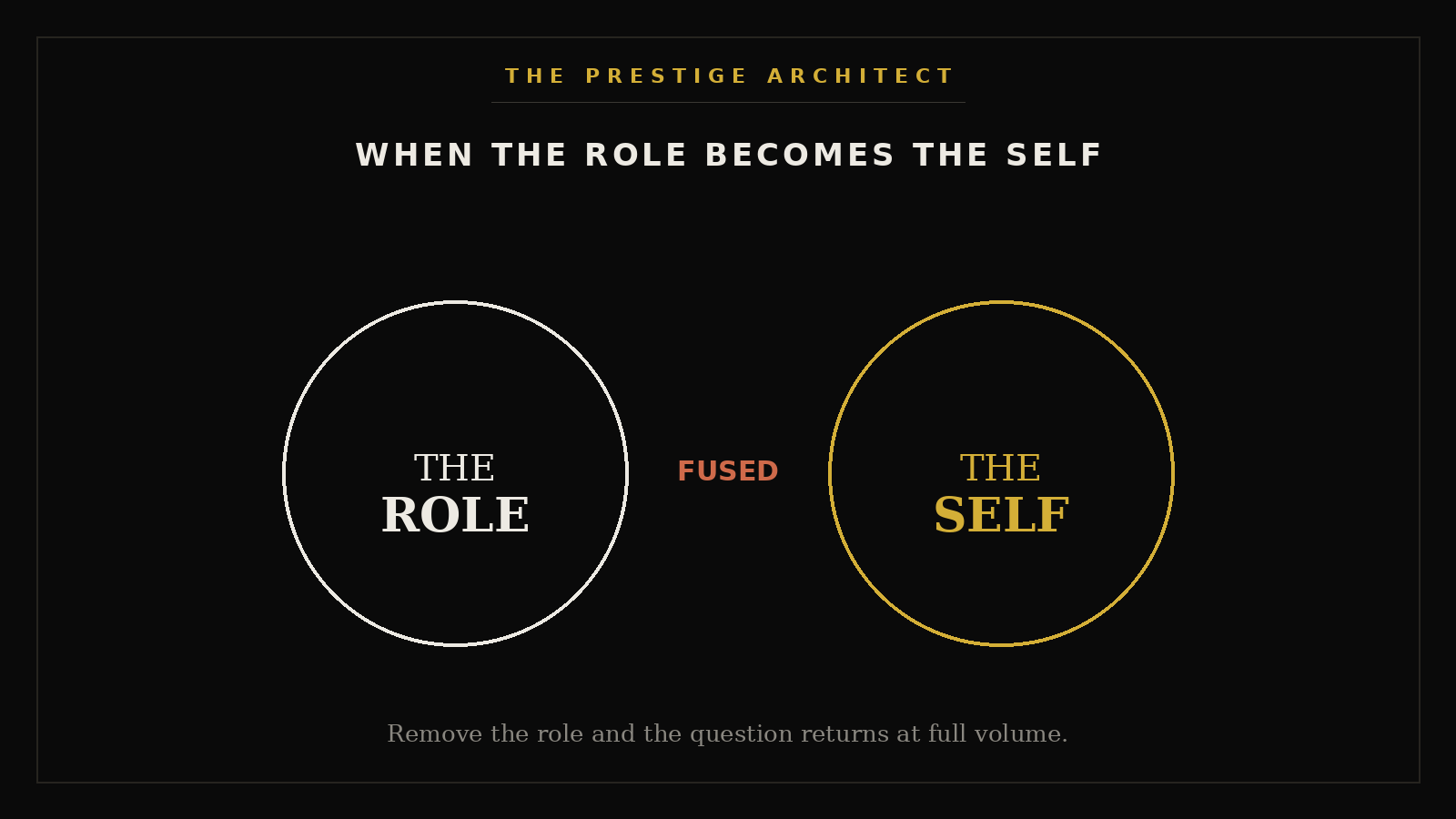
Founders cannot let go because the business stopped being something they own. It became something they are. The role gave you a name, a verdict, a reason the phone rings. Remove it and the question underneath gets loud: who am I now. Most leaders answer that question by staying one more year. The honest work is to rebuild the identity first, then hand over the keys from a self that survives the handover.
The Hidden Pattern: Why Letting Go Feels Like Dying
Watch what happens in the body when you imagine the last day. The chest tightens. The plan gets vague. You find one more reason the team is not ready. This is not weakness. It is a nervous system defending a fused identity. Psychologists call it identity foreclosure — when one role swallows the whole self, and no other version of you got built underneath.
The data tracks the felt sense. Harvard Business Review's 2026 research found founder-led handovers carry a failure or performance-downturn risk two to three times greater than non-founder transitions (HBR, "Leading After the Founder," 2026). Governance research at Harvard names the same fracture from the boardroom side — the human refusal to plan power out loud (Harvard Law on CEO succession, 2025). The exit is where the private self and the performed self finally collide.
The fear is not that the company falls without you. The fear is that you fall without the company.
That is the spine of Silent Collapse™ — the erosion of identity beneath a performance that still looks intact. You can see it best in the founders the world calls winners. Sovereign exits are built from the inside structure out. Start at the Sovereign Leadership Resource Hub.
The RAMS™ Reframe: Rebuild the Founder Beneath the Founder
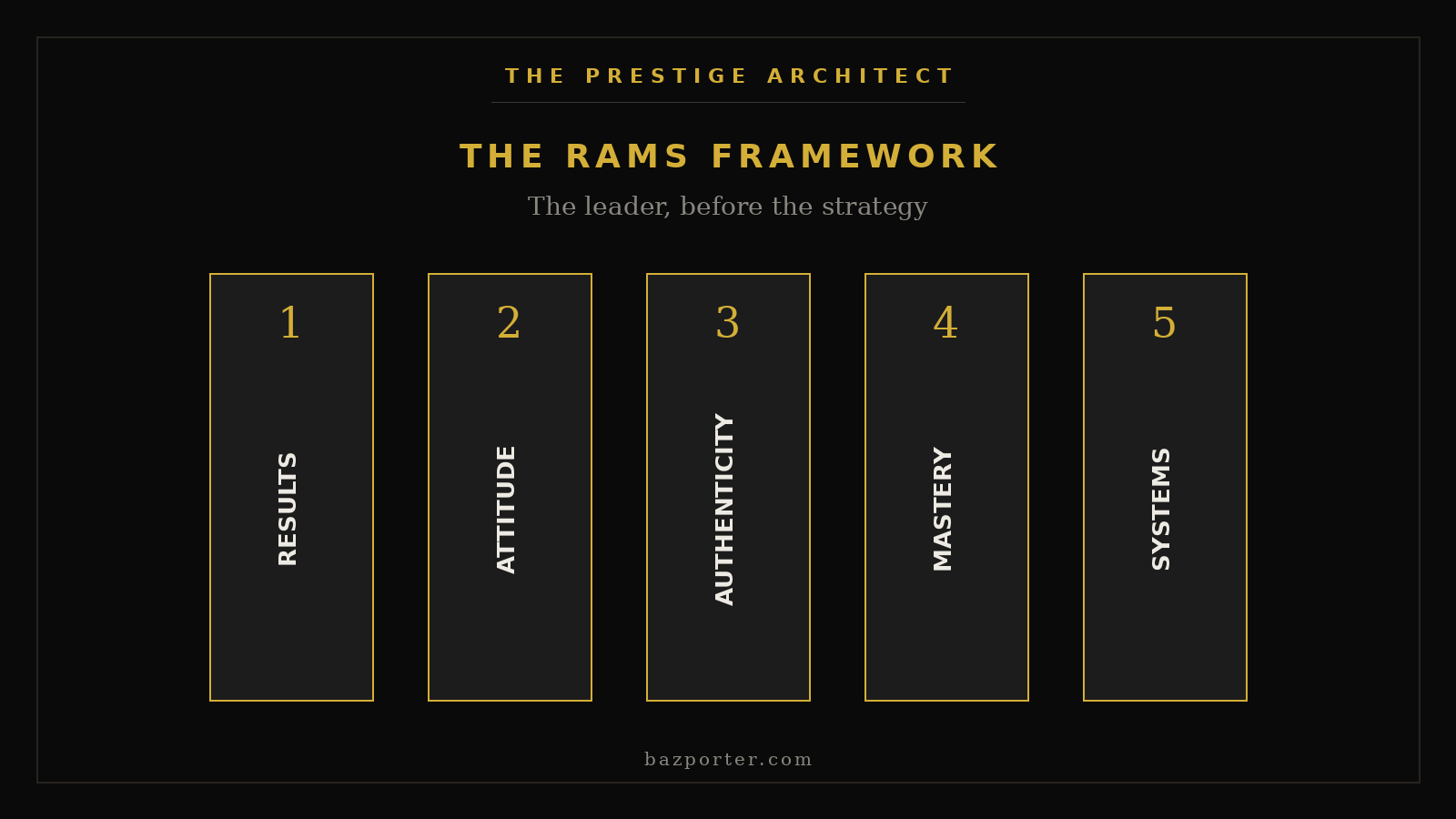
The RAMS Framework™ runs at two levels at once — nervous system and business architecture, the leader before the strategy. Five pillars. Applied to the one exit you keep delaying.
Results — Output vs Identity
You measure yourself in output: revenue, headcount, the next round. The exit threatens the only scoreboard you trust. Operational rule: separate what you produced from who you are before you separate from the company. A founder who only exists as output cannot survive a quiet calendar.
Attitude — Where the Collapse Lives
Attitude is the internal operating system. It runs the line, "If I let go, it falls apart." That belief is not analysis. It is residue. Command decision: name the belief, then test it against the actual team in front of you — not the team your fear invented.
Collapsed: control is safety; every delegation is a risk to manage.
Sovereign: control was the scaffolding; the building now stands without it.
Authenticity — The Private/Public Divide
In public you are decisive about the transition. In private you stall it for months. That gap is the engine of Silent Collapse™. The exit forces the two selves into one room. Authenticity closes the divide — you stop performing readiness and start building it.
Mastery — Skill vs Sovereign Capability
You mastered the company. You did not master the self that does not need the company. Skill kept the machine running. Sovereign capability is the power to be no longer needed and not lose your center. That is the rarer mastery, and the one the exit demands.
Systems — The Architecture of the Return
The calendar is not the problem. The architecture is. A clean exit is a system: a successor with real authority, a founder identity that exists outside the title, and a defined role for what you become next. Build the structure and the feeling follows. Here is the table I run with founders.
DimensionCollapsed FounderSovereign Leadership™Source of identityThe title and the outputThe self beneath bothThe exitA loss to delayA return to architectControlHeld until forcedTransferred by designSuccessorNever quite readyBuilt with real authorityLife afterAn empty calendarA defined next role
If you recognize yourself in the left column, start with the diagnostic, not the resignation letter. Take the Silent Collapse Diagnostic.
A Founder's Return: One Case
A founder I counseled had moved his exit date four times in two years. The board was ready. The buyer was ready. He was not. We did not touch the deal first. We built the architecture beneath it — a successor with named authority, a personal identity audit, and a defined role for his next decade. The fear did not vanish. It lost its grip because the self underneath finally had a structure to stand on. He signed in ninety days. The company held. So did he.
The Architecture of Your Return
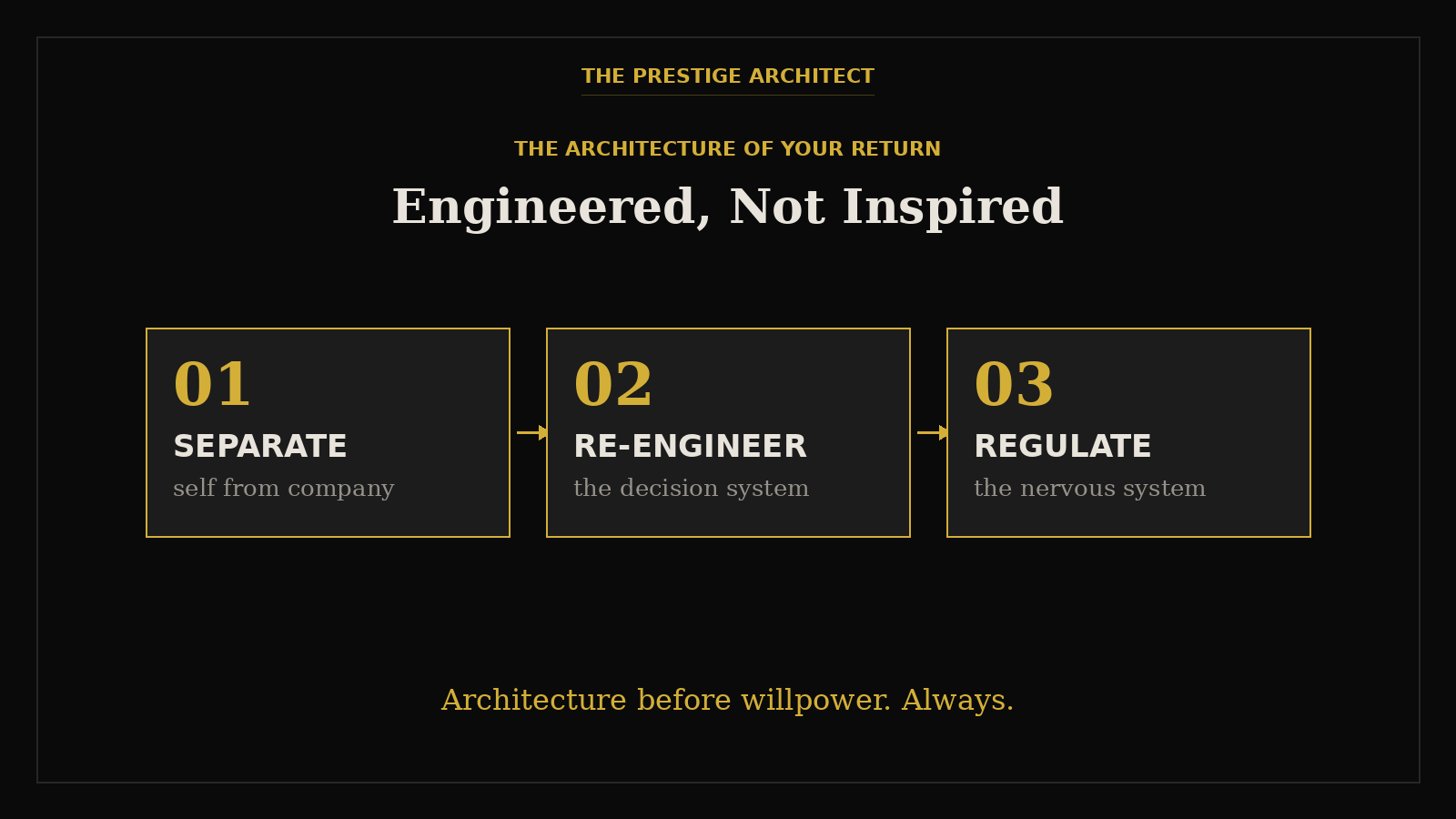
You do not exit a company. You exit an identity that was built to need it. The return is nervous-system sovereignty — the capacity to be uncrowned and still be whole. That is not inspiration. It is engineering. You build the successor, you build the self that outlives the title, you build the role you walk into next. Then the handover is a Tuesday, not a death.
This is the work of The Prestige Architect®: rebuilding the identity infrastructure beneath high performance so the exit is a return, not a collapse. If you are ready to architect yours, Apply to Work With Baz.
Frequently Asked Questions
Why can't I let go of my business even though I want to?
Because the business became your identity, not your asset. The reluctance is your nervous system protecting a self that never got built outside the title. Rebuild that self first and the exit stops feeling like erasure.
Is delaying my exit a sign of a bigger problem?
Often, yes. Repeated delay is rarely about market timing. It is the visible edge of Silent Collapse™ — identity eroding under intact performance. The delay is a symptom worth diagnosing, not a logistics issue.
Won't the company fall apart without me?
That belief is usually residue, not data. Test it against the real team and a successor with genuine authority. Founder handovers fail more often when the architecture is absent — not when the founder steps back from a built structure.
What do I do after I exit if the company was my whole life?
Define the next role before the last day, not after. An undefined calendar is what makes the exit feel like a void. Sovereign founders architect what they return to, so the handover opens a door instead of closing one.
About the Author
British military veteran. Two-time international bestselling author. Founder, The Prestige Architect®. Host, Rise From The Ashes podcast, C-Suite Network. Boulder, Colorado.