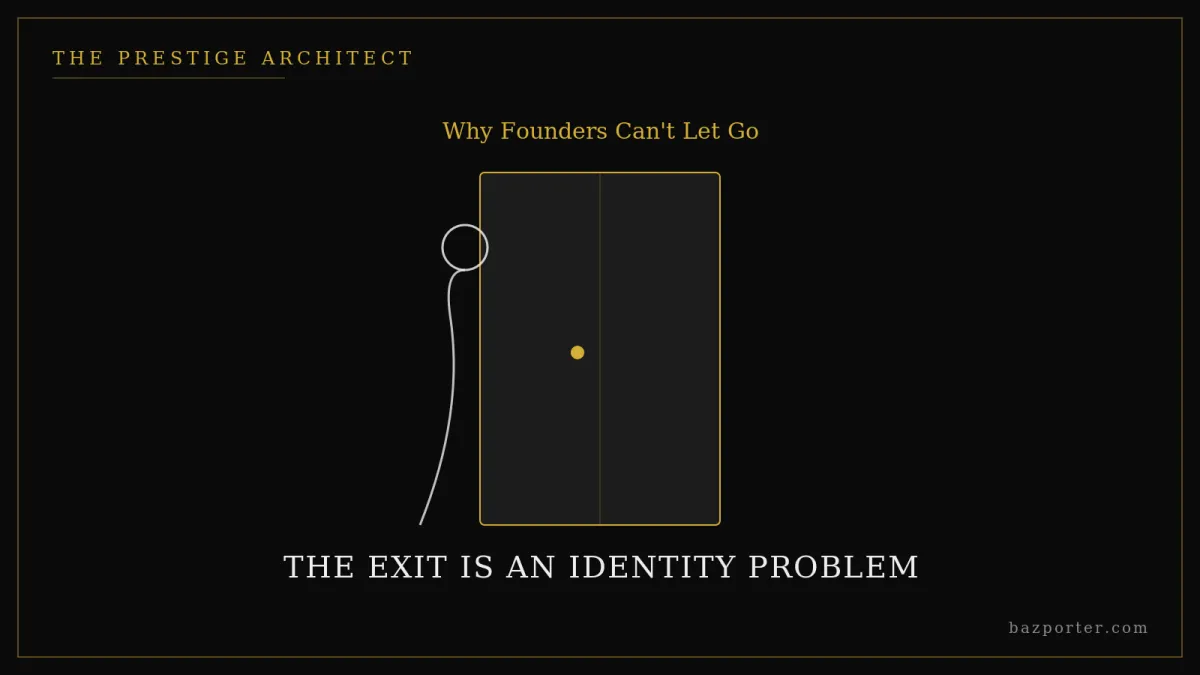
Why Founders Can't Let Go: The Exit Is an Identity Problem
You built the thing. Now you cannot leave it. The board asks about succession and your chest tightens. You call it timing. You call it protecting the team. It is neither. What you feel is Silent Collapse™ — the structural erosion of identity underneath intact performance. The company runs fine. The founder does not. If this names something you have carried without words, start here: Read The Manifesto.
Table of Contents
Key Takeaways
The exit is an identity problem, not an org-chart problem. Founders stall on succession because leaving threatens the self, not the business.
Founder handovers fail at two to three times the rate of non-founder transitions. The failure point is psychological, not operational.
Organizational identification predicts the pain. The longer the company has been central to who you are, the more costly the exit feels.
Sovereign Leadership™ separates the operator from the identity. You rebuild the self first. Then the exit becomes structural, not fatal.
The Definitive Answer
Founders cannot let go because the role has become the self. Stepping down does not read as a career move. It reads as a small death. Succession planning treats this as a governance task. It is a nervous-system task first — and that is why the org chart never fixes it.
The Hidden Pattern: Why the Exit Feels Like Death
Your body does not know the difference between losing a role and losing a life. It runs the same alarm. You spent years fusing your name to the company. The fusion was the fuel. Now it is the trap.
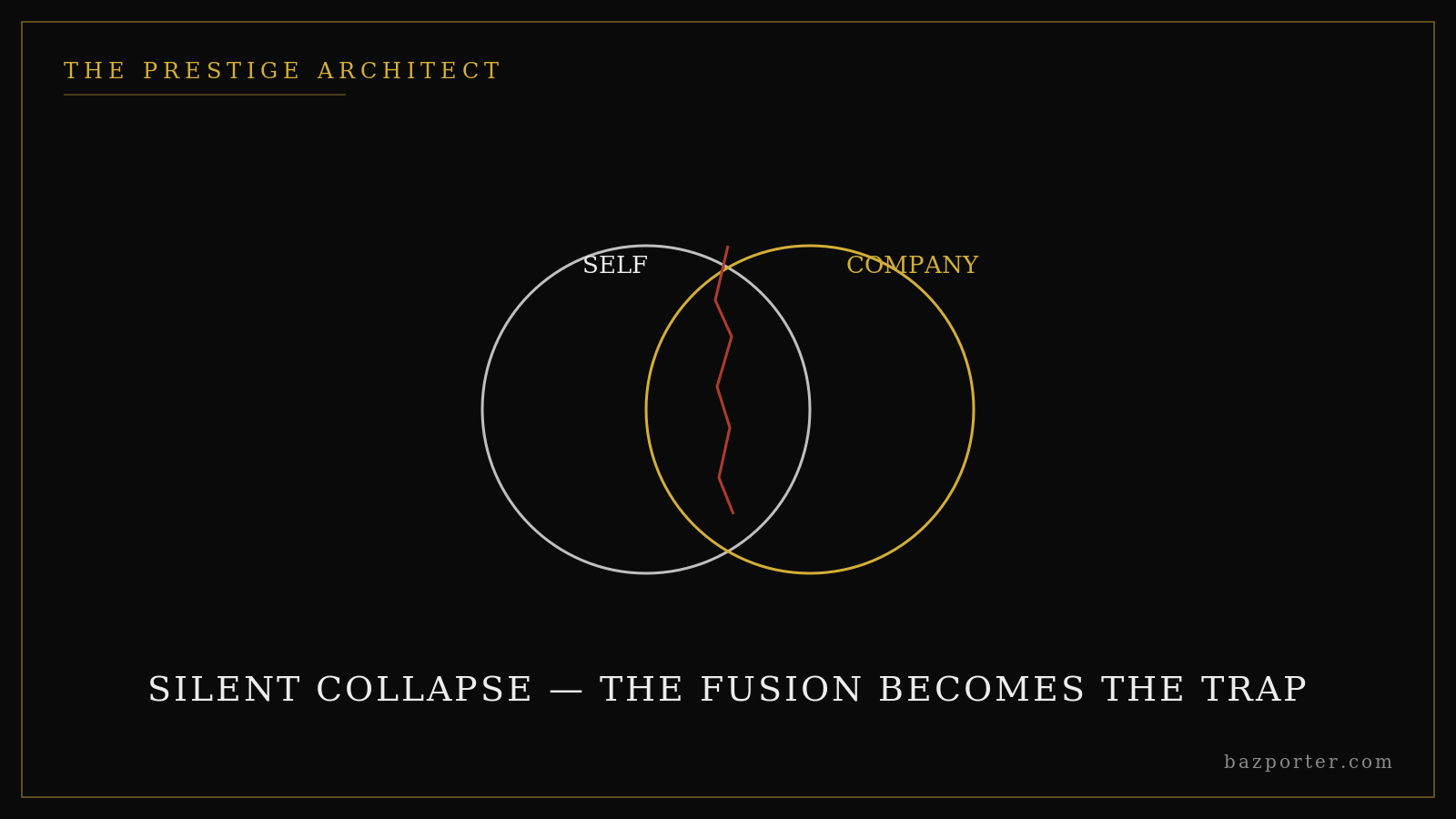
Research names this directly. In the Academy of Management Journal, organizational identification is one of the strongest predictors of how hard a founder handoff lands (Academy of Management Journal, 2019). The deeper the fusion, the harder the exit. Nearly half of departing chief executives describe the role as part of who they are, not a job they held.
This is Silent Collapse™ in its purest form. On the surface: a capable leader planning a responsible transition. Underneath: a self with no blueprint for existing outside the role. The founder guards the door because the door is the last wall holding the identity up.
The founder does not fear the company failing without them. The founder fears being no one once the company runs fine without them.
Name the pattern and it loses half its grip. For the full frame, see the Sovereign Leadership Resource Hub.
The RAMS™ Reframe: Rebuilding the Self Beneath the Role
The RAMS Framework™ runs the exit as an architecture problem, not a willpower problem. Five pillars: Results, Attitude, Authenticity, Mastery, Systems. Each one closes a gap the org chart cannot reach.
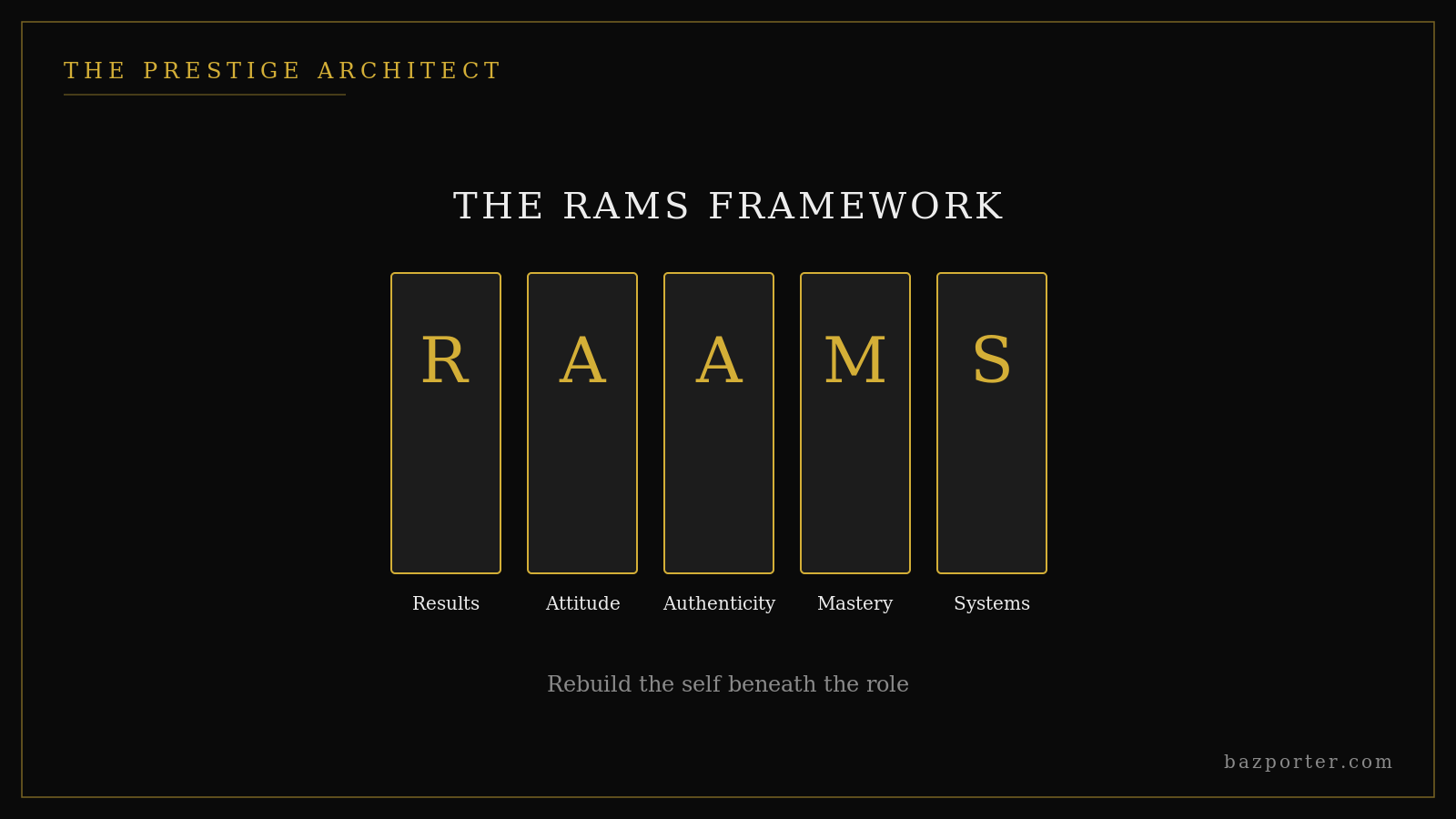
Results: The Output–Identity Gap
You measure yourself by output. The company measures fine without you. That gap is the wound. When results and identity are the same object, losing the results reads as losing yourself.
Collapsed pattern: "If I am not producing, I am nothing." The exit erases the scoreboard.
Sovereign pattern: Output is a thing you do, not the thing you are. The scoreboard changes. You do not.
Operational rule: Separate what you produce from who you are before you sign the transition plan, not after.
Attitude: Where the Collapse Lives
Attitude is the internal operating system. It runs underneath every decision. In a fused founder, the attitude says: control is safety. So you delay. You re-enter. You revise the successor's calls. Each move looks like diligence. Each move is fear wearing a suit.
Recent research is blunt on the cost. Founder handovers carry a failure risk two to three times greater than non-founder transitions (Harvard Business Review, January 2026). The self-sabotage is not weakness. It is an unexamined operating system doing exactly what it was built to do.
Authenticity: The Private–Public Divide
In public: the confident founder, ready to hand over the reins. In private: a person who has no idea who they are on the other side. That divide is the engine of Silent Collapse™. The wider it runs, the longer the exit stalls.
Command decision: Close the divide privately first. The public transition follows a self that already exists off the org chart.
Mastery: Skill Versus Sovereign Capability
You mastered building the company. That is skill. Existing as a full person without the title is a different capability. Most founders never built it. They ran so hard for so long that the role became the only self they practiced.
Skill: running the business. Proven. Visible. Rewarded.
Sovereign capability: holding a stable identity when the business no longer needs you at the helm.
Systems: The Architecture of the Exit
Succession plans build the org chart of the future. They rarely build the identity architecture of the founder. That omission is why the plan sits in a drawer. The calendar is not the problem. The architecture is.
The Collapsed Founder vs. Sovereign Leadership™:
Guards the door out of fear → Opens the door by design
Identity fused to the title → Identity anchored beneath the title
Exit reads as erasure → Exit reads as the next build
Delays and re-enters → Hands over and stays out
Self dies with the role → Self outlives every role
The Collapsed FounderSovereign Leadership™Guards the door out of fearOpens the door by designIdentity fused to the titleIdentity anchored beneath the titleExit reads as erasureExit reads as the next buildDelays and re-entersHands over and stays outSelf dies with the roleSelf outlives every role
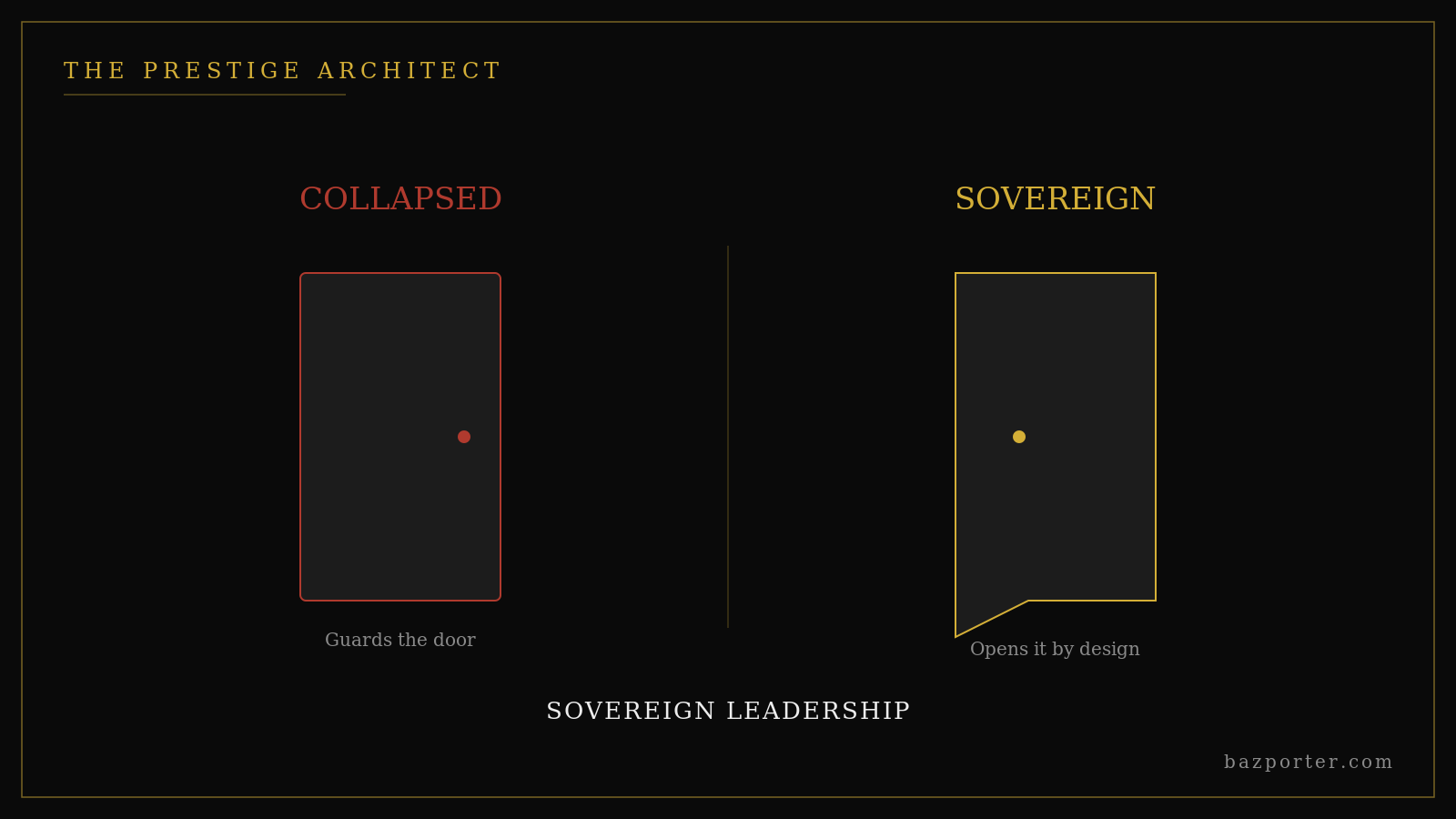
The exit is not a date. It is an architecture. Build the self that survives the handover, and the handover stops feeling like a loss. If your body reads the exit as a threat, name where you stand first: Take the Silent Collapse Diagnostic.
Case Vignette: The Founder Who Stopped Guarding the Door
A founder, eighteen years in, had a successor ready and a plan approved. He still would not sign. Every review meeting, he re-opened decisions the successor had already made. He called it standards. It was terror.
We did not touch the succession plan first. We rebuilt the identity architecture underneath it. We separated his results from his self. We named the private–public divide out loud. Six weeks in, he signed. He stayed out. The company held. So did he — because for the first time in eighteen years, there was a self standing outside the role to hold.
The Architecture of Your Return
You do not need more courage. You need a self that exists when the title does not. That is nervous-system sovereignty, not inspiration. The alarm in your chest is not a character flaw. It is a body that never learned it was safe outside the role.
The return is structural. Build the identity architecture, and the exit becomes the next chapter instead of the final one. The work is not letting go. The work is building the person who can. When you are ready to build that with precision, Apply to Work With Baz.
Frequently Asked Questions
Why can't I let go of the company I built?
Because the role became your identity. Stepping down reads to your nervous system as losing yourself, not losing a job. The block is psychological, not operational. You rebuild the self first, then the exit becomes possible.
Is founder exit anxiety a sign of weakness?
No. It is a sign of deep organizational identification — the same fusion that made you build hard also makes leaving hurt. It is an operating system, not a flaw. Named and rebuilt, it stops running the show.
Why do so many founder successions fail?
Founder handovers fail at two to three times the rate of non-founder transitions. The cause is rarely the successor. It is the founder re-entering, delaying, and undermining — fear protecting a fused identity.
How do I actually prepare to step down?
Separate your results from your self before you sign anything. Close the private–public divide first. Build a stable identity off the org chart. The org-chart plan works only once the identity architecture holds.
What is Silent Collapse and how does it relate to exit?
Silent Collapse is the erosion of identity underneath intact performance. In a founder, it surfaces most sharply at exit, when the company runs fine and the self has no blueprint for existing outside the role.
British military veteran. Two-time international bestselling author. Founder, The Prestige Architect®. Host, Rise From The Ashes podcast, C-Suite Network. Boulder, Colorado.