Why You Can't Let Go: The Founder Exit Is an Identity Problem
You built the thing. Now you cannot leave it. You tell the board you are protecting the company. The truth sits lower than that. If you step back, you do not know who you are. This is Silent Collapse™ wearing a succession plan as a disguise. The exit looks operational. It is not. It is an identity event your nervous system was never told about. Most founders read this as discipline. It reads, clinically, as fusion. Read The Manifesto.
Table of Contents
Key Takeaways
The block is not stubbornness. The founder who cannot let go is fused, not difficult.
Succession is an identity problem first. The org chart is the last 10 percent, not the first.
The data is brutal. Founder-CEO transitions fail two to three times more often than other handovers.
The fix is architecture, not willpower. You rebuild the self under the role before you move the role.
The Definitive Answer
A founder cannot let go because the company has become the nervous system's primary source of identity, purpose, and regulation. Stepping back does not read as a plan. It reads as loss. Succession planning anxiety is not a scheduling issue. It is an identity problem, and it resolves only when you build a self that exists outside the company first.
The Hidden Pattern: Why Letting Go Feels Like Dying
Picture the founder as the load-bearing wall of a house. Pull the wall and the house does not adjust. It comes down. That is how the body reads the exit. Not as a transition. As a structural failure.
The research is not soft on this. Harvard Business Review reports that founder-CEO handovers carry a failure risk two to three times higher than other leadership transitions. McKinsey finds that one in three CEO successions fails outright. These are not skill gaps. The successors are often excellent. The wall will not come out cleanly.
Why? Because the founder's daily purpose runs on the company. So does their status. So does their regulation. The business is not what they do. It has become who they are. This is the engine of Silent Collapse™: a leader who looks fully in command while the self underneath has quietly merged with the work.
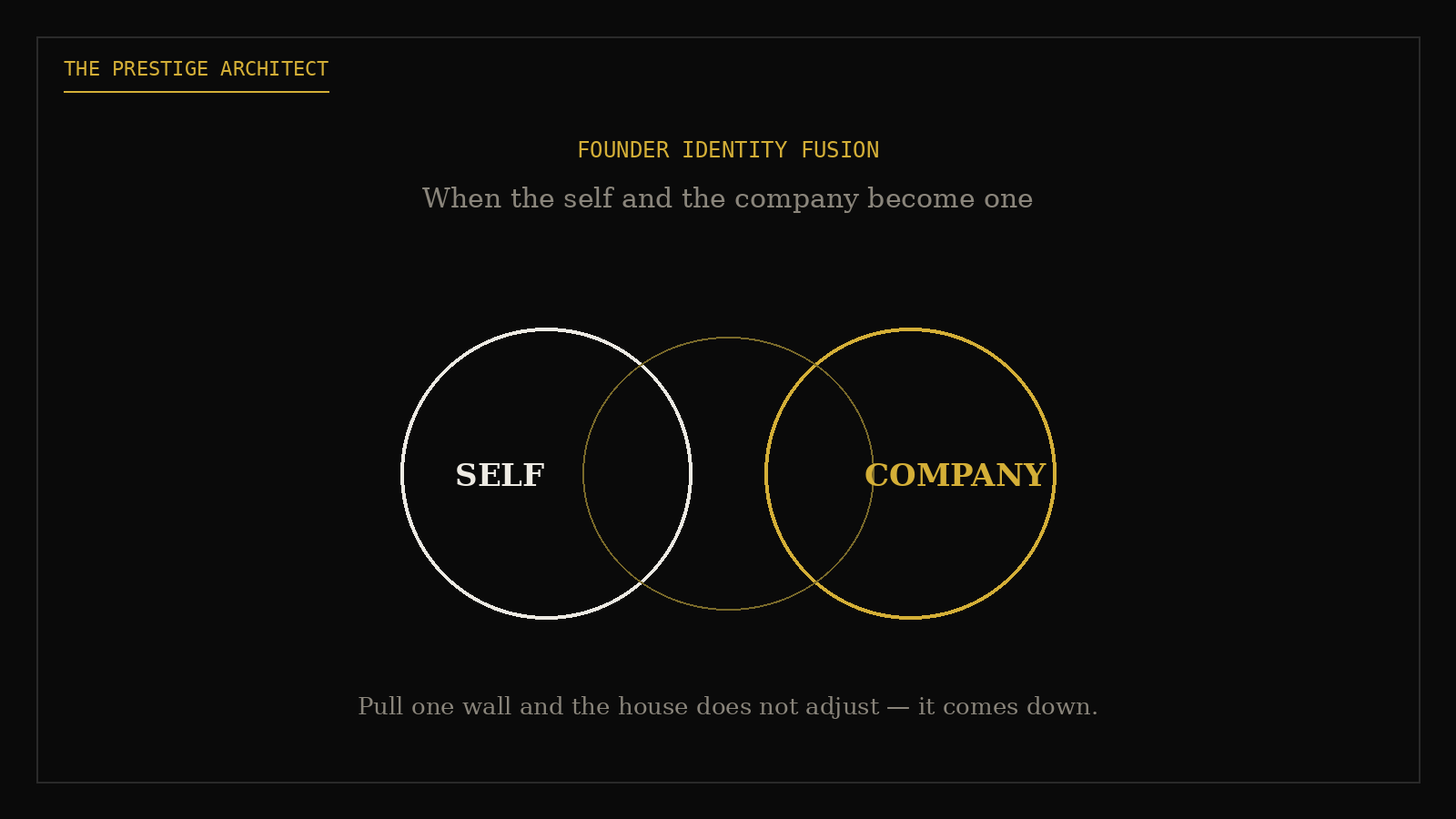
Founder Identity Fusion
Identity fusion is the merger of the self with the organization. Purpose, belonging, and meaning stop being separate from the company. They become the company. Annie Wright, writing on post-exit founders, describes the aftermath as grief — a void no cheque fills. The HBR research on stepping down names the same fear in plain words: leaders ask who they are without the role at all.
The founder who cannot let go is not protecting the company. They are protecting the only version of themselves they can still find.
Name it correctly and the problem changes shape. You are not managing a calendar. You are rebuilding an identity. Read The Manifesto for the spine of that rebuild.
The RAMS™ Reframe: Building an Exit That Holds
The RAMS Framework™ runs the exit at two levels at once: the nervous system and the business. Five pillars — Results, Attitude, Authenticity, Mastery, Systems. The leader before the strategy. Here is how each one moves a stuck founder.
Results: Output Is Not the Same as Identity
You measure yourself by output. Revenue. Headcount. The deal. Strip the title and the output stops — so the identity reads as gone too. That is the gap. Operational rule: separate what you produce from who you are before you separate yourself from the company.
Name the metric you hide behind. It is usually one number.
Define a result that is not the company. Mentorship. A second build. A body that recovers.
Attitude: Where the Collapse Actually Lives
Attitude is the internal operating system. The collapse does not live in the org chart. It lives here, in the private script. "If I step back, it all falls apart." That sentence is not strategy. It is fear running the company through you.
Succession is not an org-chart problem. It is an identity problem the nervous system was never told about.
Authenticity: The Public Plan, The Private Fear
In the boardroom you present a clean timeline. In private you stall every handover. That divide is the core of Silent Collapse™. The performed founder is ready. The lived founder is terrified. Command decision: close the gap between the two before the gap closes the exit. You cannot delegate a role you are secretly still gripping.
Mastery: From Indispensable to Sovereign
You made yourself indispensable. It felt like strength. It built a cage. Real mastery is not being needed for everything. It is the capability to be removed without the structure shaking.
Indispensable: the company needs your presence to function.
Sovereign: the company runs on your architecture, not your attendance.
Systems: The Architecture of the Exit
This is the pillar most founders skip. They plan the announcement, not the architecture. McKinsey's work on stepping out of the role is clear: the clean exits are years of structure, not a single date. Sovereign Leadership™ treats the exit as a build — successor depth, decision rights, and a regulated founder who is no longer the single point of failure.
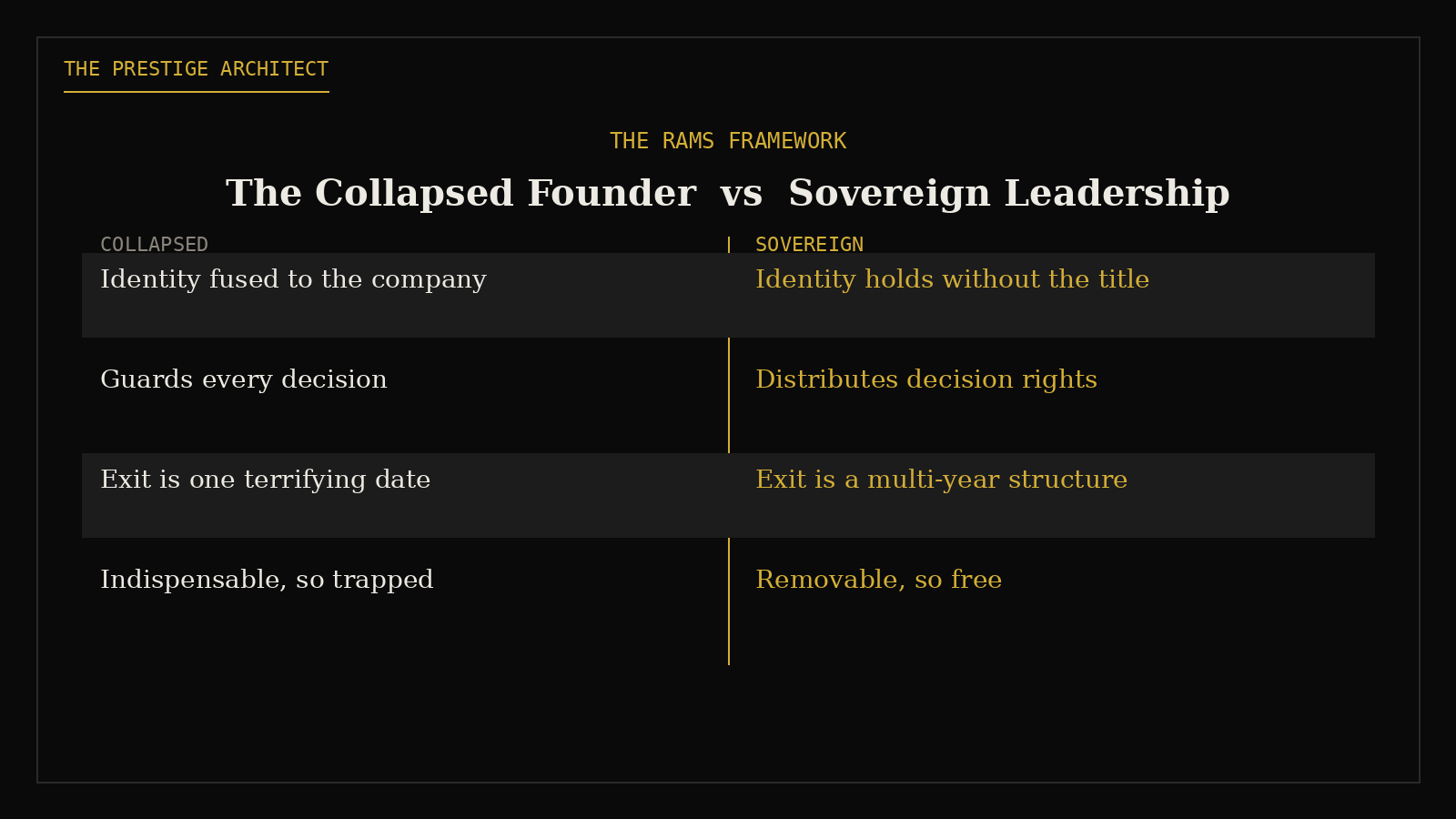
The Collapsed FounderSovereign Leadership™Identity fused to the companyIdentity holds without the titleGuards every decisionDistributes decision rightsExit is one terrifying dateExit is a multi-year structureIndispensable, so trappedRemovable, so freeStalls in private, smiles in publicPrivate and public are the same plan
If the symptoms above are reading as recognition, not theory, start with the diagnostic. Take the Silent Collapse Diagnostic. It shows you where the fusion is load-bearing.
A Short Case: The CEO Who Stopped Guarding the Door
A founder, fourteen years in, had a buyer and a successor. Both ready. He killed the deal twice. He called it diligence. It was fear. We did not start with the term sheet. We started with the self under it.
We built results that were not the company. We named the private script out loud. We rebuilt decision rights so the business stopped needing his hands on every door. Eight months later he transitioned out — regulated, not hollow. The architecture held because we built the founder first. For the structure behind that work, see the Sovereign Leadership Resource Hub.
The Architecture of Your Return
You do not need more discipline. You have plenty. You need a self that survives the role coming off. That is nervous-system sovereignty — a regulated identity that does not depend on the company to stay intact.
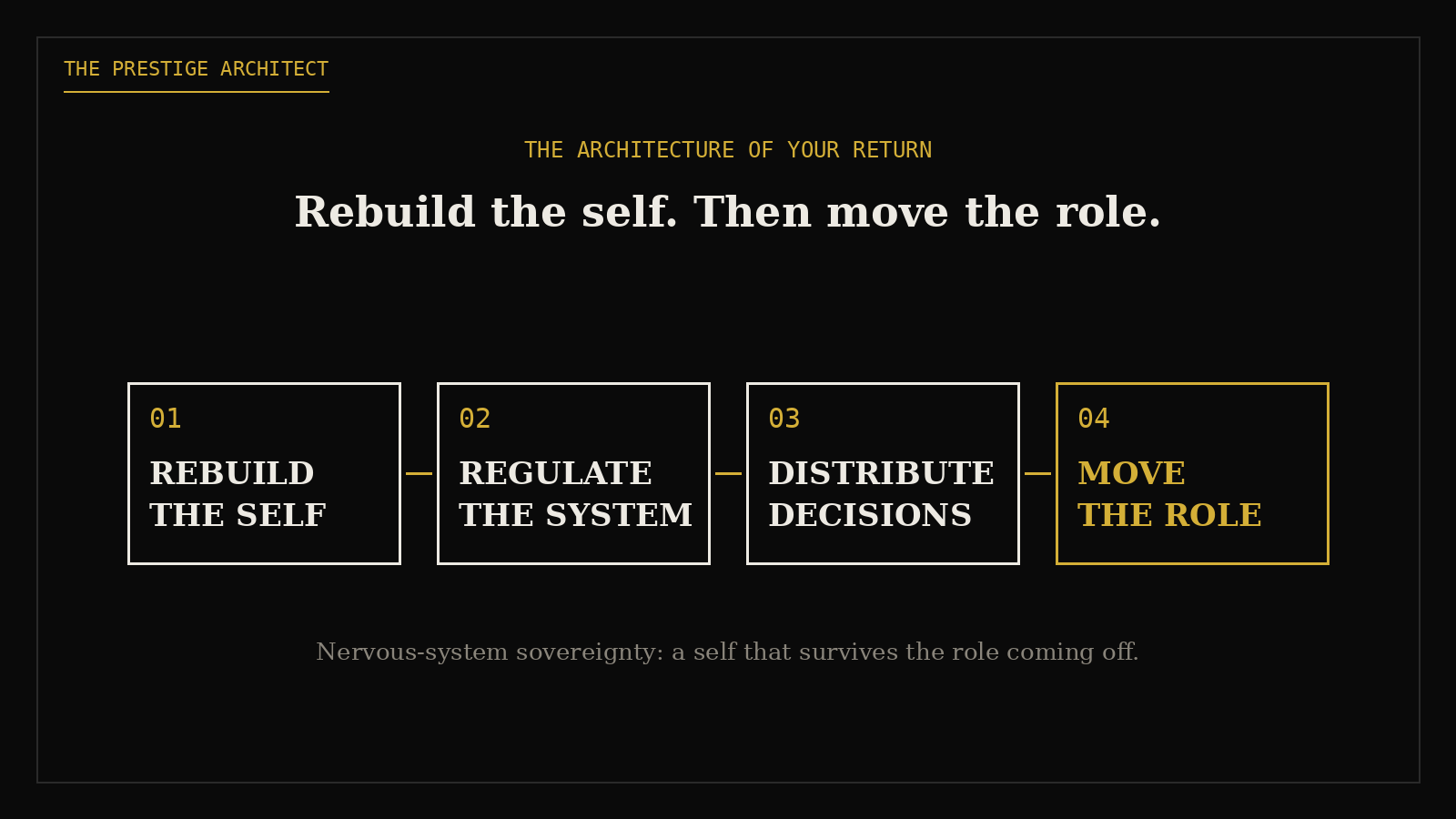
The order is fixed. Rebuild the self. Then move the role. Founders who do it in that sequence exit clean. Founders who skip it stall for years, or leave and fall into the void the research keeps documenting. The exit is not the end of who you are. It is the test of whether you ever existed outside the work. Build the answer first. Apply to Work With Baz.
Frequently Asked Questions
Why can't I let go of my company even though I planned to?
Because the company became your primary source of identity and regulation. The plan is rational. The block is not. Your nervous system reads the exit as loss, so it stalls every handover regardless of the timeline. The fix is to build a self that exists outside the company first.
Is succession planning anxiety normal for founders?
It is common and it is documented. Founder-CEO transitions fail far more often than other handovers, and many founders report grief and emptiness after the exit. Common does not mean harmless. Left unaddressed, the anxiety quietly sabotages the transition you say you want.
How do I know if I am fused to my company?
Ask one question: who are you without the title? If the answer is silence, fear, or only the company, you are fused. Other signals include guarding every decision, stalling handovers in private, and measuring your whole worth by output.
What is the first step to actually stepping back?
Not the org chart. The self. Define results and meaning that are not the company. Name the private script driving the stall. Then rebuild decision rights so the business no longer needs your presence to function. The role moves last, not first.
About the Author
British military veteran. Two-time international bestselling author. Founder, The Prestige Architect®. Host, Rise From The Ashes podcast, C-Suite Network. Boulder, Colorado.