Founder Can't Let Go? The Exit Is Identity Collapse, Not a Plan
You built the thing. Now the board wants a handover date. And something in your chest tightens every time the calendar gets close. You call it deal complexity. It is not. What you are feeling is Silent Collapse™ — the structural erosion of identity beneath intact performance. The company runs fine. You are the one coming apart. If this is landing, start here: Read The Manifesto.
Table of Contents
Key Takeaways
The exit is an identity event, not an org-chart event. The legal work is easy. Releasing the self that the company built is not.
"Founder can't let go" is a nervous-system state. It is not weakness. It is an unmapped fear with no name yet.
Most handovers fail on the founder, not the successor. Only about 30% of founder-led businesses survive the transition to the next generation.
The fix is architectural. You build an identity that outlives the title before you ever sign the papers.
The Short Answer
A founder cannot let go because the business became the identity, and the exit reads to the body as a death. The succession plan handles the assets. It does not handle the person. Until you rebuild the identity infrastructure underneath the role, every handover date will feel like a threat — and you will quietly sabotage it. This is Silent Collapse™, and it has a way out that is structural, not motivational.
The Hidden Pattern: Why You Cannot Sign the Papers
For twenty years, your name and the company's name were the same word. Every hard season, you were the one who held the line. The firm did not just hold your money. It held your worth. So when the exit gets real, your body does not process a transaction. It processes a loss of self.
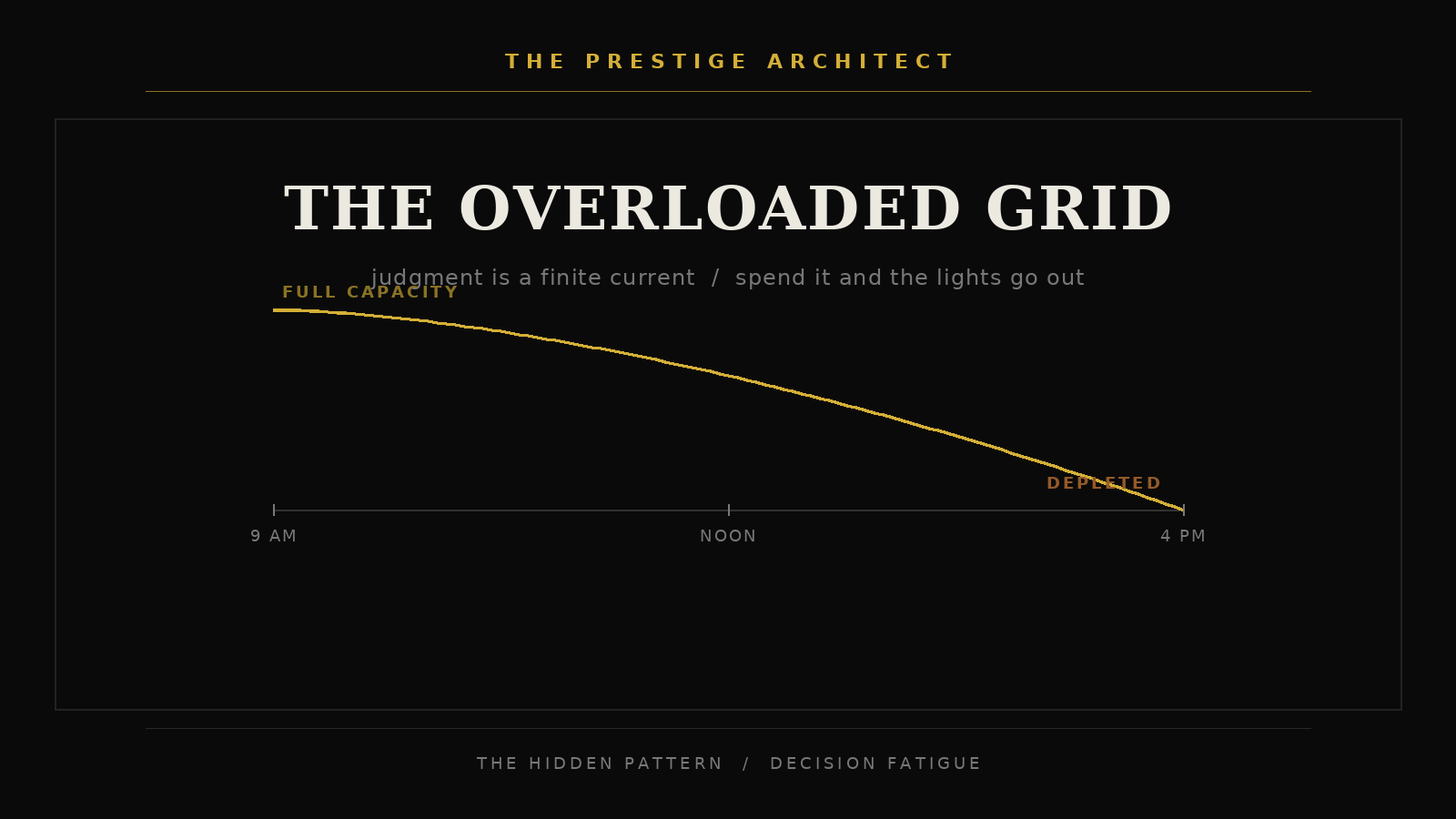
Harvard Business Review, studying life after the founder, found that the hardest transfer is not power — it is meaning, because purpose gets fused to the title (HBR, "Leading After the Founder," 2026). Forbes reached the same floor from the deal side: the best exits are built years early, precisely because the founder needs time to become someone the company does not define (Forbes Business Council, 2026).
The founder who cannot let go is not protecting the company. He is protecting the only version of himself he has ever known.
Watch how it surfaces. You reopen settled terms. You insert yourself into decisions that no longer need you. The team reads it as control. It is grief with a suit on. Naming the pattern is the first structural move. If you want the full map of the erosion, the Sovereign Leadership Resource Hub lays it out.
The RAMS™ Reframe: Rebuilding the Founder Beneath the Founder
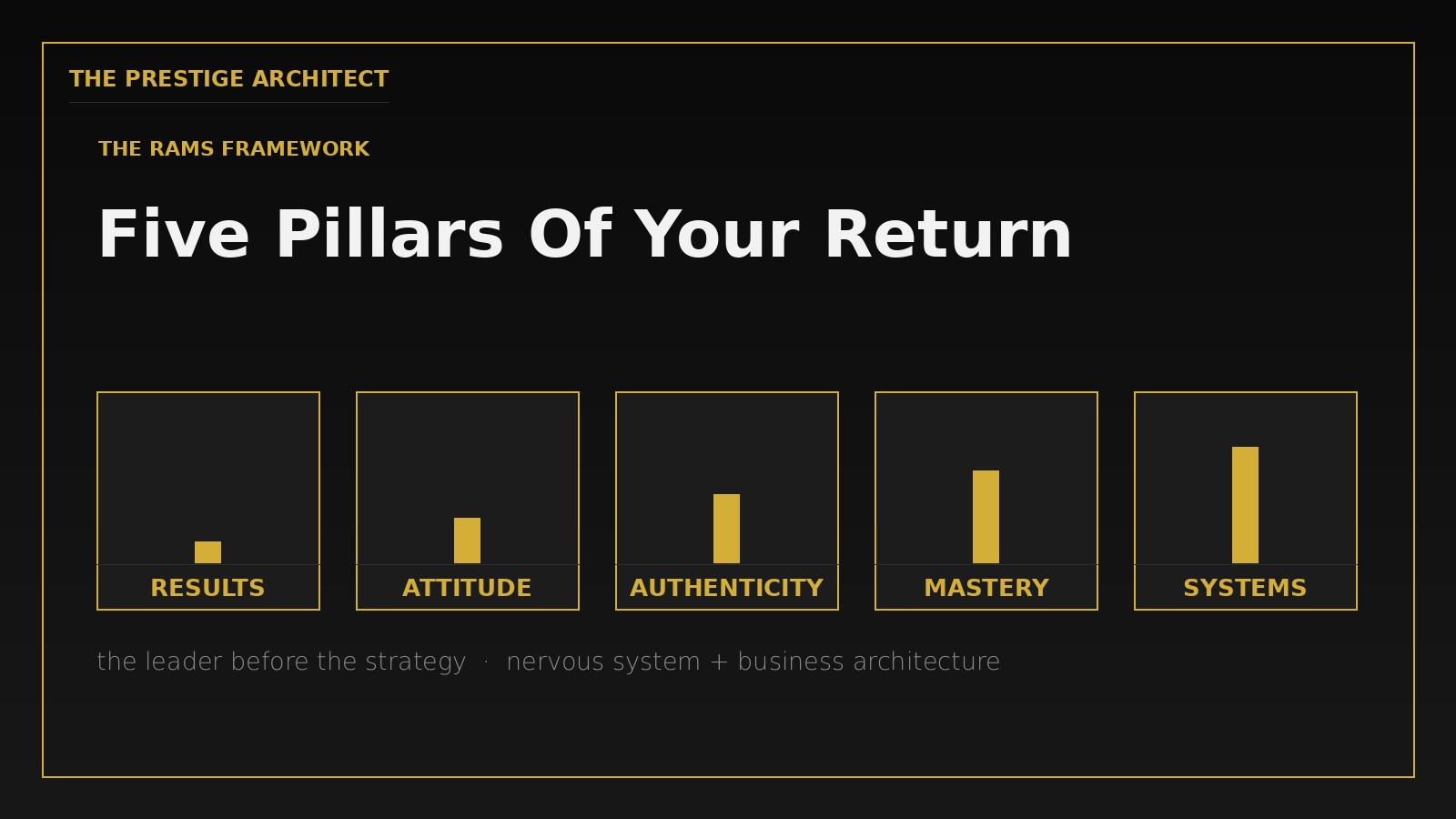
I do not fix exits with pep talks. I rebuild the leader underneath the exit. The RAMS Framework™ works at two layers at once — the nervous system and the business architecture. The body and the business run on the same wiring. Dysregulate one and both fail. Here is the handover through all five pillars.
Results — The Output-Identity Gap
You measured yourself by what the company produced. Revenue. Headcount. The logo on the wall. Remove the output and a gap opens where the self should be. That gap is the real reason the exit terrifies you.
The trap: "I am what I build." The moment you stop building, you stop existing.
The rebuild: your worth becomes a constant, not a line item. It does not move when the revenue does.
Operational rule: if your calm depends on this quarter's number, you do not own the number — it owns you.
Attitude — Where the Collapse Lives
Attitude is the internal operating system. It is the story running under the decision. For the exiting founder, the story is brutal and quiet: "If I let go, I am no one." That line lives in the body, not the strategy deck. It fires cortisol every time the handover gets close.
Succession does not fail in the paperwork. It fails in the founder's nervous system, months before anyone signs.
Authenticity — The Private/Public Divide
In the boardroom you say you are ready to transition. In the dark you are terrified there is nothing on the other side. That divide — the performed readiness over the private dread — is the engine of Silent Collapse™. It costs you sleep, presence, and the very clarity the handover needs. Closing the divide is not confession. It is architecture. When the private truth and the public posture finally match, the deal stops feeling like a threat.
This is the pillar most founders skip. It is also the one that decides whether the return holds. Take the Silent Collapse Diagnostic to see exactly where the divide is running in you.
Mastery — Building Is Not Releasing
You have mastery. You built a company from nothing. But building and releasing are different capabilities. The skill that got you here — hold everything, decide everything, carry everything — is the exact skill that now blocks the exit. Sovereign Leadership™ is the capability to lead without gripping. To hold power loosely enough to hand it over clean.
Skill: makes you indispensable. Feels like strength. Ends as a cage.
Sovereign capability: makes you unnecessary on purpose. That is the mastery an exit requires.
Systems — The Architecture of the Handover
The calendar is not the problem. The architecture is. A clean handover is not willpower on the day you sign. It is a system you build in advance: a defined next chapter, an identity that stands without the title, a nervous system regulated enough to let go without collapse. Build that structure and the exit becomes a door, not a cliff.
Command decision: do not schedule the handover before you build the founder who survives it.
The exit is the last thing you build. Build the founder who survives it first.
The Collapsed Founder vs Sovereign Leadership™
Staying relevant vs signing clean: the collapsed founder reopens settled terms to stay needed; Sovereign Leadership™ signs clean and stays gone.
Worth: the collapsed founder's worth rises and falls with the valuation; the sovereign founder's worth is a constant, not a number on the ledger.
Identity: "If I let go, I am no one" becomes "I am the architect, not the building."
The divide: performed readiness hiding private dread becomes private truth and public posture in match.
Power: gripping power to feel safe becomes holding power loosely enough to pass it on.
The Collapsed FounderSovereign Leadership™Reopens settled terms to stay relevantSigns clean and stays goneWorth rises and falls with the valuationWorth is a constant, not a number on the ledger"If I let go, I am no one""I am the architect, not the building"Performs readiness, hides the dreadPrivate truth and public posture matchGrips power to feel safeHolds power loosely enough to pass it on
Case Vignette: The Deal That Sat Unsigned
A founder came to me with a signed offer on the table — and it sat there unsigned. Two decades in. Strong price. The buyer was ready. Every week the papers sat, and every week she found a new term to renegotiate. Her advisors called it caution. It was not caution. It was collapse.
We did not touch the deal. We built the architecture underneath it. We named the fear — "if I let go, I am no one" — and we constructed the next chapter before the exit, not after. We regulated the nervous-system spike that fired every time the handover got close. Six weeks later she signed. Not because she was pushed. Because there was finally a self standing on the other side of the signature.
The Architecture of Your Return
Letting go is not a mindset. It is nervous-system sovereignty — a body regulated enough to release what it built without reading release as death. That is not inspiration. It is engineering. You do not "get over" the fear of the exit. You build the identity infrastructure that makes the fear unnecessary.
The return is simple to name and demanding to build: an identity that is not the company, a nervous system that stays sovereign under loss, and a next chapter designed before the handover, not scrambled after it. Build the founder beneath the founder, and the exit stops being the end of you. It becomes the cleanest thing you ever architected. When you are ready to build it with me, Apply to Work With Baz.
Frequently Asked Questions
Why can't I let go of my business even though I want to sell?
Because the business became your identity, not just your income. When the exit gets real, your body reads it as a loss of self, not a transaction. The wanting is real. So is the dread underneath it. Both are true at once, and the dread wins until you rebuild the identity beneath the role.
Is founder exit anxiety a sign something is wrong with me?
No. It is a sign the company held your worth for too long. That is a structural condition, not a character flaw. It is what I call Silent Collapse™ — intact performance, eroding identity. It has a clear architecture and a clear way out.
Why do I keep sabotaging my own succession plan?
Because part of you experiences the handover as an ending you have not prepared for. So you reopen terms, insert yourself, and stall. The team sees control. It is grief managing itself the only way it knows. Build the next chapter first and the sabotage stops.
How do I actually prepare to hand over the company I built?
You build the founder who survives the exit before you build the exit. That means a defined identity off the title, a regulated nervous system, and a designed next chapter. The legal handover is the last step, not the first. Start by mapping where the collapse is running with the Silent Collapse Diagnostic.
About the Author
British military veteran. Two-time international bestselling author. Founder, The Prestige Architect®. Host, Rise From The Ashes podcast, C-Suite Network. Boulder, Colorado.