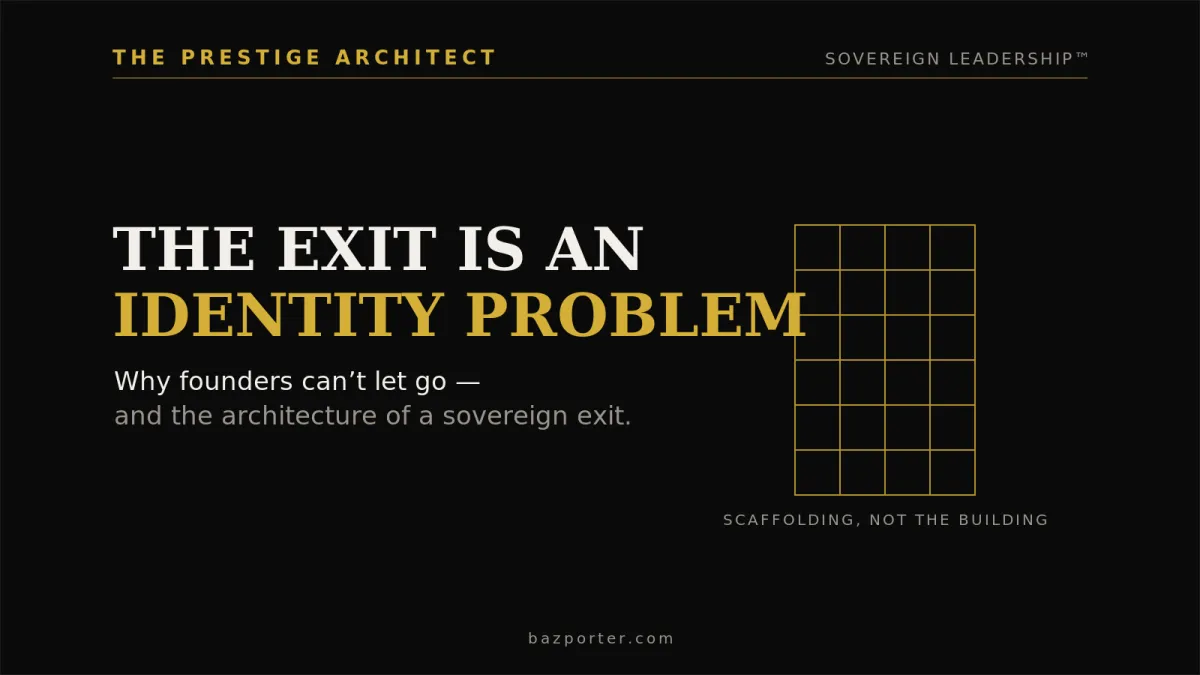
The Founder's Exit Is an Identity Problem, Not an Org Chart
The Founder's Exit Is an Identity Problem, Not an Org Chart
You built it. Now it owns you. The numbers say you can step back. The board says it is time. The plan sits finished. And still you do not move. This is Silent Collapse™ wearing a founder's face — the quiet refusal to leave a thing you can no longer enjoy and can no longer release. It does not look like fear. It looks like diligence. One more quarter. One more hire. One more reason to stay indispensable. Read The Manifesto before you call that loyalty.
Table of Contents
Key Takeaways
The structure never stalls a succession. The founder does. The plan is finished. The person at its center is not.
Founder-CEO handovers fail two to three times more often than other leadership changes — and the cause is identity, not strategy.
Letting go is an architecture problem. You cannot will your way out of a role that became your name.
The exit you fear is a rebuild. Sovereignty is the capacity to leave a thing intact — and remain intact yourself.
The Definitive Answer
Founders cannot let go because the business is not something they own — it is something they have become. Succession planning anxiety is not a gap in the org chart. It is a fusion between identity and output that no exit plan can dissolve on its own. The work is structural: separate the self from the system before you transfer the keys.
The Hidden Pattern: Your Exit Is Not on the Org Chart
Here is what no advisor names in the room. The plan is rarely the problem. The numbers reconcile. The successor is ready. And the handover stalls for three more years. Not because the model is wrong — because the person at the center cannot answer a single question: who am I when this is no longer mine?
That is the spine of Silent Collapse™. The outward signal reads as care. Inwardly it is a nervous system bracing against erasure. Harvard Business Review reporting puts the founder-CEO transition failure risk at two to three times that of other leadership changes, and poorly managed CEO transitions destroy close to a trillion dollars in value each year across the S&P 1500. The cost is not a spreadsheet error. It is unprocessed identity, priced at scale. The research is clear that the high cost of poor succession planning compounds long before a handover date.
Why Identity Fusion Freezes the Handover
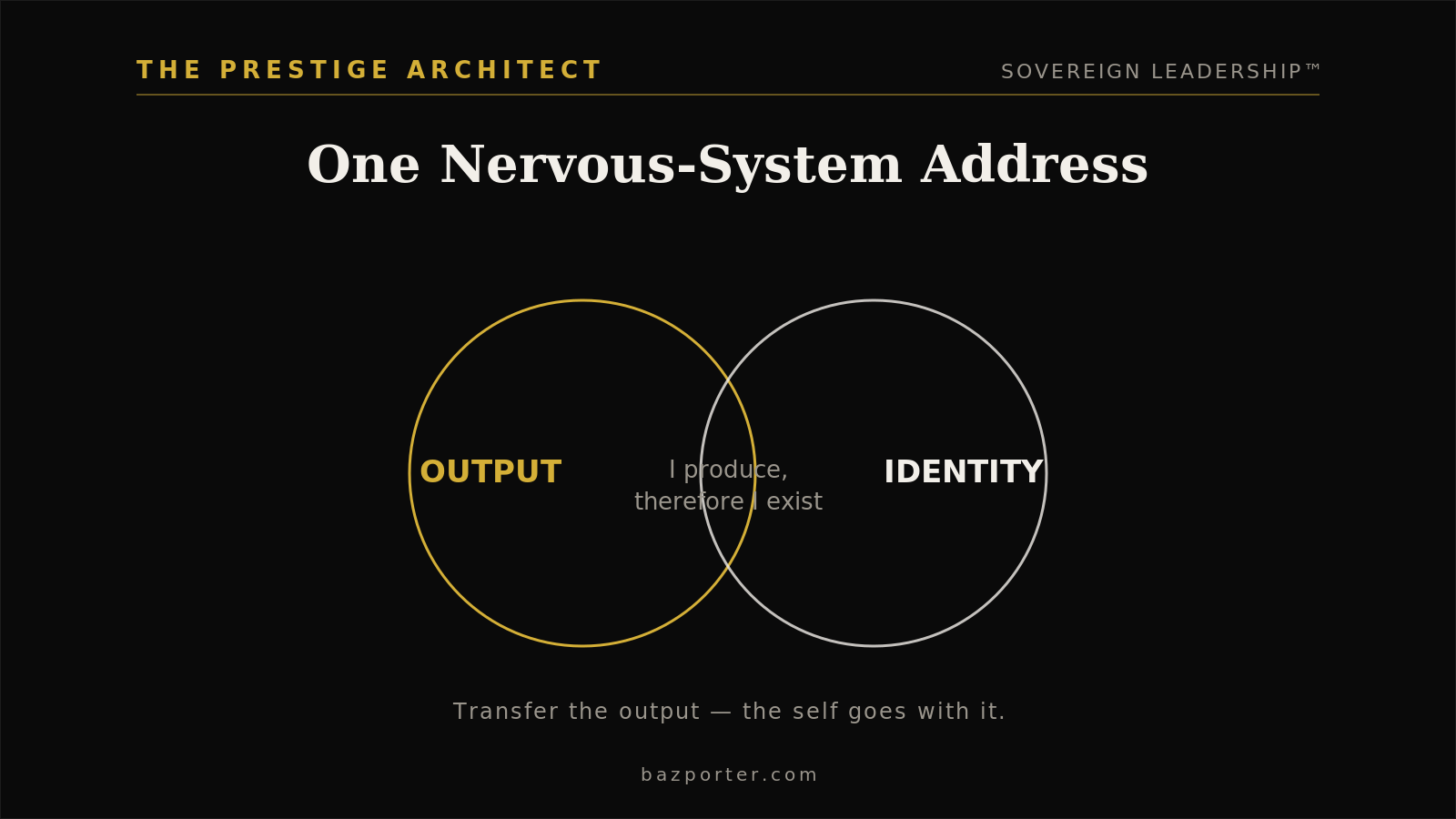
For a decade you were the deciding vote. The role gave you status, urgency, and a place where your judgment mattered most. The brain treats that role as part of the self. Strip it and the system reads threat — the same circuitry that fires under physical danger. This is why logic does not move you. You are not weighing a decision. You are defending a self. HBR's review of the succession research confirms what the boardroom avoids: the human variable, not the plan, decides the outcome.
The structure never stalls a succession. The founder does. The plan sits finished in a drawer because the person at its center cannot separate who they are from what they built.
Name it and you can work it. The exit is an identity problem wearing an operations costume. Start where the freeze actually lives. The Sovereign Leadership Resource Hub maps the same pattern across other points of executive strain.
The RAMS™ Reframe: Architecture, Not Willpower
Willpower is the wrong tool for a fused identity. You do not push harder to leave. You rebuild the structure underneath the leaving. The RAMS Framework™ — Results, Attitude, Authenticity, Mastery, Systems — is the architecture beneath Sovereign Leadership™. It operates on the nervous system and the business at once, because the founder and the company run on the same wiring.
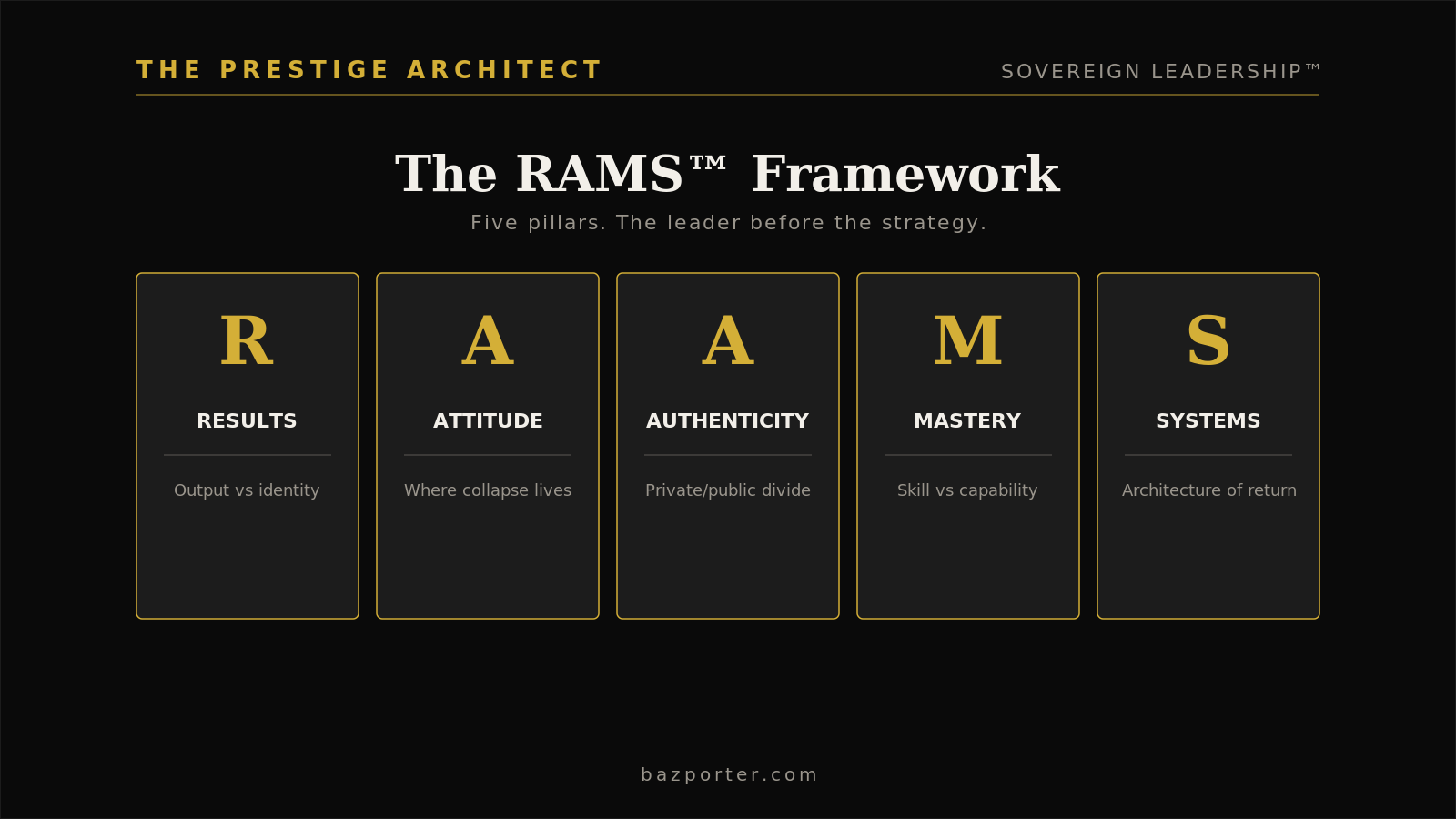
Results — the output-identity gap. You measure your worth by the company's output. When the output transfers, your sense of worth has nowhere to stand. Operational rule: separate the scoreboard from the self before the equity changes hands.
Attitude — where the collapse lives. The internal operating system reads exit as deletion. Until that read changes, every plan stalls at the same wall.
Authenticity — the private/public divide. In public you sponsor the transition. In private you sabotage it with one more delay. That gap is the engine of Silent Collapse™.
Mastery — capability, not control. Staying indispensable is not skill. It is a held breath. Sovereign capability is the ability to make yourself unnecessary on purpose. Command decision: build the team that no longer needs you.
Systems — the architecture of the return. Succession is not a date. It is a structure that holds your identity steady while the role moves on without you.
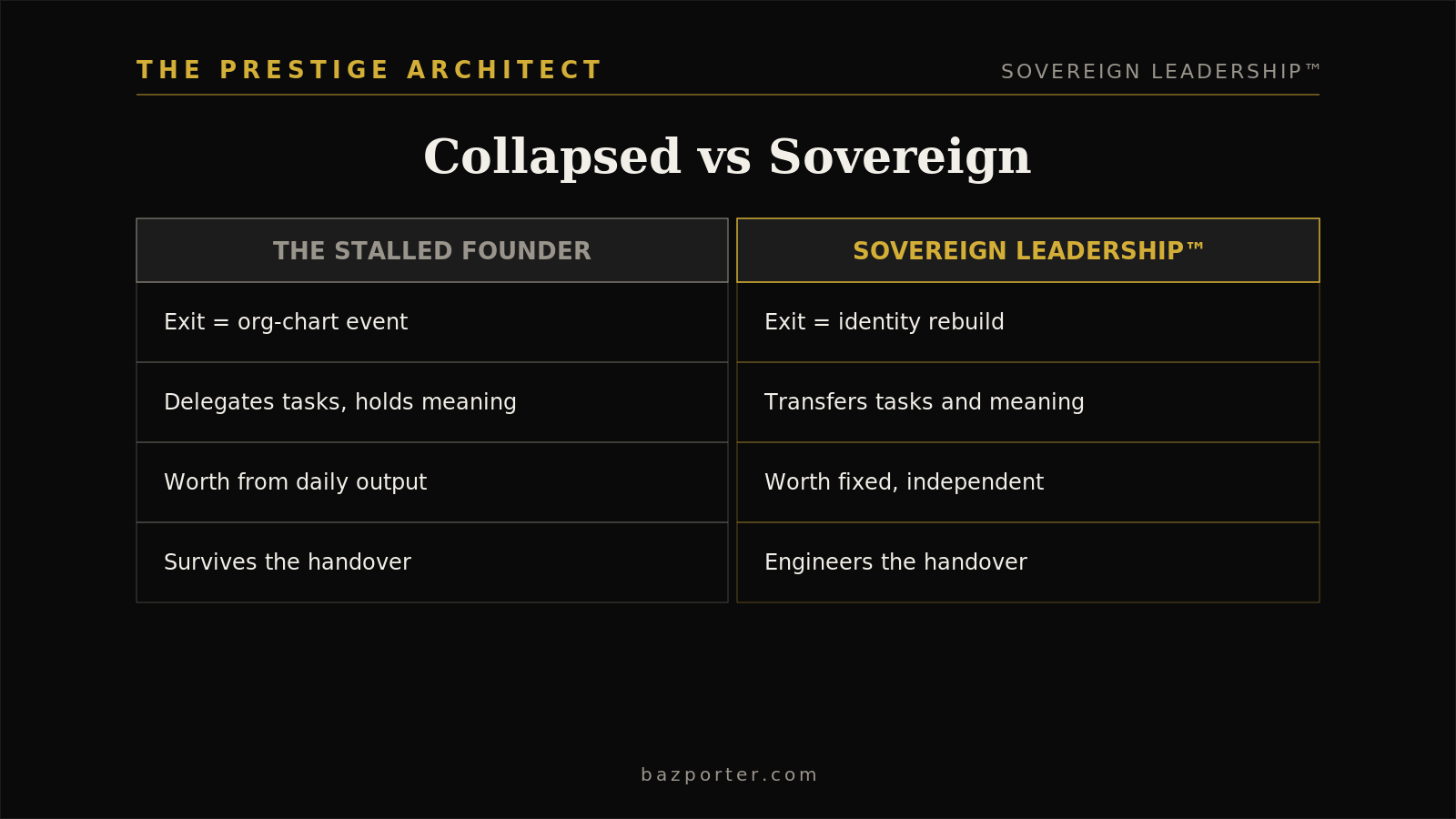
Collapsed vs Sovereign: The Founder at the Threshold
The role. Collapsed founder: is who I am. Sovereign Leadership™: something I built.
The exit. Collapsed founder: erasure of self. Sovereign Leadership™: transfer of a system.
Indispensability. Collapsed founder: proof of worth. Sovereign Leadership™: a design flaw to fix.
The delay. Collapsed founder: loyalty and care. Sovereign Leadership™: a symptom to diagnose.
After the handover. Collapsed founder: empty hands, no name. Sovereign Leadership™: intact self, new structure.
The ThresholdCollapsed FounderSovereign Leadership™The roleIs who I amIs something I builtThe exitErasure of selfTransfer of a systemIndispensabilityProof of worthA design flaw to fixThe delayLoyalty and careA symptom to diagnoseAfter the handoverEmpty hands, no nameIntact self, new structure
The collapsed founder defends a self. The sovereign founder transfers a system and keeps the self. The difference is not courage. It is architecture installed in advance. If you recognize your own delay in that left column, name it precisely. Take the Silent Collapse Diagnostic — a 60-minute live read of where the fusion sits and what the rebuild requires.
Case Vignette: The Founder Who Finally Walked
A founder, eighteen years in, had a signed succession plan and a ready successor. Three years passed. Nothing moved. The advisors blamed valuation. The real block was a single sentence he would not say out loud: without this, I am no one. We did not start with the cap table. We started with the nervous system — separating the scoreboard from the self, rebuilding identity on a base the company did not own. Within four months he transferred the role. The business held. So did he. The plan had always worked. The architecture under the founder had not been built yet.
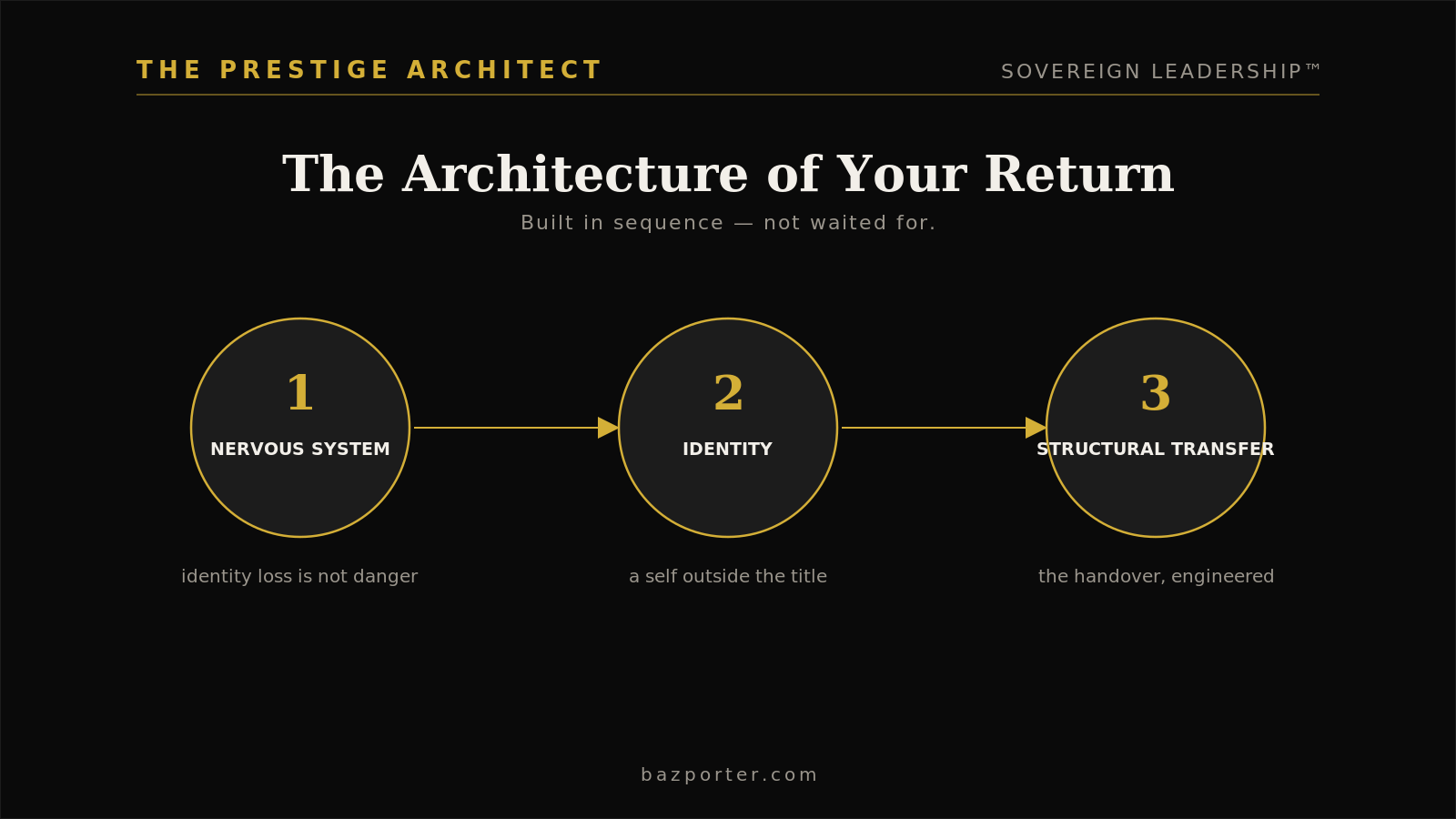
The Architecture of Your Return
Letting go is not a feeling you wait for. It is a structure you install. Sovereignty is nervous-system capacity — the ability to stand at the threshold without the system reading erasure. You rebuild the base first: an identity that does not depend on being the deciding vote. Then the exit stops feeling like death and starts reading as design. This is not inspiration. It is the slow, deliberate engineering of a self that can survive its own success. The founder who can leave intact was built to, on purpose, before the date arrived. That build is the work of The Prestige Architect®. If you are at the threshold and frozen, Apply to Work With Baz.
FAQ
Why can't I let go of my business even though the plan is finished?
Because the plan addresses the org chart and your block lives in your identity. The business became part of how you define yourself. Releasing it reads as self-erasure to the nervous system, so you delay. The work is to separate the self from the system first.
Is succession planning anxiety a sign of weakness?
No. It is a sign that your identity and your output fused over years of building. That fusion is predictable and structural, not a character flaw. It responds to architecture, not willpower.
Why do founder-led handovers fail more often than other transitions?
Because the founder carries an identity stake no successor can replace and no plan can address. Harvard Business Review reporting places the failure risk at two to three times that of non-founder transitions. The variable is human, not strategic.
What is the first step to letting go without collapse?
Separate the scoreboard from the self. Name the fusion precisely, then rebuild your identity on a base the company does not own. Once the self is steady, the role can move without reading as a threat.
British military veteran. Two-time international bestselling author. Founder, The Prestige Architect®. Host, Rise From The Ashes podcast, C-Suite Network. Boulder, Colorado.