Burnout vs Breakdown: The Collapse Executives Can't Name
You run a company. You hit the number. You feel nothing. The word for this is not on the list you keep reaching for. You ask whether this is burnout. You ask whether it is a breakdown. It is neither. What you are living is Silent Collapse™ — the quiet failure of the self underneath the performance. The output stays high. The person running it has gone missing. I name this before I solve it, because recognition is the first repair. Read The Manifesto.
Table of Contents
Key Takeaways
Burnout is occupational. Collapse is structural. One drains your energy. The other erases your identity.
High performers get misdiagnosed. The output stays high, so no one — including the leader — sees the failure underneath.
The fix is not rest. Rest restores energy. It does not rebuild a self. That requires architecture.
The return runs on the nervous system first. Regulate the body, then the business follows.
Burnout vs Breakdown: The Definitive Answer
Burnout is energy depletion from chronic workplace stress. A breakdown is an acute loss of function. For most high performers, the real condition is a third thing the language never names: Silent Collapse™. You still deliver. You still lead. Inside, the identity that gave the work meaning has quietly failed. The burnout vs breakdown debate misses this because both labels measure capacity. Collapse is not a capacity problem. It is an identity problem.
The Hidden Pattern Under the Diagnosis
The World Health Organization classifies burnout as an "occupational phenomenon" — energy depletion, mental distance from the job, reduced efficacy (WHO, ICD-11). That definition is accurate and incomplete. It describes the worker. It says nothing about the person.
Here is the part the diagnosis skips. High performers do not lose function first. They lose meaning first. Harvard Business Review documents the pattern: achievement and satisfaction run on separate tracks, and reaching the goal rarely delivers the feeling you expected (HBR, 2023). The dopamine that drove the climb drops on arrival. The summit feels like nothing.
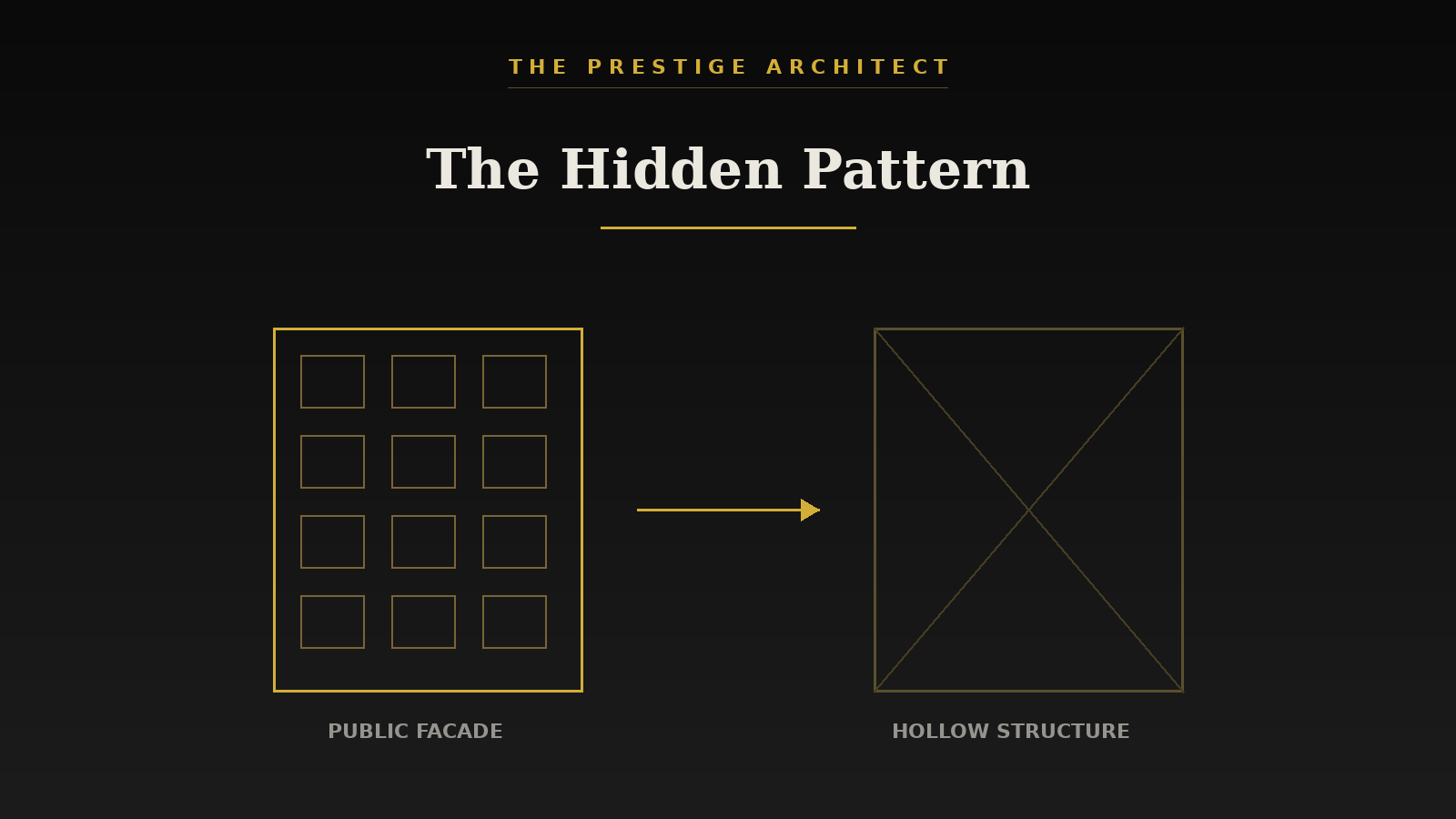
Picture a building with a perfect facade and a hollowed structure. From the street it is impressive. Inside, the load-bearing walls are gone. That is the executive in Silent Collapse™. The performance holds the weight the person can no longer carry. Rest does not repair a structure. Architecture does. The Sovereign Leadership Resource Hub exists for this reason.
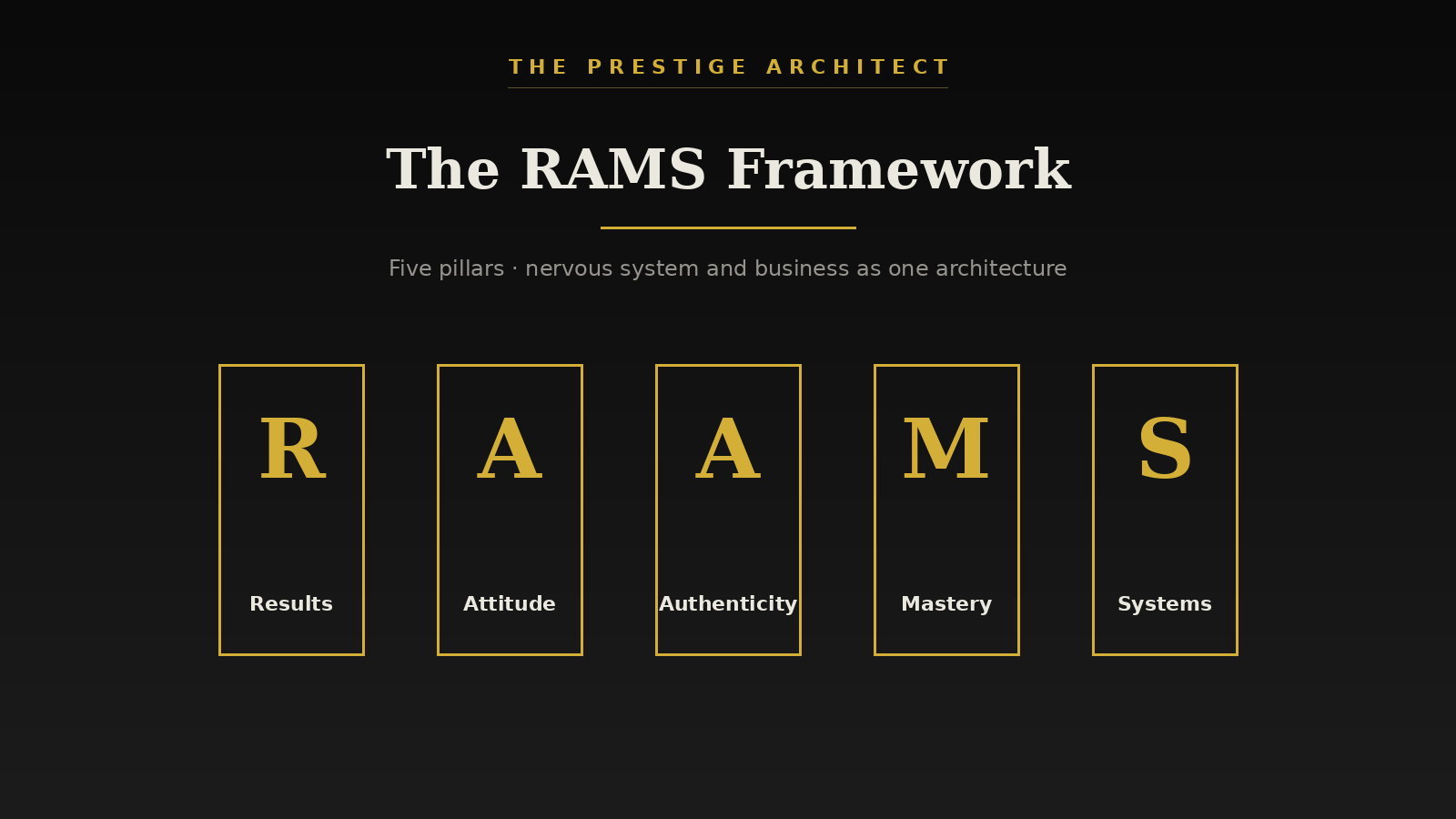
The RAMS Reframe: Five Pillars
I do not treat symptoms. I rebuild the architecture beneath them. The RAMS Framework™ works on five pillars — Results, Attitude, Authenticity, Mastery, Systems. It operates on the nervous system and the business at the same time, because they run on one wiring. Sovereign Leadership™ is power that does not cost you yourself.
Collapsed State vs Sovereign Leadership™
Output measures worth → Worth holds steady; output flows from it.
Rest feels like risk → Recovery is built into the system.
The private self hides → The private and public self match.
More effort, less return → Less force, higher leverage.
The body is ignored → The body sets the pace.
Collapsed StateSovereign Leadership™Output measures worthWorth holds steady, output flows from itRest feels like riskRecovery is built into the systemThe private self hidesThe private and public self matchMore effort, less returnLess force, higher leverageThe body is ignoredThe body sets the pace
Results — The Output and Identity Gap
Burnout gets framed as too much output. That is wrong. The damage sits in the gap between what you produce and who you are. When results become the only proof of worth, every quiet day reads as a threat. Operational rule: separate the number from the nervous system. The number is data. It is not a verdict on you.
Attitude — Where the Collapse Lives
Attitude is the internal operating system. It is the story running before the first meeting. For the leader in collapse, that story says one thing on a loop: if I stop, everything falls apart. That belief is not strength. It is a fault line. Command decision: audit the belief before you audit the calendar.
Authenticity — The Private and Public Divide
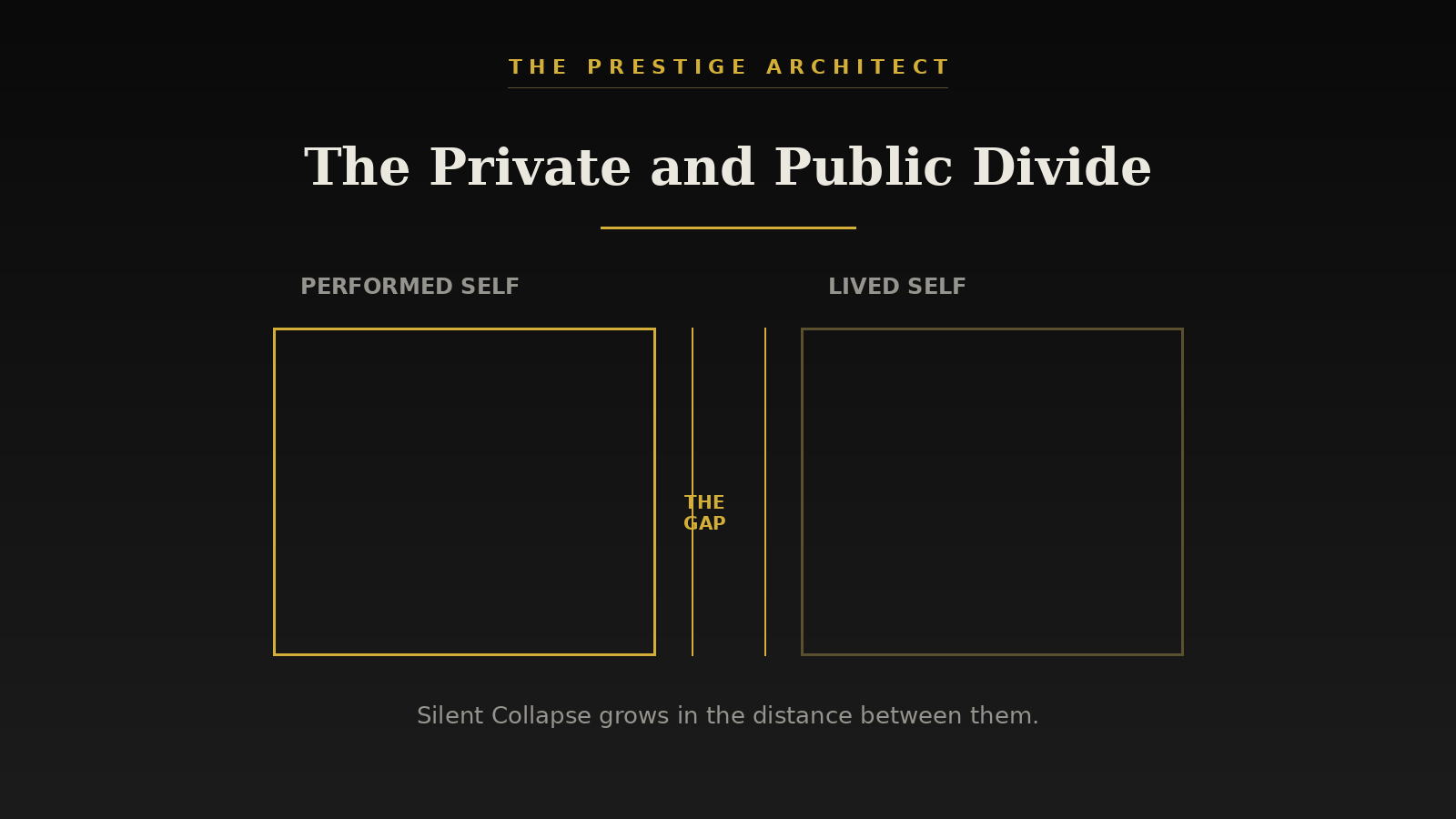
This pillar carries the weight. Silent Collapse™ grows in the distance between the performed self and the lived one. The wider that gap, the heavier the load. You manage a public version with full control. You abandon the private version with none. Closing the divide is not exposure. It is structural relief. This is the conversion point of the return.
"What looks like burnout in the C-suite is usually a collapse of identity, not a shortage of energy. You cannot rest your way out of a self you have abandoned."
If you recognize the gap, measure it before you manage it. Take the Silent Collapse Diagnostic.
Mastery — Skill Versus Sovereign Capability
You have skill. Skill is execution. Sovereign capability is execution that does not consume the operator. A surgeon with a shaking hand has skill and no capability. Many executives run the same way — expert, depleted, one bad week from the floor. Mastery here means the capacity to perform without self-erasure.
Systems — The Architecture of the Return
Willpower fails on schedule. Systems do not. The return is built, not summoned. That means designed recovery, regulated decisions, and a structure that protects the leader from the leader's own habits. Operational rule: if your stability depends on your discipline, you do not have a system. You have a debt.
A Case Vignette: The Return
A founder came to me running an eight-figure company. On paper, untouchable. In private, he had not felt his own life in two years. He called it burnout and booked a vacation. He returned to the same hollow on day one. We did not start with rest. We started with the architecture. We rebuilt his decision system, named the identity he had abandoned, and set the body as the governor of the pace. Ninety days later the numbers held. The person running them had come back. The vacation treated the fatigue. The rebuild treated the cause.
The Architecture of Your Return
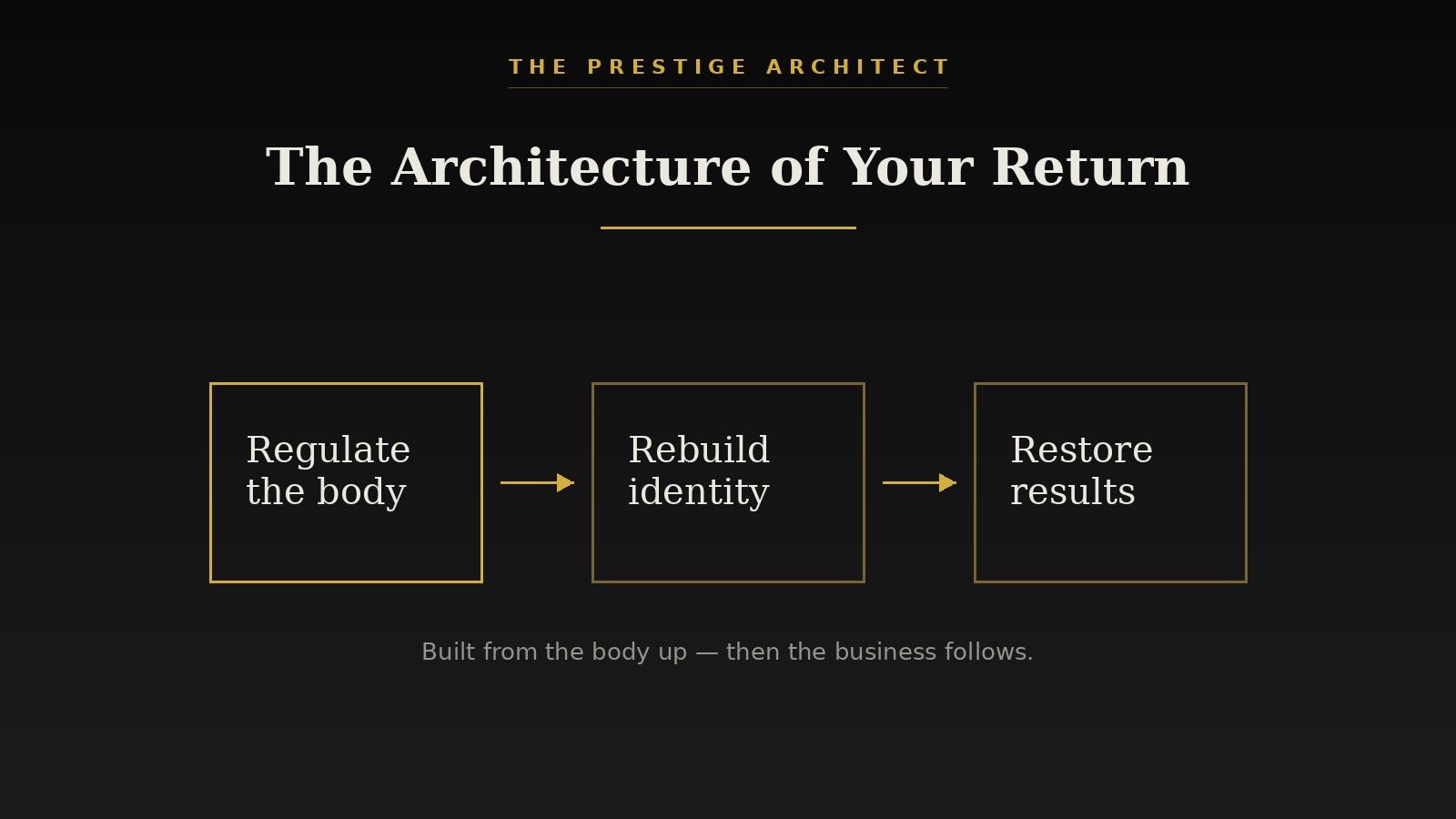
The return is not inspiration. It is engineering. It begins in the nervous system, because a dysregulated body makes dysregulated decisions, and dysregulated decisions build a dysregulated company. You regulate first. Then you rebuild the identity infrastructure underneath the performance. Then the results stop costing you yourself.
This is not motivation. It is not rest. It is a structural rebuild of the self that carries the weight. That work is deliberate, and it is gated by readiness. Apply to Work With Baz.
Frequently Asked Questions
How do I know if it is burnout or something worse?
Burnout shows up as exhaustion tied to work. If rest restores you, it was burnout. If you rest and still feel hollow, the issue is structural — Silent Collapse™, not fatigue. The tell is the gap that survives the break.
Why do I feel nothing after hitting my biggest goals?
Achievement and satisfaction run on separate systems in the brain. Dopamine drives the climb, then drops at the summit. When your worth is fused to output, the empty feeling is a signal, not a flaw. It marks the gap between what you built and who you are.
Can rest fix executive collapse?
Rest restores energy. It does not rebuild an identity. A vacation treats the symptom and returns you to the same architecture. The cause sits below fatigue, in the structure that made output the only measure of worth.
What is the first step back?
Regulation, not effort. You stabilize the nervous system before you touch the strategy. A regulated leader makes clean decisions. The return is built from the body up, then the business follows.
British military veteran. Two-time international bestselling author. Founder, The Prestige Architect®. Host, Rise From The Ashes podcast, C-Suite Network. Boulder, Colorado.