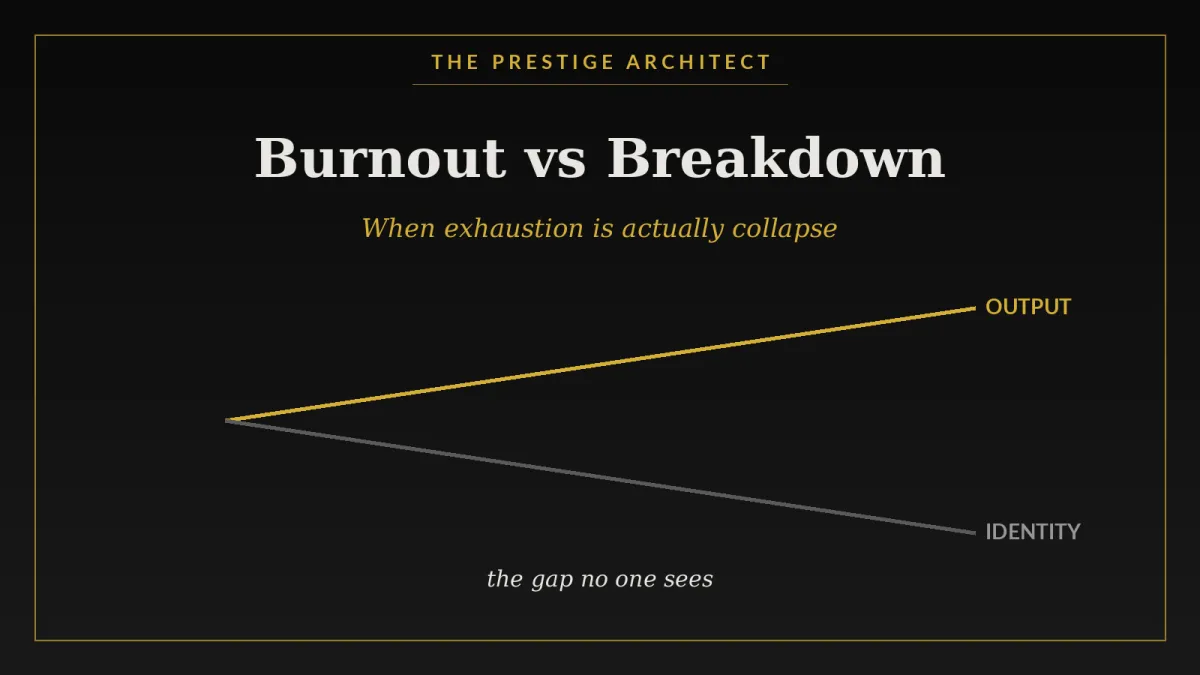
Burnout vs Breakdown: When Exhaustion Is Actually Collapse
You can still run the meeting. You can still close the quarter. From the outside, nothing looks wrong. Inside, something has gone quiet. This is the part of Silent Collapse™ no one names. It does not arrive as a crisis. It arrives as numbness wearing your competence like a suit. You searched "burnout vs breakdown" because neither word fits, and you already sense it. Before you read further, read The Manifesto.
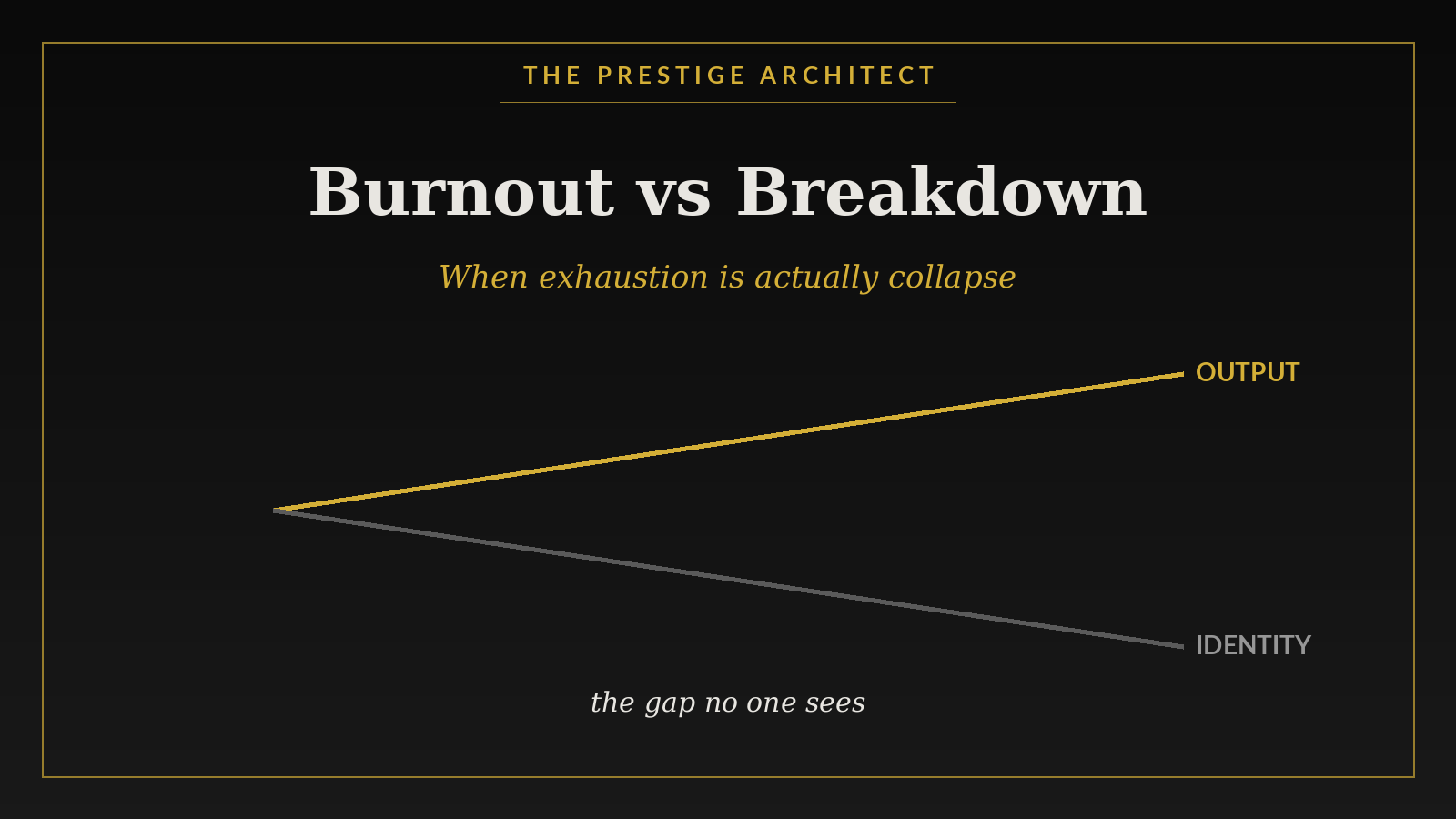
Table of Contents
Key Takeaways
Burnout and breakdown are not the same axis. Burnout is exhaustion in one lane. What high performers actually carry crosses every lane.
The real divide is exhaustion versus collapse. Collapse is the gap between your output and your identity widening in silence.
Rest does not close that gap. A holiday treats fatigue. It does not treat a self that has gone offline.
The return is built, not felt. Sovereignty is an architecture you install, not a mood you wait for.
The Definitive Answer
Burnout is occupational exhaustion. A breakdown is acute loss of function. For most high performers, the honest answer is neither. The condition is Silent Collapse™: high output, vanished interior, no visible alarm. The question "burnout vs breakdown" is the wrong question. The correct question is whether you are tired or whether you have gone missing from your own life.
The Question Under the Question
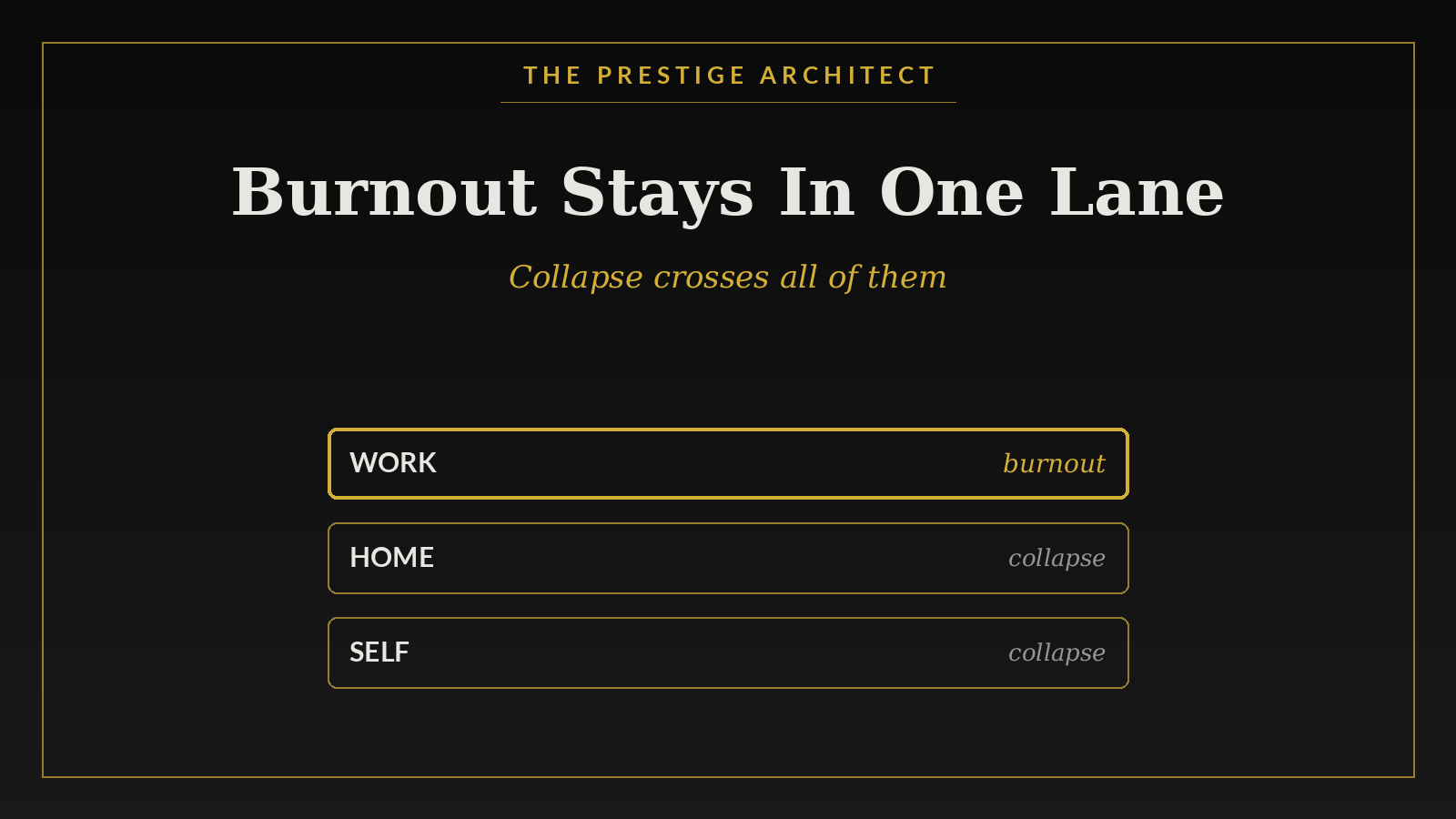
The World Health Organization defines burnout precisely. It is a syndrome from chronic workplace stress, and it stays "specifically to phenomena in the occupational context." Three markers: energy depletion, mental distance, reduced efficacy (WHO, ICD-11). Notice the boundary. Burnout lives in one lane.
What you are describing does not stay in that lane. It follows you home. It sits at dinner. It mutes the win you worked a decade for. That is not a longer burnout. That is a different category.
The nervous system does not file events by job title. When survival load runs long enough, the body stops producing meaning, not just energy. You keep performing because performance is automatic. The performance is the camouflage. The collapse hides inside the competence. This is why the smartest people get diagnosed last.
Burnout is exhaustion in one lane. Collapse is the self going quiet across all of them.
Recognition is the first instrument. If you want the structured version of what you are reading, start with the Sovereign Leadership Resource Hub.
The RAMS Reframe
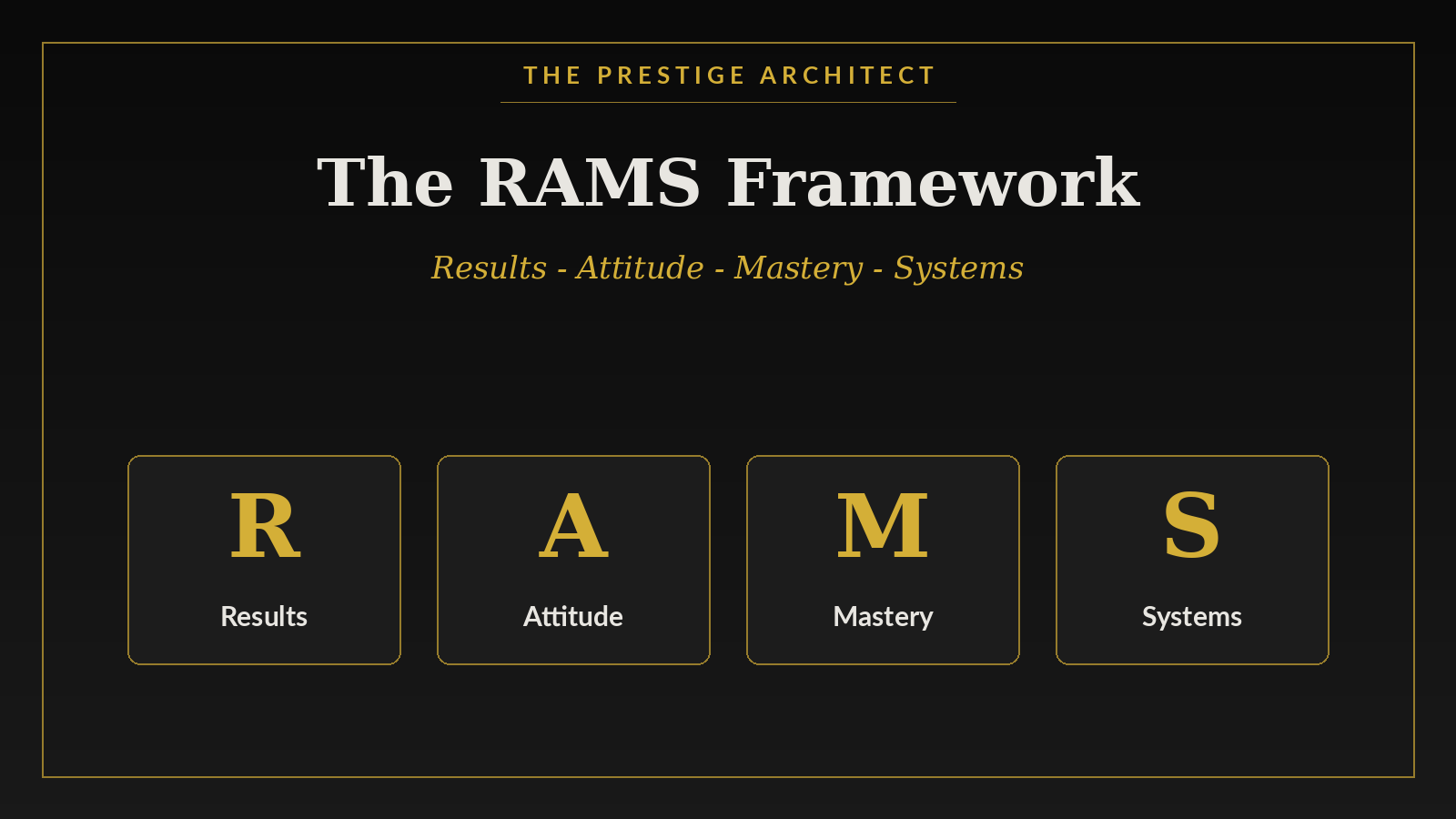
I do not treat this with rest. I treat it with architecture. The RAMS Framework™ runs on four pillars: Results, Attitude, Mastery, Systems. It operates at two levels at once, the nervous system and the business. When one is dysregulated, both are compromised. Here is how each pillar reads the gap between exhaustion and collapse.
Results — the output and identity gap
Burnout asks how much you produced. Collapse asks who produced it. High performers keep hitting the number while the person behind the number disappears. The output stays loud. The identity goes silent. Operational rule: when results rise and meaning falls, you are not tired. You are collapsing on schedule.
Attitude — where collapse actually lives
Attitude is the internal operating system. Not positivity. The default posture your body runs under load. Most leaders run survival as their resting state and call it drive. Survival is efficient and hollow. Collapse lives here, in the operating system you never chose. Command decision: name the state you run on before it names you.
Mastery — skill is not sovereign capability
You have skill. Skill got you here. Sovereign capability is different. It is the ability to lead without spending the self to do it. Adding more skill to a collapsed operator produces a more efficient collapse. Capability without sovereignty is volume without a floor.
Systems — the architecture of the return
Burnout culture sells personal fixes. The research disagrees. Harvard Business Review put it plainly: burnout is structural, and individual band-aids "may actually be harming our ability" to address it (Moss, HBR). The same logic governs the interior. You do not feel your way back. You build your way back. Systems are the pillar that makes the return repeatable instead of accidental.
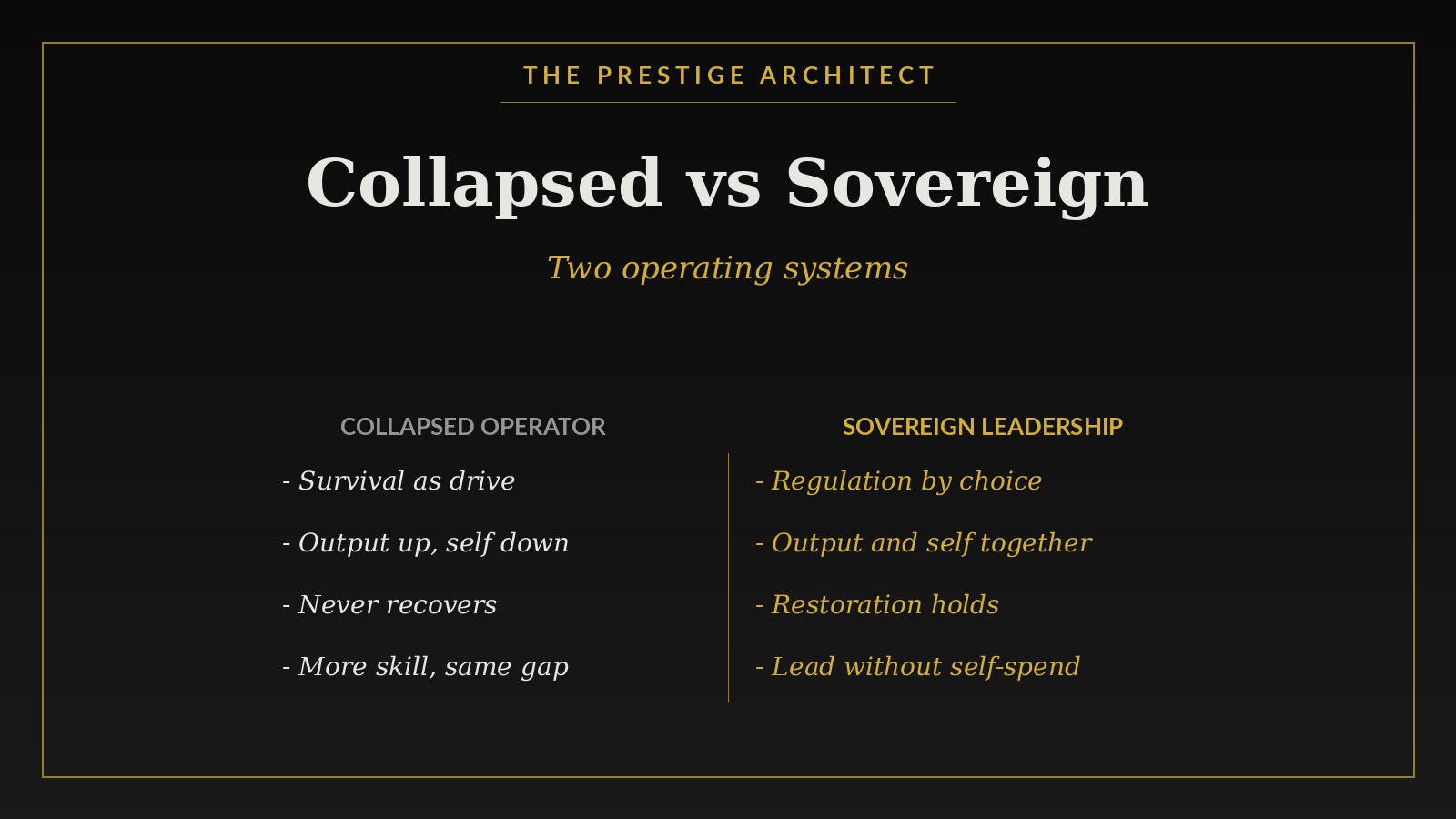
Collapsed Operator vs Sovereign Leadership™
Default state: survival mislabeled as drive → regulation chosen on purpose.
Results: output rising, identity falling → output and self moving together.
Rest: recovery that never recovers → restoration that holds.
Capability: more skill, same collapse → leadership without self-spend.
If you have read this far, the pattern is yours. Name it with precision. Take the Silent Collapse Diagnostic.
A Short Case
One client ran a nine-figure operation. Every metric was green. She described the feeling as "watching my own life through glass." We did not start with rest. We started with the architecture. We mapped her default state, separated output from identity, and installed the Systems pillar around her week. Eleven weeks later the glass was gone. The numbers never dropped. The person came back to stand behind them. That is the order: systems first, feeling second.
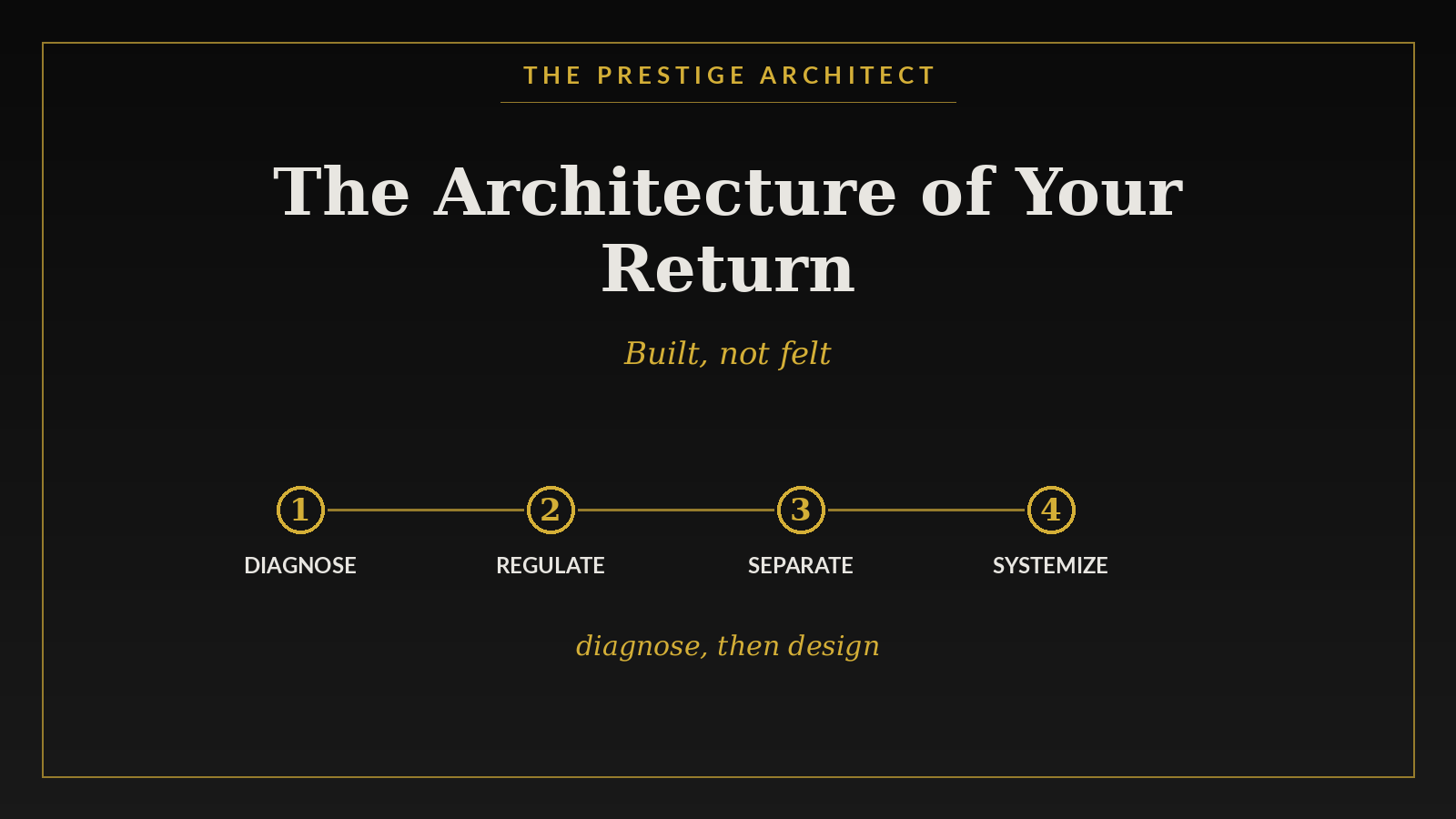
The Architecture of Your Return
Collapse is not the end of capacity. It is a nervous system stuck in survival, doing excellent work with no one home. The return is not inspiration. It is sovereignty installed as architecture: a regulated default, a clean line between what you produce and who you are, and Systems that hold the line when pressure spikes.
You do not wait to feel sovereign. You build the structure, and the feeling follows the build. The exhaustion was never the problem. The missing architecture was. When you are ready to build it, Apply to Work With Baz.
FAQ
Is it burnout or something worse?
If your exhaustion stays inside work and lifts with real rest, it reads as burnout. If the flatness follows you home, mutes your wins, and survives the holiday, it is not burnout. That pattern points to Silent Collapse™, the gap between high output and a silent interior.
I feel nothing even though everything is going well. Why?
Sustained survival load teaches the body to stop producing meaning, not just energy. You keep performing because performance is automatic. The numbness is the signal that identity has gone offline while output continues. Success does not reach a self that is no longer present to receive it.
Will time off fix this?
Time off treats fatigue. It does not rebuild a default state stuck in survival. People return from leave rested and still hollow because the architecture underneath never changed. Rest is real, and rest alone is not the repair.
What is the difference between a breakdown and Silent Collapse?
A breakdown is visible and acute, a loss of function others can see. Silent Collapse™ is invisible and chronic. Function stays intact. The interior empties quietly while every external measure says you are fine. The danger is precisely that nothing looks wrong.
Where do I start?
Start with recognition, then structure. Name the state with the Silent Collapse Diagnostic, then build the architecture of the return. The order is fixed: diagnose, then design.
British military veteran. Two-time international bestselling author. Founder, The Prestige Architect®. Host, Rise From The Ashes podcast, C-Suite Network. Boulder, Colorado.