Why You Can't Stop Working (And It Isn't Your Calendar)
You left the office. The office did not leave you. You are home, and your body is still in the meeting. The plate is full, the family is close, and your mind is three decisions ahead. This is not poor time management. This is Silent Collapse™ — the quiet erosion that runs underneath outward success. You are not failing. Your operating system is. Before you read further, read The Manifesto.
Table of Contents
Key Takeaways
The calendar is the symptom, not the cause. Rearranging your hours never fixes a structural problem.
The human brain runs sequentially. Leadership demands parallel load. That mismatch is architectural, not a flaw in you.
Overwork is an identity loop. When work is the only place worth is confirmed, stopping feels like disappearing.
The fix is structural. You rebuild the system underneath the behavior — through RAMS™ — not the to-do list on top of it.
The Definitive Answer
Successful executives can't stop working because the compulsion is built into their internal architecture, not their schedule. The role demands continuous parallel processing the nervous system was never designed to sustain, and identity has fused with output. You do not solve this with a better calendar. You solve it by rebuilding the operating system beneath the behavior.
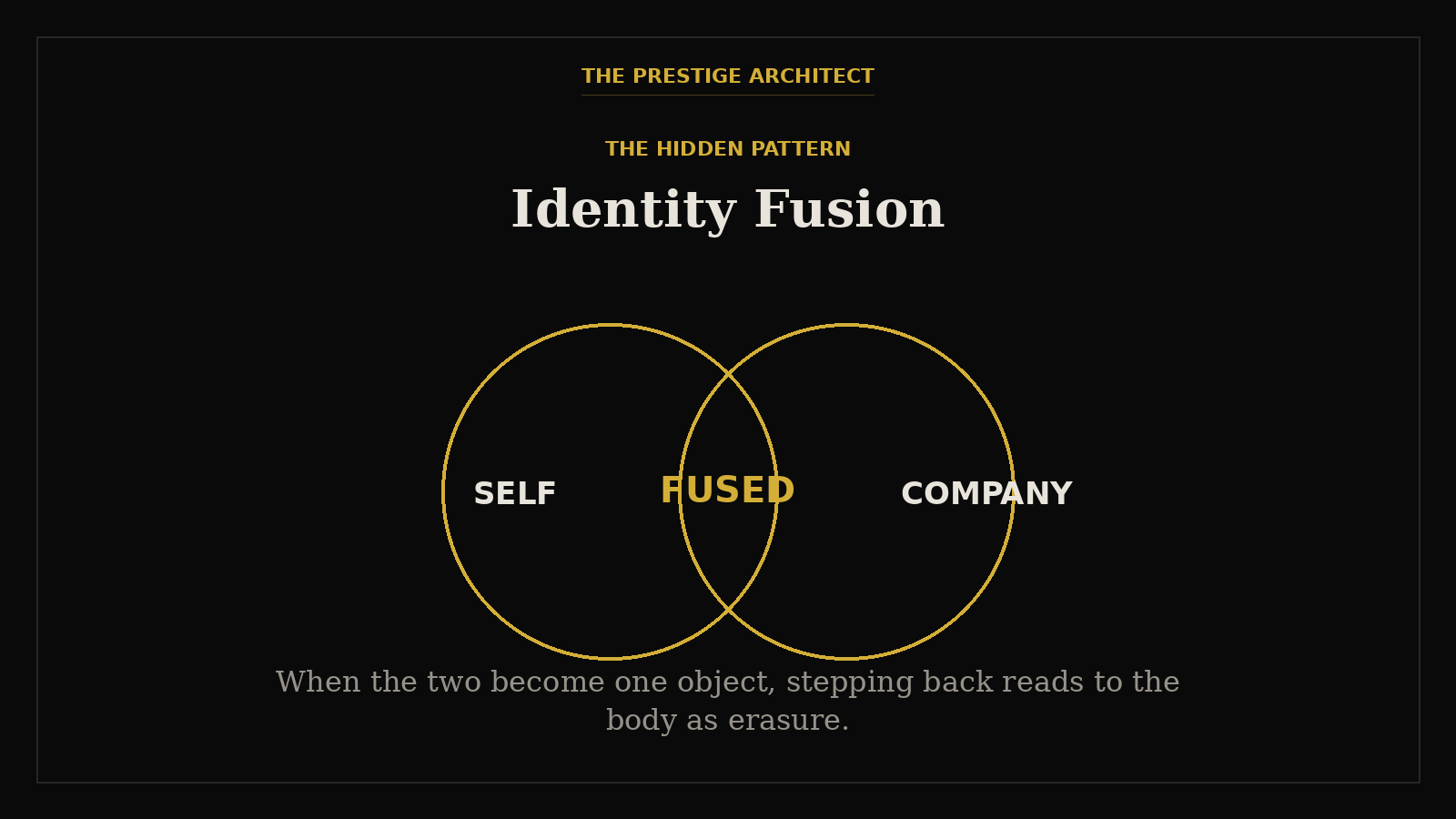
The Hidden Pattern: Your Brain Was Built for One Thing at a Time
Here is the part no productivity system tells you. The human brain evolved for sequential processing — one threat, one task, one decision. Modern leadership demands the opposite. You hold a dozen open systems at once, all day, for years. Research on cognitive load is clear: chronic divided attention degrades judgment and accelerates exhaustion. Harvard Business Review has documented how the always-on executive mind erodes the very decision quality the role depends on.
The body keeps the score. Sustained stress without recovery produces what researchers call allostatic load — the cumulative wear of a system that never powers down. The American Psychological Association links this chronic state to measurable physical and cognitive decline. Think of a high-performance engine with no idle. It will run. Then it will seize.
This is the engine of Silent Collapse™. The leader looks fine. The metrics look fine. Underneath, the architecture is bearing a load it was never structured to carry. You feel it as the inability to stop. It is not weakness. It is physics.
The calendar is never the problem. The architecture is. You cannot schedule your way out of a structural fault.
The RAMS™ Reframe: Five Pillars of the Rebuild
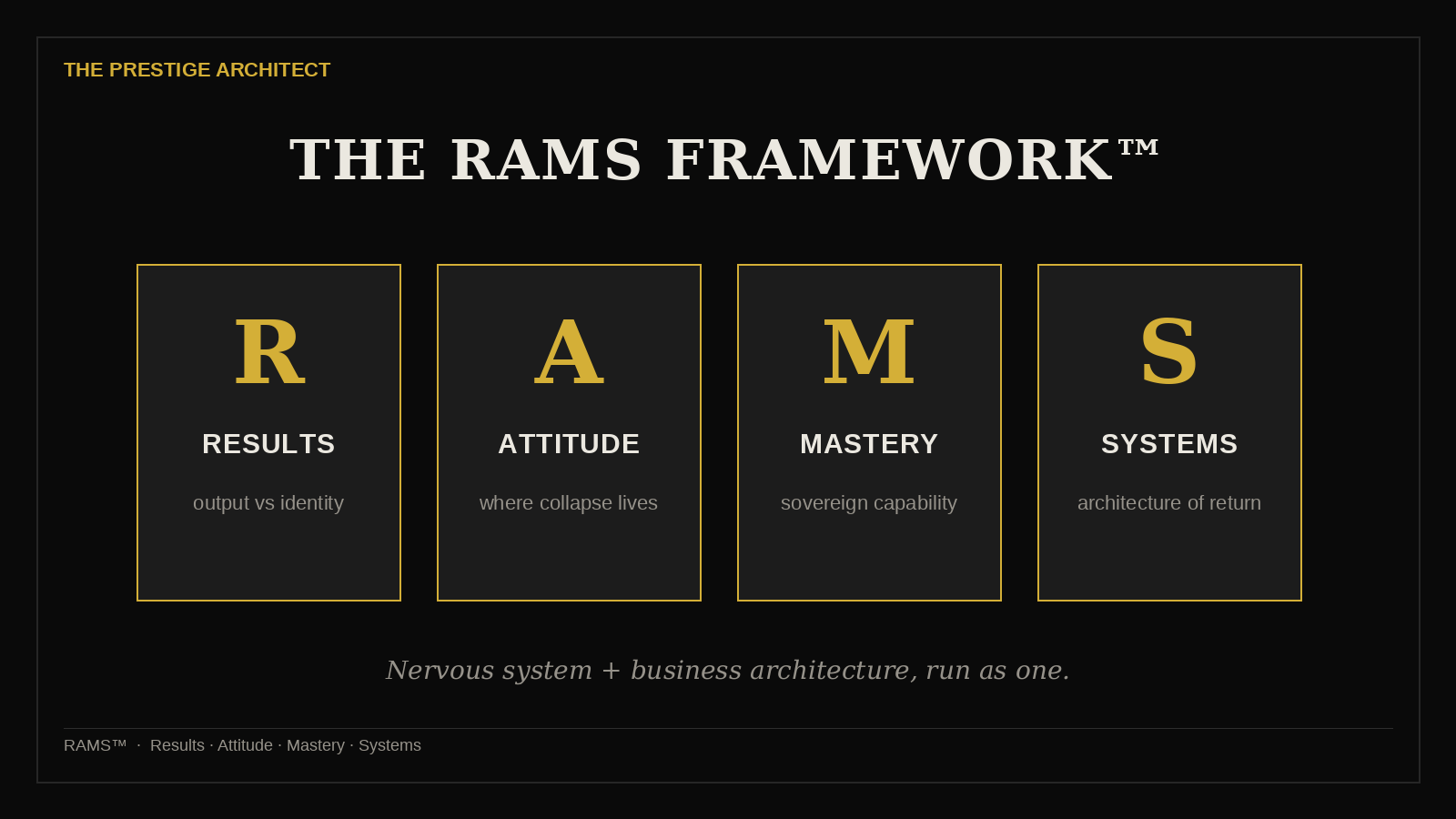
The RAMS Framework™ operates on two levels at once — the nervous system and the business architecture. The body and the business run on the same wiring. When one is dysregulated, both are compromised. This is the core of Sovereign Leadership™: you rebuild the leader before you optimize the strategy.
Results — Output Is Not the Same as Identity
You produce. Relentlessly. But somewhere the output stopped being what you do and became who you are. That is the gap that drives the overwork.
The trap: every result raises the floor. The next one is required just to stay even.
The shift: results become evidence of the system working, not proof you are allowed to exist.
Operational rule: measure the health of the architecture, not just the size of the output.
Attitude — Where the Compulsion Actually Lives
Attitude is the internal operating system. This is where the inability to stop is wired. The story underneath is old: if I stop, everything falls apart. It feels like truth. It is a setting, and settings can be rewritten.
Collapsed Operating StateSovereign Leadership™Stopping feels like dangerRecovery is part of the systemWorth is confirmed only by outputWorth is structural, not earned dailyRest is a reward you never reachRest is engineered, not bargained forPresence at home is performedPresence is real because the load is held elsewhere
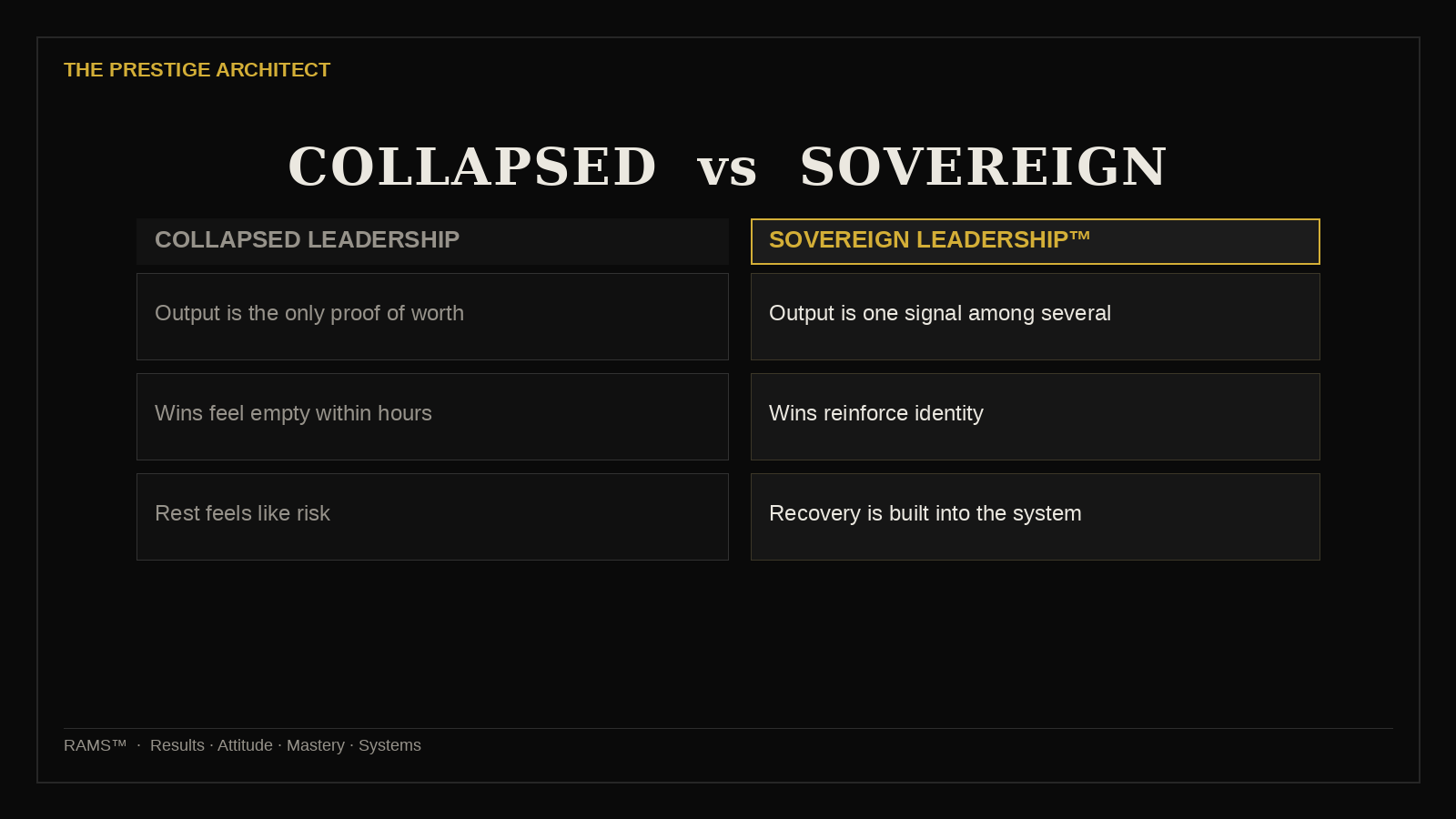
If you recognize the left column, name it precisely. Take the Silent Collapse Diagnostic to map exactly where your system is carrying the fault.
Authenticity — The Private/Public Divide
In public you are composed, decisive, in command. In private you are depleted and quietly certain that if anyone saw the gap, it would cost you everything. That divide is the fuel of Silent Collapse™. The wider the gap between the performed self and the lived self, the more work you need to keep the performance running. Closing the divide is not exposure. It is integration — and it lowers the energy cost of being you.
Mastery — Capability Is Not Volume
You confused doing more with being more capable. They are not the same.
Volume is hours, tasks, and visible motion.
Sovereign capability is the ability to hold weight without absorbing it.
Command decision: a master is not the one who carries the most. It is the one who builds the structure that carries it for them. McKinsey research confirms the lever is structural redesign, not individual endurance.
Systems — The Architecture of the Return
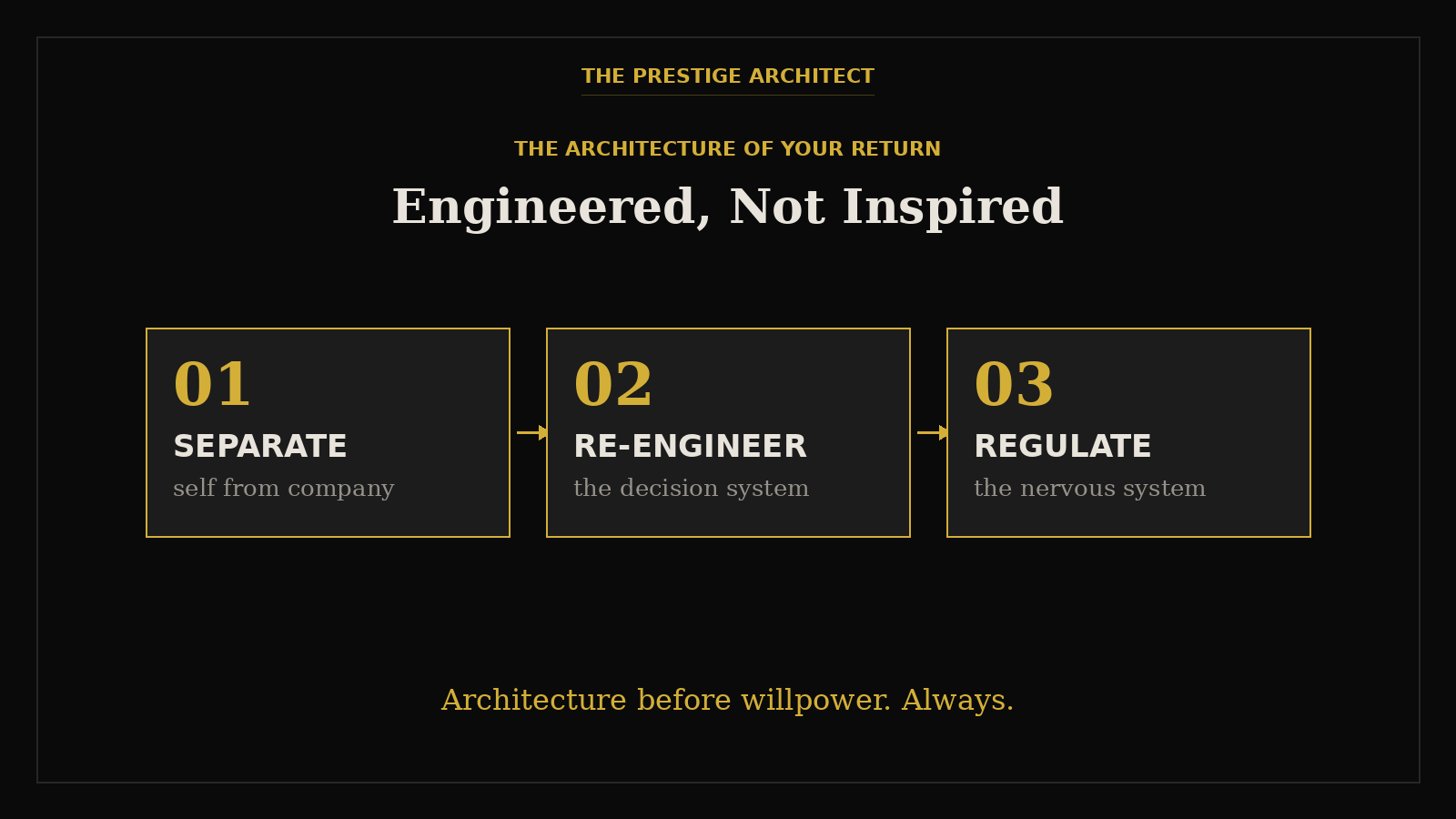
This is the pillar that ends the overwork. Systems is the architecture — the structure that holds the load so your nervous system does not have to. A calendar moves the boxes around. Architecture changes what the boxes weigh. When the system holds the load, the compulsion to stay on has nothing left to do.
When the architecture holds the load, the leader gets to be a person again. That is the whole point of building it.
Case Vignette: The Founder Who Could Not Close the Laptop
One client ran a company worth tens of millions and had not taken an evening off in two years. The problem presented as time. It was not. Every system in the business routed through him. His nervous system had become the company's load-bearing wall. We did not fix his calendar. We rebuilt the architecture — decisions, ownership, recovery — as structure, not willpower. Within ninety days he closed the laptop at 6 p.m. The company did not fall apart. It got stronger, because it was no longer resting on one exhausted person.
The Architecture of Your Return
Your return is not a mindset. It is nervous-system sovereignty — a body that can power down because the structure around it is sound. You do not need more discipline. You have plenty. You need an architecture that does not require your constant presence to stand. That is the work. It is structural, it is measurable, and it is buildable. Read the Sovereign Leadership Resource Hub for the wider system, and when you are ready to rebuild yours, Apply to Work With Baz.
Power without collapse. Success without self-betrayal. That is the standard. Anything less is a system running on borrowed nervous system.
Frequently Asked Questions
Why can't I stop working even when there is nothing urgent to do?
Because the compulsion is structural, not situational. When identity has fused with output, stopping registers in the nervous system as a threat. The fix is rebuilding the architecture underneath, not finding more willpower.
Is this just burnout?
Burnout describes exhaustion. Silent Collapse™ describes the structural cause beneath it — the gap between output and identity, held in place by a system that never recovers. You can rest a burnout for a week. The collapse returns until the architecture changes.
Will a better calendar or time-management system fix it?
No. A calendar rearranges the same load. If the architecture routes every weight through you, a tidier schedule simply organizes the overwhelm. The lever is structural redesign.
How do I know if my overwork is an identity problem?
Ask one question: when you stop, do you feel relief, or do you feel like you are disappearing? Relief is fatigue. Disappearing is identity fusion — the signal that the work has become the only place your worth is confirmed.
About the Author
British military veteran. Two-time international bestselling author. Founder, The Prestige Architect®. Host, Rise From The Ashes podcast, C-Suite Network. Boulder, Colorado.