Successful But Feel Empty? The Architecture Beneath the Hollow
Successful But Feel Empty? The Architecture Beneath the Hollow
You hit the number. You closed the round. The applause landed, then faded inside a week. And underneath it sat a quiet you did not order: nothing. This is the moment high performers rarely say out loud. Silent Collapse™ does not look like breakdown. It looks like a person who has everything and feels almost none of it. If you are successful but feel empty, read this as recognition, not a verdict. Start where the real work starts — Read The Manifesto.
Table of Contents
Key Takeaways
Emptiness is a signal, not a mood. The hollow after a win is data about how your identity is built.
The win goes quiet because the architecture is wrong. You built self-worth on output. Output cannot hold a life.
Feeling nothing is the private half of Silent Collapse™. The public half is that you keep performing anyway.
The return is structural. You rebuild the internal architecture — nervous system first, then the business runs cleaner on top of it.
The Definitive Answer
When you are successful but feel empty, the problem is not the success and not your gratitude. The problem is architecture. You wired self-worth to performance, so the moment the performance stops, there is nothing underneath to feel. The hollow is your own system reporting a design fault. Fix the design and the feeling returns.
The Hidden Pattern: Why the Win Goes Quiet
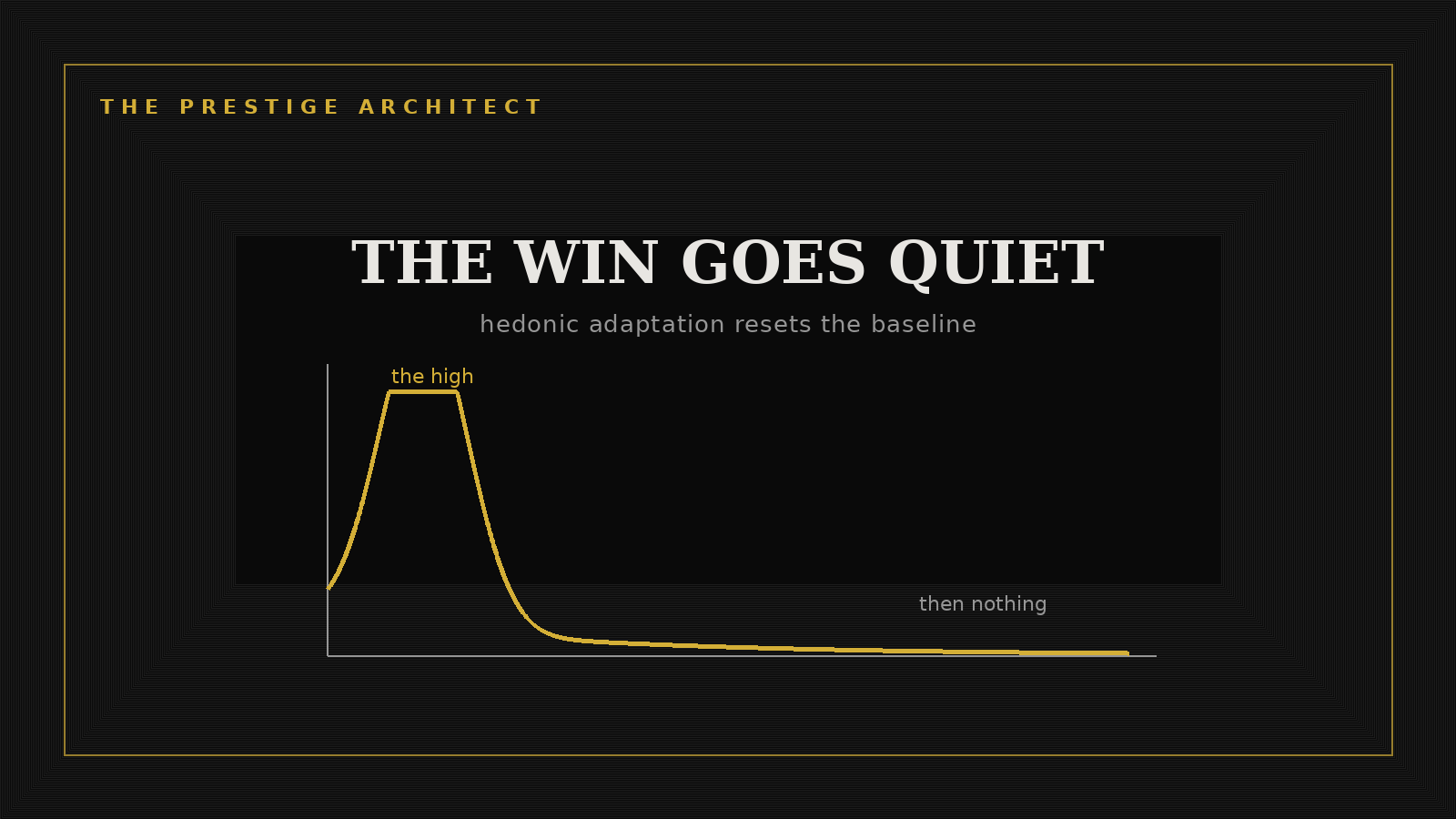
The brain adapts to reward fast. Researchers call it hedonic adaptation. The promotion becomes the new floor within days, and the hunger resets one notch higher. So you chase the next number to feel the old high, and the high shrinks each time.
Underneath that is a deeper fault. Self-Determination Theory, one of the most cited frameworks in psychology, shows that wellbeing rests on three needs: autonomy, competence, and relatedness (Ryan & Deci, American Psychologist). Goals chased for status feed none of them. They photograph well and feel like nothing. Psychology Today frames the same fault as an identity built for output rather than meaning (Psychology Today, 2026).
Think of a house built to be photographed, not lived in. Every room stages perfectly. No room holds you at 2 a.m. That is the private face of Silent Collapse™ — the leader who wins in public and finds an empty house in private. If this names something you have carried without a word for it, sit with the frame before the fix: the Sovereign Leadership Resource Hub.
Emptiness after achievement is not weakness. It is your own architecture reporting a fault you were too busy to read.
The RAMS™ Reframe: Five Pillars Under the Hollow
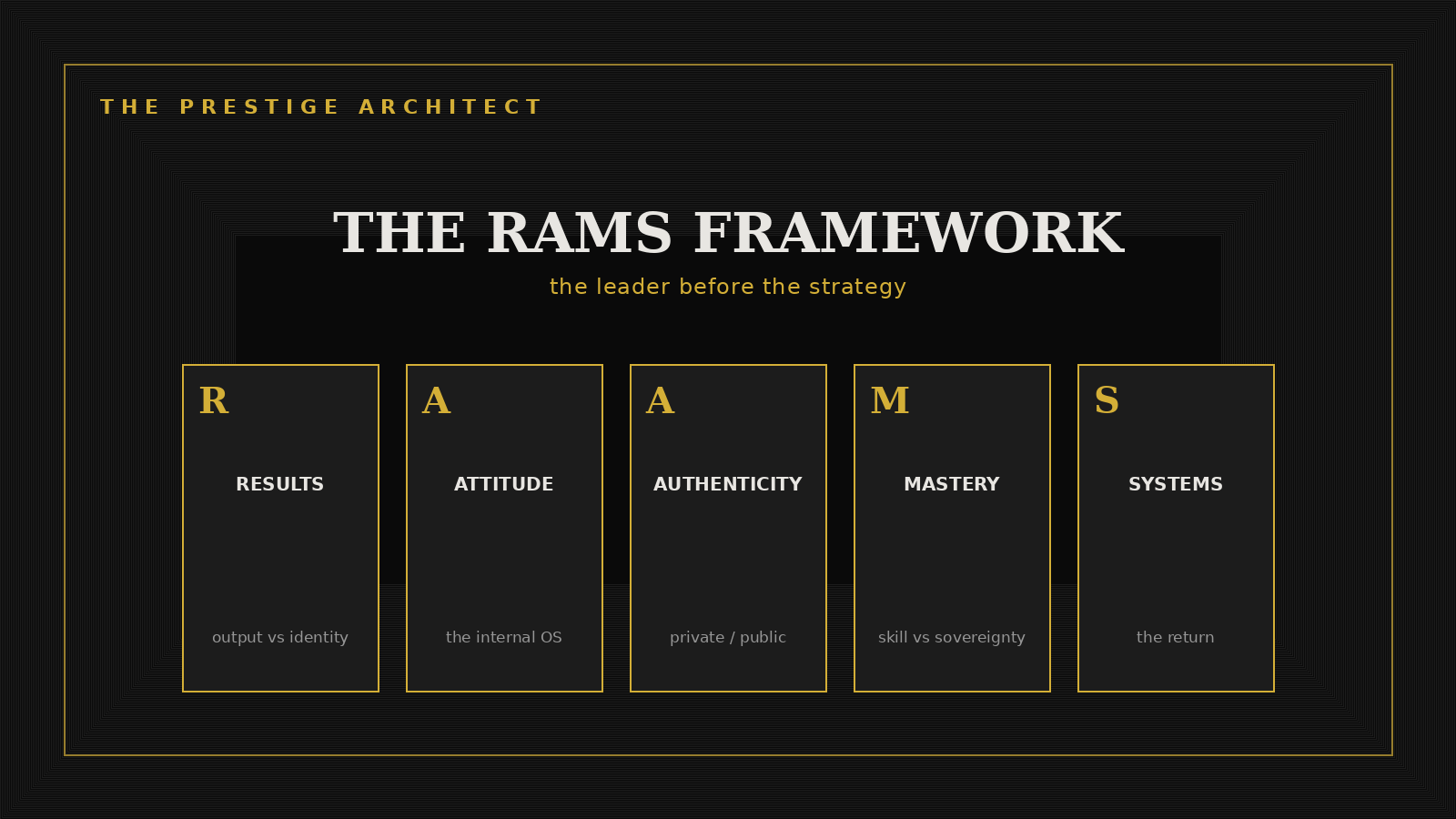
The RAMS Framework™ works the leader before the strategy. Five pillars — Results, Attitude, Authenticity, Mastery, Systems — run at the level of the nervous system and the business at the same time. The hollow shows up in every one.
Results — The Output-Identity Gap
You measure yourself by output. Output rises. Identity does not. That gap is where the emptiness pools.
Collapsed: the number is the self. No number, no self.
Sovereign: the number is a result the self produces. The self stands without it.
Operational rule: if a single quarter can erase your sense of worth, you do not have a results problem. You have an identity built on sand.
Attitude — Where the Emptiness Lives
Attitude is the internal operating system. The hollow lives here — in the private voice that says if I stop, it all falls apart. So you never stop, and you never feel.
Command decision: name the voice as a setting, not a fact. A setting can be rewritten. A fact owns you.
Collapsed leader vs Sovereign Leadership™ — the same person, two architectures:
Feels nothing, performs anyway — sovereign feels fully, chooses the response.
Worth is the last result — sovereign worth is a steady baseline.
Numbs to keep moving — sovereign regulates to stay present.
Success in public, empty in private — sovereign is whole in both rooms.
Collapsed LeaderSovereign Leadership™ Feels nothing, performs anywayFeels fully, chooses the response Worth = last resultWorth = steady baseline Numbs to keep movingRegulates to stay present Success in public, empty in privateWhole in both rooms
Authenticity — The Private/Public Divide
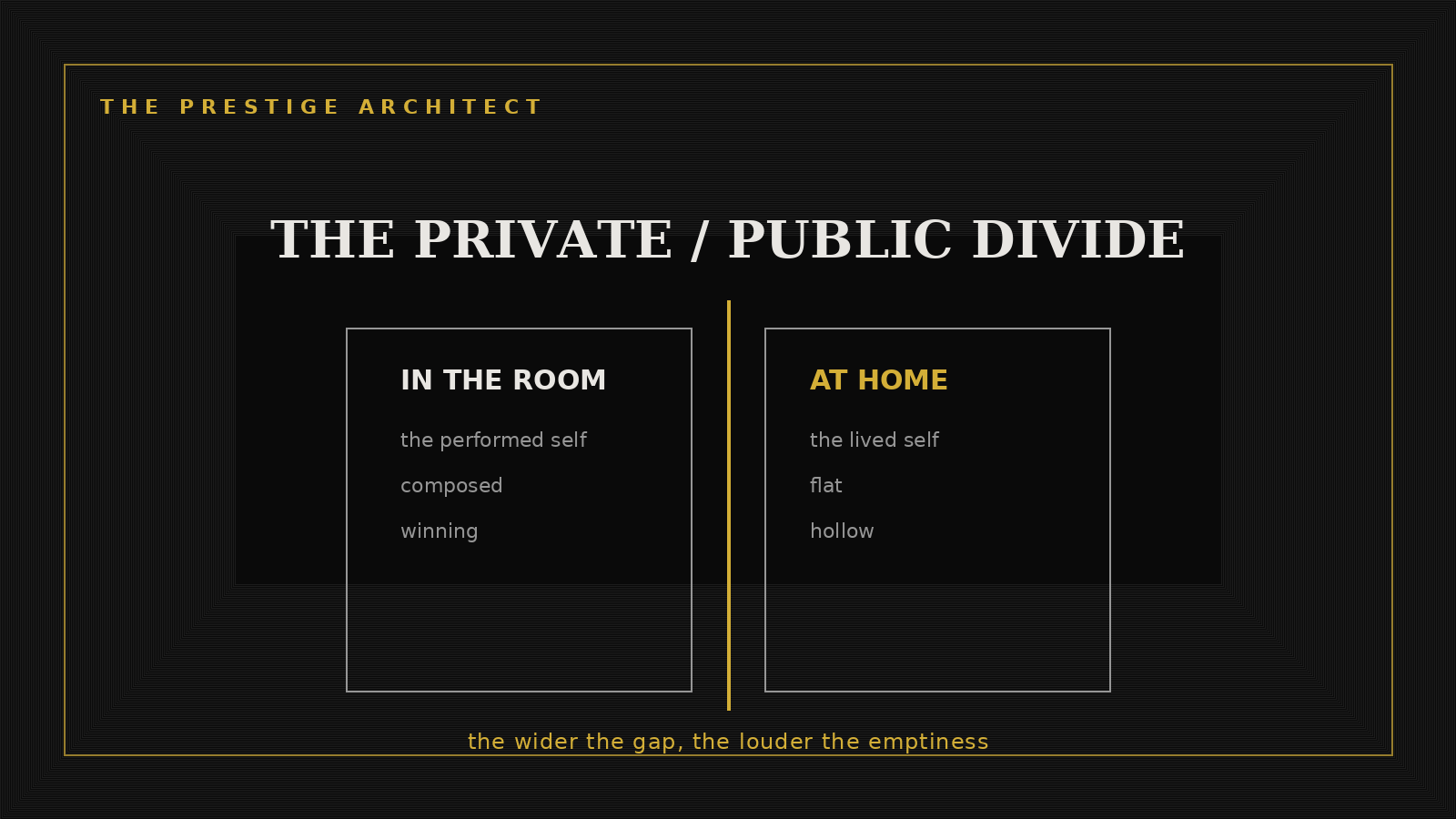
Here is the engine of the hollow. You perform one self in the room and carry another one home. The wider that gap, the louder the emptiness. Closing it is not confession. It is alignment — the public leader and the private person running on the same wiring.
This is the pillar most high performers skip, and the one Silent Collapse™ feeds on. If the divide is yours, the fastest read on where it sits is diagnostic, not motivational — Take the Silent Collapse Diagnostic.
Mastery — Skill Is Not Sovereignty
You are excellent. Excellence is not the same as sovereignty. Skill produces the win. Sovereignty lets you feel it. Most leaders keep sharpening skill to fix a problem that only capability at the nervous-system level can touch.
Skill: you can do the hard thing.
Sovereign capability: you can do the hard thing and stay present inside your own body while you do it.
Systems — The Architecture of the Return
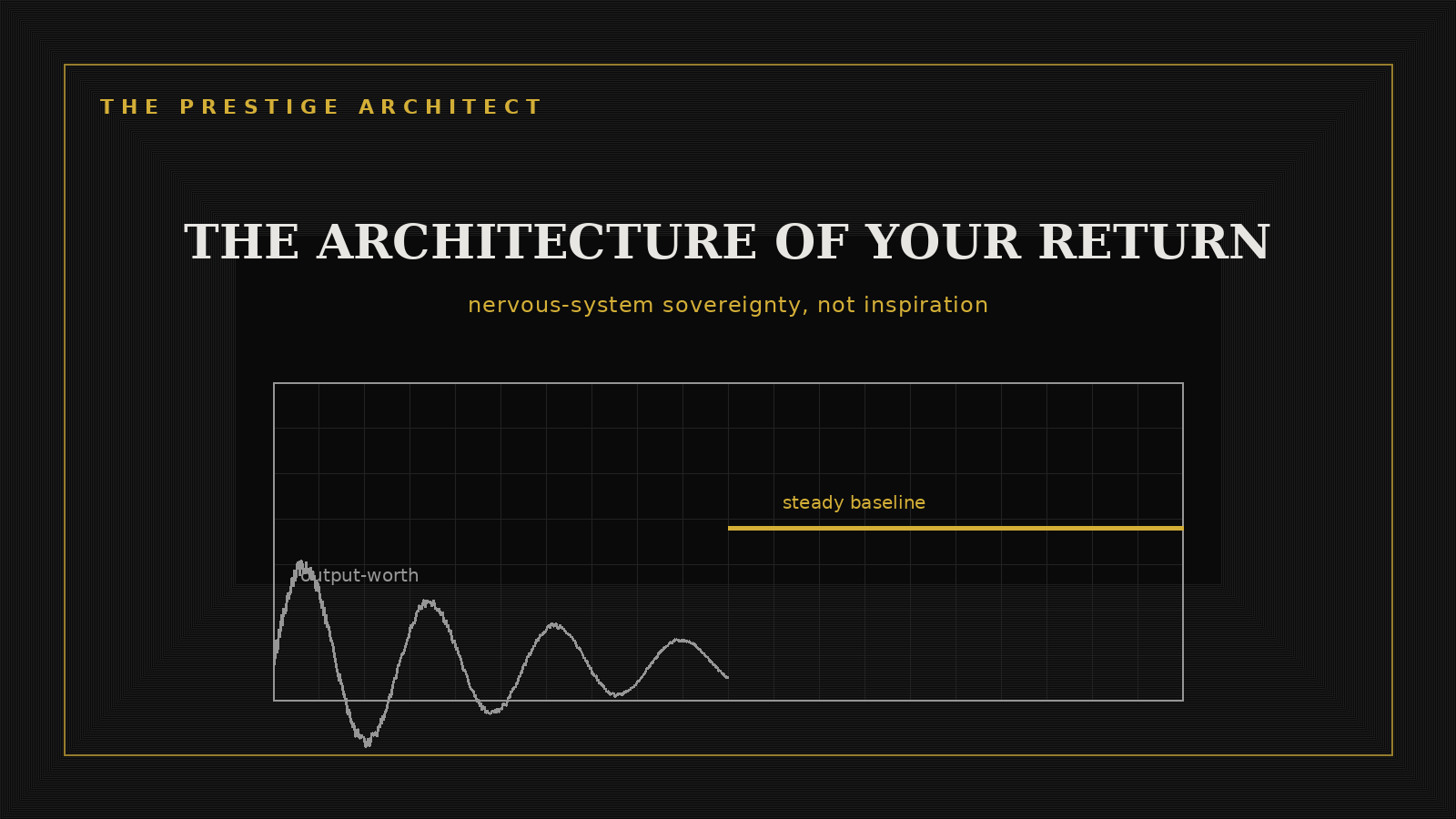
Feeling is not restored by insight. It is restored by architecture. You rebuild the system that generates worth so it no longer depends on the next result. Nervous system first. Then the calendar, the team, the offer — all of it runs cleaner on a regulated base.
Operational rule: design the internal system, and the external results stop being the only place you can feel alive.
Case Vignette: The Founder Who Felt Nothing
A founder closed the largest deal of a nine-year run. Wired, then flat by Friday. Not tired — hollow. We did not touch the pipeline. We rebuilt the base. First the nervous system: a daily regulation practice so the body would register a win at all. Then the identity architecture: worth decoupled from the next close. Inside a quarter the emptiness had a floor under it. Revenue held. The founder felt the second big deal instead of watching it happen from behind glass.
The Architecture of Your Return
The return is not a feeling you summon. It is a structure you build. Sovereignty at the nervous-system level means your baseline sense of worth stops rising and falling with output. The win becomes something you experience, not something you extract a pulse from.
This is the work of The Prestige Architect®: rebuild the identity infrastructure beneath high performance so power flows from presence, not from the next result. The hollow is not a life sentence. It is a design fault with a known repair. If you are ready to rebuild the architecture instead of chasing the next number, Apply to Work With Baz.
Frequently Asked Questions
Why do I feel empty after achieving a big goal?
Because the brain adapts to reward within days and resets the baseline. If your self-worth is wired to output, the win fades and there is nothing underneath to hold you. The emptiness is a signal that the goal was chasing status, not meaning.
Is feeling nothing after success a sign of depression?
It can overlap with clinical depression, and that deserves professional care. It is also, distinctly, the private half of Silent Collapse™ — a structural gap between output and identity in high performers. If the flatness is persistent or severe, speak with a licensed professional.
Can I be genuinely successful and still feel hollow?
Yes. External success and internal emptiness sit together often in leaders. The success is real. The hollow is real. Both are true because they live on different layers — one is output, the other is architecture.
How do I stop tying my worth to my results?
You rebuild the internal system, not the willpower. Regulate the nervous system first so a steady baseline exists, then decouple identity from the next result. Worth becomes a floor you stand on rather than a score you defend.
About the Author
British military veteran. Two-time international bestselling author. Founder, The Prestige Architect®. Host, Rise From The Ashes podcast, C-Suite Network. Boulder, Colorado.