Success Guilt: Why You Can't Enjoy Your Own Wins
You closed the deal. You earned the title. You hit the number that once looked impossible. And somewhere under the applause, a quiet voice said: you should feel bad about this.
That voice has a name. It is success guilt. It is the reason winning feels hollow instead of clean. And it is rarely a sign of weak character. More often it is a Silent Collapse™ signal, surfacing at the exact moment you were supposed to feel proud.
Success guilt is not humility. It is a structural loyalty to an old story about who you are allowed to be. Left unnamed, it teaches you to shrink every win before anyone notices it. The way back is not more achievement. It is a different architecture. This is where the sovereign path begins.
Table of Contents
Key Takeaways
Success guilt is the discomfort that arrives when your win separates you from people you love.
It is a Silent Collapse™ signal, not proof that you took too much.
The guilt is loyalty in disguise. It protects an old belonging at the cost of your present.
Downplaying wins does not resolve the guilt. It trains your nervous system to distrust success.
The return is structural. You rebuild the belief that your gain is allowed to stand.
What Is Success Guilt?
Success guilt is the felt sense that you did something wrong by succeeding. You achieve. You advance. And instead of pride, you feel exposure. This is common in high-achieving leaders who outgrew their origins. The mind reads distance from the group as danger. So it manufactures guilt to pull you back toward the pack. Success guilt is not a verdict on your worth. It is a Silent Collapse™ signal that your identity is still governed by an old rule: do not have more than the people who raised you.
The Hidden Pattern Beneath Success Guilt
Clinicians have a name for this. They call it survivor guilt, or interpersonal guilt. Research in control-mastery theory, developed by Joseph Weiss and studied by O'Connor and colleagues, describes a specific bind. We feel guilty when our success appears to come at the expense of others. The peer-reviewed literature on interpersonal guilt shows it is not vanity. It is a loyalty reflex, wired early, meant to keep the group intact.
The pattern runs deeper than mood. Social psychologists document the tall poppy response, where the standout is quietly cut down. The work on social comparison and belonging confirms the cost. When you rise, part of you braces for exile. So you pre-empt the exile. You minimise the win before the group can.
Here is the trap. The guilt never asks you to give the success back. It only asks you to feel bad enough that no one resents you. So you keep the title and lose the joy. You bank the result and forfeit the meaning. The pattern is not a character flaw. It is an old operating rule running without your consent.
The RAMS™ Reframe: From Guilt to Sovereign Ownership
RAMS™ is the operating system beneath Sovereign Leadership Architecture™. It works at the level of the business and the level of the nervous system. Five pillars. Run success guilt through each one and the guilt stops driving.
Results. Guilt hides your wins from you. Name the result in plain numbers. What did you build, and who is safer because of it? A result you refuse to own cannot compound.
Attitude. Guilt frames your success as a theft. Sovereign leaders frame it as a contribution. Your rise did not empty anyone. It widened what is possible for the room behind you.
Authenticity. This is the pillar that breaks the guilt. Your win is true. Shrinking it is the lie. Authenticity asks you to let the truth of your success stand at full size, without a discount.
Mastery. Guilt says the success was luck, so you owe an apology. Mastery says name the skill you earned. When you own the craft, you stop treating the outcome as an accident you must atone for.
Systems. Guilt is a private reflex, so it stays invisible. Build a system that logs each win and the person it served. The structure holds the truth on the days your feelings will not.
Collapsed versus Sovereign
Collapsed: hides the win, waits for resentment, and calls the shrinking humility.
Sovereign: names the win, credits the work, and lets the result stand without apology.
Collapsed: reads distance from the old group as betrayal.
Sovereign: reads distance as growth the old group can be invited into.
Collapsed: spends every success paying an emotional tax that never clears.
Sovereign: banks the success and reinvests the energy the guilt used to burn.
Success guilt is loyalty pointed at the wrong target. You are not betraying anyone by rising. You are refusing to abandon yourself to keep an old peace.
If you recognise the pattern, you can measure it. The Silent Collapse Diagnostic™ is a sixty-minute live session that maps the exact structure holding your guilt in place.
A Case From the Room
A founder came to the room after her largest year. Record revenue. A team that trusted her. And a flatness she could not explain. Every win landed with an apology attached. She grew up as the responsible one, the child who carried the household. Her success now felt like leaving her family behind.
We did not chase more results. We named the rule underneath. Her guilt was protecting a childhood loyalty that no longer served her or them. Over a few weeks she began to log each win and the people it protected. The story shifted. Her success was not a departure. It was provision. The flatness lifted because the truth finally had somewhere to stand.
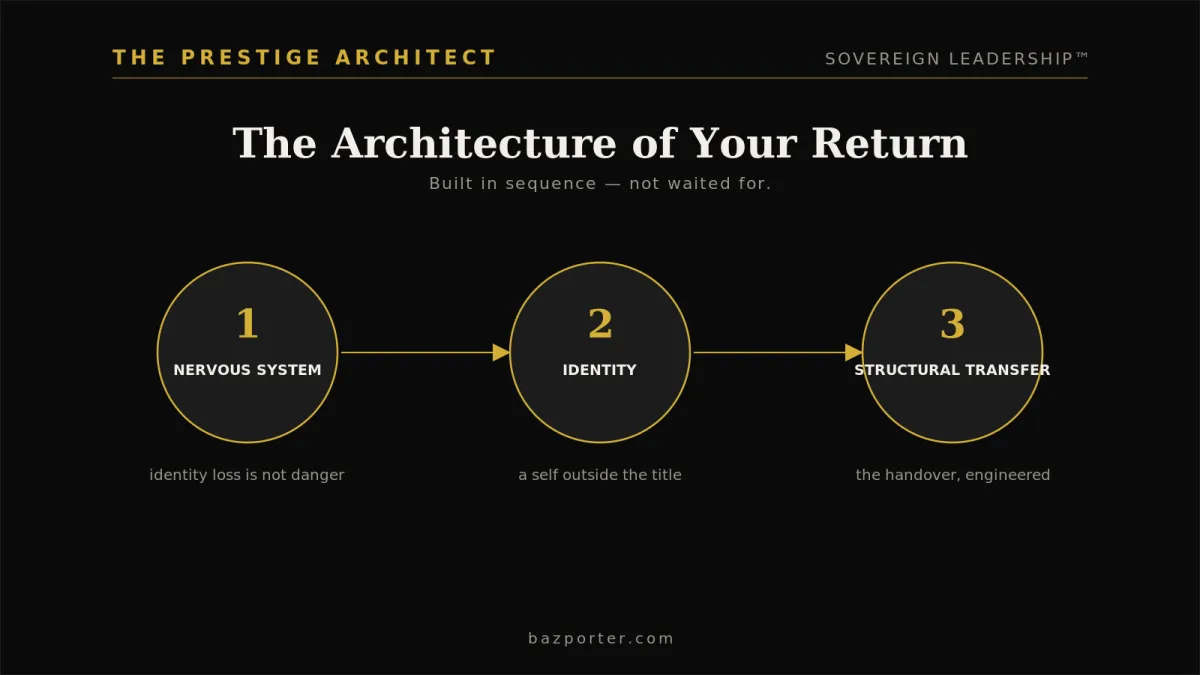
The Architecture of Your Return
Success guilt does not resolve by achieving more. Another win only gives the guilt more to police. The return is structural. You change the rule that says your success must cost you your belonging.
That rebuild is precise, and it is personal. It starts by seeing the architecture with your own eyes. The Silent Collapse Diagnostic™ shows you the pattern beneath the guilt and the first structural move to end it. You keep the success. You reclaim the meaning that was always yours to hold.
Frequently Asked Questions
Why do I feel guilty for being successful?
You feel guilty because your success created distance from a group you were loyal to. The mind reads that distance as risk. It generates guilt to pull you back toward belonging. The guilt is a loyalty reflex, not evidence that you did anything wrong.
Is success guilt the same as imposter syndrome?
No. Imposter syndrome is the fear of being exposed as a fraud. Success guilt is the discomfort of having more than others. One says you do not deserve the position. The other says you should not enjoy it. They can appear together, but they are different patterns.
How do high achievers overcome success guilt?
They stop treating the win as a theft and start treating it as a contribution. They name the result, credit the skill, and log who their success protected. The shift is structural, not motivational. You change the belief that your gain must cost someone else.
Is success guilt a sign of something deeper?
Often, yes. Persistent success guilt can be a signal of Silent Collapse™, where outward achievement sits on top of an unstable identity. It is worth mapping. A structured review shows whether the guilt is a passing mood or a pattern shaping your decisions.
Why do I downplay my achievements?
Downplaying is a pre-emptive strike against resentment you expect from others. You shrink the win before anyone can. It feels safer in the moment. Over time it teaches your nervous system to distrust every success you earn.
About the Author
Baz Porter® is the founder of Sovereign Leadership Architecture™. British military veteran. 2× international bestselling author. Baz works with high-achieving women to dismantle the structural patterns beneath Silent Collapse™ and return them to sovereign identity, relational wholeness, and gravitational power.