Why You Feel Like a Stranger to Yourself
Why You Feel Like a Stranger to Yourself
You caught your own eyes in the mirror this week and felt nothing. Not sad. Not proud. Just a flat, quiet nothing, looking back at a face you used to know. The life around that face works. The title is real. The numbers are real. And still you think, in a voice you would never say out loud, I feel like a stranger to myself. This is the Silent Collapse™. It is the quiet loss of the self you set aside to build the life. If you want the short version of what has happened to you, read the manifesto here first, then come back.
In this article
Key takeaways
Feeling like a stranger to yourself is a signal, not a flaw.
The self did not vanish. It went quiet to keep you moving.
A successful life can hide this loss for years.
The way back is a return, not a rebuild from zero.
You can name the felt state and act on it this week.
The definitive answer
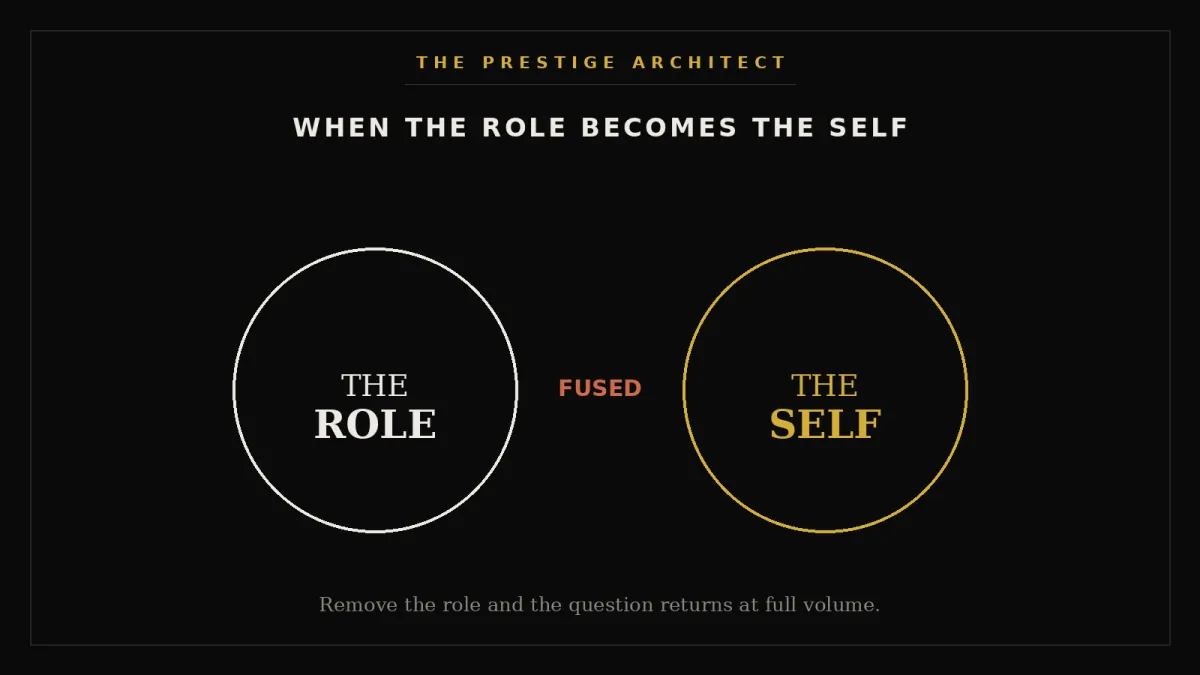
You feel like a stranger to yourself because you spent years becoming who the life needed. Every role asked for a version of you. You gave it. You were good at it. One small trade at a time, you set the real self aside. It made sense each time. None of it felt like loss in the moment. Then one ordinary day the person in the mirror is someone you manage, not someone you know. That flat feeling is the gap between who you perform and who you are. It is not weakness. It is the honest cost of a life built on performance.
The hidden pattern under it
There is a name for the thing that went quiet. Psychologists call it self-concept clarity. It is how clearly and steadily you know who you are. When it is strong, you feel like yourself. When it drops, you feel hollow and unsure, even when life looks fine on paper. Research on adults links stronger self-concept clarity to more purpose, more meaning, and higher life satisfaction (study, 2025). A separate long study of older adults found the reverse edge too. When identity coherence drops, loneliness rises and mental health falls (study, 2025). So the numbness is not random. It tracks a real, measured thing. You did not lose your mind. You lost the clear signal of your own self.
The five pillars of the return
Return runs through five pillars. This is the RAMS™ frame. It works the leader first, then the strategy. Here is how each pillar reads when the self has gone quiet, and what it looks like on the way home.
Results
You still hit the targets. That is the trap. The wins arrive and the win feeling does not. Results measured only in output will always leave the self out. Start counting a second result. Did today hold one honest moment that was yours.
Attitude
The inner voice has gone cold and clinical. It grades you. It rarely thanks you. That tone kept you productive and kept you numb. A warmer, truer voice is not soft. It is accurate. It tells you the flatness means something.
Authenticity
This is the center of it. Authenticity is not a brand or a pose. It is the match between the inside and the outside. When you feel like a stranger, that match has thinned to almost nothing. You are fluent in the performance and rusty in the truth. The return begins the hour you say one true thing out loud, to one safe person.
Mastery
You mastered the role. You did not master the self. Those are different skills. One earns the life. The other lets you live inside it. Mastery here means learning to read your own signals again. The numbness is a signal. So is the small pull toward things you quietly love.
Systems
Nothing in your week protects the real self. Every hour is spoken for by the role. That is a design, not a fate. A life that keeps abandoning you was built to do exactly that. So you rebuild the design. You give the self standing time, on the calendar, the same way you give the work.
Here is the contrast, plainly.
Collapsed: you know your numbers and not your own name inside.
Sovereign: you know both, and neither owns you.
Collapsed: the mirror holds a stranger you manage.
Sovereign: the mirror holds a person you recognize.
Collapsed: rest feels like guilt.
Sovereign: rest feels like return.
The self you set aside to build the life is not gone. It is waiting for you to stop performing long enough to hear it.
If this reads like your inner week, name it. The Silent Collapse Diagnostic™ is a focused hour to see exactly where the self went quiet and what the first honest move is. It is the fastest way to stop guessing.
One real story
A leader I counsel had built all of it. The company. The house. The reputation that opened rooms. On the outside, a full life. On the inside, a flat, quiet nothing that had lasted two years. The words came out in the first hour. I do not recognize the person living my life. We did not add a goal. We found the exact trades that had set the self aside, one at a time. Then we gave the real self one hour a week that the role could not touch. Within a month the mirror stopped holding a stranger. Nothing about the success changed. Everything about the person inside it did.
The architecture of your return
You do not need to burn the life down. The life is not the enemy. The design that leaves you out is the enemy. The return is an architecture, built in order. First you name the felt state without shame. Then you find the trades that abandoned the self. Then you give the self standing time and a truer voice. Then you let results include your own aliveness, not just your output. This is the work of the return. It is not a rebuild from zero. You are still in there.
When you are ready to build it with a clear plan, apply for the Silent Collapse Diagnostic™ here. One honest hour. A real map of the way home.
Common questions
What does it mean when you feel like a stranger to yourself?
It means the gap between who you perform and who you are has grown wide. The self did not disappear. It went quiet under years of roles and trades. The flat, numb feeling is the honest signal of that gap. It is a call to return, not a sign that anything is wrong with you.
Why do I feel empty inside a successful life?
Success measures output. It does not measure whether you feel like yourself. You can hit every target and still set the real self aside to do it. The emptiness is the cost of a life built on performance. Naming it is the first move toward the Silent Collapse™ and the return out of it.
Is feeling like a stranger to yourself a midlife crisis?
It is less a crisis and more a reckoning. It often lands between 44 and 55, when the built life is finally quiet enough to feel. The feeling is not decline. It is the self asking to be met again after years of waiting.
Can you get back to who you were?
Yes, though the truer aim is forward, not backward. You are not restoring an old copy. You are letting the real self lead the life you already built. That is the return. It starts the hour you stop performing and say one true thing.
What is the first step to feeling like yourself again?
Name the felt state out loud, honestly, to one safe person or on paper. Then give the self one hour this week that the role cannot touch. If you want a clear map, the Silent Collapse Diagnostic™ shows you where the self went quiet and what to do first.
About the author
Baz Porter® is The Prestige Architect™, counsel to leaders who have built the life and lost the self inside it. His work names the Silent Collapse™ and architects the return to Sovereign Leadership™. Power without performance. Peace without retreat.™