How to Stop Editing Yourself Mid-Sentence
How to Stop Editing Yourself Mid-Sentence
You start to say the thing. Then you catch it. You swap the sharp word for a soft one. You add the maybe. You trail off and let someone else finish your thought. By the time the sentence lands, it is not the one you meant to say. This is what it looks like when you edit yourself mid-sentence. It is not humility. It is Silent Collapse™, the quiet state where a capable leader disappears one qualifier at a time. I rebuild the self underneath that reflex, because I edited myself into silence first. Your voice did not get smaller. You learned to shrink it in real time. If you want the full map of what is happening underneath, start with the manifesto.
On this page
- What editing yourself really is
- The hidden pattern underneath it
- The RAMS™ reframe
- What I see in the room
- The architecture of your return
- Questions leaders ask me
Key takeaways
- Editing yourself mid-sentence is not tact. It is self-erasure in real time.
- The qualifier is the tell. You dilute the point the moment it starts to land.
- You are not short of things to say. You delete them before they reach the end.
- The reflex is old. It was safety once. It is costing you the room now.
- Your judgment did not shrink. You stopped letting it finish a sentence.
What editing yourself really is
Here is the plain answer. To stop editing yourself mid-sentence is to let a thought reach the end before you judge it. It is not speaking louder. It is finishing the point you started, in the words you meant, before you file off the edge.
Most leaders confuse two things. There is choosing your words with care. And there is deleting your words out of fear. The first is craft. The second is collapse wearing the costume of craft.
You know the difference in your body. When you choose with care, you feel precise. When you edit out of fear, you feel smaller. You walk out of the room having said a watered version of what you knew. That residue is the signal. It tells you the edit was about safety, not about accuracy.
The hidden pattern underneath it
There is a mechanism here, and it is well studied. Some people run a constant check on how they are coming across, and adjust in the moment to fit the room.
Mark Snyder named this in 1974, writing in the Journal of Personality and Social Psychology. He called it self-monitoring. High self-monitors watch the room closely and tune their words and manner to match what they think it wants. Low self-monitors speak more from what they actually feel. Neither is broken. But when self-monitoring runs too hot, it stops being awareness. It becomes a live edit on every sentence before it is allowed out.
So the reflex to edit yourself is not a flaw. It is a skill turned up past its use. Knowing that does not switch it off, but it removes the shame. You are not weak. You are running a survival tool at full volume in a room that no longer needs it.
Here is the part that should change how you lead. Alicia Grandey, writing in the Journal of Occupational Health Psychology in 2000, studied what she called surface acting. That is performing a version of yourself you do not feel. Her work, and the research that followed, found that surface acting predicts emotional exhaustion and burnout. The constant mid-sentence edit is surface acting in real time. It does not just quiet you. It drains you. Every meeting costs more than it should, and you cannot name why.
The edit is not making you more professional. It is making you tired and unheard at the same time.
The RAMS™ reframe
I do not work on your vocabulary. I work on the self that decides whether a sentence is allowed to finish. My framework is RAMS™. It runs across five pillars. Here is how editing yourself looks through each one.
Results. A collapsed leader counts a smooth meeting as a win. A sovereign leader counts whether the real point actually made it into the room. You cannot control who agrees. You can control whether you deliver your whole thought.
Attitude. You treat your own unfiltered read as a risk. So you soften it before it can cause friction. The sovereign move is to trust that your plain read has a right to exist. It does not need to be pre-approved to be said.
Authenticity. This is the heart of it. When you edit the sentence, you trade your own voice for the room's comfort. The real you goes quiet so no one is startled. The return is simple. You let the sentence finish in your own words, then adjust from there if you need to.
Mastery. Mastery is not talking more. It is letting a clear thought stand without hedging it to death. You say the point. You stop. You do not stack three qualifiers on top of it to make it safe.
Systems. A mind that edits every sentence has a broken feedback loop. The fear fires before the thought is even finished. You do not need more courage in the moment. You need a repeatable way to let a sentence land before you grade it.
Look at the two states side by side.
- Collapsed: swaps the true word for a safe one. Sovereign: says the word it meant.
- Collapsed: stacks qualifiers until the point is soft. Sovereign: lets the point stand plain.
- Collapsed: trails off so someone else can finish. Sovereign: finishes the sentence.
- Collapsed: reads a clear thought as too much. Sovereign: reads it as exactly enough.
- Collapsed: edits to be safe and feels drained. Sovereign: speaks to be clear and stays whole.
The room is not waiting for a safer version of you. It is waiting for the sentence you keep deleting.
If you want to see which state you are living in right now, I built a free tool for exactly that. It is the Fast Future Freedom Blueprint™, a sixty-minute identity audit. You can book it here.
What I see in the room
The leaders I sit with who edit themselves mid-sentence almost always trace it to one room. There was a moment, years back, where they said the plain thing and paid for it. They got corrected in front of people. Or the idea got taken and they got left out. After that, the body learned a rule. Finish the thought and something bad happens.
So the edit became automatic. A reflex, faster than thought, firing before the sentence is out. By the time they reach me, they do not notice they are doing it. They just feel unheard, and tired, and slightly unlike themselves in every meeting that matters.
That is the real cost. Not one softened sentence. The slow forfeit of a mind the company is actually paying for. The judgment is all still there. It just never gets to the end of a sentence anymore. The work is not teaching them to speak. It is retiring a rule that stopped being true a long time ago.
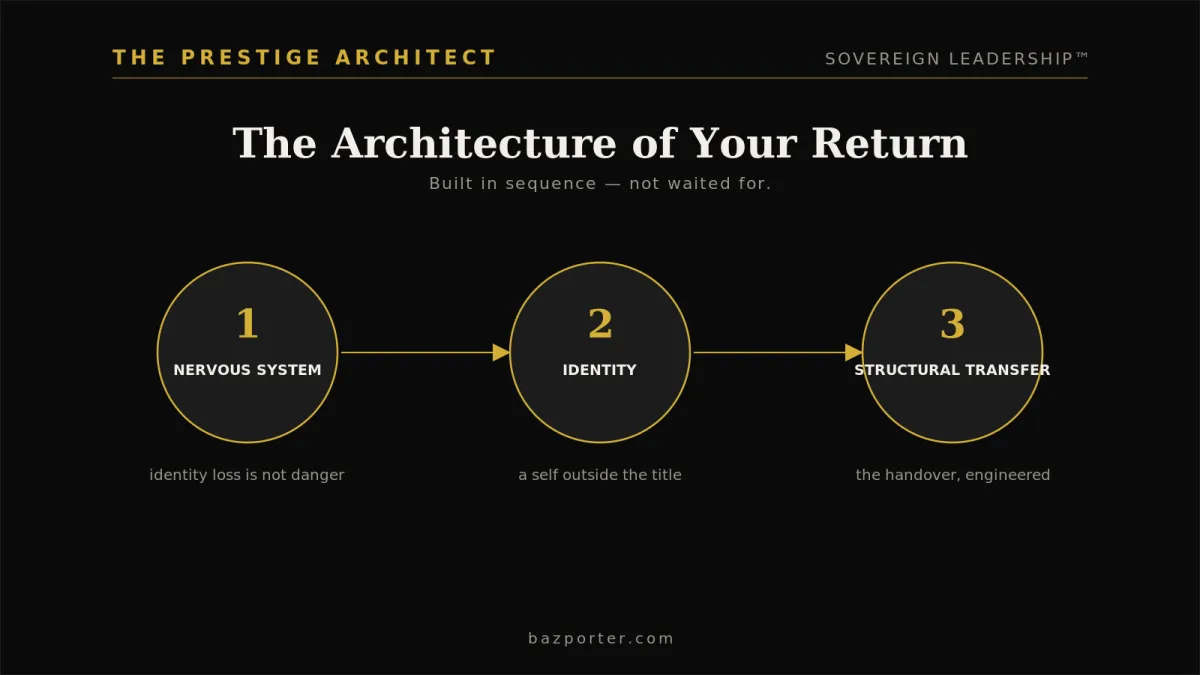
The architecture of your return
Here is the part most people miss. You do not need to become blunt. Your filter was never the problem. You need to rebuild the sense that it is safe to finish a thought in your own words. That is identity work, not speech training.
The research backs this. The edit is a survival reflex running long after the threat is gone. You can start to interrupt it yourself. The next time you feel the swap coming, let the first sentence finish before you touch it. Say the plain version once. Notice that nothing bad happens. That small proof, repeated, is how the reflex begins to loosen.
This is the RETURN. Not louder, not harsher. Coming home to the one who could say a plain thing before a bad room taught you to delete it. You stop filing off the edge in real time. You start letting your own judgment reach the end of its own sentence.
Here is where self-help stops. You can catch the edit in a meeting. You cannot see the exact room where the rule was written, or feel safe enough on your own to let it go. That part lives below what you can reach from inside your own head. This is the work I do with leaders in private counsel. It begins at the same door for everyone. A free sixty-minute conversation, the Fast Future Freedom Blueprint™, where we find the room the rule came from. If you are ready to stop deleting yourself and start finishing the thought, apply for your audit here.
Questions leaders ask me
Why do I edit myself mid-sentence even when I am sure I am right?
Because certainty is not the issue. Safety is. Somewhere the plain version got punished, so your body deletes it before it can cost you again. The judgment is intact. The sense that it is safe to finish is what thinned.
How do I stop softening my point without sounding harsh?
You do not need the hard version. You need the plain one. Say the point once, in your real words, and then stop. Do not stack qualifiers on top of it. Clear is not harsh. Plain usually lands as calm and sure.
Is editing myself the same as being thoughtful?
Not quite. Thoughtful chooses words with care and still delivers the point. Editing out of fear deletes the point to avoid friction. The test is how you feel after. Thoughtful leaves you clear. Fearful editing leaves you smaller and drained.
Why am I so tired after meetings where I barely spoke?
Because silence is not rest when you are policing every sentence. Performing a safer version of yourself is work, and the research ties it to exhaustion. You were editing the whole time. That is why you leave empty.
What is the first step back to speaking without the live edit?
Let one sentence finish before you touch it, in a low-stakes room first. Say the plain version once and watch that nothing breaks. Naming the room where the rule started is the deeper work, and that is where we begin together.
About Baz Porter
Baz Porter® is a Sovereign Leadership Architect. He rebuilds the identity beneath high performance, so leaders can decide, lead, and live from a self that is genuinely their own. He works with accomplished people who look strong on the outside and feel lost on the inside. His framework, RAMS™, begins where the real problem lives, underneath the visible one.