The Stoic Executive Myth: Why Suppressing Emotion Fuels Collapse
The Stoic Executive Myth: Why Suppressing Emotion Fuels Collapse
They praise your composure. In every room you are the calm one, the unmoved one, the one who never flinches. Inside, something is going quiet that should not be quiet. This is Silent Collapse™: the structural erosion of identity underneath intact performance. The stoic executive is not regulated. The stoic executive is sealed. And a sealed system does not stay calm — it loses pressure until it fails without warning. If that lands, start with The Manifesto.
Table of Contents
Key Takeaways
Emotional suppression is not composure. It is the accelerant of Silent Collapse™.
Stoicism was never about erasing emotion. The calm-executive ideal has been misread as a mandate to seal the system.
Suppressed emotion does not disappear. It reroutes into the body, the sleep, the decisions — and the research is clear on the cost.
Emotion is energy and signal. The sovereign move is to channel it, not to bury it.
Should Leaders Suppress Emotions? The Short Answer
No. Suppression is not regulation. It is containment under pressure with no release. Leaders who habitually suppress do not feel less — they feel it later, harder, and in the wrong system. The clinical goal is not a flat face. It is a regulated one. Those are different builds.
The Hidden Pattern: The Mask Is Not the System
Here is what the stoic ideal gets wrong in practice. The executive learns to control the display and calls it strength. The face goes still. The nervous system does not. Underneath, the load keeps rising with nowhere to go.
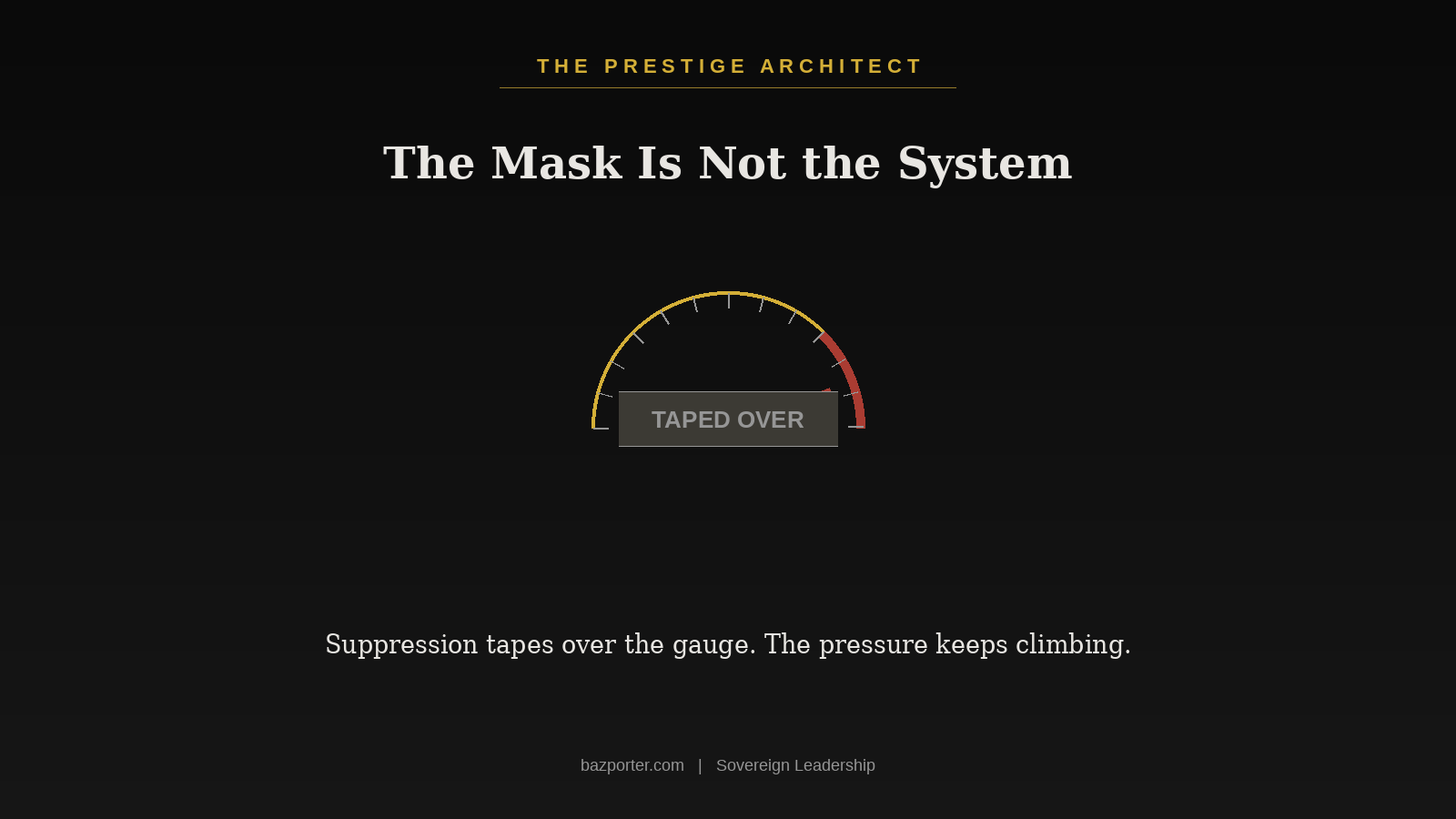
Picture a pressure vessel with the gauge taped over. The reading looks calm because no one can see it. The pressure is still climbing. The American Psychological Association documents that habitual emotional suppression is linked to higher anxiety, faster burnout, and worse physical health outcomes. The suppression does not remove the charge. It removes the warning light.
This is Silent Collapse™ in its most decorated form. The leader is praised for exactly the trait that is eroding them. Performance holds. The system underneath quietly gives way. The calm was never proof of health. It was the tape over the gauge.
Suppressed emotion is not composure. It is a slow burn wearing a calm face.
The RAMS™ Reframe: The Architecture of Regulation
The RAMS Framework™ treats the leader before the strategy. Five pillars — Results, Attitude, Authenticity, Mastery, Systems. Applied to emotion, each one moves you off suppression and onto regulation — a system that channels charge instead of sealing it. This is Sovereign Leadership™: power that runs on presence, not on performance of calm.
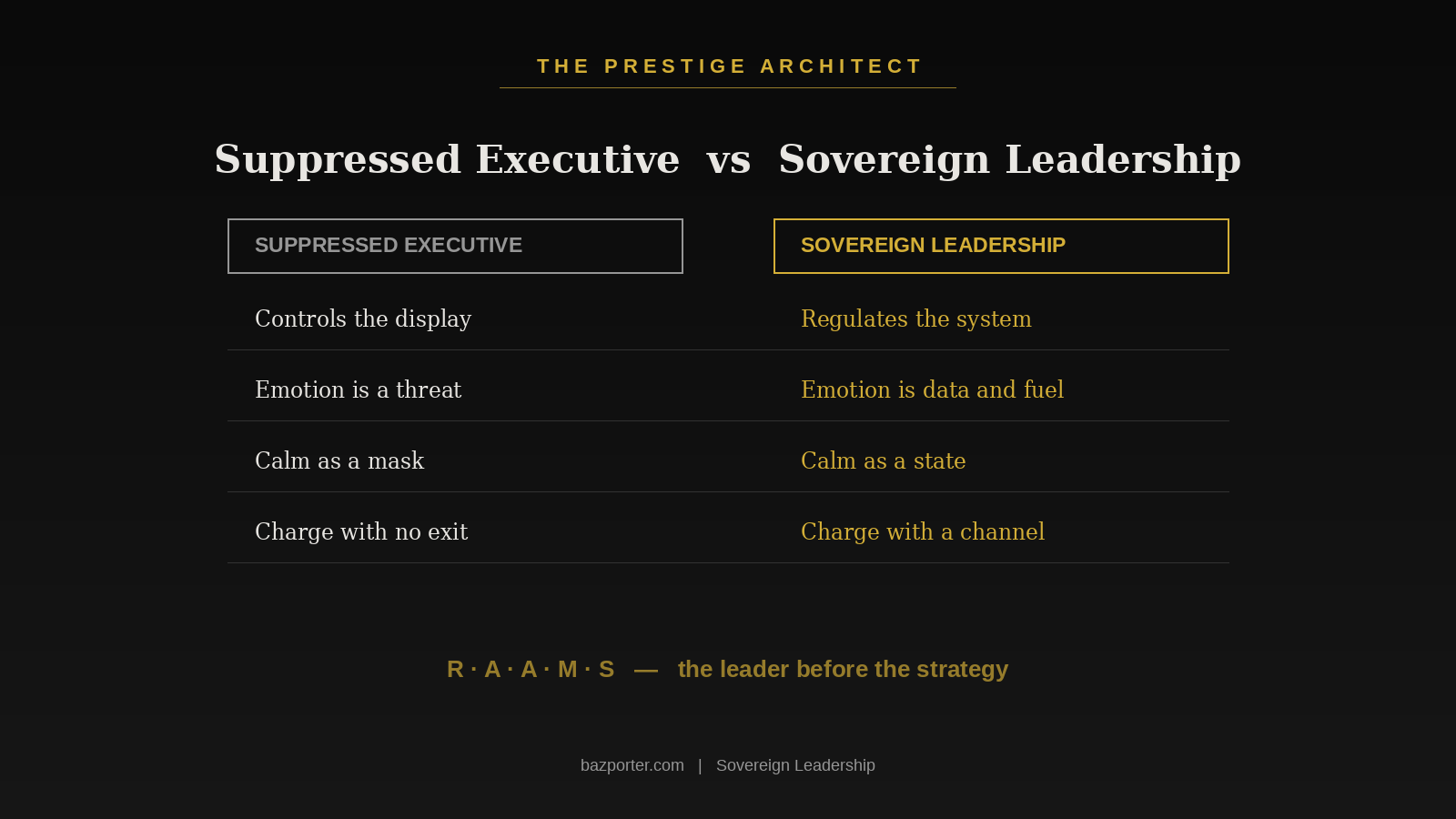
Collapsed Executive vs. Sovereign Leadership™:
Controls the display → Regulates the system
Emotion is a threat → Emotion is data and fuel
Calm as a mask → Calm as a state
Charge with no exit → Charge with a channel
Results — Composure vs. Capacity
Suppression buys composure and spends capacity. The leader looks steady and runs on a shrinking reserve. Operational rule: measure your regulated capacity, not your visible calm. The mask can hold long after the system has thinned.
Attitude — Where the Suppression Lives
Attitude is the internal operating system. "Feeling it means losing control" is not a fact. It is a belief installed young and rewarded hard. It runs quietly under every sealed reaction. Name it and it loosens.
Authenticity — The Private/Public Divide
In public, the leader is unflappable. In private, the charge has to land somewhere — the sleep, the temper, the numbness. That divide is the engine of Silent Collapse™. Closing it is not weakness on display. It is the system finally telling the truth.
Mastery — Control vs. Sovereign Regulation
Controlling the display is a skill. Regulating the system is a capability. They are not the same. Harvard Business Review research on leadership finds that regulated emotional expression — not suppression — is what steadies a team's climate and sharpens decisions under pressure. Command decision: build the capability to feel and function at once. To see where your system stands, Take the Silent Collapse Diagnostic.
Systems — Building the Channel
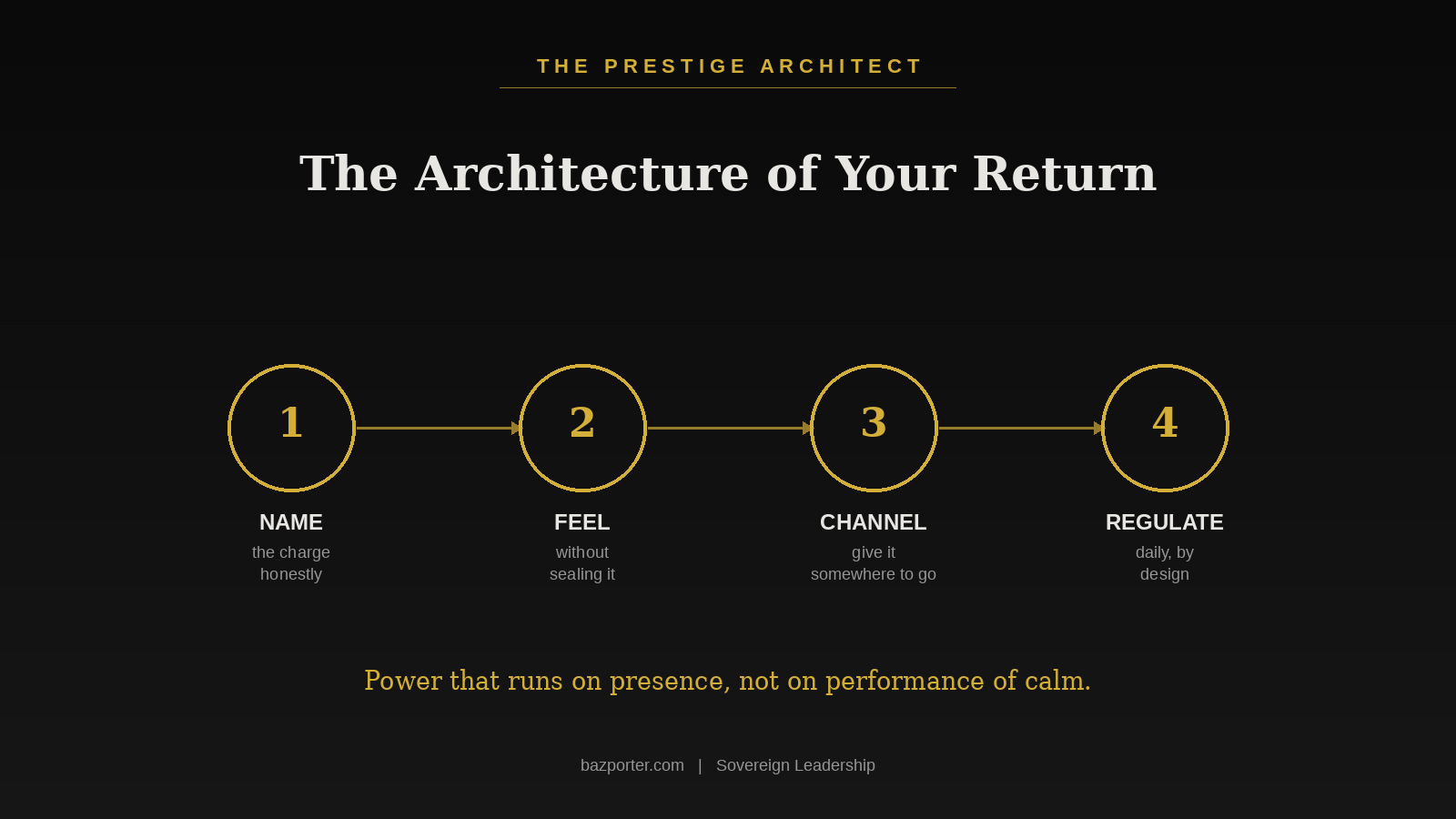
The final pillar is structural. You build the daily architecture that gives charge a channel — regulation practices, honest counsel, recovery that is scheduled, not hoped for. Then emotion becomes fuel you use instead of pressure you hide. For the wider system, see the Sovereign Leadership Resource Hub.
Case Vignette: The Leader Everyone Called Unflappable
One executive was known for never cracking. The board loved it. Then the sleep went, the edge dulled, the numbness set in — all while the metrics held. We did not teach him to emote. We rebuilt the architecture underneath: a channel for the charge, regulation he ran daily, counsel he was honest inside. Four months on, he was steadier in the room and awake to his own life. The calm stopped being a seal. It became a state. Systems first. The steadiness followed.
The Architecture of Your Return
The return is not permission to vent. It is nervous-system sovereignty. You stop taping over the gauge and you build the channel that carries the charge. The composure everyone praises is not the goal. A regulated system that produces real calm is. This is the rebuild, not a mindset. When you are ready to do the structural work, Apply to Work With Baz.
Frequently Asked Questions
Should leaders suppress their emotions to stay professional?
No. Suppression is containment with no release, and it costs more than it saves. Regulated expression keeps a leader steady without sealing the system. The goal is a regulated face, not a flat one. Those are different builds with very different long-term costs.
Isn't stoicism about controlling emotion?
Stoicism was never about erasing emotion. It was about not letting feeling dictate action indefinitely. The modern executive misread it as a mandate to seal the system. Control the response, yes. Delete the signal, no. The signal is information you need.
What actually happens when executives suppress emotion long-term?
The charge does not vanish. It reroutes into sleep, health, temper, and judgment. Research links habitual suppression to higher anxiety, faster burnout, and worse physical outcomes. Performance can hold while the system underneath erodes. That gap is Silent Collapse.
How do I stay composed without suppressing?
Build a channel. Regulation practices, scheduled recovery, and honest counsel give the charge somewhere to go. Then composure becomes a state your system produces, not a mask it holds. Start with the daily architecture, and the calm becomes real instead of performed.
About the Author
British military veteran. Two-time international bestselling author. Founder, The Prestige Architect®. Host, Rise From The Ashes podcast, C-Suite Network. Boulder, Colorado.