How to Speak First, Not Last, in the Room
I used to speak and the room would move. Now I see the opening and I wait. Someone else fills it. I nod. I tell myself I am picking my battles.
That is a lie I got comfortable with. Silent Collapse™ is not forgetting what to say. It is knowing exactly what to say and speaking last anyway. The read is sharp. The timing is gone.
Speaking first is not louder. It is earlier. It is the discipline of entering the room before the room decides without you. This is architecture, not personality. And the return to it is laid out in the Manifesto.
On this page
Key takeaways
Speaking first is a position, not a volume. You go early, not loud.
Waiting to react is a habit the room learns. It stops expecting you to lead.
The fix is structural. You build a first move, not more confidence.
You do not need the perfect sentence. You need the first clean one.
Going first is how Sovereign Leadership™ sounds in a meeting.
How to speak first instead of waiting to react
You speak first by deciding your opening before the meeting starts. Pick the one thing you will say in the first five minutes. Say it plainly, early, and let it stand. Speaking first is not a trait you are missing. It is a move you have stopped making. You rebuild the move, and the voice follows. The goal is not to dominate the room. The goal is to re-enter it as the person who sets the frame, not the person who reacts to it.
The hidden pattern underneath
Here is what I see underneath. You did not go quiet all at once. You went quiet one deferral at a time. You waited once because the timing felt wrong. The room adjusted. You waited again. The room adjusted again. Silence is self-reinforcing. Researchers Elizabeth Morrison and Frances Milliken named this organizational silence in the Academy of Management Review (2000): once withholding becomes the norm, it compounds, and people stop expecting their own voice to matter. The habit teaches the room, and the room teaches you back.
There is a second truth, and it is harder. Influence tracks who speaks early, not who is most correct. Work by Cameron Anderson and Gavin Kilduff, published in the Journal of Personality and Social Psychology (2009), found that people who contribute early are granted influence, often regardless of accuracy. The person with the best read loses the room to the person who spoke first. You have the read. You keep handing the room away.
The RAMS™ reframe: five pillars back to your voice
RAMS™ is how I rebuild this, pillar by pillar. Not a pep talk. A structure.
Results. Stop measuring a meeting by whether you avoided friction. Measure it by whether your frame was in the room. A clean opening is the result. Comfort is not.
Attitude. Waiting feels like respect. It is not. It is a bet that someone will invite you in. Drop the bet. Nobody is coming to ask.
Authenticity. Going first does not mean performing certainty. It means saying the true thing early, while it is still unedited. Your first instinct is usually your most honest one. Speak that one.
Mastery. Build one repeatable move. In the first five minutes, name what you see. One sentence. Same shape every time. Mastery is a pattern you can run tired.
Systems. Design the trigger before the meeting. When the agenda opens, that is your cue to speak. Not when you feel ready. The system carries you past the hesitation. Feeling ready is the trap.
Here is the contrast I draw for every leader I counsel:
Collapsed: waits for a gap, then fills it with a softened version of what they already knew.
Sovereign: opens the gap, states the read first, and lets the room respond to them.
Collapsed: speaks last, to agree or to correct.
Sovereign: speaks first, to set the frame.
Collapsed: measures safety by how little they risked.
Sovereign: measures weight by whether their voice shaped the outcome.
You are not out of things to say. You have gone quiet. Going first is how you come home to the voice that built all of this.
If you want to find the exact meeting where your voice went quiet, start with the Silent Collapse Diagnostic™. It is a free 60-minute identity audit. You bring the room where you went silent. You leave with the first move back.
What this looks like in a real room
A leader I counsel runs a 200-person division. Sharp. Respected. Silent in the one meeting that decides budget. They had the clearest read at the table and spoke last every week. By the time they spoke, the decision was already leaning away from them.
We did not work on confidence. We built one move. Before each budget meeting, they wrote a single sentence: the one thing they wanted in the room first. When the agenda opened, they said it. No preamble. No softening. Just the read, early.
The first week felt exposed. The second week, people waited for them to open. By the fourth, the meeting started with their frame instead of ending against it. Nothing about them changed. The order changed. They went first.
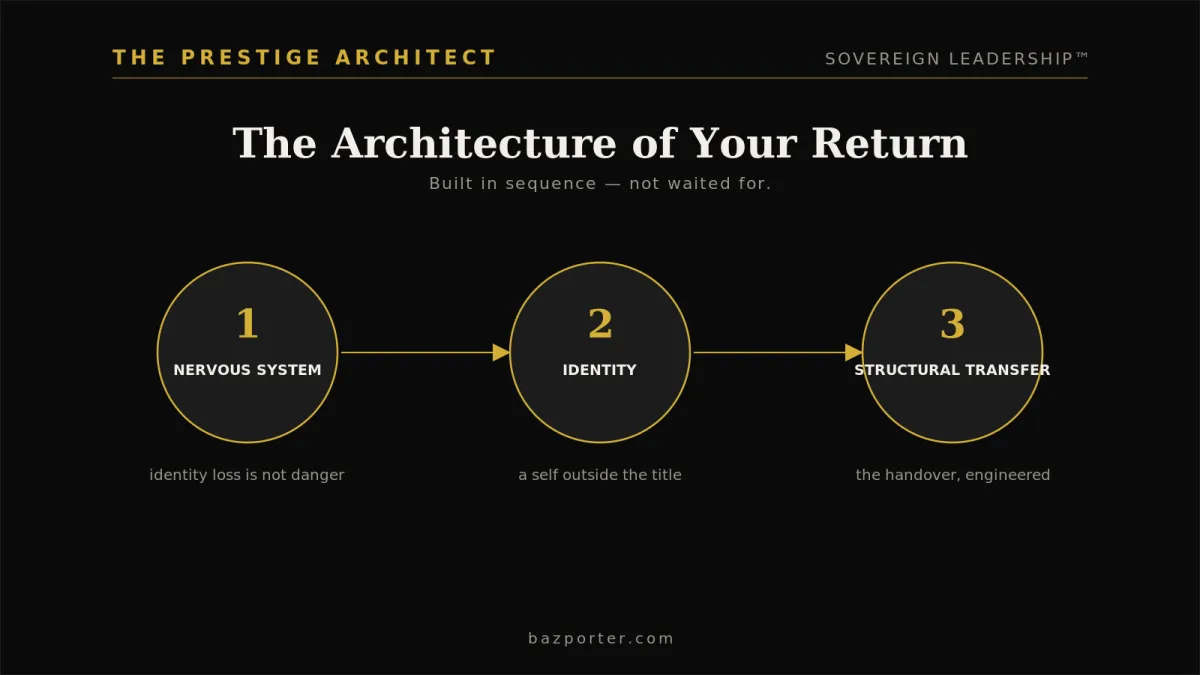
The architecture of your return
You do not get your voice back by trying harder to be brave. You get it back by rebuilding the architecture underneath it, one move at a time. That is the work I do. We find where the voice went quiet, and we build the structure that puts it first again.
The door is the Fast Future Freedom Blueprint™, a free 60-minute identity audit with me. You bring the room you stopped leading. You leave with the design of your return. This is an investment in being heard, not a bet on being asked.
FAQ
How do I speak first in a meeting without sounding aggressive?
You name what you see, once, without a wind-up. Aggression comes from force and repetition, not from timing. A single clear sentence early reads as leadership, not dominance. Say it, then stop talking and let it land.
Is speaking first just talking more than everyone else?
No. Speaking first is about position, not volume. You set the frame early, then you can go quiet for the rest of the meeting. The person who talks most is often the one who never set anything at all.
What if I speak first and I get it wrong?
Then you adjust in the room, out loud, which is its own kind of authority. Being first and correctable builds more trust than being last and certain. Research on influence shows the room rewards the early voice, not the flawless one. A wrong opening you own beats a right opinion you buried.
How do I command the room without performing?
You lead with the read instead of the performance. Performing is effort the room can see; commanding is a clear frame the room can use. Say the true thing early and let silence do the rest. You do not perform presence. You position it.
How do I start speaking first in my very next meeting?
Before the meeting, write one sentence: the thing you most want in the room. When the agenda opens, say that sentence first. Do not wait to feel ready, because ready is the thing that never arrives. The move is the readiness.
About the author
Baz Porter® is The Sovereign Leadership Architect. He rebuilds the identity beneath high performance, so leaders decide, lead, and live from a self that is genuinely their own. He works with accomplished people who look strong on the outside and feel unseen on the inside. His work begins underneath the visible problem, at the level of state of being.
Baz Porter® is the founder of Baz Porter LLC® and the architect of Sovereign Leadership Architecture™. He guides high-achieving leaders from Silent Collapse™ to Sovereign Leadership™: power without collapse, success without self-betrayal. He is an international bestselling author and the host of the Rise From The Ashes podcast on the C-Suite Network.