Should Leaders Suppress Emotions? The Stoic Myth That Fuels Collapse
You learned to hold the face. The room is tense, the news is bad, and you stay flat. No crack, no heat, nothing leaks. You call it discipline. You call it stoic. The market calls it strong leadership. Here is what it actually is: a stored cost your body has not paid yet. This is Silent Collapse™ in its most respected disguise — the leader who suppresses on the outside while the pressure compounds underneath. The suppression looks like control. It is a leak. Before you read another word on emotional discipline, read The Manifesto.
Table of Contents
Key Takeaways
Stoicism never told leaders to bury emotion. It taught regulation — feeling the signal without letting it drive. Modern leaders misread it as suppression.
Suppression is more expensive than the emotion. Research ties expressive suppression to emotional exhaustion, disengagement, and resource loss.
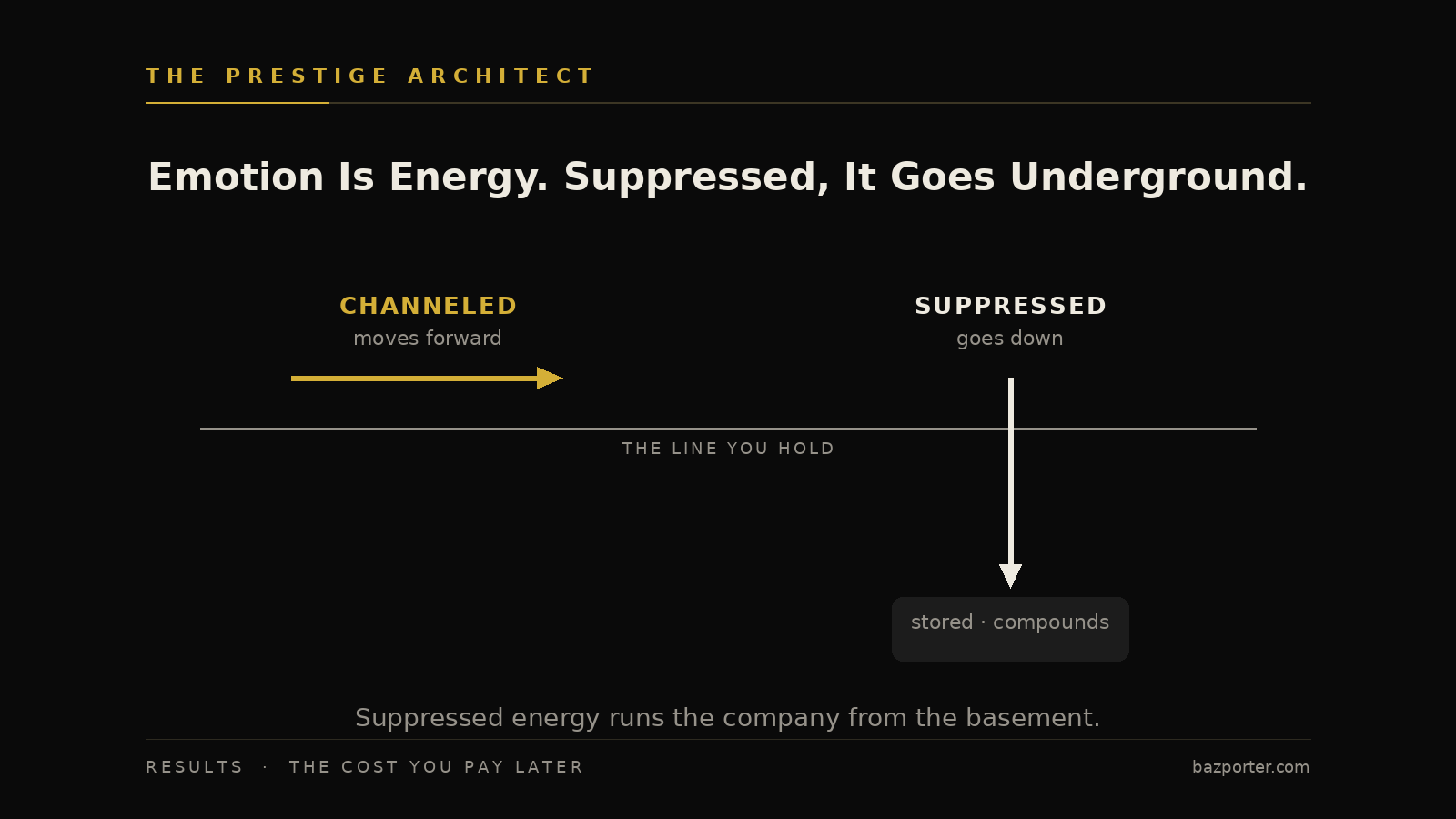
Emotion is energy. Suppressed energy does not vanish. It goes underground and runs the company from the basement.
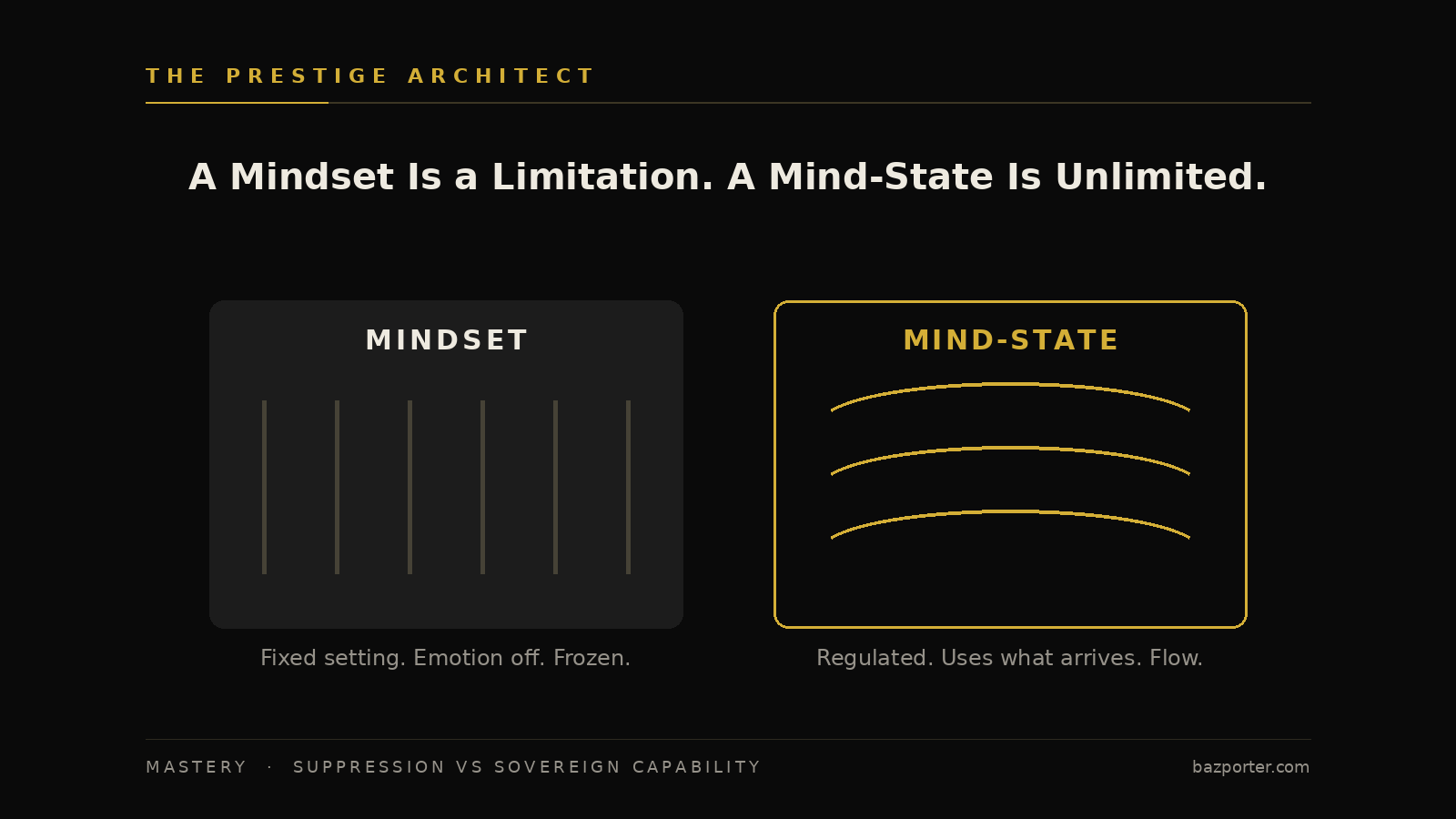
A mindset is a limitation. A mind-state is unlimited. Suppression freezes the first. Sovereignty channels into the second.
The Short Answer
No — leaders should not suppress emotions. Suppression is not strength; it is a stored cost the nervous system collects later as anxiety, exhaustion, and collapse. The stoic ideal is emotional regulation, not emotional erasure. Sovereign leaders feel the signal, read the data inside it, and channel the energy — they do not bury it.
The Hidden Pattern: What Stoicism Actually Said
The popular version of stoicism is a man with no face. Feel nothing. Show nothing. That is not stoicism. That is a costume of it. The Stoics never denied feeling. They refused to let feeling dictate action. The work was regulation, not deletion.
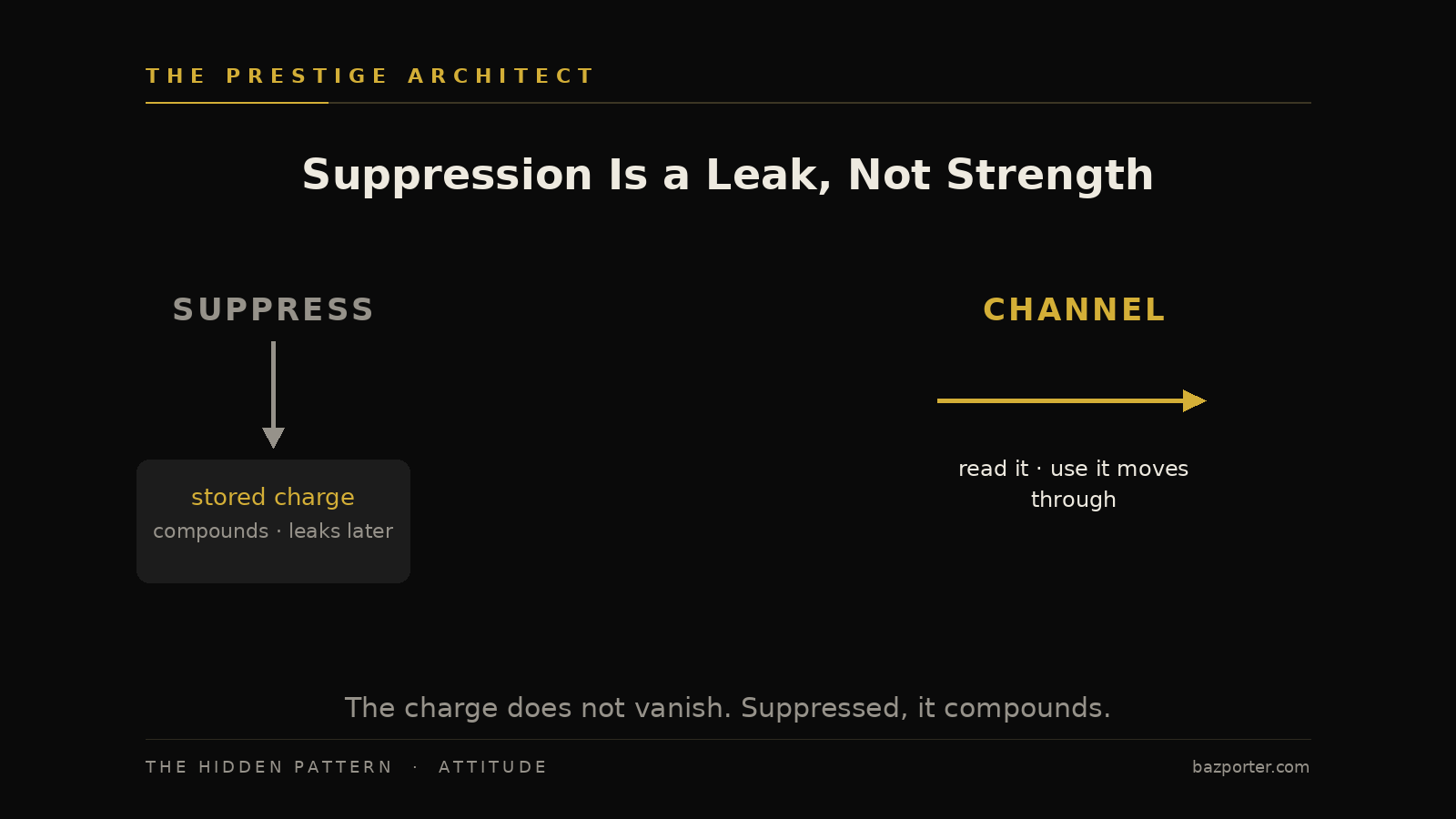
Somewhere the message got flattened into "control means no emotion." Leaders adopted the flattened version because it photographs well. Calm under fire reads as command. The problem is mechanical. Expressive suppression — stopping an emotion as it surfaces — does not remove the emotion. It hides the display while the internal charge stays live.
The research is direct. Suppression weakens the ability to process and understand emotion, depletes mental resources, and accumulates negative affect internally. Reviews of the neural and behavioral data show suppression is more resource-demanding and less effective than regulation, with measurable social and physiological costs. You can read the comparison in this review of reappraisal versus suppression and in the foundational emotion-regulation research.
So the disciplined leader is not regulating. They are paying interest. The charge does not leave. It compounds. That is the engine of Silent Collapse™: a body holding a face it can no longer separate from. For the wider frame before the rebuild, the Sovereign Leadership Resource Hub maps it.
The RAMS™ Reframe: Emotion as Architecture
The RAMS Framework™ runs the body and the business on one system. Results, Attitude, Mastery, Systems. Suppression breaks all four at once. Here is the rebuild, starting where the collapse lives.
Attitude — Where the Collapse Lives
Attitude is the internal operating system, the belief running under every move. For the suppressing leader, one belief runs the show: emotion is a threat to authority. So every signal gets shoved down before it can be read.
The trap: emotion treated as weakness, so it is buried and never used.
The shift: emotion treated as data and fuel. You read it, then you decide what it powers.
Operational rule: if you cannot name what you feel in the room, you cannot lead the room. You are managing a face, not a decision.
Results — The Cost You Pay Later
Suppression has output. In the short term it looks clean. The meeting holds, the face holds, nothing spills. The cost is deferred, not avoided.
Suppression is not control. It is a debt. The nervous system always collects.
The bill arrives as exhaustion, flat affect, and decisions made from a depleted system. The leader who never cracks in public often collapses in private. Command decision: stop measuring strength by how little shows. Measure it by how cleanly the charge moves through and out.
Mastery — Suppression vs. Sovereign Capability
Suppression is a skill. A real one. You can train a face that never moves. That skill traps you, because it builds depth into the exact habit that drains you.
Suppression holds the surface and hides the cost. It looks like mastery.
Sovereign capability feels the full charge, stays regulated, and channels it into the work. That is mastery.
A mindset is a limitation — a fixed setting that says emotion is off. A mind-state is unlimited — a regulated system that uses whatever arrives. One freezes you. The other moves.
Systems — The Architecture of the Return
This pillar ends the leak. You do not white-knuckle better. You build a system that processes emotion in real time, so nothing has to be buried.
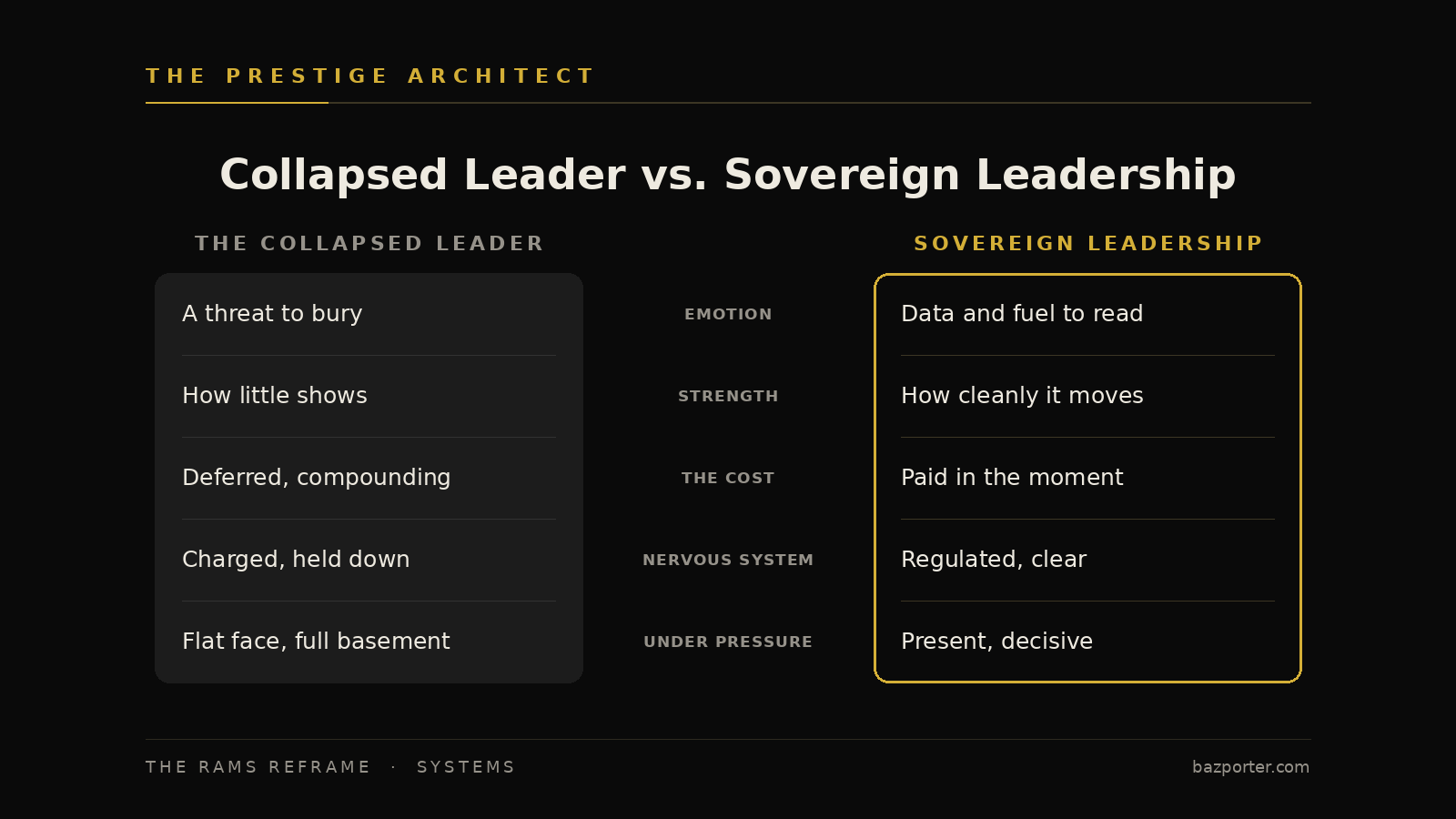
DimensionThe Collapsed LeaderSovereign Leadership™EmotionA threat to buryData and fuel to readStrengthHow little showsHow cleanly it movesThe costDeferred, compoundingPaid in the momentNervous systemCharged, held downRegulated, clearUnder pressureFlat face, full basementPresent, decisive
Build a daily practice that discharges the charge. Build language for what you feel before it leaks. Build a body that stays regulated under load. The face stops being a mask and becomes a choice. If you do not know which pillar is leaking first, find out. Take the Silent Collapse Diagnostic.
Case Vignette: The Leader Who Never Cracked
An executive I worked with was famous for composure. Boards trusted the flat calm. In private, the sleep was gone and the joy was gone. He had built a face the whole company relied on, and it was eating him alive.
We did not work on confidence. We worked on the system underneath. We named the belief that emotion threatened his authority. We built a short daily practice to move the charge instead of storing it. We gave him language for the signal in the room. The composure stayed. The cost left. He still does not crack in public. The difference is that nothing is buried now. The calm is real, not held.
The Architecture of Your Return
You do not become sovereign by feeling less. You become sovereign by processing more, in real time, so nothing has to go underground. That is nervous-system sovereignty, and it is engineered, not willed.
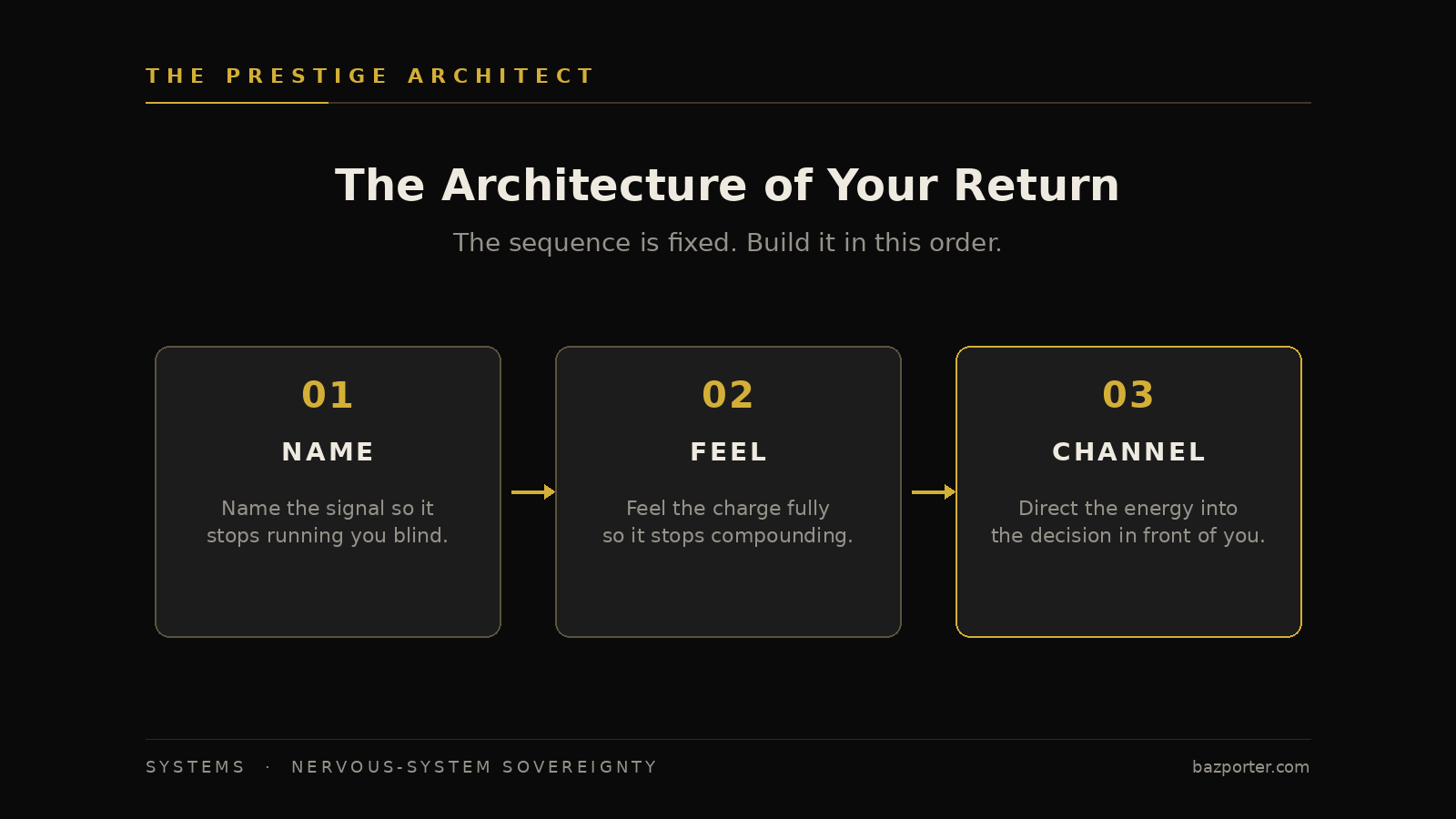
The sequence is fixed. Name the signal, so it stops running you blind. Feel the charge fully, so it stops compounding. Channel the energy into the decision in front of you. In that order, composure stops being a mask. It becomes the natural output of a regulated system.
You did not reach the top by avoiding hard structures. You built them. This is the same work, turned inward. When you are ready to build the return, Apply to Work With Baz.
FAQ
Should leaders suppress their emotions to stay professional?
No. Suppression hides the display while the internal charge stays live and compounds. Research links expressive suppression to emotional exhaustion and resource loss. Professionalism is regulation — feeling the signal, reading it, and choosing the response — not erasing emotion.
Isn't staying calm under pressure the whole point of stoicism?
Calm is the output, not the method. Real stoicism teaches regulation, not deletion. The Stoics felt emotion and refused to let it dictate action. The modern misread — feel nothing, show nothing — is suppression wearing stoicism's name. It costs more than it saves.
What is the difference between suppressing and regulating emotion?
Suppression stops the emotion at the surface and buries the charge. Regulation lets the emotion register, reads the data inside it, and channels the energy. Suppression depletes resources and accumulates negative affect. Regulation moves the charge through and out, so nothing compounds.
Can I lead with emotional honesty without looking weak?
Yes. Sovereign leadership is not venting. It is naming the signal, staying regulated, and acting with clarity. Composure that comes from a regulated system reads as strength because it is real. The mask reads as strength until the system behind it fails.
About the Author
British military veteran. Two-time international bestselling author. Founder, The Prestige Architect®. Host, Rise From The Ashes podcast, C-Suite Network. Boulder, Colorado.