Should I Walk Away? Real Exit vs. Restlessness
Some nights you sit inside the life you built and quietly want out. Not tired. Not sad. Restless. A pull to walk away from the title, the company, the routine you chose. This is the felt state I name Silent Collapse™. It is what happens when you outgrow a life and stay loyal to it anyway. Before you decide anything, read the manifesto.
You are not broken. You are early. The restlessness is data, not a verdict.
On this page
Key takeaways
A real exit is quiet, specific, and steady under stress.
A restless exit is loud, vague, and changes shape weekly.
The urge to blow it up is rarely the first right move.
Reinvention is a process, not a single leap.
You can want your life again without torching it.
Should I walk away? The short answer
Ask one question first. Are you moving toward something real, or away from yourself? A real exit points at a specific life. A restless exit points at anywhere but here.
Sit with the fantasy for a moment. Notice its shape. Does it name a place, a craft, a person, a way of working? Or does it only say gone?
The real exit survives a boring Tuesday. The restless one needs a crisis to feel true. That single test settles most of it.
The Silent Collapse Diagnostic™ exists to run that test with you, in one hour, without you having to decide anything yet.
The hidden pattern under the pull
Here is what almost no one tells you. The pull to walk away is usually not about the job. It is about a self you shelved to build the life.
Research backs this. Herminia Ibarra, in her Harvard study Working Identity, found that reinvention is not a clean decision. It is a slow experiment with new versions of yourself. The people who land well do not reject the old identity. They rework it.
A University of Maryland study on midlife transition decisions found the same forces at play: identity, networks, and shocks. A shock makes the pull feel urgent. Identity decides whether the move is wise.
So the restlessness is honest. The instinct to detonate everything is not. One is a signal. The other is a strategy that costs you the years you already spent.
The RAMS™ discernment: a real exit vs a restless one
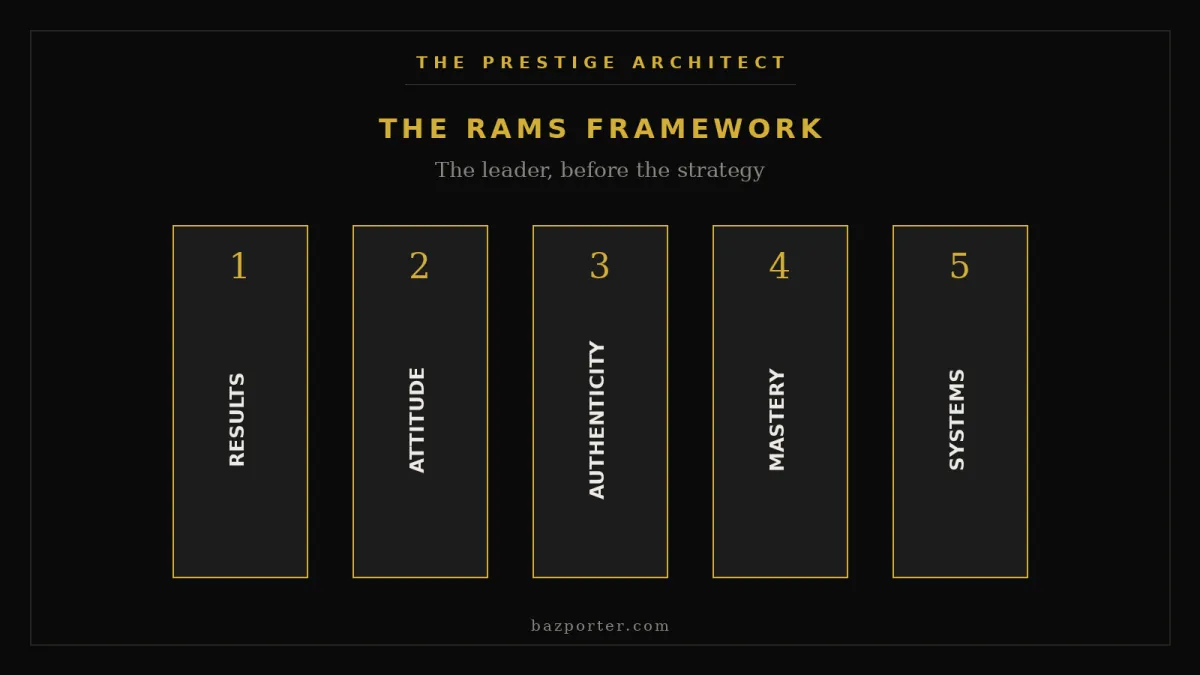
I read this decision through RAMS™, my five-pillar architecture. Each pillar is a checkpoint. Together they tell you whether the door is an exit or a mirror.
Results
A real exit has a testable next result. You can name what you would build first. A restless exit only names what you would leave. If you cannot describe the first ninety days, the pull is not ready.
Attitude
Notice the tone underneath. Real change feels grave and calm. Restless change feels frantic and secret. When the plan only feels good at 2am, it is escape wearing the mask of courage.
Authenticity
This is the center pillar, and the deciding one. Ask who you are without the role. If the answer is a stranger, do not walk yet. Walking away from a self you have not met just relocates the emptiness. First you meet yourself. Then you choose.
Mastery
A real exit carries your skill forward. It reworks the old identity, as the research shows. A restless exit throws away twenty years to feel new for a season. Reinvention keeps the craft and changes the container.
Systems
Run a small experiment before the big leap. Redesign one part of the life in place. New scope, a real sabbatical, a side build, a hard boundary. The system test reveals the truth cheaply.
Here is the honest contrast between the two states.
Collapsed: I want out of everything, right now, anywhere.
Sovereign: I want this specific life, and I will build toward it.
Collapsed: I fantasize about disappearing.
Sovereign: I name what I would return to, and I plan for it.
Collapsed: I will blow it up and figure it out later.
Sovereign: I test one change, then I decide with evidence.
The people I counsel are not failing. They outgrew the life they built, and no one taught them how to grow the life to match.
If that lands, do not decide tonight. Book the Silent Collapse Diagnostic™ and run the discernment with me first.
A case from the room
A leader in their early fifties came to me certain they were done. Successful company. Strong marriage on paper. A quiet plan to sell everything and vanish to another country.
We did not argue about the plan. We ran the test. What, exactly, would you build on day one there? Silence. They could name what they were leaving. They could not name what they were going toward.
So we redesigned in place first. They cut the parts of the role that had gone dead. They took a real month away. They rebuilt one relationship they had abandoned, the one with themselves.
Six months on, the fantasy had gone quiet. Not because we suppressed it. Because they finally wanted the life again, on new terms. The restlessness was pointing at the right problem. The exit door was the wrong solution.
The architecture of your return
Return is the move, not escape. You are not here to become someone new. You are here to come back to who you were before the life got loud.
The architecture is simple, and it is not easy. Meet the self behind the role. Name what you actually want, in plain words. Test one change in place. Read the result. Then, and only then, decide whether the door is an exit or a threshold.
Some of you will still leave. That is a clean exit, and it will hold, because you chose it from clarity instead of pressure. Most of you will find the life was never the problem. The loyalty to a version of it was.
If you are standing at this edge, do not stand there alone. Apply for the Silent Collapse Diagnostic™. One hour. We find out whether you need a new life or a real return to this one.
Questions people ask
How do I know if I should walk away or stay?
Run one test. A real exit names a specific life you are moving toward and holds up on an ordinary day. A restless exit only names what you want to escape and needs a crisis to feel true. If you cannot describe your first ninety days on the other side, you are not ready to leave yet.
Why do I want to walk away from a life I built and love?
Because you likely outgrew it and stayed loyal anyway. The pull is not proof the life is wrong. It is proof a part of you got shelved to keep the life running. Meet that part first, then the decision gets clear.
Is the urge to blow up my life a midlife crisis?
Not usually. It is closer to a midlife correction. Research on midlife transitions shows identity, not age, drives the wise version of the move. The restlessness is a real signal. Detonating everything is just the loudest, costliest response to it.
Can I want my life again without leaving it?
Yes, and most people can. Redesign one part in place before you leap. Change the scope, take a true break, rebuild the relationship with yourself. Many find the life returns once the abandoned self does.
What is the Silent Collapse Diagnostic?
It is a focused one-hour session where we run the real-exit versus restless-exit test together. You leave with clarity on whether the door in front of you is an exit or a threshold, and the first move either way. It is the calm room to decide in, before you decide anything.
About Baz Porter
Baz Porter® is the founder of Baz Porter LLC and the architect of RAMS™, a system for leaders who built the life and lost themselves inside it. He works with successful people in Silent Collapse™ to engineer the return to who they actually are. Start with the manifesto, then book the Silent Collapse Diagnostic™.