How to Say No Without Feeling Like You Failed
"I say no, and the guilt arrives before the sentence ends." That is the quiet cost of being the one everyone leans on. You carry the team. You carry the family. You carry the business. And somewhere in the carrying, no stopped being a word you were allowed to use. This is the felt state Silent Collapse™ names: not loud burnout, but the slow erosion of a leader who cannot decline without feeling they failed someone. The way out is not a harder boundary. It is a return to a self that is more than useful.
On this page
Key takeaways
The guilt you feel when you say no is a relationship signal, not proof you did wrong.
A clean no protects the relationship. A guilty yes slowly corrodes it.
You overestimate how much your no will cost the other person.
Saying no is a skill of design, not a test of your worth.
The move is RETURN: your value was never your usefulness.
How do you say no without feeling like you failed someone?
You say no cleanly by separating the request from your worth. The failure you fear is imagined, not real. A clean no names the limit, honors the person, and offers nothing false. It does not over-explain. It does not apologize for existing. The Prestige Architect™ approach treats a no as a structural decision, not a moral verdict. You are not refusing the person. You are refusing one load. The guilt is loud because you have trained it for years. It will quiet when you stop obeying it. You keep your word by giving it less often and meaning it more.
The hidden pattern under the guilt
Most leaders think the guilt means they let someone down. It rarely does. Guilt is an interpersonal tool, not a truth detector. Baumeister, Stillwell, and Heatherton (1994), writing in Psychological Bulletin, showed that guilt evolved to protect relationships, not to measure wrongdoing. It fires when a bond feels at risk. It fires whether or not harm occurred. So the feeling is real. The verdict it implies is often false.
There is a second distortion. You assume your no will land harder than it does. Flynn and Lake (2008), in the Journal of Personality and Social Psychology, found that people badly misjudge social requests. We overestimate the cost of a refusal. We underestimate the other person's resilience. You picture their disappointment as permanent. It is usually a shrug and a pivot. The weight you carry is mostly forecast, not fact.
Put the two together. The guilt is a false alarm. The damage is a bad prediction. You have been paying a tax on events that never happen.
The RAMS™ reframe: saying no as architecture
A clean no is not a personality trait. It is a system you build. RAMS™ gives it structure across five pillars, and Mastery carries this one.
Results. Every yes spends a finite budget. Your hours are the budget. A guilty yes borrows against work only you can do. The result is slower, not kinder. A clean no is how real results get protected.
Attitude. You believe a good leader never refuses. That belief is the trap. The dependable one who cannot say no is not strong. They are unavailable to the work that matters. Change the belief, and the no stops feeling like betrayal.
Authenticity. A guilty yes is a quiet lie. You say yes with your mouth and no with your body. People feel the gap. A clean no is honest. Honesty, over time, is what people actually trust. You become easier to believe.
Mastery. This is the build. A clean no has three parts. Name the limit plainly. Honor the person directly. Offer one real alternative or none. "I cannot take this on. I trust you to carry it. Here is the one thing I can do." No speech. No apology tour. Mastery is saying it once and not taking it back.
Systems. Decide before the ask. A system answers for you. Set the standing rules now, while calm. What you always protect. What you never take on. Who owns what. When the request comes, you are not negotiating with guilt. You are reading a rule you already wrote.
Here is the contrast, held plainly:
Collapsed: says yes, resents it, delivers late, calls it loyalty.
Sovereign: says no, means it, protects the few things only they can do.
Collapsed: over-explains, apologizes, reopens the door an hour later.
Sovereign: names the limit once, stays warm, lets it stand.
Collapsed: measures worth by how much they carry.
Sovereign: measures worth by what they protect.
The dependable leader does not break from the work. They break from never being allowed to decline it. The press is constant. The pull to say yes never stops. A clean no is how you stop pressing and start choosing.
If you cannot tell whether your yes is a choice or a reflex, start there. The Fast Future Freedom Blueprint is the free entry audit. It shows you where the guilty yes is quietly costing you.
One leader's clean no
A managing director I counsel ran every escalation in their division. Nothing closed without them. They said yes to all of it. They called it ownership. It was fear wearing a nicer word. Each yes bought a little relief and a lot of weight. The guilt of a no felt worse than the exhaustion of a yes. So they never said it.
We built the three-part no first. Then we built the system behind it. They named two things only they would own. They handed the rest back, once, cleanly. The first no shook them. Their director shrugged and reassigned it in a day. No collapse. No betrayal. Just a load moving to where it belonged.
Six weeks later the division ran better, not worse. The leader was still trusted. They were simply available again. The guilt did not vanish. It got quieter, and they stopped obeying it. That is the return. Not a new person. The same person, no longer defined by what they carry.
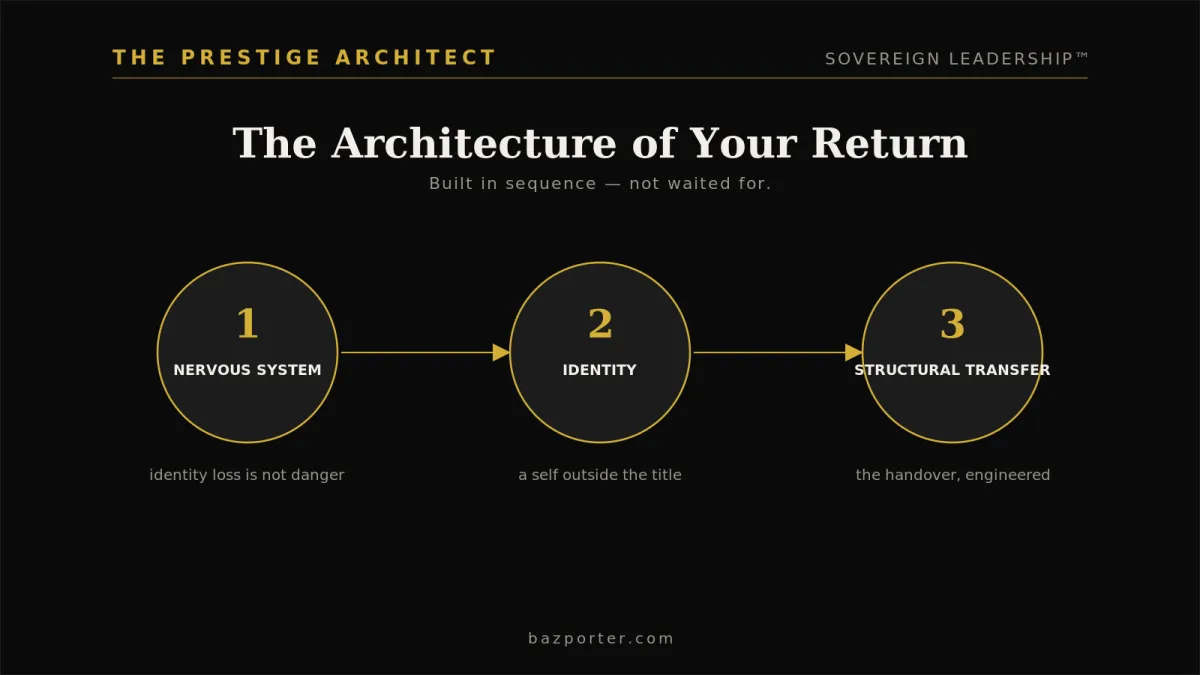
The architecture of your return
You do not fix this with willpower. You fix it with design. The guilt is old and well trained. You will not argue it away in a moment. You will outbuild it. A clean no, said once, honored, repeated. A system that decides before the ask. A worth that no longer rides on being needed. This is architecture, and it holds when the pressure returns.
The return is not becoming someone colder. It is becoming someone whole. You were never only useful. You were taught to believe that. The belief can be rebuilt. Start with one no this week, said cleanly, and left to stand. If you want the map for the whole rebuild, apply through the Fast Future Freedom Blueprint and begin with the audit.
Questions leaders ask about saying no
Why do I feel guilty every time I say no?
Because guilt is a relationship alarm, not a truth detector. It fires when a bond feels at risk, whether or not you did anything wrong. Years of saying yes trained the alarm to be loud. The feeling is real. The verdict that you failed someone is usually false.
How do I say no without damaging the relationship?
Name the limit plainly, honor the person directly, and do not over-explain. A short, warm no protects the relationship better than a resentful yes. People trust a leader who is honest about capacity. They slowly distrust one whose yes cannot be believed.
What is a clean no?
A clean no has three parts. You name the limit, you honor the person, and you offer one real alternative or none. It is said once and not taken back. It carries no apology tour and no reopened door. It is a structural decision, not a moral confession.
What if saying no means I let my team down?
You almost certainly overestimate the cost. Research shows people misjudge how hard a refusal lands and underestimate others' resilience. Your team is more capable than your guilt believes. A clear no often hands them growth you were accidentally hoarding.
How do I stop saying yes out of fear?
Decide before the ask. Build standing rules while you are calm about what you protect and what you never take on. When the request arrives, you read the rule instead of negotiating with fear. The Fast Future Freedom Blueprint audit helps you see where the fear is driving.
Baz Porter® is the founder of Baz Porter LLC and the architect behind RAMS™ and The Prestige Architect™, the system that helps capable leaders return from Silent Collapse™ to a self that is more than useful. Begin with the Fast Future Freedom Blueprint.