How to Run Your Own Day Instead of Reacting
Silent Collapse™ rarely looks like collapse. Your calendar is full. Your numbers hold. Still, you reach the evening and see the truth. You ran the company all day. You did not lead it. You answered, you fixed, you chased. The strategic seat sat empty while you worked. This is the owned day gone missing. The move is not another productivity hack. The move is a return to leading from who you are.
What this article covers
- The short answer
- The hidden pattern beneath the day that runs you
- The RAMS™ reframe across five pillars
- What this looks like in practice
- The architecture of your return
- Frequently asked questions
Key takeaways
- Running your own day is a leadership act, not a time trick.
- The day that runs you is a structure, not a character flaw.
- Reaction feels urgent because it rewards you fast.
- One protected block each morning changes the whole day.
- Your return starts with a single owned decision.
How do you run your own day instead of reacting?
You run your own day by deciding its shape first. Name the one result that must move today. Protect the opening ninety minutes for it. Route everything else into a holding pattern. You check that pattern on purpose, not on reflex. Reaction is not a flaw in you. It is the absence of a structure that decides for you. Build the structure, and the day stops running you.
The hidden pattern beneath the day that runs you
Most leaders treat this as a calendar problem. It is not. It is an attention problem with a leadership root.
Every time you switch from your work to a new fire, a cost follows. Part of your attention stays stuck on the task you left. Sophie Leroy named this attention residue in a 2009 study in Organizational Behavior and Human Decision Processes. The residue lowers the quality of the next task. So a day of switching is a day of thinking at half strength.
The cost compounds. Research by Gloria Mark and colleagues, presented at the 2008 CHI conference, found that interrupted work gets done faster. It also carries more stress and more effort. You feel busy and spent at once. That is the reactive day in one sentence.
Here is the leadership root. A reactive day is a day you have handed to other people to design. The strategist in you needs long, quiet attention to do its job. The responder in you can run on fragments. So the responder wins every hour, and the strategist goes silent. That silence is the felt edge of Silent Collapse™.
The RAMS™ reframe: five pillars of the owned day
RAMS™ is the framework Baz Porter®, The Sovereign Leadership Architect, uses to rebuild the leader underneath the role. Run your day through its five pillars and the shape of the owned day appears.
Results. Reaction measures motion. Sovereignty measures movement. Pick the one result that has to advance today. Judge the day by whether it moved, not by how full it felt.
Attitude. The reactive day treats every ping as a command. The owned day treats most pings as requests. You decide which ones earn your attention now and which ones wait.
Authenticity. You became a leader to direct, not only to respond. A day spent catching is a day spent as someone smaller than you are. Running your own day is how you stay the leader people hired.
Mastery. Protected attention is a skill, not a mood. You build it with one guarded block, held daily, defended out loud. The skill grows each time you keep the block.
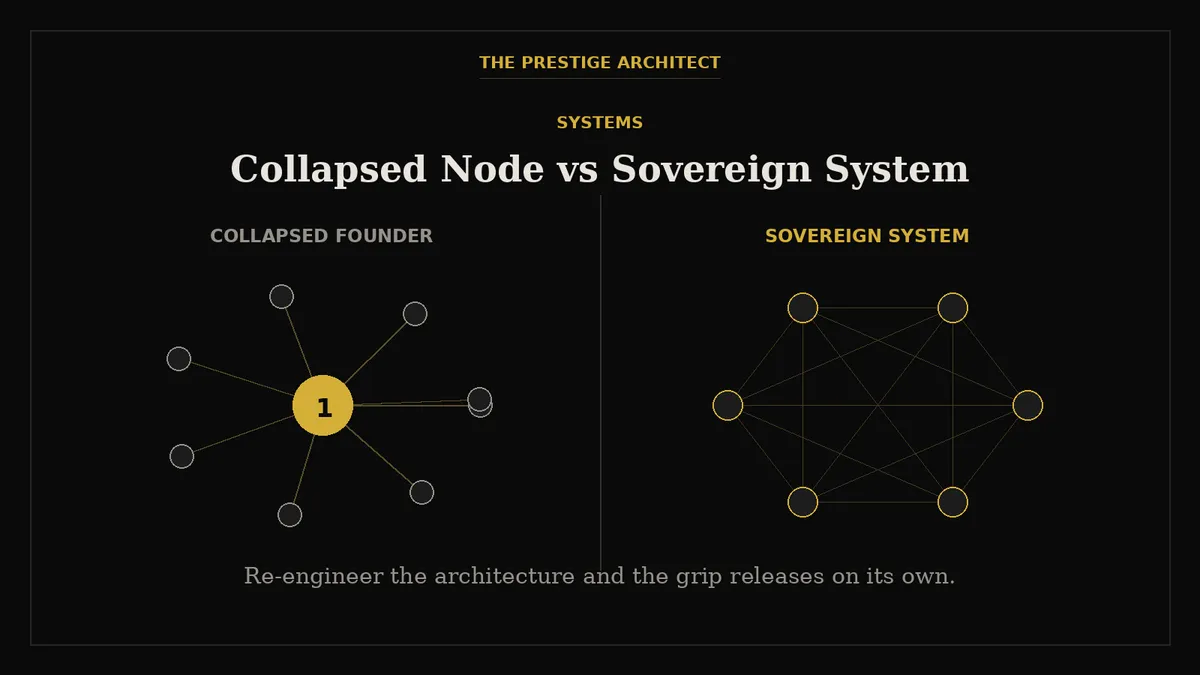
Systems. Willpower will not win this. A system will. Set the opening block, the holding pattern, and the check times once. Then let the structure carry the load so you do not have to.
Collapsed versus Sovereign: the two days side by side
- Collapsed: the day opens with other people's urgency. Sovereign: the day opens with your one result.
- Collapsed: every channel is live all day. Sovereign: channels are checked at set times.
- Collapsed: you measure the day by hours spent. Sovereign: you measure it by what moved.
- Collapsed: you end tired and behind. Sovereign: you end tired and ahead.
- Collapsed: the responder runs the company. Sovereign: the leader runs the responder.
You are not out of skill. Your strategic seat is empty. Fill the seat, and the day is yours again.
If you want to see which seat has gone quiet in you, start with the Fast Future Freedom Blueprint™. It is a free 60-minute identity audit. It names where your day stopped being yours, and where your return begins.
What this looks like in practice
Consider a managing director with a full team and a clean record. Every number holds. Every evening ends the same way. The real work, the thinking only this person can do, never starts.
The change was small. One result named each morning. One ninety-minute block, guarded and silent. Everything else held until two set check times. The team learned the new rhythm inside a week.
Nothing about the person changed. The structure changed. Within a month, the strategy that had waited for a year was moving. The seat was full again. That is a return, not a reinvention.
The architecture of your return
Running your own day is the surface. The deeper work sits under it. Somewhere, your identity fused with the role of the responder. Being needed became proof that you matter. So handing a fire to someone else can feel like losing yourself.
That is the open loop no calendar closes. It is identity, not time. The responder self has to be relieved of command, and the leader self restored to it. That is the work beneath the work.
This is the level Baz Porter® builds at, through RAMS™ and Sovereign Leadership™. Not a new system laid over the old self. A return to the self that can hold the system without strain.
Your next step is one honest hour. Apply for the Fast Future Freedom Blueprint™, the free identity audit. It is the door to the return, and the one place this work begins.
Frequently asked questions
How do I run my own day instead of reacting?
Decide the day's shape before anyone else does. Name one result that must move, and protect the first ninety minutes for it. Send everything else into a holding pattern you check at set times. The day stops running you once a structure decides for you.
What does it mean to run your day as a leader?
It means the day serves your direction, not only other people's urgency. You lead from a plan you set, not from the fires that find you. The responder still answers, but on your schedule. That is the difference between holding a title and leading.
How do I protect time for strategy when everything is urgent?
Treat one block as a meeting that cannot move. Guard it before the day fills, and say out loud that it is held. Route true emergencies to a named backup so the room is not stuck on you. Almost nothing is as urgent as a live channel makes it feel.
Why does reacting feel productive when it is not?
Reaction pays you in fast, visible wins. You clear a message and feel the hit at once. Real leadership work pays slowly and out of sight, so it loses the hourly contest. Feeling busy is not the same as moving what matters.
How long before running my own day feels normal?
Most leaders feel the shift inside one week and settle into it within a month. The first days are the hardest, because the room still expects instant answers. Hold the structure anyway. The rhythm teaches everyone, including you, faster than willpower ever could.
About the author
Baz Porter® is The Sovereign Leadership Architect. He rebuilds the identity beneath high performance, so leaders decide, lead, and live from a self that is genuinely their own. He works with accomplished people who look strong on the outside and feel unseen on the inside. His work begins underneath the visible problem, at the level of state of being.