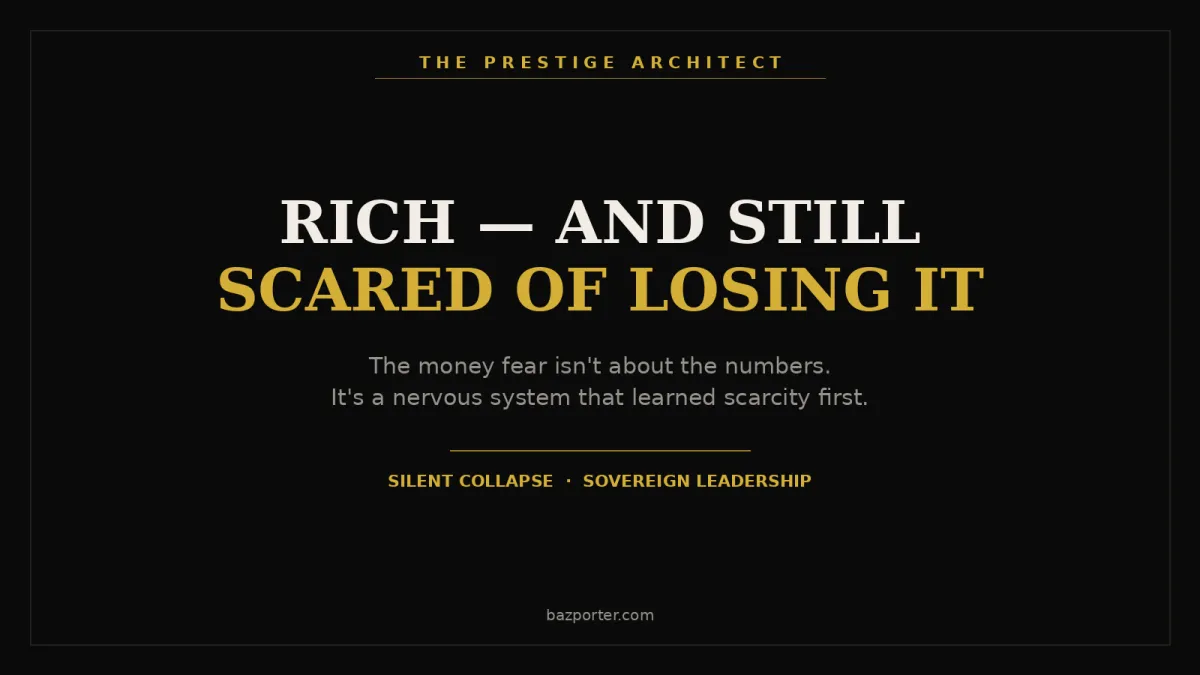
Rich but Still Scared of Losing It? The Fear Has a Source
The account is full. The fear is full too. You earned the security you once only imagined, and the dread did not move an inch. An $8 coffee still registers as a threat. This is Silent Collapse™ wearing a different mask — the high earner who looks free and feels hunted. The number on the statement says safe. The body says run. That gap is not irrational. It is a nervous system running an old file. Start here: Read The Manifesto.
Table of Contents
Key Takeaways
The money fear is not about the money. It is a nervous system that learned scarcity before it learned safety.
Scarcity is a cognitive load, not a bank account. Princeton and Harvard research shows scarcity itself taxes mental bandwidth — which is why the fear survives the success.
More income does not close the gap. The threat response was installed early and never updated. A bigger number cannot overwrite it.
Sovereign Leadership™ rebuilds felt safety independent of the statement, so the grip finally releases.
The Definitive Answer
A high earner stays scared of losing money because the fear was wired before the wealth arrived, and wealth does not rewrite wiring. The anxiety is a nervous-system residue from scarcity, not a verdict on the net worth. Rebuild felt safety at the body level and the fear loses its grip — regardless of the number.
The Hidden Pattern Beneath the Fear
Watch a wealthy leader check the account for the fourth time before noon. Nothing changed since the third check. The behavior is not greed. It is a threat scan the body cannot switch off.
Princeton's Eldar Shafir and Harvard's Sendhil Mullainathan demonstrated in Science that scarcity itself consumes cognitive bandwidth. The mind under scarcity narrows, fixates, and plans poorly — even when the scarcity is temporary. The American Psychological Association's Stress in America data shows money remains a top chronic stressor across every income bracket, the wealthy included.
The studies describe the load. The cause sits one layer down. A body that learned, early, that money equals survival keeps that file open for life. Success adds zeros to the account. It does not delete the file. The result is Silent Collapse™ — outward abundance, inward famine. The leader performs wealth while the nervous system rehearses ruin.
The fear was never about the money. It is a nervous system that learned scarcity before it learned safety — and never updated the file.
This is why a raise does not fix it. You cannot out-earn a threat response you never consciously closed. For the deeper map of how high performers carry this, the Sovereign Leadership Resource Hub holds the full framework.
The RAMS Reframe: Safety as Architecture
The RAMS Framework™ treats the body and the business as one system — Results, Attitude, Mastery, Systems. When money fear runs the leader, all four are compromised at once. Here is the rebuild, pillar by pillar.
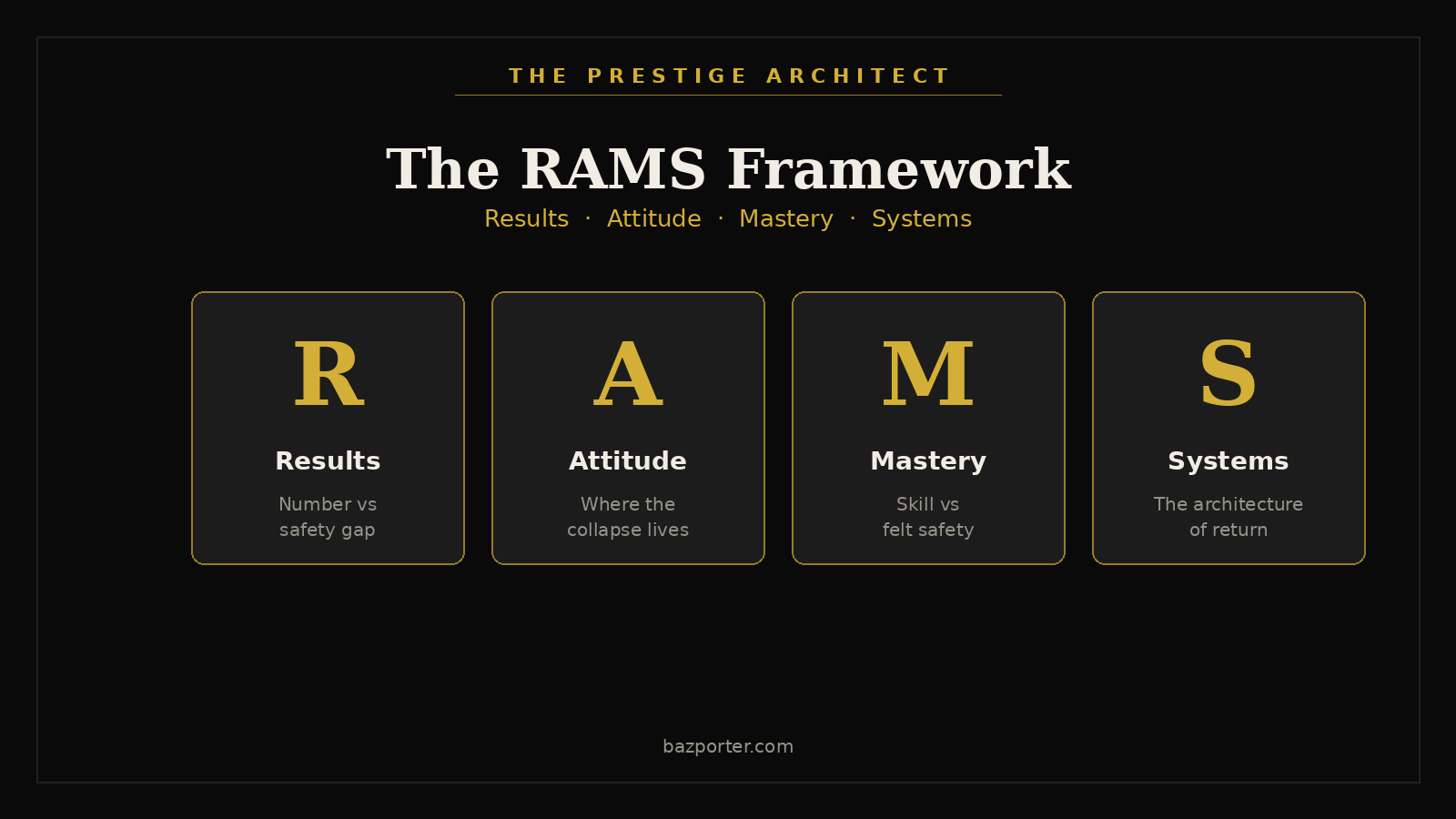
Results — The Account and Safety Gap
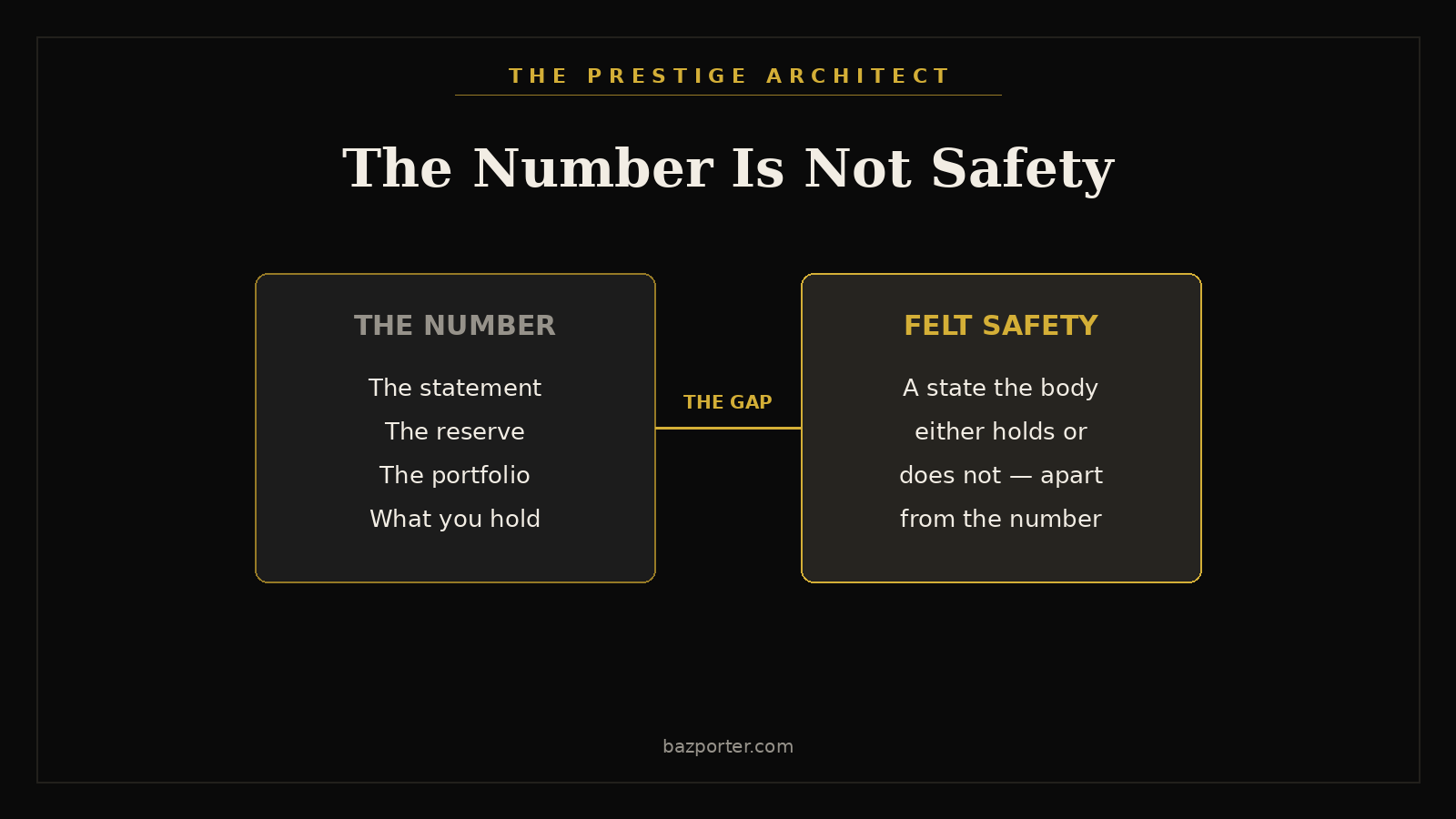
The leader measures safety in the account. The account climbs; the safety does not arrive. Two things were quietly fused that were never the same.
The gap: the account is a number; safety is a state the body either holds or does not.
The tell: a record month brings relief that lasts hours, then the scan resumes.
Operational rule: stop using the statement to regulate the nervous system. It was never built for that job.
Attitude — Where the Collapse Lives
Attitude is the internal operating system. It runs rules the body wrote before language. For the money-haunted leader one rule dominates: if I lose it, I do not survive.
That rule once kept a frightened person alert. It now taxes a wealthy one. The collapse does not live in the portfolio. It lives in the operating system that scans the portfolio.
Command decision: name the rule out loud. An unnamed rule runs the leader; a named rule can be rewritten.
Mastery — Financial Skill vs Felt Safety
High earners are deep in financial skill. Skill builds the wealth. It does not build the felt safety to hold it. Sovereign capability is different — the trained capacity to feel secure when the threat alarm fires and nothing is actually wrong.
Skill answers "how do I grow it." Sovereign capability answers "who am I when the fear says it is all about to vanish." Wealth demands the second one, and most leaders never trained it.
Systems — The Architecture of the Return
This is the load-bearing pillar. A leader gripped by money fear has one safety system and it is wired to the number. The fix is not a larger reserve. It is a second architecture — felt safety sourced inside the body, not on the statement.
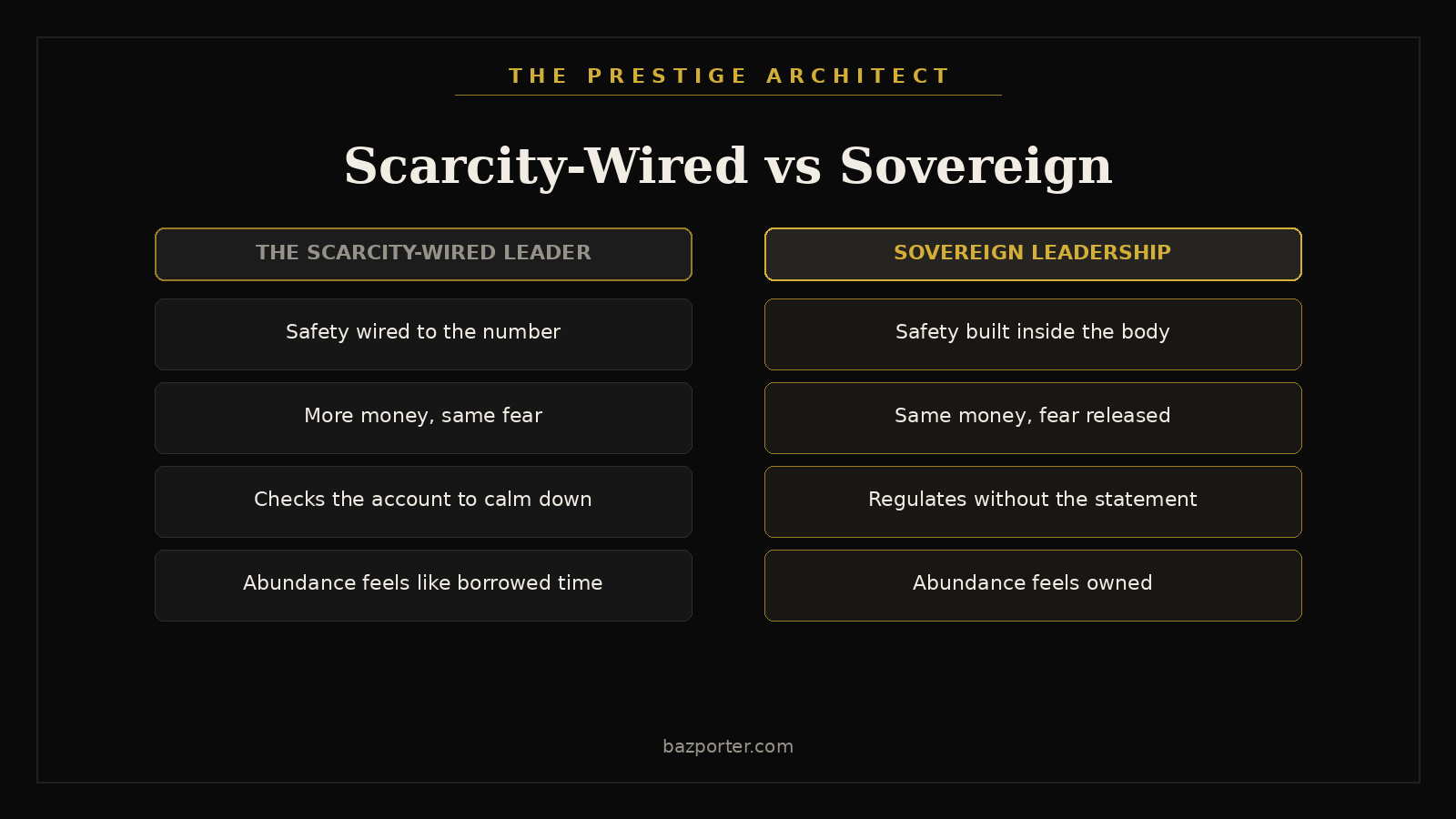
The Scarcity-Wired Leader vs Sovereign Leadership™:
Safety wired to the number → safety built inside the body
More money, same fear → same money, fear released
Checks the account to calm down → regulates without the statement
One system, fused to scarcity → two systems, threat and reality, distinct
Abundance feels like borrowed time → abundance feels owned
The Scarcity-Wired LeaderSovereign Leadership™ Safety wired to the numberSafety built inside the body More money, same fearSame money, fear released Checks the account to calm downRegulates without the statement One system, fused to scarcityTwo systems, threat and reality, distinct Abundance feels like borrowed timeAbundance feels owned
Build the second architecture first. Then the number stops running the day. The fastest way to see which system is running you is to measure it. Take the Silent Collapse Diagnostic.
A Case From the Field
A founder, eight figures liquid, checked the markets before her feet hit the floor. The numbers were strong. The dread was stronger. Her team read it as diligence. It was a childhood watching the lights get shut off.
We did not touch the portfolio. We rebuilt the system underneath it. We separated her Results from her sense of safety. We named the rule running her Attitude — if I lose it, I do not survive. We trained felt safety in small, deliberate reps: a morning without the markets, a purchase without the flinch, a number left unchecked. The wealth held. Her body learned that safety is something she carries, not something the statement grants.
Within weeks the morning scan stopped. She described it in one line: the money finally felt like hers instead of borrowed.
The Architecture of Your Return
The return is not affirmation. It is nervous-system sovereignty — the trained capacity to feel safe when the alarm fires and nothing is wrong. You do not need to want money less. You need a body that no longer reads abundance as a threat.
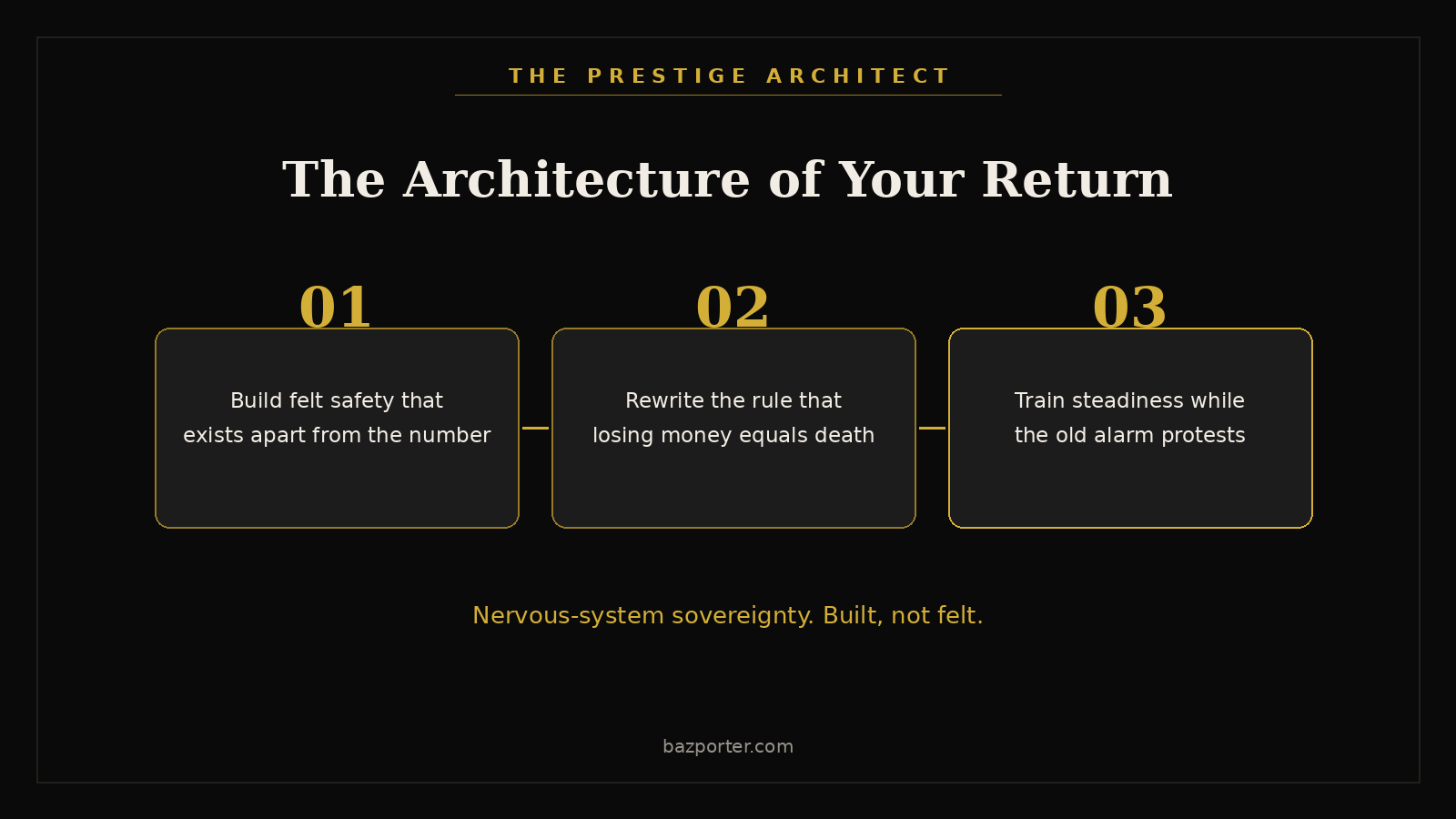
That is built, not felt. You build felt safety that exists apart from the account. You rewrite the rule that says losing money equals death. You train steadiness while the old alarm protests. When the architecture is in place, wealth stops being a thing to defend and becomes a thing to deploy.
Money cannot make a frightened nervous system feel safe. Only a rebuilt nervous system can do that — and then the money is finally free to be used, not guarded.
The leaders who hold wealth without dread did not find more reserves. They built more architecture. If you are ready to build felt safety that the number can no longer dictate, Apply to Work With Baz.
Frequently Asked Questions
Why am I still anxious about money when I have more than enough?
Because the fear was wired before the wealth, and wealth does not rewrite wiring. Your nervous system learned that money equals survival and kept that file open. Until felt safety is rebuilt at the body level, the account cannot calm the alarm.
Is money anxiety really common among high earners?
Yes. The American Psychological Association reports money as a top chronic stressor across every income bracket. Research from Princeton and Harvard shows scarcity taxes the mind regardless of actual resources. High income does not exempt the nervous system.
How is this different from being financially responsible?
Responsibility plans once and rests. This pattern scans without end — repeated account checks, relief that evaporates in hours, dread on a record month. That is Silent Collapse™ surfacing, not prudence. It signals a nervous-system problem, not a spreadsheet one.
Can a bigger financial cushion fix the fear?
A larger reserve delays the alarm without disarming it. The threat response was installed early and treats every number as temporary. The fix is felt safety sourced inside the body, not a higher figure on the statement.
What is the first step to feeling safe with money I already have?
Measure which system is running you. Separate the account from your sense of safety, name the internal rule driving the scan, and train steadiness in small, deliberate reps. Take the Silent Collapse Diagnostic to see where you stand.
About the Author
British military veteran. Two-time international bestselling author. Founder, The Prestige Architect®. Host, Rise From The Ashes podcast, C-Suite Network. Boulder, Colorado.