Why You React All Day and Move Nothing Forward
You ran hard all day. You answered every message. You caught every problem before it dropped. Then, by evening, one quiet question lands. What did you actually move forward? This is the reactive day. You react all day and move nothing forward. It is a real state, and it has a name. Silent Collapse™ is the quiet place a strong leader reaches when the responder runs the day and the strategist has gone silent. You are not out of skill. Your own direction has gone quiet. The way back is not a cleaner calendar. It is a return to leading from who you are, named in the manifesto.
On this page
- Key takeaways
- The short answer
- Why the reactive day is not a time problem
- The RAMS™ return: from reaction to result
- What this looks like up close
- The architecture of your return
- Frequently asked questions
Key takeaways
- The reactive day is a state, not a scheduling flaw. You respond to everything and advance nothing.
- Motion is not progress. A full day of answers can move zero things that matter.
- Research is clear. Real progress on meaningful work is the strongest driver of a good working life.
- The surface fix is one protected block and one named result each day.
- The deeper cause is an identity that treats being needed as being valuable.
- The return is Baz Porter®'s work: rebuild the self that keeps choosing reaction.
The short answer
You react all day because your day was built to catch, not to lead. Every channel is open. Every problem has a clear path to your desk. So you spend your hours responding to other people's urgency. The work that needs your own thought never starts. By evening you are tired and unseen. The move is not more discipline. It is a return: name the one result that must move, protect it first, and let the day react around it. The deeper layer, the identity that keeps you available, is the part a free Fast Future Freedom Blueprint™ is built to reach.
Why the reactive day is not a time problem
Here is the hidden pattern. The reactive day feels like a time problem. It is a direction problem wearing a clock.
Two findings make this plain. Teresa Amabile and Steven Kramer studied thousands of daily work diaries. Their result is called the progress principle. The single strongest driver of a good inner work life is real progress on meaningful work. Read their summary in the Harvard Business Review. A reactive day gives you none of that progress. It gives you volume instead. So you end the day empty, even after working hard.
The second finding names the trap. Leslie Perlow called it the time famine. In her Administrative Science Quarterly study, driven people had plenty of hours and almost no uninterrupted time. Their days fractured into response. The real work, the work that needs quiet focus, kept getting pushed. When she protected a daily block of quiet time, true progress returned at once.
So the problem is not your speed. You are fast. The problem is that nothing you did today belonged to your own direction. That is the felt heart of Silent Collapse™. The responder is loud. The leader has gone quiet.
The RAMS™ return: from reaction to result
RAMS™ is the framework beneath the return. Five pillars. Results, Attitude, Authenticity, Mastery, Systems. Each one turns the reactive day back toward your own command.
Results
Change the scorecard. Stop counting messages cleared. Start counting what moved. Each morning, name one result that must advance today. Guard the first ninety minutes for it. The inbox can wait ninety minutes. Your direction cannot wait another week.
Attitude
Watch the quiet belief that availability is virtue. It is not. Your constant response trains the room to route everything to you. You taught them to. You can teach them a new way.
Authenticity
Reaction is a performance. You are playing the responder, the one who always catches it. That role is not you. Return to leading from your own line, not from the next thing that lands.
Mastery
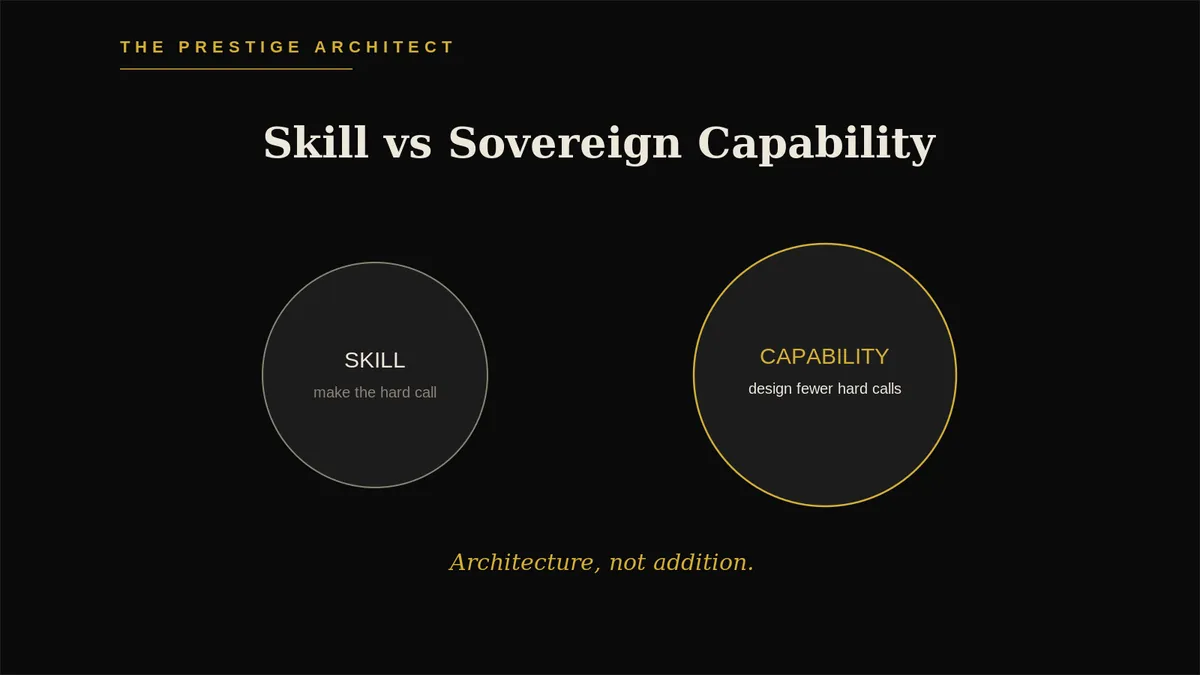
The real skill is not clearing the queue. It is holding one line under pressure while the noise continues. That is hard. It is also learnable. Mastery is the practice of staying on your result when every signal says react.
Systems
Build a day that defends your first block. Route inbound through other people and other hours. A sovereign day is engineered, not wished for. The system does the holding so you do not have to hold it by willpower alone.
Here is the contrast, collapsed against sovereign:
- Collapsed: whoever reaches you first sets your agenda. Sovereign: you set the first result, then open the doors.
- Collapsed: you measure the day by messages cleared. Sovereign: you measure it by what moved.
- Collapsed: being available feels like being valuable. Sovereign: being directional is the value.
- Collapsed: every fire routes to your desk. Sovereign: the room carries what the room can carry.
- Collapsed: you end the day busy and unseen. Sovereign: you end the day tired and clear.
You do not have a time problem. You have a direction that has gone quiet, and a day built to keep it quiet.
Ready to see the identity underneath your reactive day? Book a free Fast Future Freedom Blueprint™, a 60-minute identity audit. You will leave with the one belief that keeps you responding, named out loud.
What this looks like up close
The leaders I sit with who react all day almost always trace it to one quiet agreement. Somewhere, early, they decided their worth was their responsiveness. Being the one who catches it felt safe. So they kept the channels open and their own direction closed.
The pattern holds across rooms. The person is capable. The seat is fully built. The title is intact. And the day is spent entirely on what other people need. The strategic self is not gone. It has simply not been asked to speak in a long time. That is the part self-help cannot reach on its own. You can protect the first block yourself. You cannot, from inside the same room, see the self that keeps giving the block away.
The architecture of your return
Start the self-serve move this week. Name one result the night before. Protect your first block. At day's end, ask one honest question. What moved forward because of me today, not just what did I answer?
That first move is real. It is also partial. The reactive day is held in place by an identity, and identity work is not a solo project. This is the architecture Baz Porter® rebuilds: the self beneath your performance, so you lead from who you are and not from the fires that find you. The name for that is Return™, a rebuild, not a rebrand.
When you are ready for the deeper layer, apply for a Fast Future Freedom Blueprint™. It is free, it is 60 minutes, and it is built to find the one agreement that keeps your day reactive. You bring the honesty. The audit brings the pattern you cannot see from the inside.
Frequently asked questions
Why do I react all day and get nothing done?
Because your day is built to catch, not to lead. Every channel is open and every problem has a clear route to you. So your hours go to other people's urgency. The work that needs your own focus never starts. The fix begins with one protected block and one named result each morning.
What is the reactive day in leadership?
The reactive day is a state where you spend every hour responding and none of it advancing your own direction. You are busy and productive-looking. Yet nothing that matters moves. It is a felt form of Silent Collapse™, where the responder runs the day and the strategist stays silent.
How do I stop being the person every problem routes to?
You have to retrain the room. Your constant availability taught people to bring everything to you. Name who else can carry each class of problem. Route inbound through other people and set hours. The goal is a day that no longer depends on you catching everything in real time.
Is reacting all day a time management problem?
No. It looks like one, but a better calendar alone will not solve it. Research on the time famine shows capable people with plenty of hours and almost no uninterrupted time. The real issue is a direction that has gone quiet and a day engineered to keep it quiet.
How does the RAMS™ framework help me move from reaction to results?
RAMS™ gives you five pillars to rebuild the day: Results, Attitude, Authenticity, Mastery, and Systems. Together they change your scorecard, your beliefs, and your structure. You stop measuring the day by messages cleared and start measuring what moved. The free Fast Future Freedom Blueprint™ is where that return begins.
About the author
Baz Porter® is The Sovereign Leadership Architect. He rebuilds the identity beneath high performance, so leaders decide, lead, and live from a self that is genuinely their own. He works with accomplished people who look strong on the outside and feel unseen on the inside. His work begins underneath the visible problem, at the level of state of being.