No Time to Think? Silent Collapse in Leaders
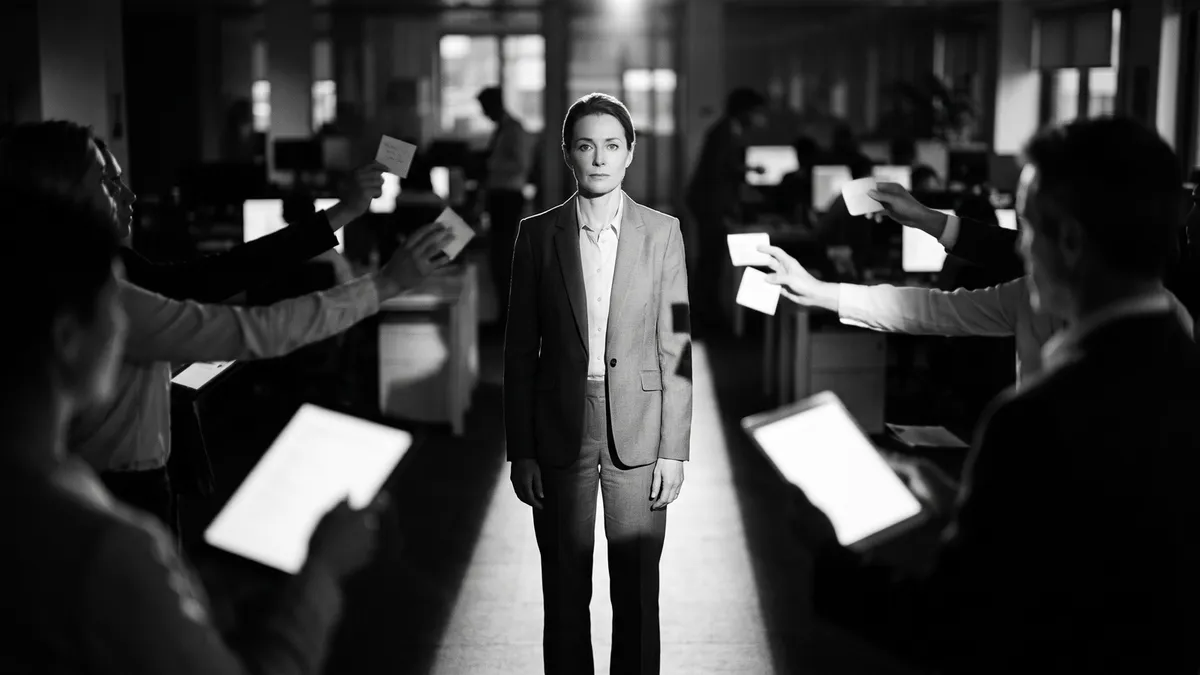
You run all day. You lead nothing that is yours. By evening you have answered everyone and thought about nothing. You have no time to think, and the quiet underneath that is louder than the noise.
This state has a name. Silent Collapse™ is what we call it when a capable leader goes numb inside a full calendar. You are not lazy. You are not failing. You are buried. The first honest step is to name it, and the manifesto names it plainly.
On this page
- Why you have no time to think
- Key takeaways
- The hidden pattern
- The RAMS™ reframe
- What this looks like
- The architecture of your return
- Questions leaders ask
Key takeaways
- No time to think is rarely a calendar problem. It is a state problem.
- The reactive day hides a harder question: what is actually yours to do.
- Every fire feels equal because the irreducible work was never named.
- Thinking time returns when identity returns, not when you add a time block.
- The move is Return™, not more effort.
Why you have no time to think
You have no time to think because your day is built to absorb other people's work. The calendar is the symptom. The cause sits one layer down. When you cannot name the work only you can do, every task looks equal. Every request earns a yes. The thinking work has no protected place, so it loses to the loudest thing. Baz Porter®, The Sovereign Leadership Architect, calls this the architecture of Silent Collapse™. You fix it by rebuilding what you lead from, not by hunting for a spare hour.
The hidden pattern beneath no time to think
Here is the mechanism most leaders never see. Thinking is not what takes so long. Switching is.
Research on attention residue shows the cost. When you jump from one task to the next, part of your mind stays stuck on the last one. Sophie Leroy's study in Organizational Behavior and Human Decision Processes (2009) found that this residue lowers the quality of the work in front of you. You are present in body and absent in mind.
Interruptions deepen the hole. Gloria Mark's research at the University of California, Irvine found it takes about twenty-three minutes to return to a task after a single interruption. A day of small interruptions is a day with no real thought in it. The hours were there. The mind was not.
So the problem is not that you have no minutes. It is that your minutes are shredded. A shredded mind cannot do the one thing leadership needs most. Clear, owned judgment.
This is why a packed day can feel exhausting and empty at once. You spent the energy. You produced little that was yours. The cost is not only the lost hour. It is the slow erosion of trust in your own thinking.
The RAMS™ reframe: from reaction to return
RAMS™ is the framework. Results, Attitude, Authenticity, Mastery, Systems. Five pillars, no weights. Here is how each one hands your thinking back.
Results. Define the one outcome only you can produce. Name it in a sentence. What does not serve it is not yours to carry today.
Attitude. Treat thinking as the work, not the reward for finishing the work. The reactive leader thinks last. The sovereign leader thinks first.
Authenticity. Your yes has gone automatic. Ask a harder question. Is this mine, or am I taking it because no feels unsafe. Authentic leadership guards the real work.
Mastery. Build one protected hour the way you build a muscle. Same time. Same place. No exceptions for a week. Mastery is a practice, not a mood.
Systems. Create a layer beneath you that holds what is not yours. A simple rule, a clear owner, a place to route the fire. The system carries it so you do not have to.
Collapsed versus Sovereign
- Collapsed: every task looks equal. Sovereign: one outcome leads the day.
- Collapsed: you answer all day. Sovereign: you think first, then answer.
- Collapsed: the loudest thing wins. Sovereign: the owned thing wins.
- Collapsed: you are the system. Sovereign: the system holds the rest.
- Collapsed: busy and unseen. Sovereign: clear and present.
You do not need more hours. You need a self that decides which hours are yours.
The fastest way to see your own architecture is to have it read back to you. The Fast Future Freedom Blueprint™ is a free sixty-minute identity audit. You leave with the one outcome that is yours and the first layer to build beneath it.
What this looks like in a real week
The leaders I sit with who say they have no time to think almost always share one habit. They protect everyone's work except their own.
They open the laptop and the inbox decides the day. They answer fast because answering feels like leading. By noon the real work has not started. By six it is pushed to tomorrow, again.
When we name the one outcome that is theirs, the week changes shape. Not because they found more time. Because they stopped giving their mind away for free. The fires still come. They no longer all land on one desk.
This is a pattern, not a personality. You can start it this week. The deeper cause, the identity that says your work is less urgent than everyone else's, is the part you cannot see from inside the room.
The architecture of your return
You can win back an hour on your own. You can guard it for a week. That first move is real, and it is yours to make now.
What you cannot do alone is see the architecture underneath. The reason your yes is automatic. The reason the real work always loses. That sits below the surface, at the level of state of being, and it does not move with a new calendar rule.
That is the work I architect. Not more effort. Return™ to the leader who decides from a self that is genuinely their own. Apply for your Fast Future Freedom Blueprint™ and we will map the first layer together.
Questions leaders ask
Why do I have no time to think at work?
Your day is built to absorb other people's tasks, so thinking has no protected place. The cause is not a full calendar. It is that the work only you can do was never named. Once you name it, you can defend the time it needs.
How do leaders make time to think?
They treat thinking as the first work of the day, not the last. They guard one hour at the same time each day and route interruptions to a clear owner. The hour holds because it is tied to one outcome, not to willpower.
Is no time to think a sign of Silent Collapse?
Often, yes. Silent Collapse is the felt state of a capable leader who has gone numb inside a full schedule. No time to think is one of its clearest early signals. Naming the state is the first step back.
Will delegating give me time to think?
Delegating helps only when you have named what is truly yours first. Without that, you hand off the wrong work and take it back within a week. Build the layer beneath you around the one outcome that cannot leave your desk.
What is the first move if I have no time to think?
Write the single outcome only you can produce this week in one sentence. Guard one hour for it tomorrow morning. Then book a Fast Future Freedom Blueprint to find the identity-level cause you cannot see alone.
About the author
Baz Porter® is The Sovereign Leadership Architect. He rebuilds the identity beneath high performance, so leaders decide, lead, and live from a self that is genuinely their own. He works with accomplished people who look strong on the outside and feel unseen on the inside. His work begins underneath the visible problem, at the level of state of being.