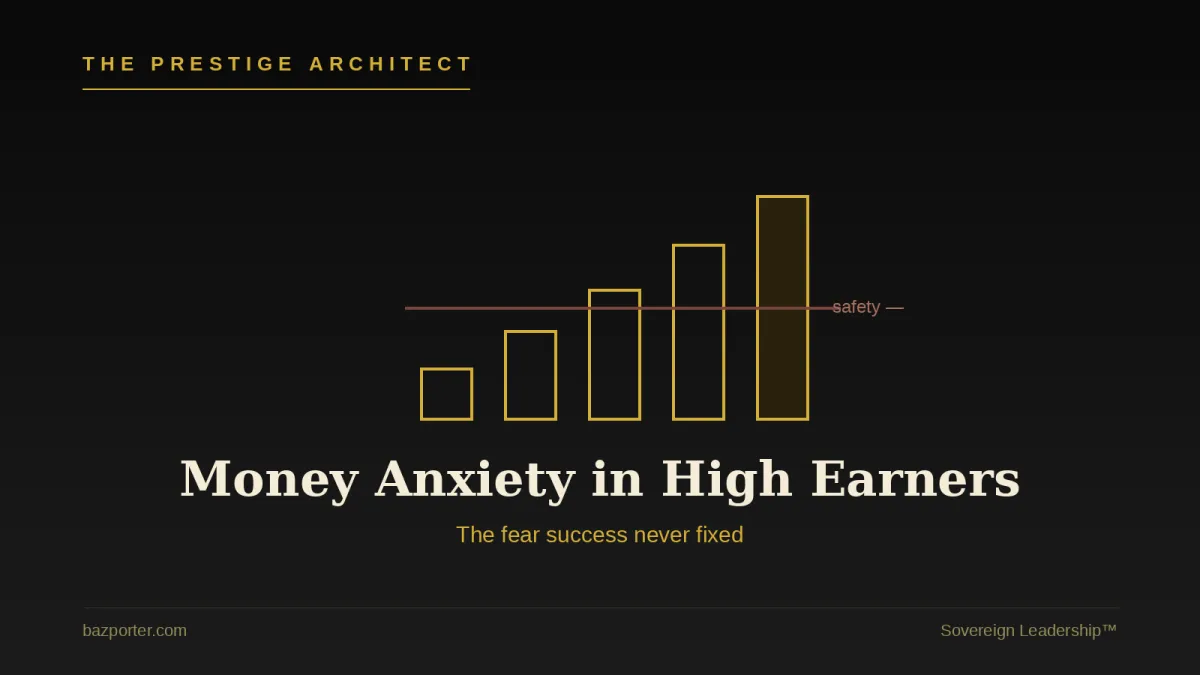
Money Anxiety in High Earners: The Fear Success Never Fixed
The account is safe. The body did not get the memo. You check the total and feel the same tightness you felt at twenty with nothing. The number climbed. The fear held its position. You earn more than the people who told you money was scarce, and still the floor feels one bad quarter away.
This is Silent Collapse™ speaking in dollars. The wealth is real and the dread is real, and they refuse to cancel each other out. What looks like prudence is often a nervous system that never registered the win. This is money anxiety in high earners — a fear that outlived the problem that created it. Before you blame the markets, Read The Manifesto.
Table of Contents
Key Takeaways
Money anxiety in high earners is a nervous-system pattern, not a math problem. The fear tracks old danger, not current numbers.
Scarcity outlives the bank account. Research finds the scarcity mindset transcends income — it shows up at $100K+ households too.
More income rarely lowers the fear. It raises the stakes. The threat system reads a bigger number as more to lose.
The fix is structural. Sovereign leaders define enough by design and regulate the body, rather than chasing a figure that quiets nothing.
The Definitive Answer
Money anxiety in high earners is persistent financial fear that continues despite real financial security. It is driven by a threat response wired early, not by present-day risk. The body learned that money meant survival, and it kept running that program after the survival math changed. The answer is not another zero in the account. The answer is to regulate the system that reads safety as danger.
The Hidden Pattern Under Money Anxiety
Scarcity leaves residue. When the early environment taught the nervous system that resources vanish without warning, the brain encodes money as a threat signal. That wiring does not update itself when income rises. A February 2026 study in PLOS One found the scarcity mindset transcends income status — at household incomes of $100,000 and above, a stronger scarcity mindset still raised the odds of high-cost financial behavior by 15.6% (PLOS One / NCBI).
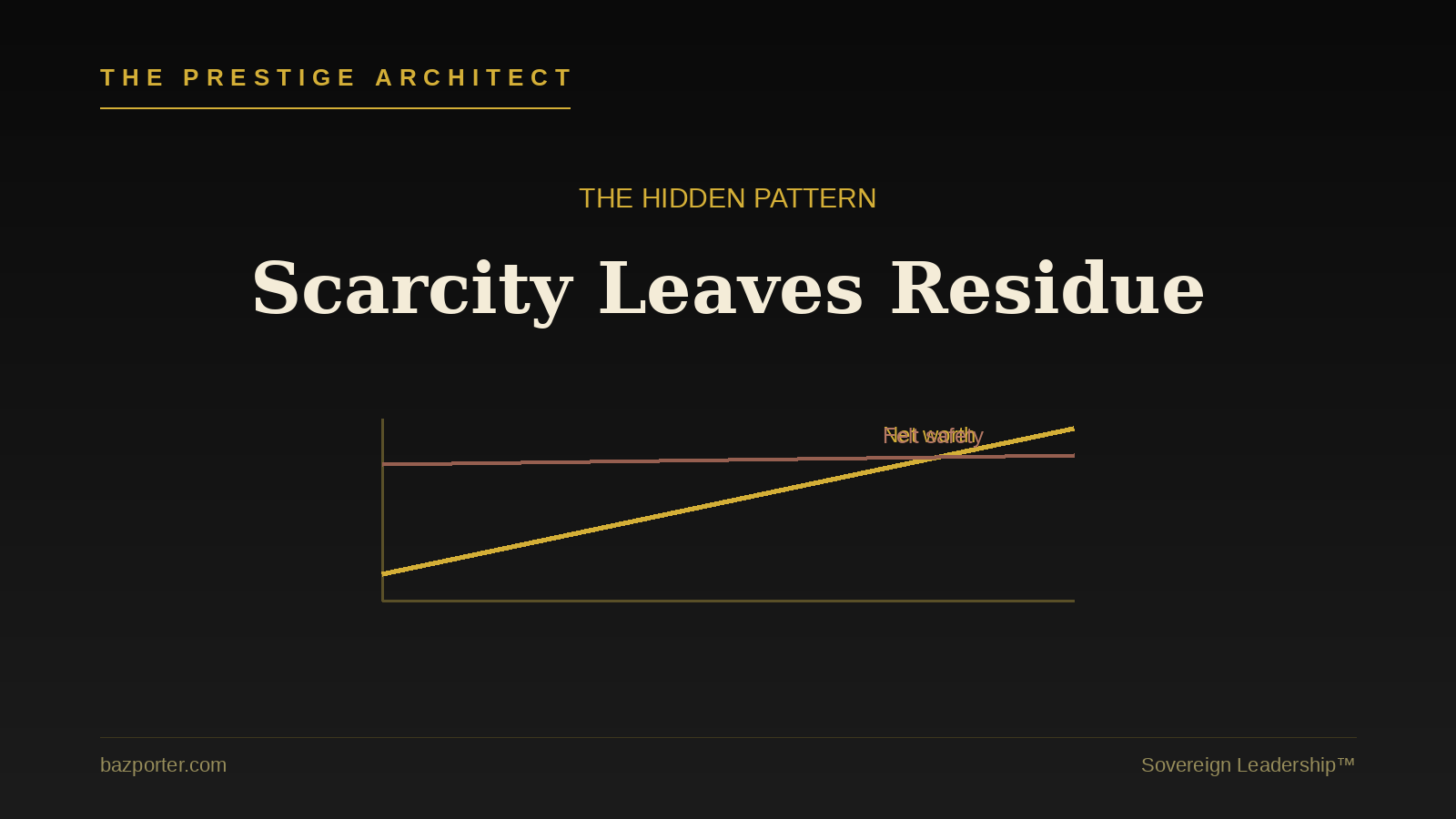
Here is the pattern most high earners miss. The fear is not measuring your account. It is measuring an old danger. Each raise is read by the threat system as a larger surface to lose. So the number that was supposed to bring peace brings a heavier guard.
"Money anxiety in high earners is not a budgeting failure. It is a survival program still running long after the war ended."
This is the architecture of Silent Collapse™. The portfolio compounds while the fear compounds beside it. Outwardly, you look disciplined and secure. Inwardly, the body braces. The two never meet, and the gap is exactly where the collapse hides — in the people least likely to admit a fear they can afford to fix. The Sovereign Leadership Resource Hub maps the mechanism in depth.
The RAMS™ Reframe: The Fear Is Not About Money
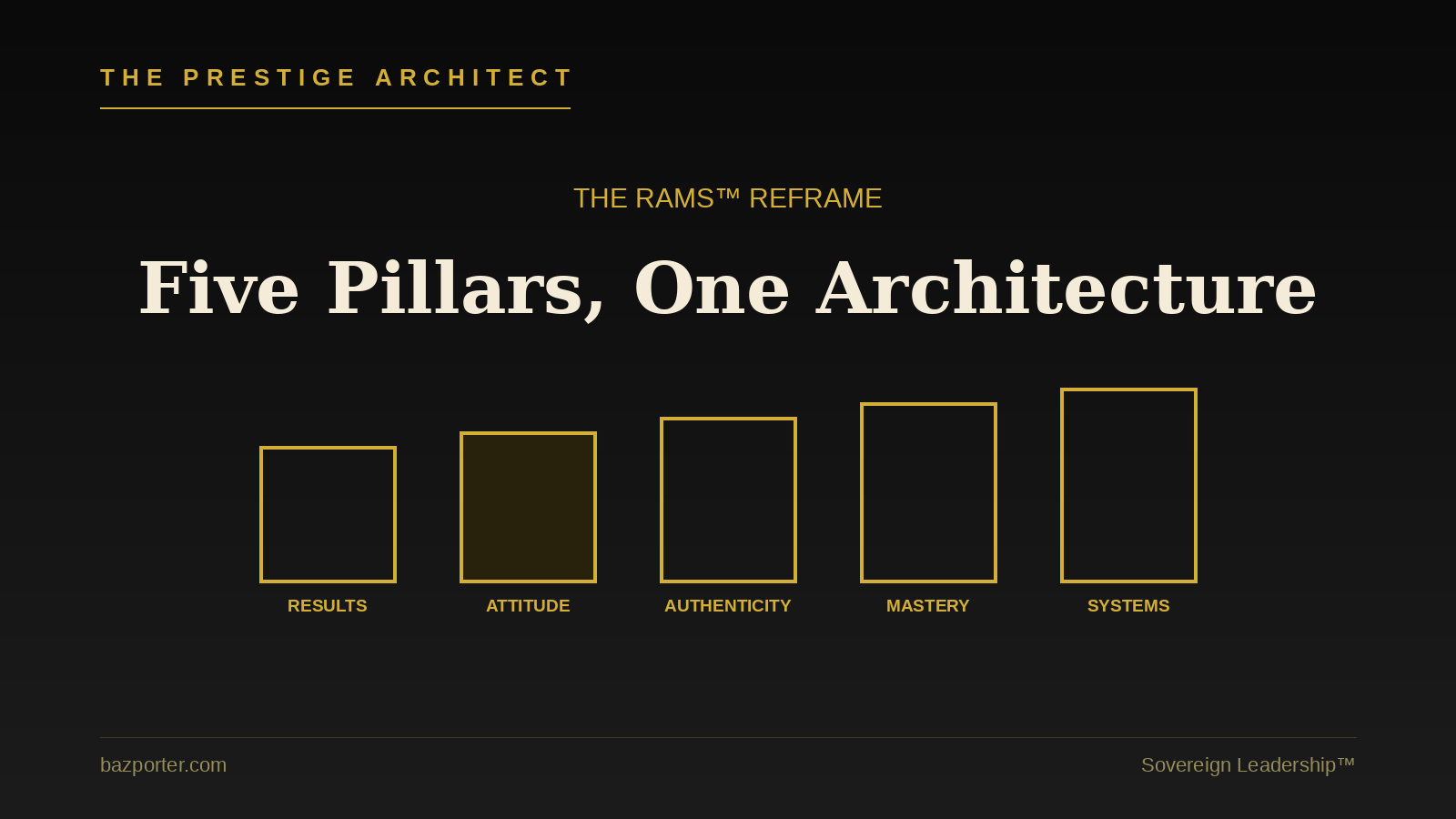
The market sells you tactics. Budget tighter. Diversify harder. All of it treats a symptom. The RAMS Framework™ — Results, Attitude, Authenticity, Mastery, Systems — treats the leader before the strategy. It runs at the level of the nervous system and the business at once, because both operate on the same architecture. When one is dysregulated, both pay.
DimensionThe Collapsed EarnerSovereign Leadership™The fearTreated as a money numberTreated as a nervous-system signal"Enough"Always one figure awayDefined, written, fixedMore incomeRaises the stakes and the guardHeld without raising the threatSafetyChased through accumulationRegulated through the body
Results: The Scoreboard That Never Settles
You measure yourself by the number. The number went up. The feeling did not. The gap between what you have and what you feel is where money anxiety lives. A higher net worth reads as a higher scoreboard, not a closed case. The scoreboard never settles, because the fear was never about the score.
Operational rule: stop using the account total as a verdict on your safety. It is a number, not a nervous system.
Attitude: Where the Collapse Lives
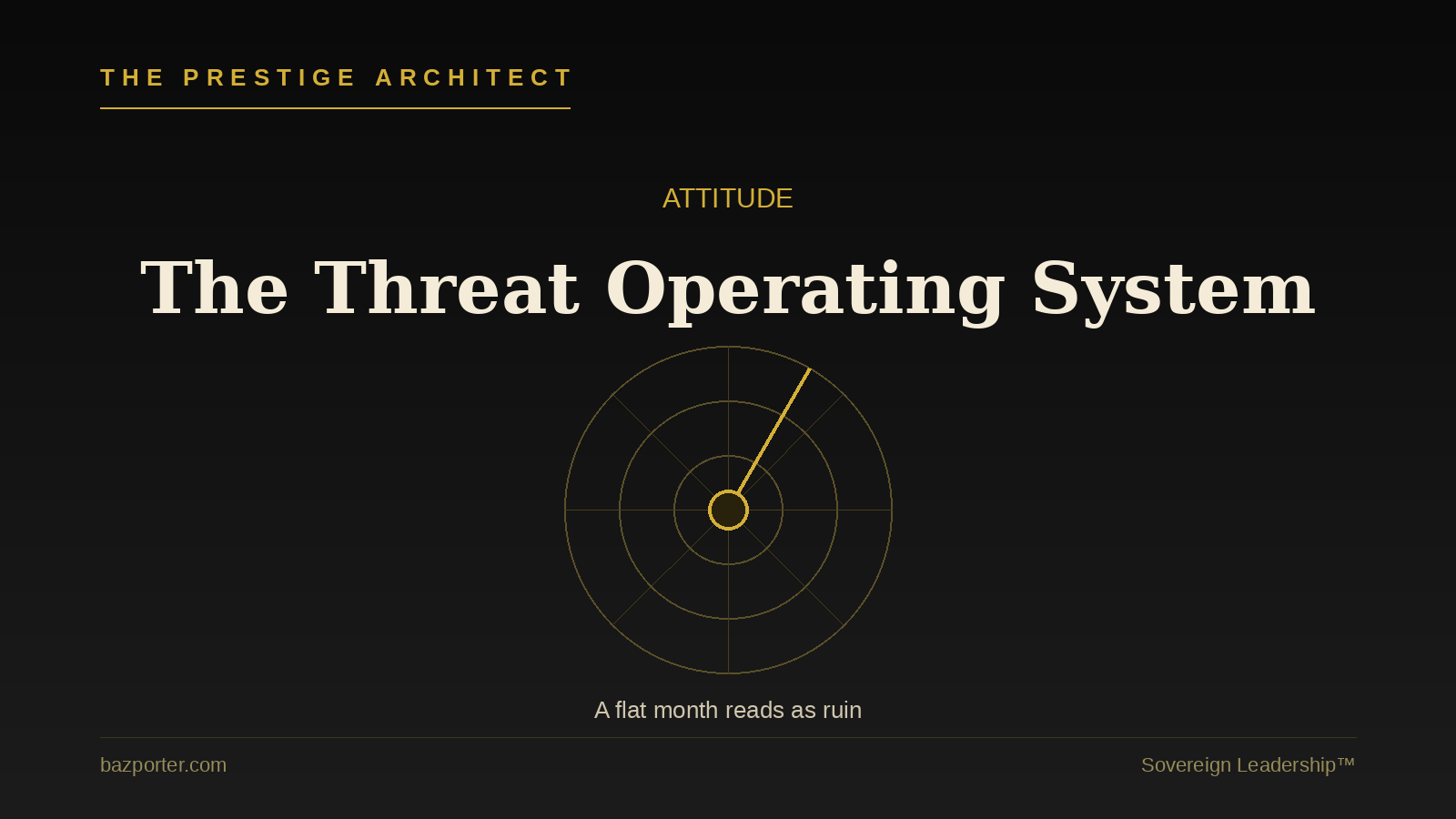
Attitude is the internal operating system — the running interpretation beneath every choice. Under old scarcity wiring, that system reads neutral input as threat. A flat month feels like ruin. A large expense feels like exposure. A 2026 Bankrate survey found 43% of Americans say money negatively affects their mental health, and the strain does not exit at the top of the income scale (Bankrate). The fear is not a character defect. It is a setting.
This is the point of return. Most leaders need the structure before the willpower. If the tightness in the chest is familiar even with the account full, Take the Silent Collapse Diagnostic and see the pattern named in your own data.
Authenticity: The Secure Public, the Exposed Private
In public, you are the picture of stability. Others borrow confidence from your calm. In private, you run the numbers at midnight and feel one move from the edge. That divide between the secure performance and the exposed reality is the engine of Silent Collapse™. The wider the gap, the more energy the performance costs — and the less is left to actually feel safe.
Mastery: Managing Money Versus Holding Enough
Managing money is a skill. Holding enough without the body bracing is a sovereign capability. The market confuses the two. It hands high earners more complexity as a reward and treats the rising dread as weakness. Command decision: stop measuring your relationship with money by how much you control. Measure it by how much you can hold while staying regulated.
Systems: The Architecture of the Return
Willpower is the most expensive way to feel safe. Architecture is the cheapest. The sovereign answer to money anxiety is to define safety as a structure rather than chase it as a number.
Enough, written down. A defined figure for security, fixed in advance. An undefined target moves every time you reach it.
A regulation practice, scheduled. The body learns safety through repetition, not through one more deposit.
Decision rules over fresh fear. Standing rules for spending and risk retire the daily threat scan.
A Case Vignette: The Earner Who Defined Enough
A founder clearing well into seven figures came in certain the problem was the market. We did not touch the portfolio first. We audited the fear. He had never named a number that meant safe. So every gain reset the finish line and every dip read as the beginning of the end.
We did not hand him a budgeting app. We rebuilt the architecture. We defined enough as a written figure. We placed a daily regulation practice as a fixed input. We set decision rules so the threat scan stopped firing forty times a day. Within weeks, the midnight math quieted — not because the account grew, but because the body finally registered the win it already had. Systems first, always.
The Architecture of Your Return
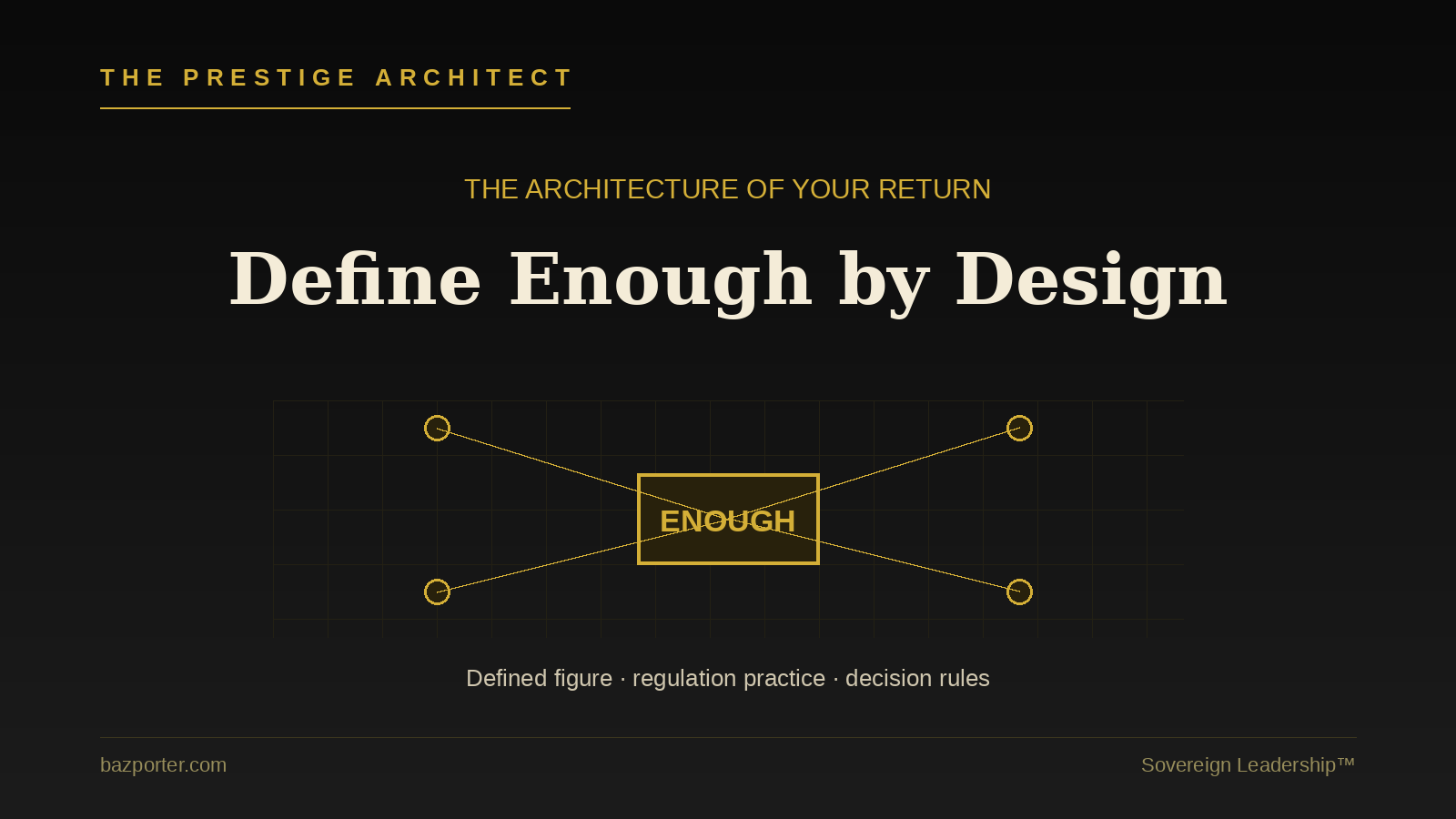
Your return is not found in a bigger number. It is engineered into how safety reaches your nervous system. Sovereignty here means the body registers the security the spreadsheet already shows — held by structure, not by accumulation. This is not reassurance. It is architecture.
Stop asking how much money would finally feel safe. Ask what your system reads as danger, and rebuild that. That single move shifts you from the collapsed posture to the sovereign one. The leaders who hold wealth without paying themselves as the cost are not richer. They built a system that lets the body believe what the account already proves.
If you are ready to rebuild the architecture beneath your relationship with money, Apply to Work With Baz.
Frequently Asked Questions
Why do I still feel financial anxiety even though I earn a lot?
Because the fear tracks an old danger, not your current numbers. A nervous system shaped by early scarcity encodes money as survival. That program keeps running after the math changes, so a full account does not register as safety on its own.
Does more income reduce money anxiety?
Rarely. More income often raises the stakes the threat system is guarding. A larger number reads as more to lose. Without regulating the underlying response, accumulation tends to raise the guard rather than lower the fear.
Is money anxiety in high earners a real psychological pattern?
Yes. Research shows the scarcity mindset transcends income — it appears in households earning $100,000 and above. Financial strain affects mental health well beyond low-income groups, which is why high earners experience genuine, persistent money fear.
How do I actually lower financial fear when I am already secure?
Treat it as a nervous-system pattern, not a math problem. Define a written figure for enough, place a daily regulation practice as a fixed input, and set standing decision rules so the threat scan stops firing. Structure teaches the body the safety the account already holds.
About the Author
British military veteran. Two-time international bestselling author. Founder, The Prestige Architect®. Host, Rise From The Ashes podcast, C-Suite Network. Boulder, Colorado.