Lonely at the Top: The Hidden Cost of Executive Isolation
You lead the room. You close the deal. Then you sit in the car and feel completely alone. The bigger the title, the smaller the circle. You have hundreds of contacts and no one to call. This is Silent Collapse™ — the quiet erosion of identity underneath a performance that still looks flawless. The team sees a leader. You feel like a stranger in your own life. You are not weak. You are isolated by a structure no one warned you about. If you recognize yourself already, Read The Manifesto before you read the fix.
Table of Contents
Key Takeaways
Executive isolation is a structural problem, not a character flaw. The role builds the wall. The person gets blamed for it.
It carries a body count. The U.S. Surgeon General rates social disconnection on par with smoking 15 cigarettes a day (HHS, 2023).
Leaders feel it and hide it. Half of CEOs report loneliness; 61% say it hurts their performance (RHR International, reported by Harvard Business Review).
The fix is architecture, not more networking. You build connection into the system, or it does not happen.
The Short Answer
Executive isolation is the loss of real, unguarded connection as a leader's role grows. It is not shyness. It is not a personality type. The structure of the role removes peers, filters honesty, and rewards a performed self. The leader stays surrounded and feels alone. The answer is not a bigger network. It is Sovereign Leadership™ — a rebuild of the architecture beneath the connection.
The Hidden Pattern Behind Executive Isolation
Connection is a biological need, not a soft skill. The human nervous system regulates through other regulated people. Remove that, and the body reads it as threat. The data is severe. A meta-analysis of more than three million people found loneliness raised the risk of early death by 26% (Holt-Lunstad, via the Surgeon General's Advisory). This is not about mood. It is about mortality.
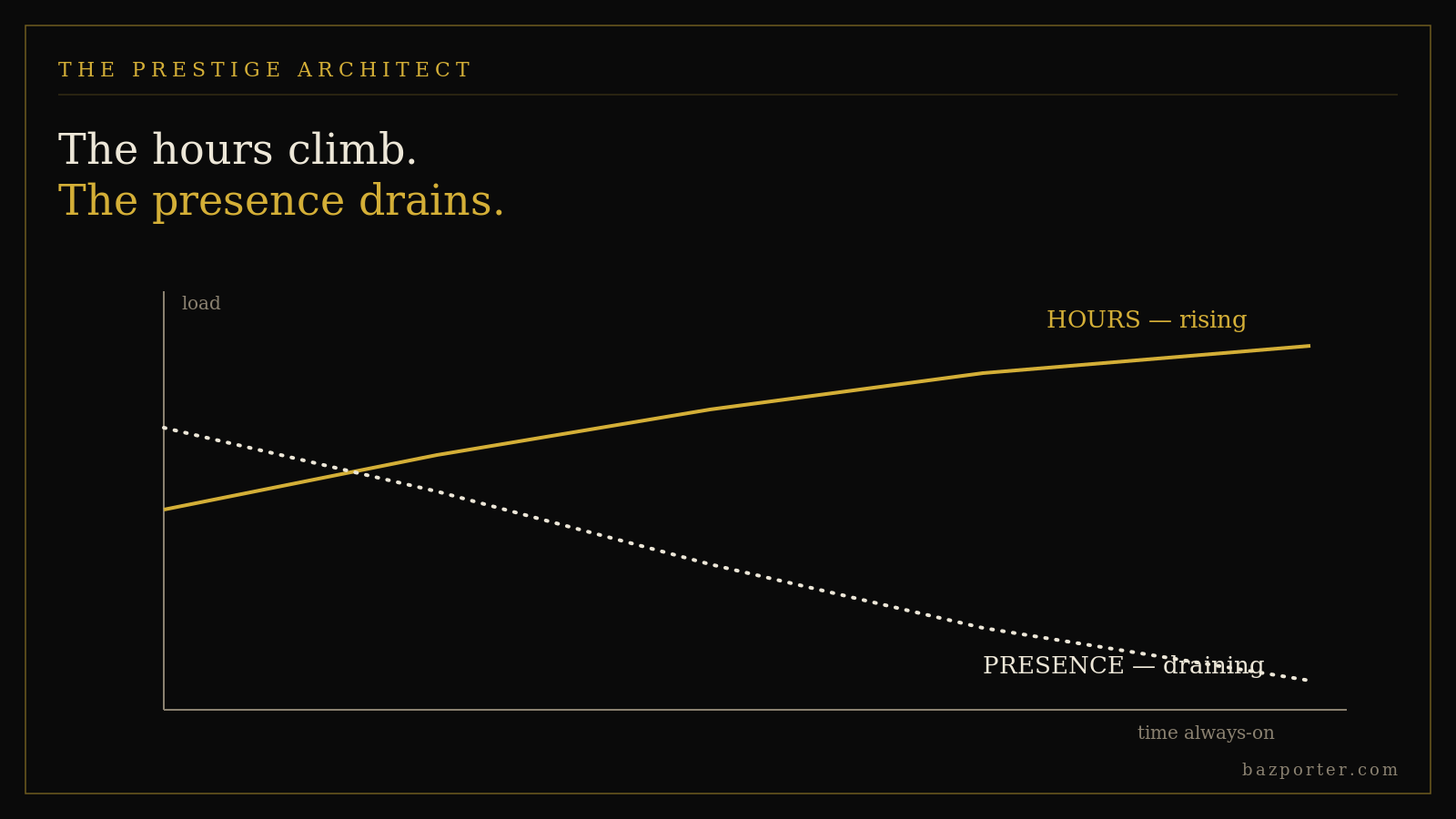
Now map it onto the corner office. Every promotion removes a peer. Feedback gets filtered before it reaches you. Honesty arrives wrapped in an agenda. You cannot be unguarded with the people you pay or the people you answer to. So you perform. Constantly. Half of chief executives report this exact loneliness, and most of them believe it dulls their judgment (Harvard Business Review). This is where Silent Collapse™ lives. The performance stays intact. The person inside it has no one to be real with.
Isolation at the top is not the price of leadership. It is a design flaw in how the role was built.
Want the structural view of why this hits high performers specifically? The Sovereign Leadership Resource Hub maps the full pattern.
The RAMS™ Reframe
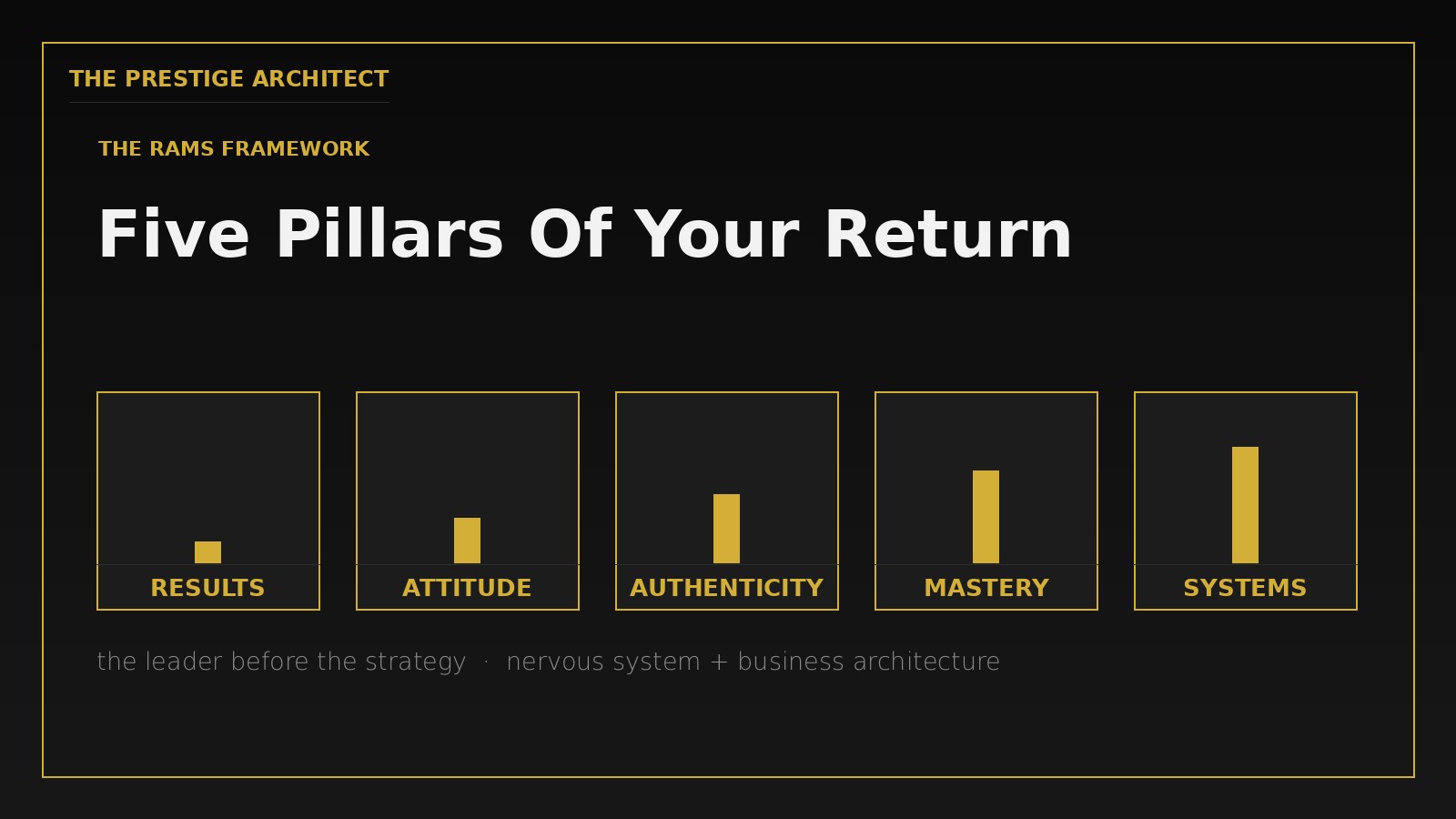
The RAMS Framework™ treats the leader before the strategy. Five pillars — Results, Attitude, Authenticity, Mastery, Systems. Isolation is not one problem. It shows up across all five. Here is how it reads on each.
R — Results: The Output–Connection Gap
You still deliver. That is the trap. Results stay high while connection falls to zero. The gap between what you produce and who knows you widens in silence. Operational rule: output is not proof of wellbeing. A thriving number can sit on top of a starving operator.
A — Attitude: Where the Collapse Lives
Attitude is the internal operating system. Run it alone for long enough and it distorts. Small slights feel like betrayals. Neutral feedback feels like attack. Nothing changed in the room. The unregulated, isolated nervous system changed how the room reads. That is where the collapse takes root first.
A — Authenticity: The Private–Public Divide
In public, you are composed and certain. In private, you are running on empty. That divide is the engine of Silent Collapse™. The wider the gap between the performed self and the real one, the deeper the isolation cuts. Closing it is not exposure. It is repair.
M — Mastery: Performance Versus Sovereign Capability
Here is the core lie of isolation. We treat self-sufficiency as strength. It is not the same as capability. Performance is holding it together in the room. Sovereign capability is staying regulated and connected under pressure, without performing for anyone. Going it alone builds neither. Command decision: stop measuring your strength by how little you need. Measure it by how well you stay regulated and real.
Self-sufficiency is not strength. Past a point, it is isolation wearing a respectable mask.
S — Systems: The Architecture of the Return
Systems decide who reaches you and how. A leader without architecture absorbs every relationship as transaction. A sovereign one builds in peers, unfiltered counsel, and recovery on purpose. Connection stops being something you hope for at a conference. It becomes structural. The role still demands distance. The operator stops paying for it in identity.
Collapsed OperatorSovereign Leadership™Treats isolation as the cost of the titleTreats isolation as a system to redesignConfuses self-sufficiency with strengthBuilds regulated connection into the rolePerforms certainty for everyoneKeeps one space with zero performanceWaits for connection to happenEngineers peers and counsel deliberatelyReads filtered feedback as truthBuilds channels for unguarded honesty
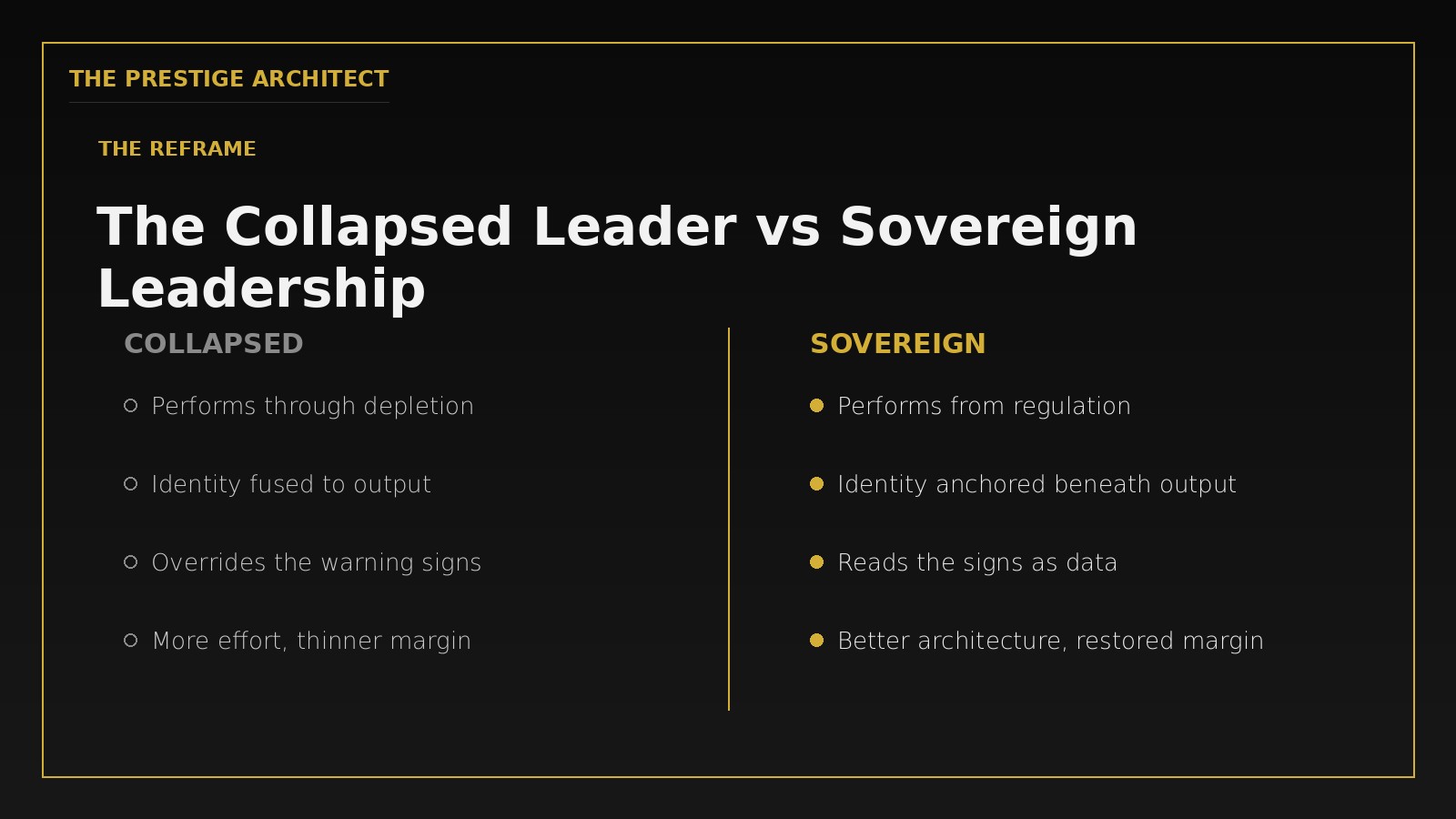
Collapsed Operator vs Sovereign Leadership™:
Collapsed: treats isolation as the cost of the title. Sovereign: treats it as a system to redesign.
Collapsed: confuses self-sufficiency with strength. Sovereign: builds regulated connection into the role.
Collapsed: performs certainty for everyone. Sovereign: keeps one space with zero performance.
Collapsed: waits for connection to happen. Sovereign: engineers peers and counsel deliberately.
Collapsed: reads filtered feedback as truth. Sovereign: builds channels for unguarded honesty.
If you are surrounded all day and still feel alone, that is the first thing to map. Take the Silent Collapse Diagnostic and see where your connection is leaking.
A Case From the Container
One client ran a fast-scaling firm. Admired by the board. Known by no one. He assumed isolation came with the seat. It did not. We did not send him to more events. We touched his architecture. One peer relationship with zero stake in his company. A standing space for unfiltered counsel. A recovery rhythm that did not depend on a quarter ending. Inside two months, the dread before the workday eased. His judgment sharpened. Nothing about him changed. The structure around him did. That is the order of operations — systems first, state second, story last.
The Architecture of Your Return
Isolation does not end with a bigger contact list. More contacts deepen the performance. The return is structural. You design relationships that carry no transaction. You build one space where you perform for no one. You make unfiltered counsel a standing part of the role, not a lucky accident. This is nervous-system sovereignty — the operator regulated and connected enough to lead under pressure without the role costing the self.
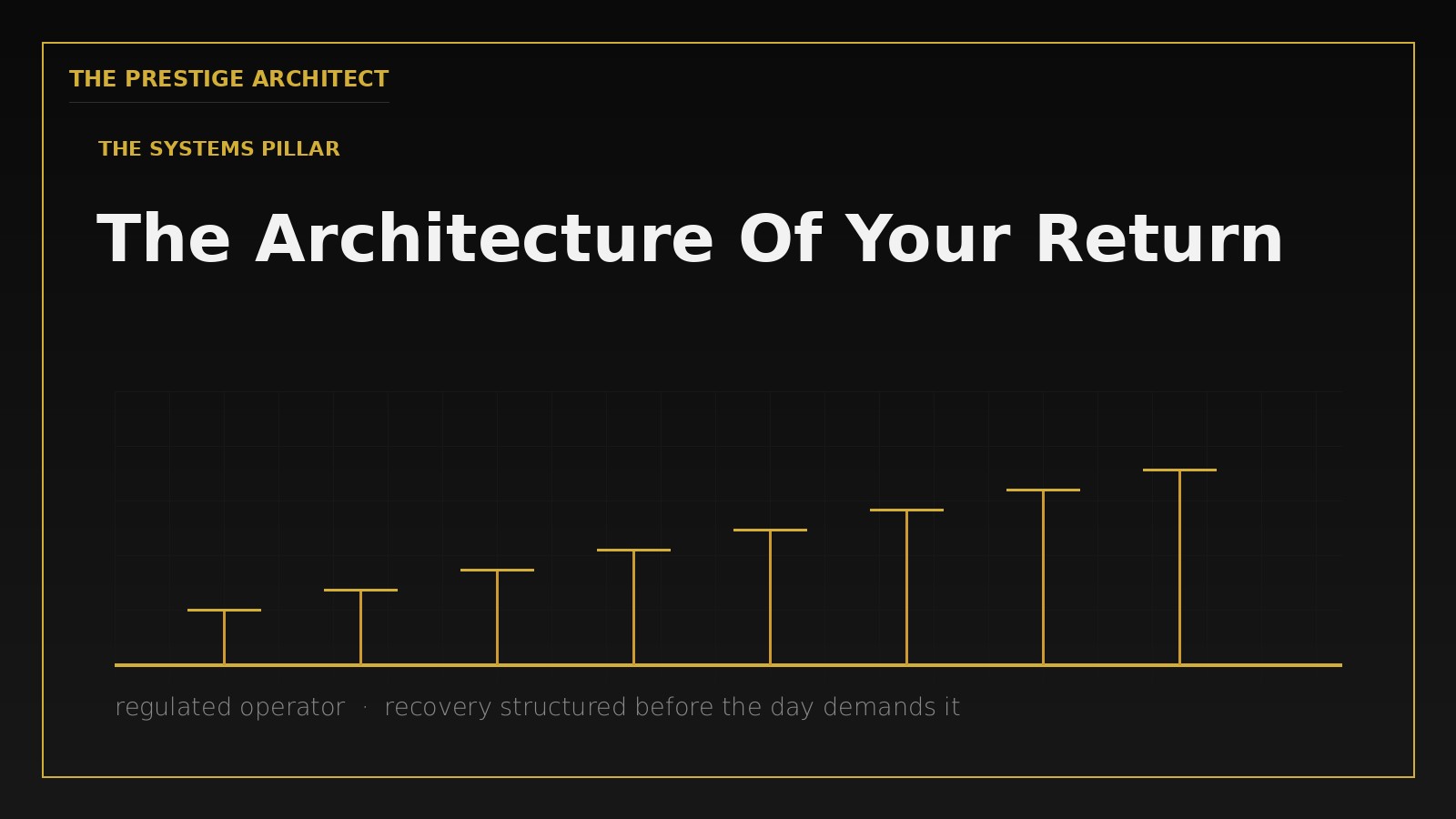
More contacts will not end isolation. They deepen the performance. The return is structural, or it is temporary.
This is the rebuild, not a hack. It holds because it is built into the architecture, not borrowed from your willpower. When the structure carries connection, leadership stops costing you yourself. If you want this engineered for your role, Apply to Work With Baz.
FAQ
Is executive isolation the same as just being introverted?
No. Introversion is a preference for how you recover energy. Executive isolation is a structural loss of unguarded connection driven by the role. An extrovert in the corner office feels it too. The wall is built by the position, not the personality.
Why does isolation hit successful leaders hardest?
Because success removes peers and filters honesty. The more you own, the fewer people can be straight with you. High performers also hide it well, which delays the signal. The output stays intact while the operator starves, the exact mechanism of Silent Collapse™.
Will joining more groups or networking fix it?
Rarely, and not for long. More rooms add more performance. The durable fix is architecture — deliberate peers, unfiltered counsel, and one space with no stake in your outcomes, built into how the role runs.
How fast does the return take?
Structural changes register fast — often inside weeks, as the case above shows. The rebuild compounds over a quarter. The point is not speed. The point is that leadership stops costing you your identity.
British military veteran. Two-time international bestselling author. Founder, The Prestige Architect®. Host, Rise From The Ashes podcast, C-Suite Network. Boulder, Colorado.