How to Lead Peers You Can't Command
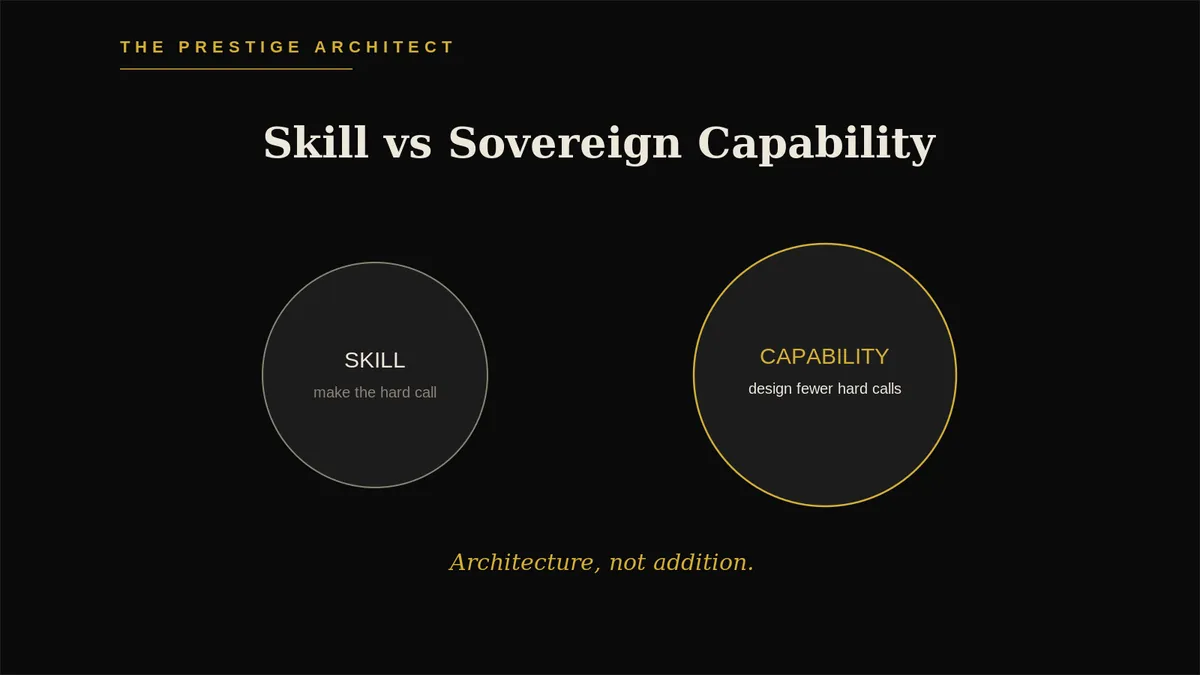
You make the call. Nothing moves. You lead peers you can't command, and they nod and keep doing the old thing. You hold the outcome. You hold almost none of the control. You tell yourself to communicate better and be more patient. Underneath sits a quieter fear. Maybe your authority was always on loan from the title. This is Silent Collapse™, the state of a leader whose pull thinned while the seat stayed intact. Baz Porter® works at the level beneath this. It is not a skills gap. It is an identity one. Your return starts in the manifesto.
On this page
- What leading peers you can't command really means
- The definitive answer
- The hidden pattern under lost pull
- The RAMS™ rebuild, pillar by pillar
- What this looks like in a real room
- The architecture of your return
- Questions leaders ask
Key takeaways
- You cannot command a peer. You can only earn movement.
- A nod is social cover. Commitment is a specific yes with an owner and a date.
- Peers move for trust and usefulness, not for your rank.
- Lost pull is rarely a tactics gap. It is an identity state.
- Lateral authority returns in small reps, not one speech.
What leading peers you can't command really means
Most leadership advice assumes a line of command. You set the direction. People below you carry it. The hard rooms are the flat ones. The other function. The founder who is now your equal. The committee where no one reports to you.
Leading peers you can't command means holding a direction without the power to enforce it. There is no line to pull. There is only your word, your usefulness, and the trust you have banked. The feeling is specific. You are responsible for the result. You command none of the people who produce it.
This is the center of responsibility without authority. You carry the outcome. The control sits elsewhere. The seat gave you a title. It did not hand you the pull.
The definitive answer
Here is how to lead peers you can't command. Replace compliance with commitment. Compliance is what rank buys. Commitment is what trust earns. You do three things, in order. First, lead with an outcome that serves their goal, not only yours. Second, ask once, directly, for a specific yes with an owner and a date. Third, hold the standard in the open without chasing. Then you let the reps compound. Rank reaches down. It never reaches sideways. What reaches sideways is a self people already trust.
The hidden pattern under lost pull
The nod is the tell. A peer agrees in the room. The old behavior returns by Friday. You read it as disrespect. It is not. It is structure.
In a flat relationship, agreement is cheap and binding on no one. So people give it freely and hold it loosely. Real movement runs on a different track. It runs on the informal network of who people trust and turn to, not the org chart.
Harvard Business School research by Casciaro and Lobo, published in Harvard Business Review in 2005, found that when people choose who to work with, likability and trust weigh as heavily as raw competence. The person others turn to is rarely the one with the biggest title. It is the one they trust to be useful and straight.
There is a second pattern, and it works in your favor. People underestimate how willing others are to help. A study by Flynn and Bohns in the Journal of Personality and Social Psychology in 2008 found that we lowball others' willingness to say yes to a direct request by roughly half. So you hint instead of ask. You soften instead of name the commitment. The pull you think you lack is often a request you never clearly made.
Underneath both patterns is the real one. When your pull thins, you reach for the title to compensate. The title cannot carry what only a self can. That compensating move is Silent Collapse™. The exit is not a louder voice. It is a return to authority that lives in who you are.
The RAMS™ rebuild, pillar by pillar
RAMS™ is how the return gets built. Five pillars. Each one moves you from borrowed authority to earned pull.
Results. Stop measuring activity. Measure movement. One commitment kept by a peer is worth ten nods. Name the outcome you own and the single next action that proves it is alive. Track the yes, not the meeting.
Attitude. Drop the story that they are ignoring you. They are responding to structure. That reframe returns your calm. Calm is magnetic across a flat room. Resentment is not.
Authenticity. This is the hinge. Peers follow a position they can feel is real. Say the true thing in the room, not the safe thing after it. When you edit yourself to keep the peace, you teach the room your word is soft. Hold one honest position and your pull starts to return.
Mastery. Master the direct ask. Most leaders never actually ask. They imply, hint, and hope. Instead, request a specific commitment, with an owner and a date, once. Then you stop. The skill is the clean request, not the follow-up chase.
Systems. Build agreements that hold themselves. A commitment with an owner, a date, and a visible record does not need you to police it. The system carries the memory. You carry the standard. That is how one person leads a room they cannot command.
Collapsed versus Sovereign
- Collapsed repeats the ask louder. Sovereign asks once and holds.
- Collapsed chases follow-through. Sovereign builds agreements that hold themselves.
- Collapsed leans on the title. Sovereign leans on who they are.
- Collapsed manages compliance. Sovereign earns commitment.
- Collapsed carries every outcome alone. Sovereign shares ownership and still leads.
The seat gave you permission to lead. It never gave you the pull. That was always yours to build.
If you want to see which pillar thinned first, the Fast Future Freedom Blueprint™ is a free 60-minute identity audit. It reads the self underneath the stall, not the symptom on top.
What this looks like in a real room
A leader I sat with ran a cross-functional launch. No one on the team reported to them. Every deadline slipped. Every meeting ended in warm agreement and no movement.
They were sure it was a respect problem. It was a request problem. They had never once asked for a clean commitment. They briefed, they hoped, they re-briefed louder.
We changed one thing. End every meeting with a named owner, a specific action, and a date, said out loud and written down. Ask once. Then hold the standard, not the person.
Within three weeks the slippage stopped. Nothing about their title changed. What changed was the clarity of the ask and the steadiness behind it. The pull was there the whole time. It had been hiding behind a hint.
The architecture of your return
Start this week. Take the one peer relationship that stalls most. Before your next conversation, decide the single outcome you own. Lead with their goal, not yours. Make one direct request, with an owner and a date. Then hold the standard without chasing.
This is small on purpose. Authority does not return in a speech. It returns in reps. Each clean ask and kept standard rebuilds the pull the title could never give you.
If you want the deeper read on the self underneath the stall, start with the Fast Future Freedom Blueprint™, a free 60-minute identity audit. It is the first door in the return.
Questions leaders ask
How do you lead peers you can't command?
You lead peers you can't command by earning movement, not ordering it. Lead with a clear outcome and a reason that serves their goal, not only yours. Ask once, directly, for a specific commitment with an owner and a date. Then hold the standard without chasing. Trust and usefulness move peers. Rank does not reach them.
Why do peers nod and then do the old thing?
A nod is social cover, not a commitment. In a flat relationship there is no line to enforce, so agreement that costs nothing gets given freely and kept loosely. People commit to what they helped shape and to people they trust. If the plan was handed down, the nod is polite and the behavior stays the same.
Is leading without authority a skills gap or something deeper?
Usually it is deeper. Most capable leaders already know the tactics. What thinned is the sense that their pull belongs to them rather than to the seat. That is Silent Collapse, an identity state, not a technique gap. The work starts underneath the visible problem, at the level of who is leading.
What is lateral authority?
Lateral authority is the pull you hold over people you do not manage. It is built from trust, usefulness, and a position you are willing to hold in the open. It cannot be assigned. It is earned in small reps, in the rooms where you tell the true thing and keep your word.
What is Silent Collapse in a leader?
Silent Collapse is the felt state of a capable leader who went quiet inside an intact title. You look strong on the outside and feel unseen on the inside. Your pull thinned while the seat stayed. It is a state, not a verdict. The move out of it is RETURN.
About the author
Baz Porter® is The Sovereign Leadership Architect. He rebuilds the identity beneath high performance, so leaders decide, lead, and live from a self that is genuinely their own. He works with accomplished people who look strong on the outside and feel unseen on the inside. His work begins underneath the visible problem, at the level of state of being.