How to Stop Over-Functioning as a Leader
Over-functioning is the quiet engine of Silent Collapse™. You do more than your share. You carry what other people should hold. You call it being reliable.
It looks like excellence. It works, for years. Then the cost arrives. The output stays high. The person inside goes quiet.
This is not a discipline problem. It is a design problem. The system was never built to hold what you keep taking on. I wrote the Sovereign Manifesto for the leader ready to stop over-carrying and start architecting.
Table of Contents
Key Takeaways
Over-functioning is chronic over-responsibility, not high standards.
Every time you over-function, someone near you under-functions.
The reflex is nervous-system deep, so willpower does not touch it.
The return runs through the Silent Collapse Diagnostic™, not through more effort.
RAMS™ rebuilds capacity by returning responsibility, by design.
What over-functioning actually is
Over-functioning is the habit of doing, deciding, and carrying more than your role requires. You take on other people's tasks, feelings, and outcomes. It is not strength. It is over-responsibility wearing the mask of competence. It builds in advance of the moment. It drains beneath the surface. The way out is not to try harder. It is to return what was never yours to hold, on purpose, by design.
The hidden pattern under over-functioning
Over-functioning never happens alone. It is one half of a pair.
Family systems research names it plainly. In Murray Bowen's theory, every over-functioner creates an under-functioner nearby (Bowen Center). The more you carry, the less they carry. The gap grows. You read it as proof you are needed. It is really proof the system is out of balance.
The body keeps a tab. Sustained over-responsibility holds the stress response switched on. The American Psychological Association links chronic stress to real physical wear (APA). You do not notice, because the output never drops. That is the trap of the high performer. The numbers hold while the person erodes.
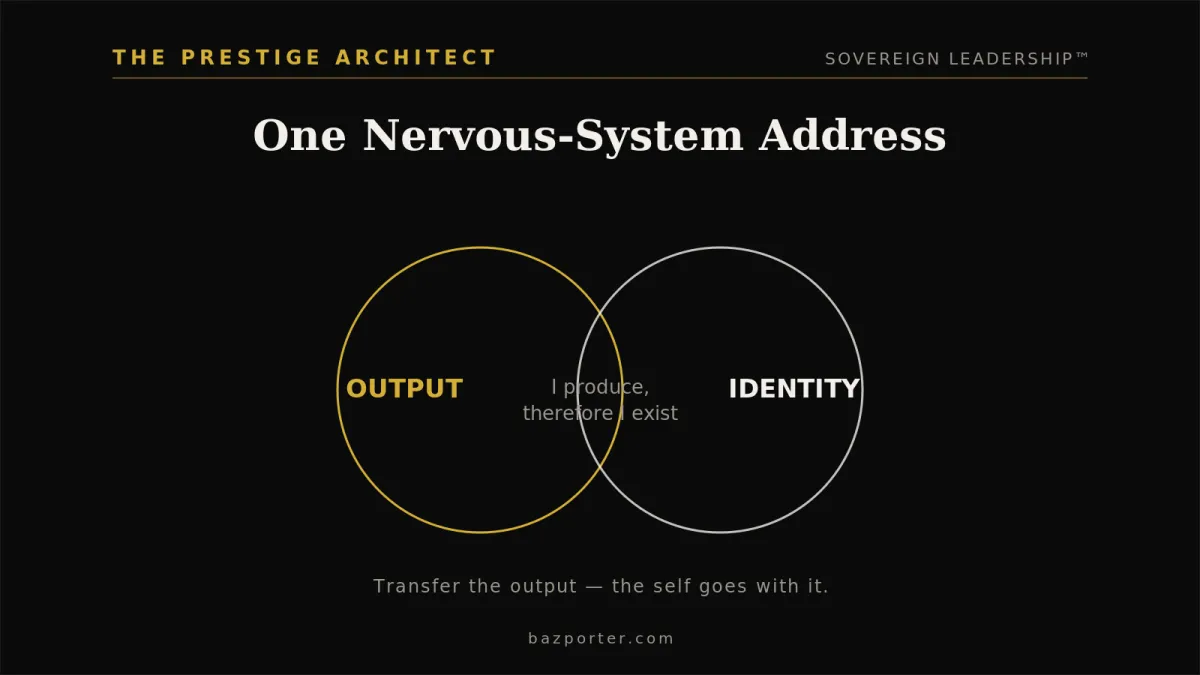
There is an identity layer underneath. Doing more feels like proof of worth. Doing less feels like exposure. So the reflex protects a belief, not a deadline. Until you meet that belief, the behaviour returns.
Why high-achievers over-function
Over-functioning is often learned early. You were the capable one. You earned love by being useful. The pattern set before you had words for it.
Then success rewarded it. The more you carried, the more you were praised. The market paid you for over-giving. So the reflex hardened into an identity.
Psychology Today ties this over-responsibility loop straight to burnout in high performers (Psychology Today). The engine that built your reputation is the same engine now draining you. That is the cruel symmetry of the pattern.
Naming it changes nothing on its own. You have to rebuild the structure that keeps rewarding the reflex. That is design work, not effort. It is the difference between insight and a return.
The RAMS™ reframe
RAMS™ is my operating system for leaders. Five pillars. Results, Attitude, Authenticity, Mastery, Systems. Over-functioning distorts every one. Here is the return, pillar by pillar.
Results
Over-functioning inflates your output and hides the true cost. You start measuring motion, not value. Sovereign results measure what only you can do. Everything else is returned to its owner.
Attitude
The over-functioner treats rest as risk. Doing less feels like danger. That belief is the driver, not the workload. Change the belief and the reflex loosens its grip.
Authenticity
You perform reliability while resenting the load. The mask says yes. The person means no. That gap is an early Silent Collapse™ signal. Authenticity closes the gap between the two.
Mastery
Mastery is not doing more, well. It is knowing what to hold and what to release. The clean handoff is the missing skill, not more capacity. You master the release, and the load falls.
Systems
A leader who over-functions builds a team that under-functions. The system learns to wait for you. Sovereign systems return responsibility to where it belongs. The structure carries the weight, so you do not.
Collapsed vs Sovereign
Collapsed: you carry the outcome for everyone. Sovereign: you carry your part, clearly.
Collapsed: saying no feels like failure. Sovereign: no is a complete sentence.
Collapsed: rest is earned only after collapse. Sovereign: recovery is built in first.
Collapsed: being needed is your worth. Sovereign: your worth is not up for hire.
Over-functioning is not devotion. It is a slow handover of your own life, one favour at a time.
If this reads like your week, start where the real read happens. The Silent Collapse Diagnostic™ shows you where you are over-carrying and what it is costing you.
A case from the room
A founder came to me at full output. Her board loved her. Her team leaned on her for everything. She approved every decision. She answered every message inside minutes.
She was not tired. She was hollow. Her calendar was full of other people's work.
We did not add a routine. We returned responsibility. Three decisions went back to her team in week one. The first day felt like losing control. It was not. The team rose to meet the weight. Her evenings came back. Her edge stayed sharp. That is the return over-functioning keeps hidden from you.
The architecture of your return
You do not stop over-functioning by trying to relax. You stop it by design. You name what is yours. You return what is not. You rebuild the system so it does not run on your over-giving.
That is architecture, not willpower. It is what I build with leaders inside my containers. The door is the same for everyone. Take the Silent Collapse Diagnostic™ and see the exact shape of your over-functioning, and the first move out of it.
Questions leaders ask about over-functioning
What is over-functioning at work?
Over-functioning at work is taking on tasks, decisions, and responsibility that belong to other people. You over-deliver and over-manage to feel secure. It looks like being dependable. Underneath, it drains you and weakens your team.
What is the difference between over-functioning and being a high performer?
A high performer delivers excellent work inside their role. An over-functioner reaches past the role and carries what is not theirs. High performance builds you. Over-functioning erodes you while the output still looks strong.
Why can't I stop over-functioning even when I am exhausted?
The reflex sits deeper than logic. Doing less triggers real anxiety, because being needed feels like safety. Willpower does not reach that far down. You change it by rebuilding the belief and the system beneath it.
How do I stop over-functioning as a leader?
Start by naming what is truly yours to carry. Return the rest to the people it belongs to, on purpose. Expect discomfort as your team rises to meet it. The Silent Collapse Diagnostic™ maps where to begin.
Does over-functioning cause burnout?
Yes, and it hides the burnout until late. Because your output stays high, the collapse builds under the surface. This is why high-functioning people crash without warning. Sustained over-responsibility holds the stress response switched on.
About the Author
Baz Porter® is the founder of Baz Porter LLC® and The Prestige Architect®. A British Army veteran and international bestselling author, he hosts the Rise From The Ashes podcast on the C-Suite Network. He created RAMS™ and Sovereign Leadership Architecture™ to guide high-achieving leaders from Silent Collapse™ to Sovereign Leadership™: power without collapse, success without self-betrayal.