Financial Anxiety in High Earners: The Fear Money Cannot Fix
The account is full. The fear is louder than ever. That is the tell.
You earned past every number that was meant to make you feel safe. The safety never arrived. You still scan for the drop. You still brace. This is Silent Collapse™ — the quiet alarm running under a successful life. The market sees a wealthy operator. You feel a body that never got the memo. If that landed, read The Manifesto.
Table of Contents
Key Takeaways
Financial anxiety in high earners is a nervous-system pattern, not a math problem. The spreadsheet is fine. The body is not.
Net worth calms the mind more than income. Yet neither resolves an old scarcity wiring on its own.
"Enough" is a felt state, not a number. The body decides when you are safe, and it decided early.
The repair is regulation plus architecture. You rebuild the response, not add another zero.
The Definitive Answer
Financial anxiety in high earners is the persistence of a scarcity response after the threat of scarcity has passed. The nervous system learned hypervigilance early and kept it running. More income does not switch it off. The repair is re-regulation and a financial architecture that signals safety to the body — not only to the bank.
The Hidden Pattern: The Fear Under the Success
Here is what the wealth reports miss. The fear is not about money. It is about safety. Your body learned, once, that the ground was not stable. It built a guard. The guard never stood down.
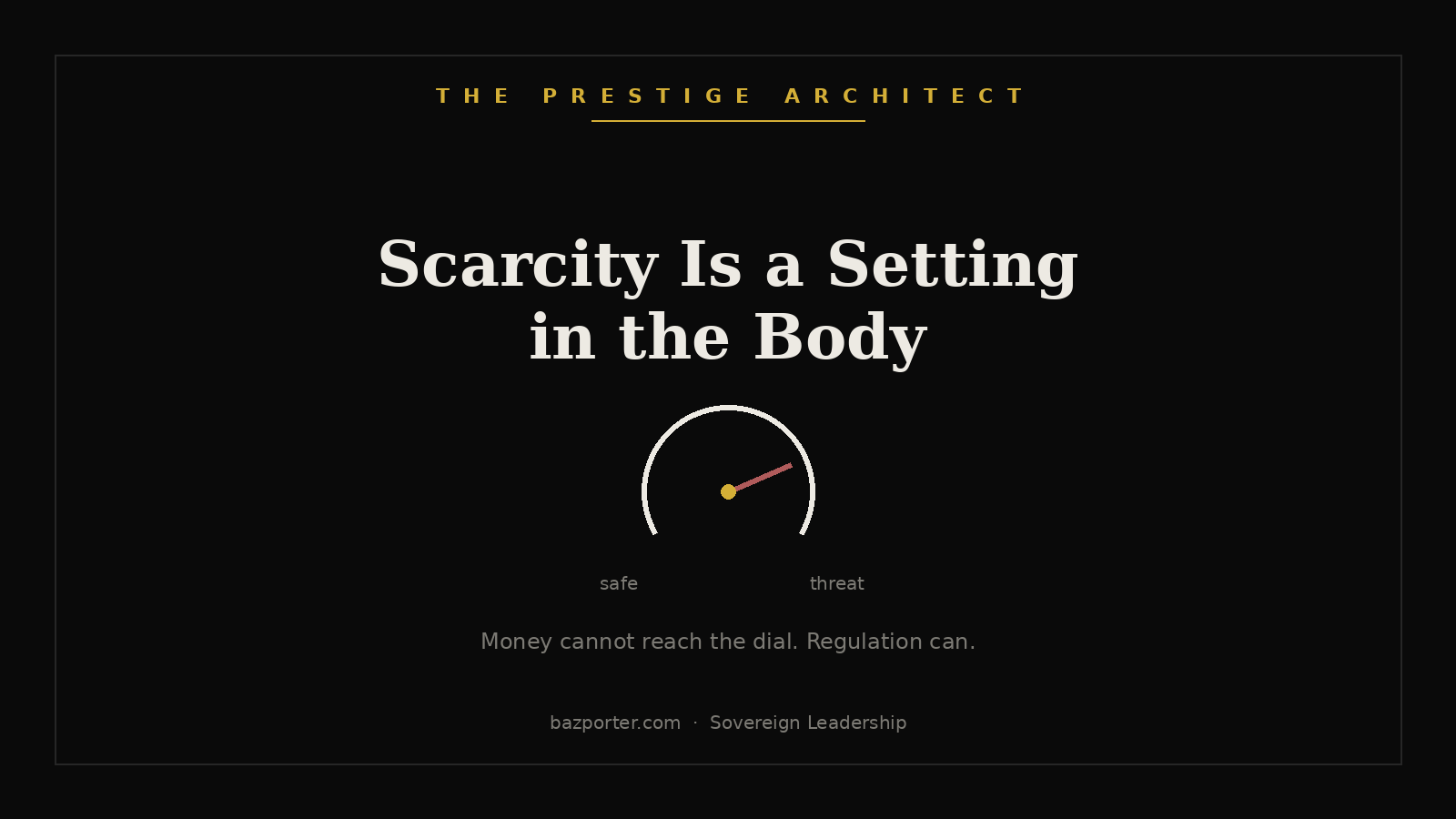
Think of scarcity as a tax on attention. It runs in the background and skims your bandwidth. Landmark research found that the experience of scarcity itself degrades cognitive function — the mind under "not enough" thinks worse, regardless of what the account holds (Science, Mani et al.). The threat does not have to be real now. The wiring fires anyway.
The 2026 data confirms the split between number and nervous system. A national survey found that financial anxiety falls more with higher net worth than with higher income — assets soothe the body more than a bigger paycheck does (CNBC). Even so, neither erases an old alarm. This is the texture of Silent Collapse™: full account, braced body, private dread the win never reaches. To sit with the gap between the performed life and the felt one, read the Sovereign Leadership Resource Hub.
Scarcity is not a number in the bank. It is a setting in the body, and money cannot reach the dial.
The RAMS™ Reframe: Five Pillars of Financial Safety
The RAMS Framework™ treats the leader before the strategy. It runs on five pillars — Results, Attitude, Authenticity, Mastery, Systems. The fear under success touches each. Here is how Sovereign Leadership™ rebuilds them.
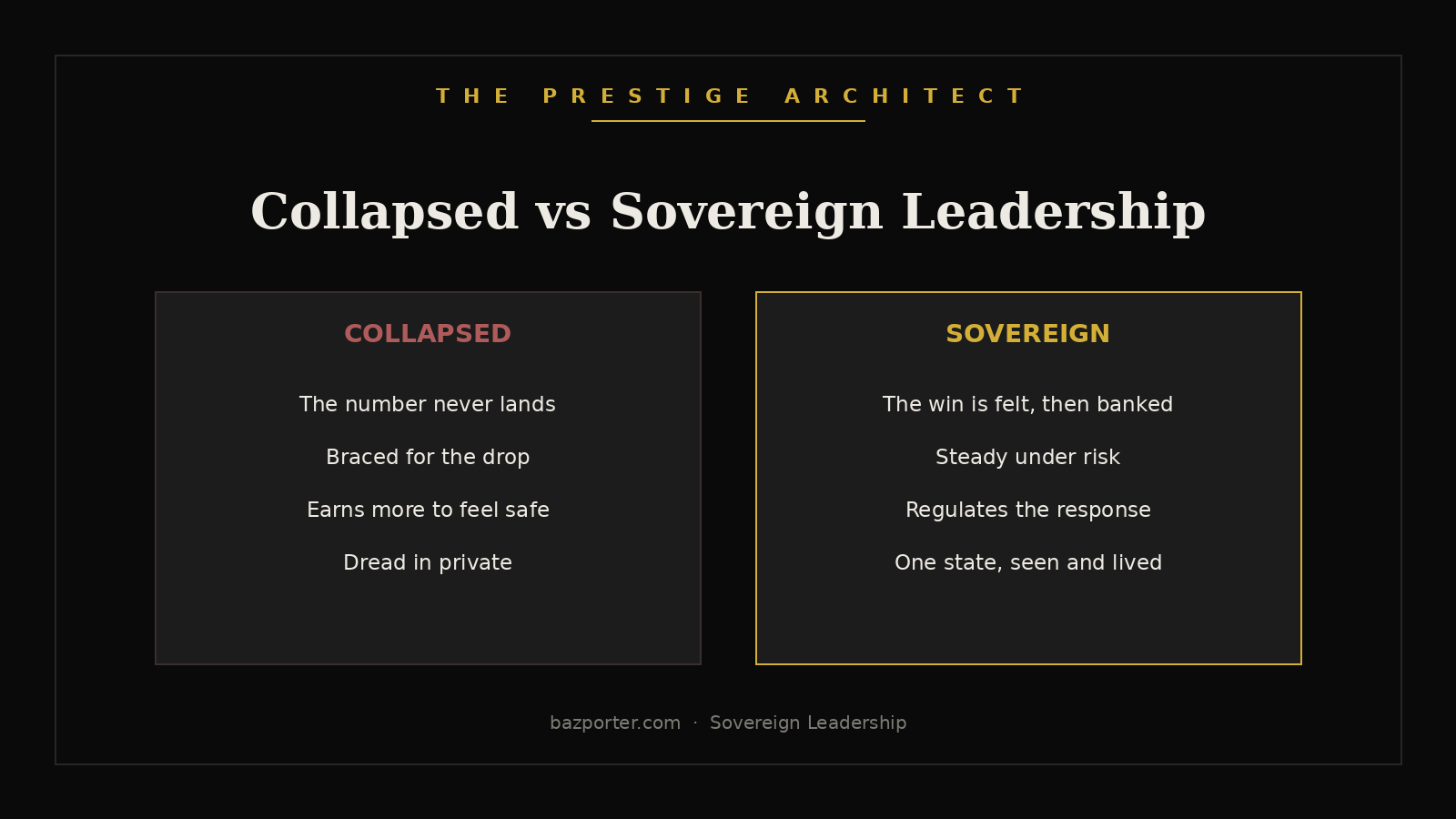
Collapsed Pattern vs Sovereign Leadership™
Results — Collapsed: the number never lands as safety. Sovereign Leadership™: the win is felt, then banked.
Attitude — Collapsed: hypervigilant, braced for the drop. Sovereign Leadership™: regulated, steady under risk.
Authenticity — Collapsed: calm in public, dread in private. Sovereign Leadership™: one state, seen and lived.
Mastery — Collapsed: earns more to feel less afraid. Sovereign Leadership™: regulates the response, not the revenue.
Systems — Collapsed: no structure signals safe. Sovereign Leadership™: architecture tells the body it is safe.
Results: The Number That Never Lands
You hit the target. The relief lasts an hour. Then the target moves. This is not greed. It is a body that cannot register the win as safety.
Symptom: each milestone resets to baseline fear.
Mechanism: the threat response outranks the reward signal.
Operational rule: mark the win in the body before chasing the next.
Attitude: Where the Scarcity Lives
Attitude is the internal operating system, and this is where scarcity lives. Under an old money alarm, you scan for loss. You over-hold. You read a normal quarter as a coming collapse. Scarcity research is direct: under "not enough," the brain prioritizes survival over perspective, so even safe leaders brace against shadows.
Command decision: name the alarm as old data, not present fact. The body believes what you rehearse.
Authenticity: The Private–Public Divide
This pillar closes the divide that feeds Silent Collapse™. The performed self projects abundance. The lived self runs a deficit. Holding both costs the energy you need to lead. The repair is not disclosure. It is alignment — the public calm and the private state made one.
Mastery: Regulating the Money Response
Here is the contrarian core. You cannot earn your way out of a nervous-system pattern. Earning more is the strategy that keeps failing, because the fear was never about the number. Mastery is regulating the response, not raising the revenue.
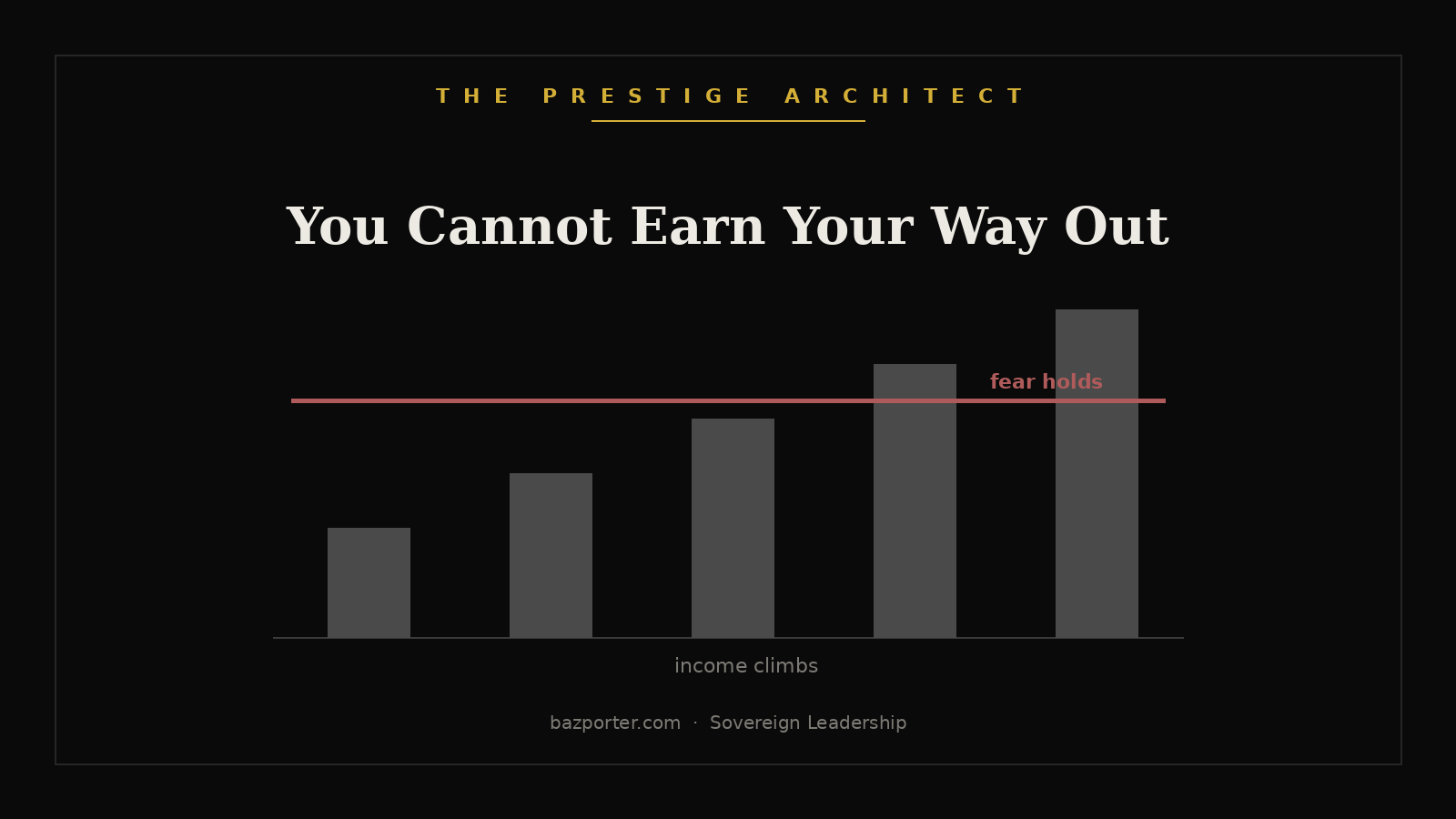
Capability is a body that stays regulated under financial risk.
Compulsion is earning more to quiet an old alarm.
Operational rule: regulate first, decide second, earn third.
The scale of this is not niche. Motley Fool's 2026 survey found 38 percent of Americans earning over 100,000 dollars report high or extreme financial stress — proof that income and calm are different systems. Mastery is reclaiming the response, not feeding the fear.
In 2026, the wealthy are not short of money. They are short of safety.
If your wins keep failing to land as safety, start here: Take the Silent Collapse Diagnostic.
Systems: An Architecture That Signals Safety
Willpower does not calm a scarcity body. Structure does. The sovereign move is to build a financial architecture that signals safety on its own — reserves, rules, and floors the body can trust. The system holds the steadiness you keep trying to feel.
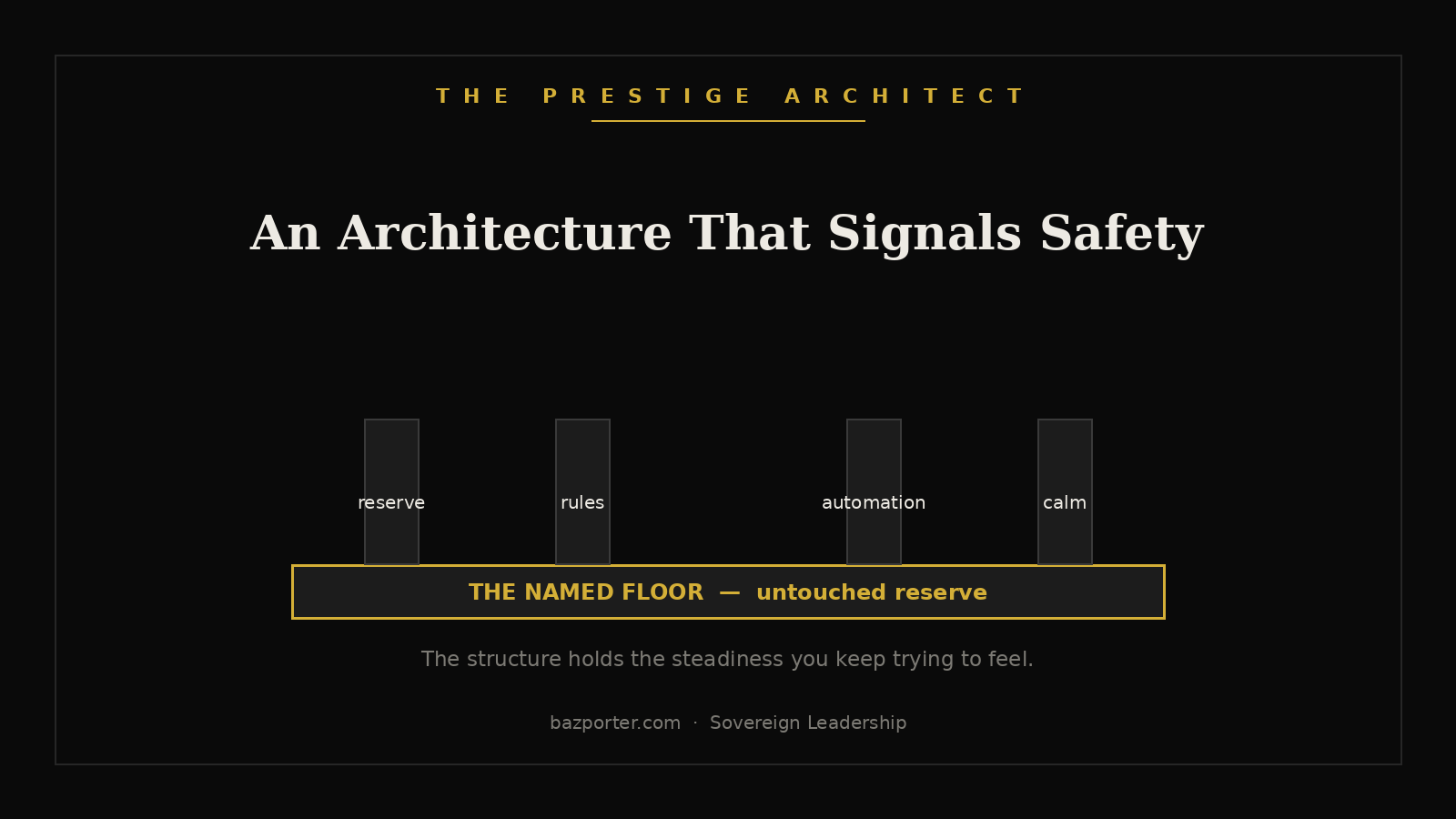
Build a named floor: a reserve that ends the "what if" loop.
Automate the safe move: remove the decision from the anxious hour.
Command decision: let the structure carry the vigilance you carried alone.
Case Vignette: The Founder Who Felt Nothing After the Exit
A founder cleared a life-changing exit and felt nothing but dread. On paper, set for life. Inside, braced for ruin. We did not address her mindset. We rebuilt her architecture.
We built a named floor she would not touch and would not spend. We automated the moves she used to agonize over. We trained one drill: register the win in the body before the mind moved the line. Within weeks the bracing eased. Not because the number grew. Because the structure finally told her body it was safe.
The Architecture of Your Return
Financial anxiety in high earners is not a flaw of character. It is an old survival setting with a structural answer. The return is built on nervous-system sovereignty, not another zero. You regulate the body that holds the fear, then you build a structure that signals safety without you straining to feel it.
Sovereignty here is concrete. It is a regulated nervous system, a named floor, and an architecture that carries the vigilance you used to hold alone. The win starts to land. The success you built becomes a place you can finally stand.
You did not need more money. You needed a structure your body would believe.
This is the work of The Prestige Architect® — rebuilding the structure beneath the performance. When you are ready to architect that return, Apply to Work With Baz.
Frequently Asked Questions
Why do high earners still feel financial anxiety?
Because the fear was never about the number. The nervous system learned hypervigilance early and kept it. Income rises; the old alarm stays. Financial anxiety in high earners is a survival setting that outlasts the threat that built it.
Does more money reduce financial anxiety?
Only partly. Research shows net worth calms the mind more than income, so assets soothe the body more than a bigger paycheck. Yet neither switches off an old scarcity response. The relief is real and incomplete. The pattern needs re-regulation, not just revenue.
What is the difference between a scarcity mindset and money trauma?
A mindset is a thought you can argue with. Money trauma is a body state you cannot reason away. The nervous system locked into financial hypervigilance long ago. That is why affirmations fail. The repair works at the level of the body, not the belief.
How do I feel safe with money when the fear will not stop?
You build safety into structure, not feeling. Set a named floor you will not touch. Automate the safe move so it leaves the anxious hour. Then regulate the body so it can register what the structure already secured. Safety becomes designed, not chased.
Can the fear under financial success be resolved?
Yes. It is a learned response, and learned responses can be retrained. Regulate the nervous system that holds the alarm. Build an architecture that signals safety on its own. The win starts to land when the body and the structure finally agree.
British military veteran. Two-time international bestselling author. Founder, The Prestige Architect®. Host, Rise From The Ashes podcast, C-Suite Network. Boulder, Colorado.