Why You Fantasize About Disappearing
You called the meeting. Everyone is waiting on you. And a quiet voice says: I want to disappear.
Not die. Disappear. Drive past your exit and keep going. Change your name. Start over somewhere no one knows the person you became.
If that daydream visits you, you are not broken. You are in Silent Collapse™, the private state where a life that works on paper stops holding the person living it. The disappearing wish is a signal, not a diagnosis. If you want the full map of what it points to, read the manifesto.
What this article covers
Why you fantasize about disappearing
You fantasize about disappearing because part of you has outgrown the life you built. The role still fits your calendar. It no longer fits you. The daydream is your mind rehearsing freedom in the only way it feels allowed. It is not weakness. It is honesty with nowhere to go.
Successful people feel this most sharply. You cannot just walk away. Too much depends on you. So the wish goes underground. It surfaces as a picture of a cabin, a new city, a life with no history and no one to answer to. The wish is real. The exit is not the answer. The signal underneath it is.
Notice the shape of the fantasy. It is almost never violent. It is quiet. You are simply gone, and the noise stops. That quiet is the clue. You are not chasing chaos. You are starving for peace, and your mind has decided the only place to find it is nowhere.
The hidden pattern under the wish
Psychologists describe a state called escape from the self. When the gap between who you are and who you feel you must be grows too wide, the mind seeks relief by narrowing awareness of the self. It is a well studied pattern in the clinical literature (see the National Library of Medicine).
Here is the part most people miss. The self you want to escape is not your real self. It is the performance. You do not want to vanish. You want the mask to stop. Chronic emotional exhaustion, the core of burnout, deepens the pull and makes the fantasy louder (American Psychological Association).
So the pattern runs like this. You perform. The performance drains you. The drain widens the gap between the mask and the person. The wider gap makes the mask heavier. The heavier mask makes disappearing look like rest. The wish is the mind's last honest protest. It is right about the cost. It is wrong about the cure.
The RAMS™ reframe: five ways back
RAMS™ is how The Prestige Architect™ reads a collapse. Five pillars. Each one turns the wish from a threat into a map.
Results. You learned to measure your worth by output. When the output stops feeding you, the wish grows. Sovereign leaders still deliver, but they measure by whether the result is theirs to want in the first place.
Attitude. This is where the disappearing wish lives. A collapsed attitude reads the fantasy as proof you are failing. A sovereign attitude reads it as data. The daydream is not a betrayal of your life. It is a briefing about it.
Authenticity. You built a life that impresses people you no longer care to impress. The wish is authenticity trying to break the surface. The instinct is to follow it out the door. The move is to follow it inward instead.
Mastery. You mastered the role so completely that you vanished into it. The skill became the cage. More mastery of the role will not free you. Mastery of the self is the only key that fits.
Systems. Your days run on systems built by an earlier version of you. They still run. That person is gone. New self, old machine. That quiet mismatch is most of the ache you cannot name.
Collapsed versus Sovereign
Collapsed: the fantasy scares you. Sovereign: the fantasy informs you.
Collapsed: you white-knuckle the role. Sovereign: you question the role.
Collapsed: you plan a secret escape. Sovereign: you design an honest return.
Collapsed: you hide the wish and feel ashamed. Sovereign: you read the wish and feel awake.
The people who fantasize about vanishing are rarely the ones who quit. They are the ones who never let themselves want anything. The wish is the first real want in years.
If that daydream visits you often, name it before it names you. The Silent Collapse Diagnostic™ shows you exactly where the mismatch lives, so the wish stops running the show.
One leader's turn
A founder came to me at fifty. Company sold. Money handled. Family fine. Every morning, the same thought arrived on schedule: get in the car and drive until the phone dies.
They were not suicidal. They were suffocating. The life fit a person who no longer existed. We did not plan an exit. We ran the diagnostic instead.
The wish was pointing at one clean fact. They had not chosen a single day of the last decade for themselves. Every choice served the company, then the sale, then the people around them. The return was small on purpose. They took back one hour a day that belonged only to them. No agenda. No output. Inside a month the disappearing wish went quiet. They did not need to vanish. They needed to arrive.
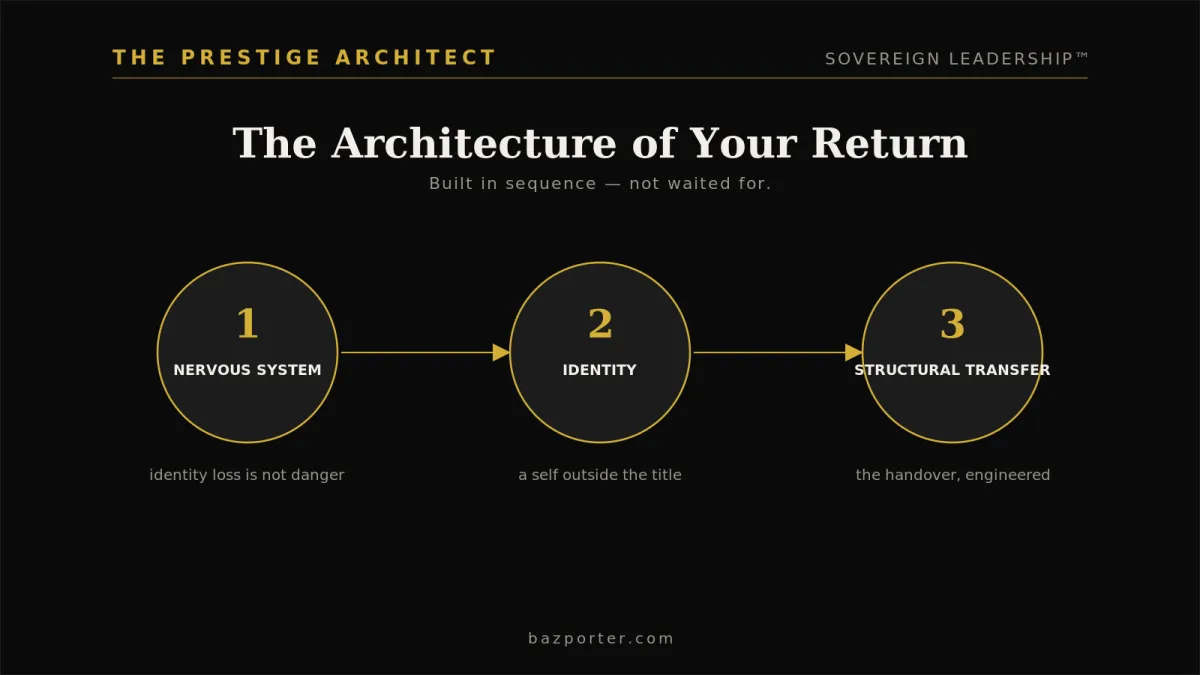
The architecture of your return
Return is not a grand gesture. It is a build. You do not detonate the life. You re-author it from the inside, one honest choice at a time.
Start here. Write the fantasy down in full. Every detail. Then ask one question of it: what am I actually free from in that daydream? Free from being needed? From being watched? From owing anyone your time? The answer is your real target. It is almost never the house, the city, or the job. It is the weight.
Move toward that freedom in place, in the real life you already have. You do not need a new name. You need your own back. When you are ready to map the whole return instead of guessing at it, apply for the Silent Collapse Diagnostic™ and we will find the door together.
Questions people ask
Is it normal to fantasize about disappearing?
Yes. It is common in high-functioning people carrying a life that no longer fits. The fantasy works like a pressure valve. It becomes a warning when it visits daily or starts to feel like the only relief you have. That is the moment to look at the mismatch underneath, not to judge the wish.
Does wanting to disappear mean I am depressed?
Not always. Depression and the disappearing wish can overlap, but they are not the same thing. This wish is often about freedom, not despair. If you also feel hopeless, or you think about harming yourself, speak to a doctor or a crisis line first. If it is mostly a longing to be free, it is a signal about your life design.
Why do successful people want to disappear?
Success builds a life that runs on your shoulders. The more people depend on you, the less room you have to want anything for yourself. The wish is the self asking for air. It hits hardest for leaders in their forties and fifties who have already won and now feel trapped by the win.
Should I act on the urge to run away?
Rarely. The urge is real, but running usually rebuilds the same trap in a new place. The better move is to read the wish, not obey it. Find what you are trying to escape, then change that one thing inside your current life. Exit only after you know exactly what you are exiting and why.
What is the difference between escape and return?
Escape runs from your life. Return comes back to yourself inside it. Escape is driven by what you cannot stand. Return is drawn by what you actually want. One leaves a hole where the life used to be. The other closes one you have carried for years.
About the author
Baz Porter® is The Prestige Architect™ and the creator of RAMS™, the framework for leaders in Silent Collapse™. He works with successful people who have everything and feel like themselves in none of it. His work is about return, not repair.