Emotional Suppression in Leadership: The Strength That Leaks
You learned to hold the face. Steady in the boardroom. Flat in the crisis. The room reads it as command. Inside, the pressure has nowhere to go. This is Silent Collapse™ wearing a stoic mask. The leak is quiet. It shows up as a short fuse at home, a numbness you cannot name, a 3 a.m. heart rate that will not settle. You call it discipline. Your nervous system calls it a wound. If you want the frame before the fix, Read The Manifesto.
Table of Contents
Key Takeaways
Suppression is not control. Research links habitual emotional suppression to lower leadership performance; reappraisal links to higher.
Stoicism was never numbness. The Stoics felt the feeling. They refused to let it drive. Modern "stay strong" culture cut out the first half.
Emotion is energy, not a flaw. A suppressed signal does not vanish. It reroutes into the body, the home, and the 3 a.m. wake-up.
The fix is architecture, not willpower. You build a nervous-system system that channels the charge instead of capping it.
The Definitive Answer
Leaders should not suppress emotion in leadership. They should regulate it. Emotional suppression in leadership relates negatively to performance and well-being, while intentional regulation relates positively. The strong, silent operator is not in command. That leader is leaking pressure the room cannot see.
The Hidden Pattern Under "Stay Strong"
Emotion is data with a charge. Fear flags a threat. Anger flags a violated standard. Grief flags a loss that matters. Suppression does not delete the data. It buries the wire while the current still runs.
The body keeps the bill. When you cap a feeling, the autonomic load stays high. Heart rate. Cortisol. Muscle tension. You read calm on the outside. Your physiology reads siege. Over years, that gap becomes Silent Collapse™ — high function on the surface, a hollow engine underneath.
Think of a pressure valve welded shut. The gauge looks quiet. The seam is where it fails. Research on emotion regulation found that suppression related negatively to leadership performance, while cognitive reappraisal related positively (Frontiers in Psychology, 2019). Harvard Business Review reached the same edge from the field: the best leaders normalize emotion at work rather than mute it (HBR, 2025).
The cost compounds quietly. A suppressed signal does not stay in the meeting where it started. It follows you to the car, the dinner table, the dark hour before dawn. The charge has to land somewhere. When you deny it a clean exit, it picks a dirty one. The team feels a coldness they cannot place. The family meets a stranger in a familiar face.
Operational rule: a feeling you will not name will name your behavior for you. Want the full architecture under this pattern? Visit the Sovereign Leadership Resource Hub.
The RAMS™ Reframe: Channel, Don't Cap
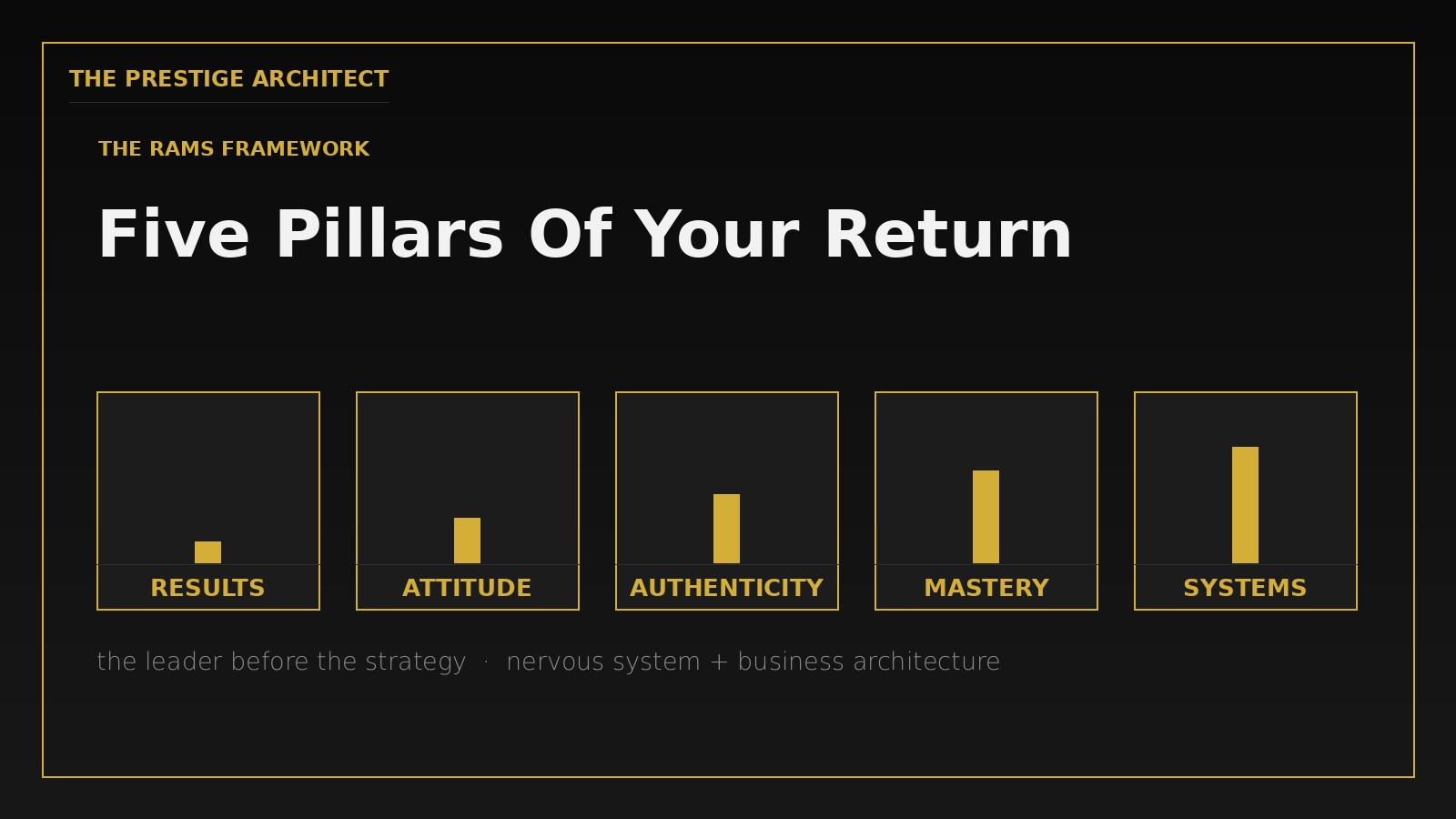
RAMS Framework™ runs at two levels at once — the nervous system and the business. The five pillars are Results, Attitude, Authenticity, Mastery, and Systems. Suppression breaks all five. Sovereign Leadership™ rebuilds them.
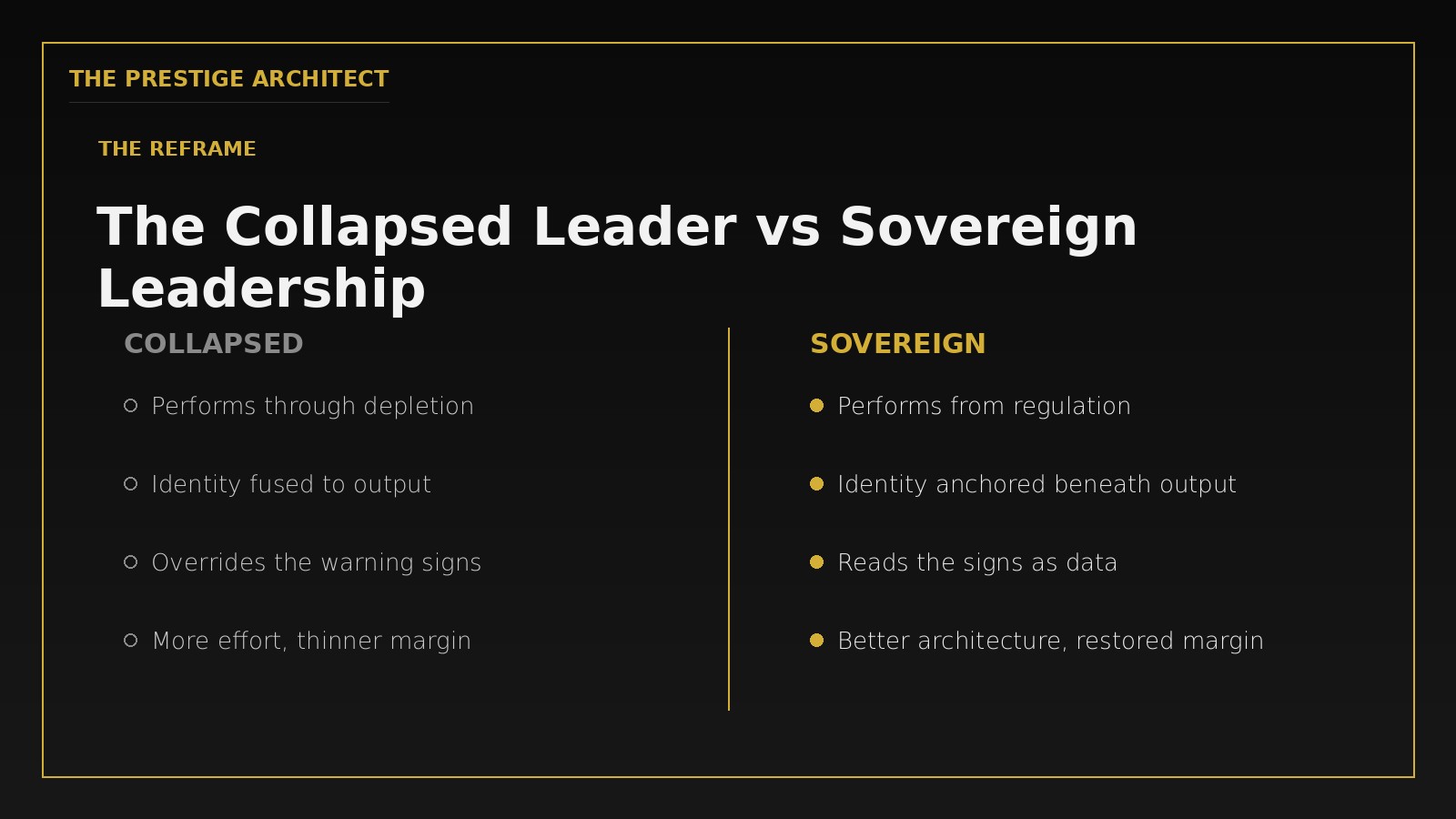
PillarThe Suppressed LeaderSovereign Leadership™ ResultsOutput climbs, meaning drainsOutput and identity move together AttitudeFlat mask, internal siegeSteady inside, honest outside AuthenticityPublic self and private self splitOne self, both rooms MasteryControls the faceRegulates the charge SystemsWillpower until it cracksArchitecture that holds
The Suppressed Leader vs Sovereign Leadership™ — the five-pillar split:
Results: Suppressed — output climbs, meaning drains. Sovereign — output and identity move together.
Attitude: Suppressed — flat mask, internal siege. Sovereign — steady inside, honest outside.
Authenticity: Suppressed — public self and private self split. Sovereign — one self, both rooms.
Mastery: Suppressed — controls the face. Sovereign — regulates the charge.
Systems: Suppressed — willpower until it cracks. Sovereign — architecture that holds.
Results: Output vs Identity
The suppressed leader still ships. Numbers hold. That is the trap. The cost hides in the gap between what you produce and who you are. You hit the target and feel nothing. Output is not the wound. The split between output and identity is.
Attitude: Where the Collapse Lives
Attitude is the internal operating system. Suppression sets it to "contain." Every signal gets filed under threat. The result is a leader who looks composed and lives braced.
Suppression is not control. It is a slow leak the room cannot see.
Authenticity: The Private/Public Divide
This is the spine. The performed self holds the line in public. The lived self carries the charge in private. The wider that gap, the deeper the Silent Collapse™. Authenticity does not mean venting. It means one self in both rooms. Psychology Today named the shift directly in 2026: leaders should stop suppressing and start signaling emotion (Psychology Today, 2026).
If you sense that divide in yourself, name it before it names you. Take the Silent Collapse Diagnostic.
Mastery: Regulation, Not Suppression
Suppression is a blunt skill. Regulation is a sovereign capability. The Stoics knew the difference. They never denied the feeling. They refused to let it dictate the next move. Modern "stay strong" culture deleted the first half and kept the clamp.
Name it: label the emotion in one word. The label drops the charge.
Locate it: find it in the body. Jaw, chest, gut. The signal lives there.
Reappraise it: ask what the signal is flagging. Threat, standard, or loss.
Direct it: spend the energy on the decision in front of you.
Command decision: stop training your face. Start training your physiology.
Systems: The Architecture of the Return
Willpower is not a strategy. It is a battery. Systems are the wiring that holds when the battery dies. You do not white-knuckle your way out of suppression. You build a structure that regulates by default — a daily downshift, a debrief that lets the charge move, a body practice that clears the autonomic load before it stacks.
Architecture removes the daily fight. You do not decide to regulate in the heat of a hard moment. You decided last week, when you built the structure that does it for you. That is the difference between a leader who hopes to hold and a leader who is built to. The system carries the load the mask used to fake.
A mindset is a limitation. A mind-state, regulated, is unlimited.
A Case Vignette
A founder in industrial software ran flat for nine years. No outburst, no visible strain. The board called it steadiness. At home, he had gone silent. We did not start with mindset. We started with systems. A nightly ten-minute downshift. A weekly debrief where the week's charge moved instead of stacking. A standing rule: name the feeling in the room, once, then decide. Inside a quarter, his team reported he had "come back." Nothing about his targets changed. The leak closed. The man returned.
The Architecture of Your Return
The return is not a pep talk. It is nervous-system sovereignty. You stop managing the mask and start regulating the source. The charge that suppression buried becomes fuel you can aim. Steady stops being a performance. It becomes a state your body can hold without cost.
This is the work of The Prestige Architect® — the leader rebuilt before the strategy. Not louder. Not softer. Sovereign. When you are ready to build it, Apply to Work With Baz.
FAQ
Is suppressing emotions a sign of strong leadership?
No. It reads as strength and functions as a leak. Research links habitual suppression to lower leadership performance and lower well-being. The strength is regulation — feeling the signal and directing it, not capping it.
What is the difference between stoicism and emotional suppression?
Stoicism accepts the feeling, then refuses to let it govern behavior. Suppression denies the feeling exists. The first regulates the charge. The second buries a live wire. Modern "stay strong" culture confuses the two.
Why do I feel numb even though my numbers are strong?
Numbness is the tax on years of suppression. When you cap the hard emotions, the good ones flatten too. The result is high output and a hollow center — the core mark of Silent Collapse™.
How do I regulate emotion without losing command of the room?
You name the signal privately, locate it in the body, and reappraise what it flags. Then you decide. Command does not come from a frozen face. It comes from a regulated nervous system that the room can feel.
About the Author
British military veteran. Two-time international bestselling author. Founder, The Prestige Architect®. Host, Rise From The Ashes podcast, C-Suite Network. Boulder, Colorado.