How to Delegate Without Losing Control
How to Delegate Without Losing Control
Hand off the one task you are best at. The task that makes you feel needed. If your chest just tightened, you found it. This is Silent Collapse™ — the version where you call it high standards and it is really a grip you cannot open. A leader who holds every rope is not in control. They are the single point of failure with a title. Before you build another checklist, Read The Manifesto.
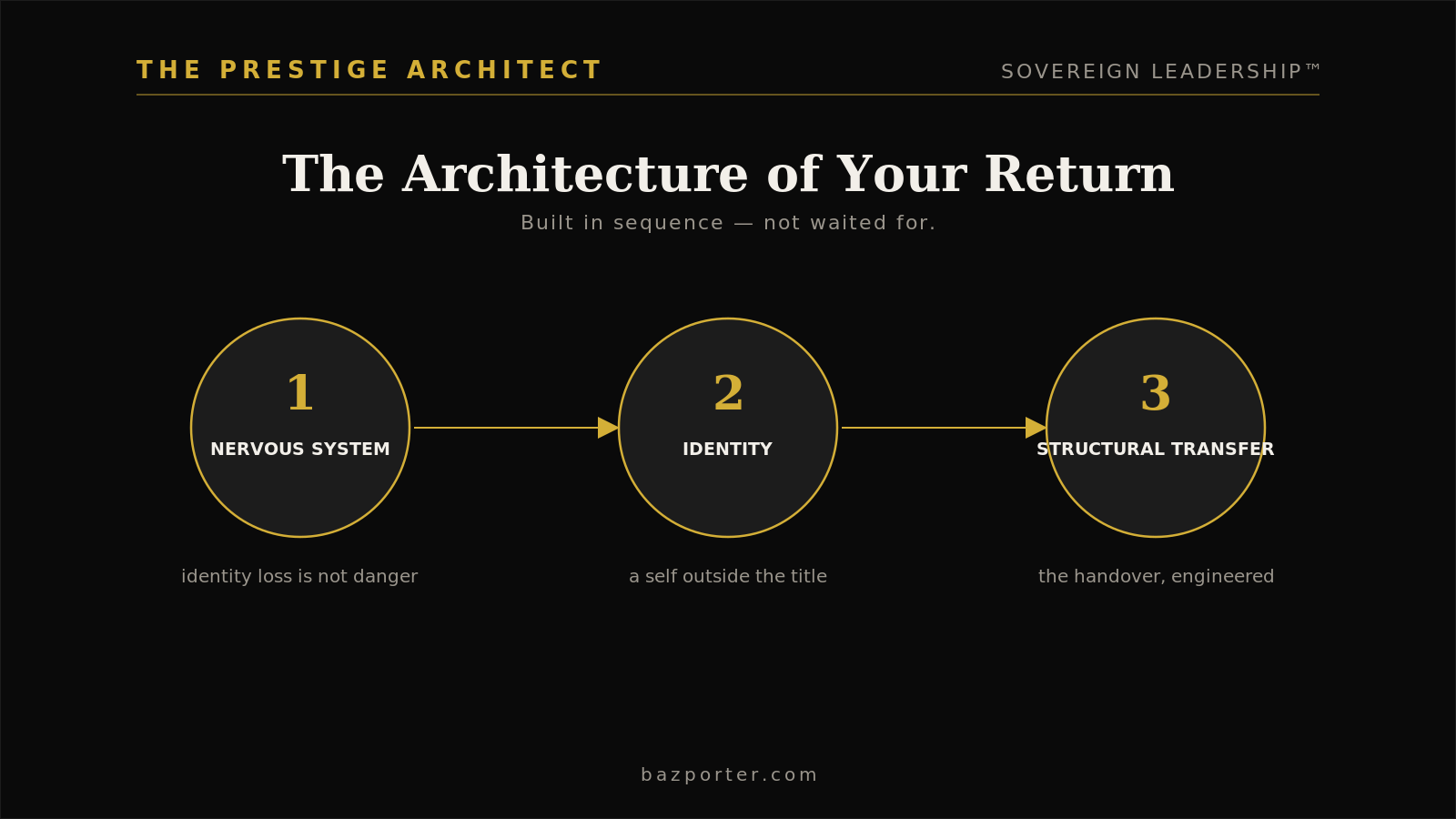
Table of Contents
Key Takeaways
You do not lose control when you delegate. You lose it when delegation is vague. Control comes from clear standards set at the start, not from holding the task.
The block is rarely competence. It is identity. The work you refuse to release is usually the work that makes you feel worth something.
Delegate the outcome, not the steps. Own what good looks like and the deadline. Release how it gets done.
Sovereign Leadership™ means control lives in the standard, not in your hands.
The Short Answer
You delegate without losing control by handing off outcomes instead of tasks, and setting the standard before you let go. You keep the what. You release the how. The block is not skill. It is the identity that made being needed feel safe. You solve it at the level of Authenticity and Systems together — one clear standard at a time, not one more round of checking their work.
The Hidden Pattern: Why Letting Go Feels Like Losing
No leader plans to become a bottleneck. You became one by being good at the thing. Early on, doing it yourself was faster and safer. You were praised for it. The praise wired the task to your worth. Now handing it off does not feel like freedom. It feels like a threat.
That reaction is not weakness. Harvard Business Review names it plainly: many leaders draw their self-worth from the things they do well, so they will not hand them off. The refusal is emotional, not practical. You are not protecting quality. You are protecting an identity.
The cost is not only your calendar. It is your team's growth and your own ceiling. Forbes puts the reframe cleanly: you do not lose control by delegating, you redesign it. Control was never in your hands. It was always in the standard. That gap between the two is Silent Collapse™ — outwardly in command, inwardly unable to release. If this is landing, the map out is in the Sovereign Leadership Resource Hub.
A leader who cannot hand off the task is not indispensable. They are trapped inside their own job.
The RAMS Reframe: Redesign Control, Do Not Surrender It
The RAMS Framework™ rebuilds the leader before it touches the tactics. Five pillars — Results, Attitude, Authenticity, Mastery, Systems. It runs at two levels at once: the nervous system and the operating architecture. A leader who tries to delegate while still bonded to the task will reclaim it the first time stress rises. That is a plan that reverses itself.
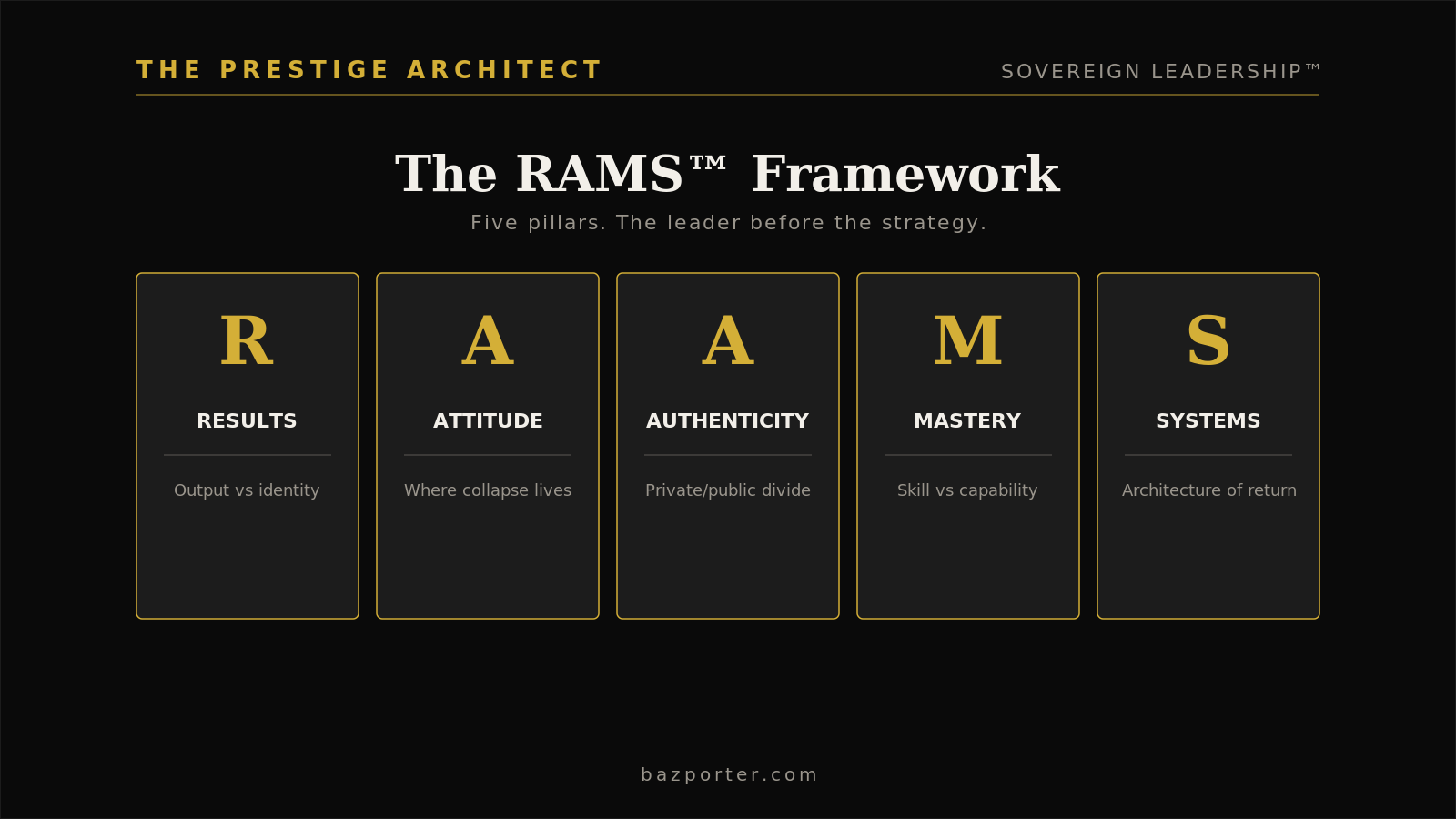
Results — Measure Outcomes, Not Your Grip
You measure how well the task was done to your touch. Change the metric. The real number is whether the outcome held when someone else owned it. A result that needs your hands is not delegation. It is supervision wearing a delegation label.
Command decision: stop grading the steps. Start grading the outcome against a standard you set once.
Operational rule: if you have to redo it, the standard was unclear, not the person unqualified.
Attitude — The Reflex to Hold On
Attitude is the internal operating system — where the reflex lives. The belief underneath is unspoken: if I do not hold it, it drops. That is not leadership. It is a nervous-system state that reads every handoff as a risk only you can carry.
Delegation fails at the nervous-system level long before it fails on the task.
Authenticity — The Trust You Only Perform
In public you say you trust the team. In private you reopen their work and quietly redo it. The distance between those two leaders is the exact size of your Silent Collapse™. Authenticity closes it. You stop performing trust and start building the standards that make trust safe to give.
Mastery — From Doing to Setting the Standard
You mastered the task. You never built the capability to define what good looks like clearly enough that another person can hit it without you. One keeps you central. The other sets you free. Sovereign capability is being whole when the work is no longer in your hands.
Systems — The Architecture That Holds Control For You
This is the literal answer. Controlled delegation is an architecture, not a leap of faith. Every handoff has a written standard — what good looks like, the deadline, the guardrails. The person owns the how. You own the what. Control lives in the standard, so it does not have to live in your hands. You build it one clear handoff at a time, and you sit with the discomfort of not touching the work while it holds.
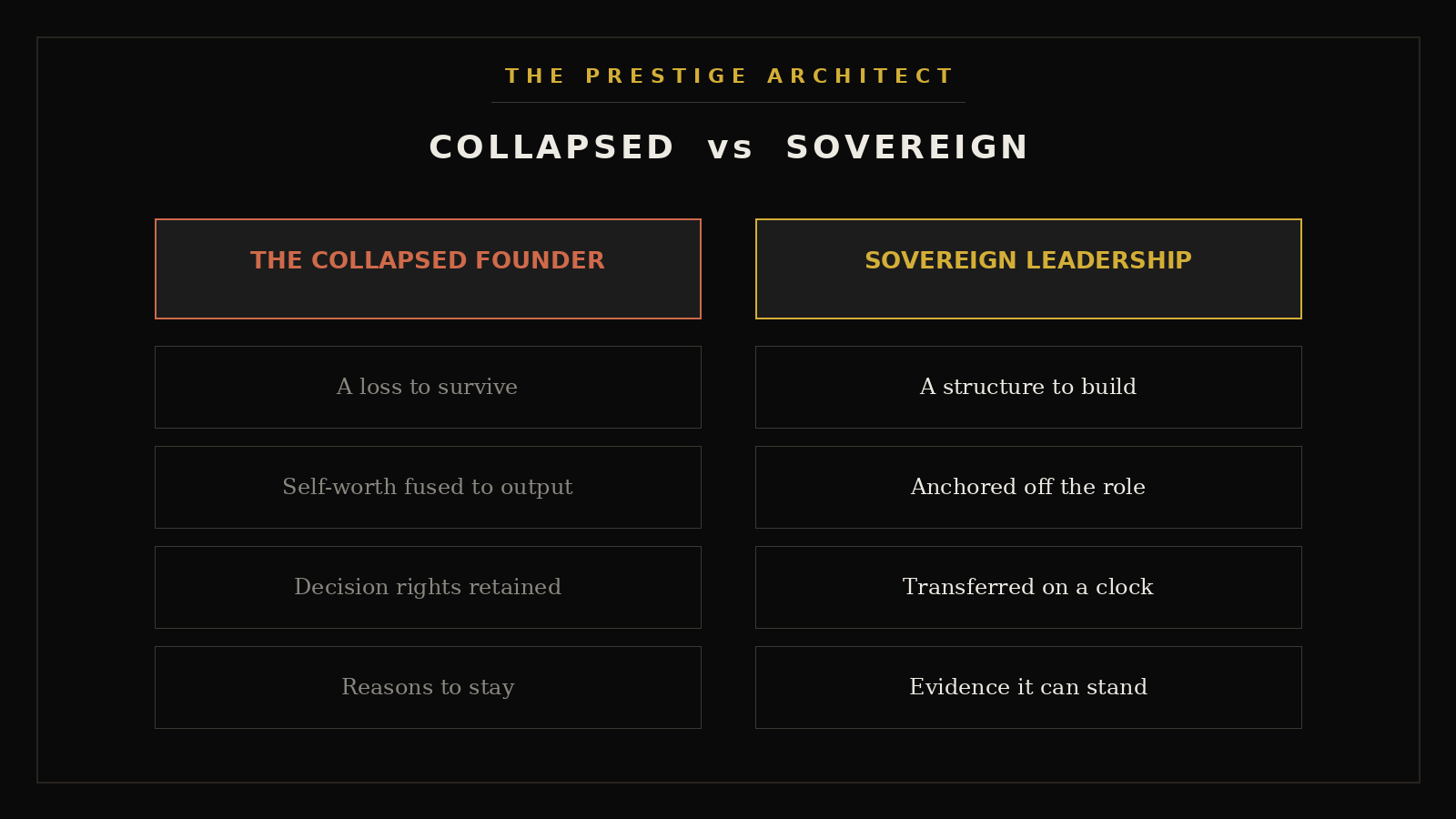
Holding on versus Sovereign Leadership™ — the shift, line by line:
Control lives in your hands → control lives in a written standard.
You delegate the steps, then correct them → you delegate the outcome and hold the standard.
Trust is performed in public, withdrawn in private → trust is built into clear guardrails.
Every handoff routes back to you → each handoff has an owner who is not you.
Being needed feels like being safe → the leader is whole with hands open.
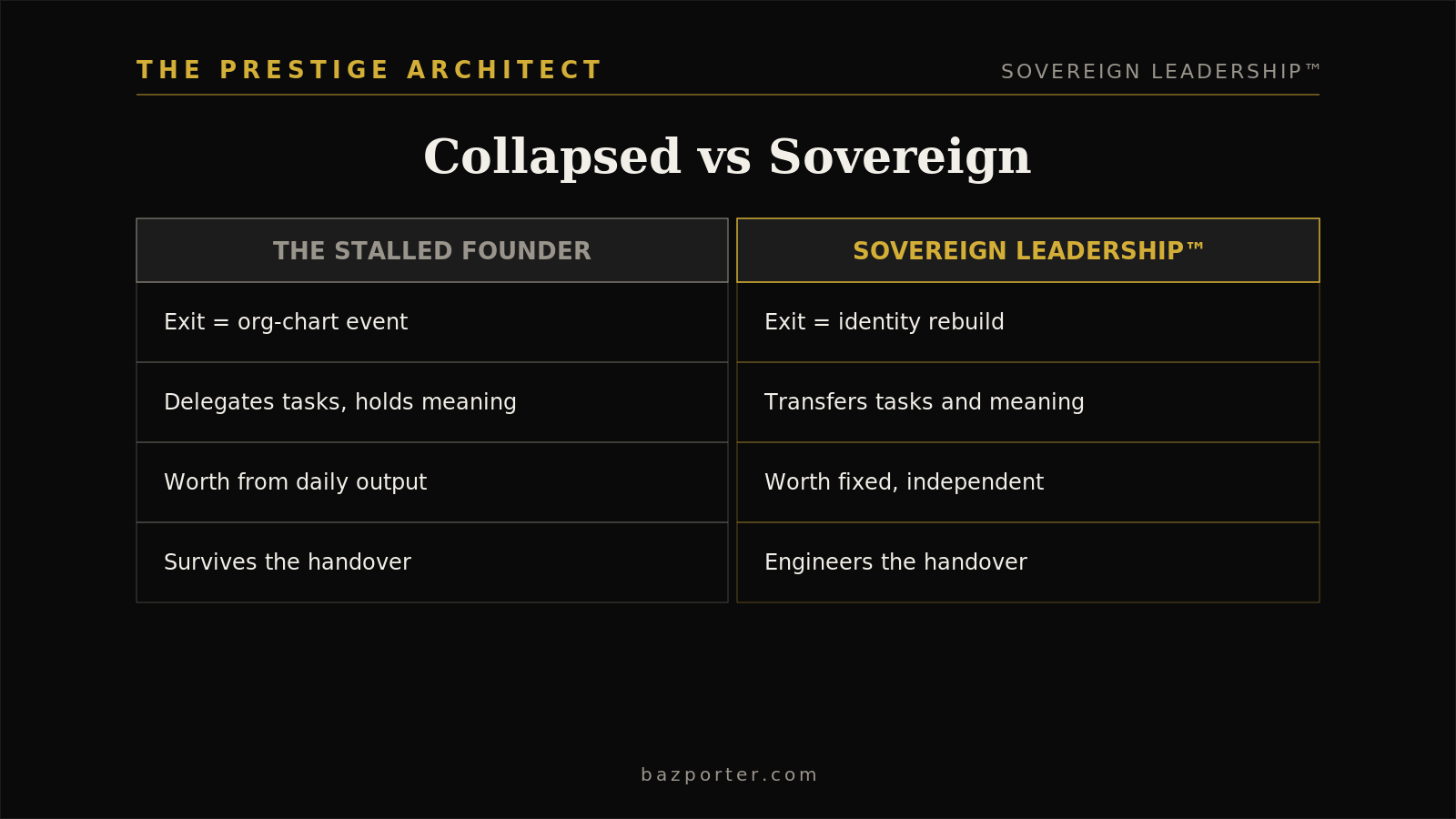
If you recognize the left column, name it before you build anything else. Take the Silent Collapse Diagnostic. It shows you where the grip sits before it costs you the team.
A Leader Who Opened Their Hands
One founder redid every piece of client work their team touched. They called it protecting the brand. It was a grip they could not open. We did not start with a delegation framework. We started with the nervous system.
We built the Systems layer and the identity layer together. First, one outcome fully owned by someone else, with a written standard and no reopening — and the founder sitting with the discomfort of not touching it. Then the next. The work held. Their team grew. The founder took on the strategic role only they could fill. That is a return, not a retreat.
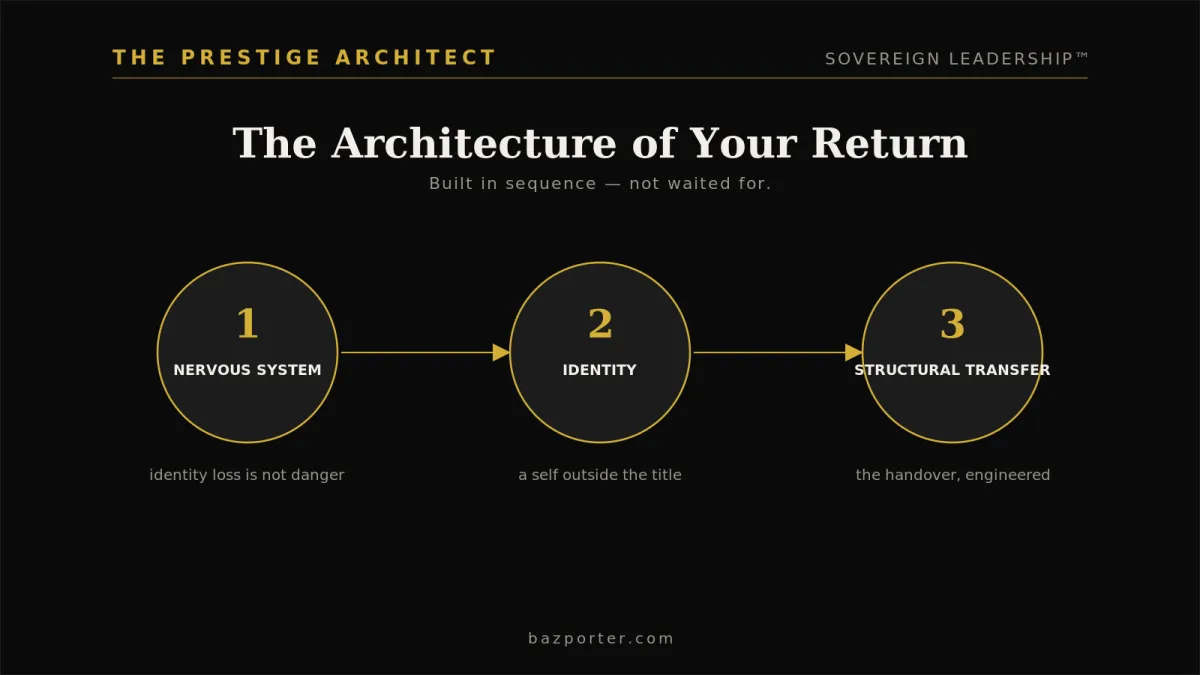
The Architecture of Your Return
You do not fix this with willpower. Willpower is what keeps your hands closed. You fix it with architecture — a deliberate rebuild of how control is held. Nervous-system sovereignty first, so a handoff stops reading as a threat. Then the standards that carry control, because now you can let them.

The order matters. Regulate the leader, and the standards hold. Reverse the order, and the first stressful week pulls every task back to your desk. This is Sovereign Leadership™: power without the collapse, a team that carries the work and a leader who is still in command.
If you cannot hand off the task without redoing it, that is the moment to build the architecture, not defer it. Apply to Work With Baz.
Frequently Asked Questions
How do I delegate without losing control?
Delegate the outcome, not the steps. Set a clear standard before you hand off — what good looks like, the deadline, and the guardrails. Then let the person own how they get there. Control does not come from staying close to the task. It comes from the standard you set at the start. When the standard is clear, you stay connected to the result without holding the work.
Why is it so hard for me to delegate?
Because the task is tied to your identity, not just your workload. Leaders often draw their sense of worth from the things they do well, so handing them off feels like losing a part of themselves. The block is emotional, not practical. You are not protecting quality. You are protecting the version of you that feels safe being needed. Naming that is the first real step.
What should I delegate first?
Start with one recurring outcome you can define clearly. Write the standard, name a single owner who is not you, and do not reopen their work. Choose something that matters enough to be real but not so critical that fear pulls it back. The goal of the first handoff is not speed. It is proving to your nervous system that control can live in a standard.
Is my need to control everything a bigger problem?
Often, yes. A grip on every task is usually a structural problem wearing a quality mask. It means nothing runs without you, and that ceiling is real. That is Silent Collapse™ in operational form. The goal is delegation architecture that is strong precisely because control lives in the standard, not in your hands.
British military veteran. Two-time international bestselling author. Founder, The Prestige Architect®. Host, Rise From The Ashes podcast, C-Suite Network. Boulder, Colorado.