Burnout vs Breakdown: The Signal High Performers Miss
Burnout vs Breakdown: The Signal High Performers Miss
You hit every number. Your calendar is full. Your team believes you. And something under all of it has gone quiet. This is not tiredness. This is Silent Collapse™ — the erosion of identity beneath intact performance. Most high performers ask the wrong question first: burnout vs breakdown. The real question sits deeper. I named this pattern because it existed before it had a name. If you feel it now, start here: Read The Manifesto.
Table of Contents
Key Takeaways
Burnout vs breakdown is the wrong first question. For high performers, the real signal is the gap between output and identity.
The WHO defines burnout as occupational. For executives, the erosion runs past the job and into the self.
A breakdown stops function. Silent Collapse™ does not. You keep producing while the person inside goes dark.
The repair is architecture, not rest. Rest treats the symptom. Systems treat the cause.
Burnout vs Breakdown: The Definitive Answer
Burnout vs breakdown describes two points on one stress line. Burnout is chronic depletion that still functions. A breakdown is a collapse of daily function that stops it. For high performers, a third state hides between them: Silent Collapse™, where output stays high while identity erodes. The signal is not fatigue. The signal is the distance between what you produce and who you feel you are.
The Hidden Pattern Under High Performance
The World Health Organization classifies burnout as an "occupational phenomenon" — chronic workplace stress that has not been successfully managed (WHO, ICD-11). That definition ends at the office door. It does not reach the executive who feels nothing at their own win.
High-functioning depression research names the same blind spot. A Cambridge BJPsych Bulletin review calls it "a hidden burden demanding clinical recognition" (Cambridge Core). The traits that make you succeed keep you hidden from help.
Picture a bridge under constant load. The deck holds. The steel underneath fatigues. Nobody inspects steel that still carries traffic. Your performance is the deck. Your identity is the steel.
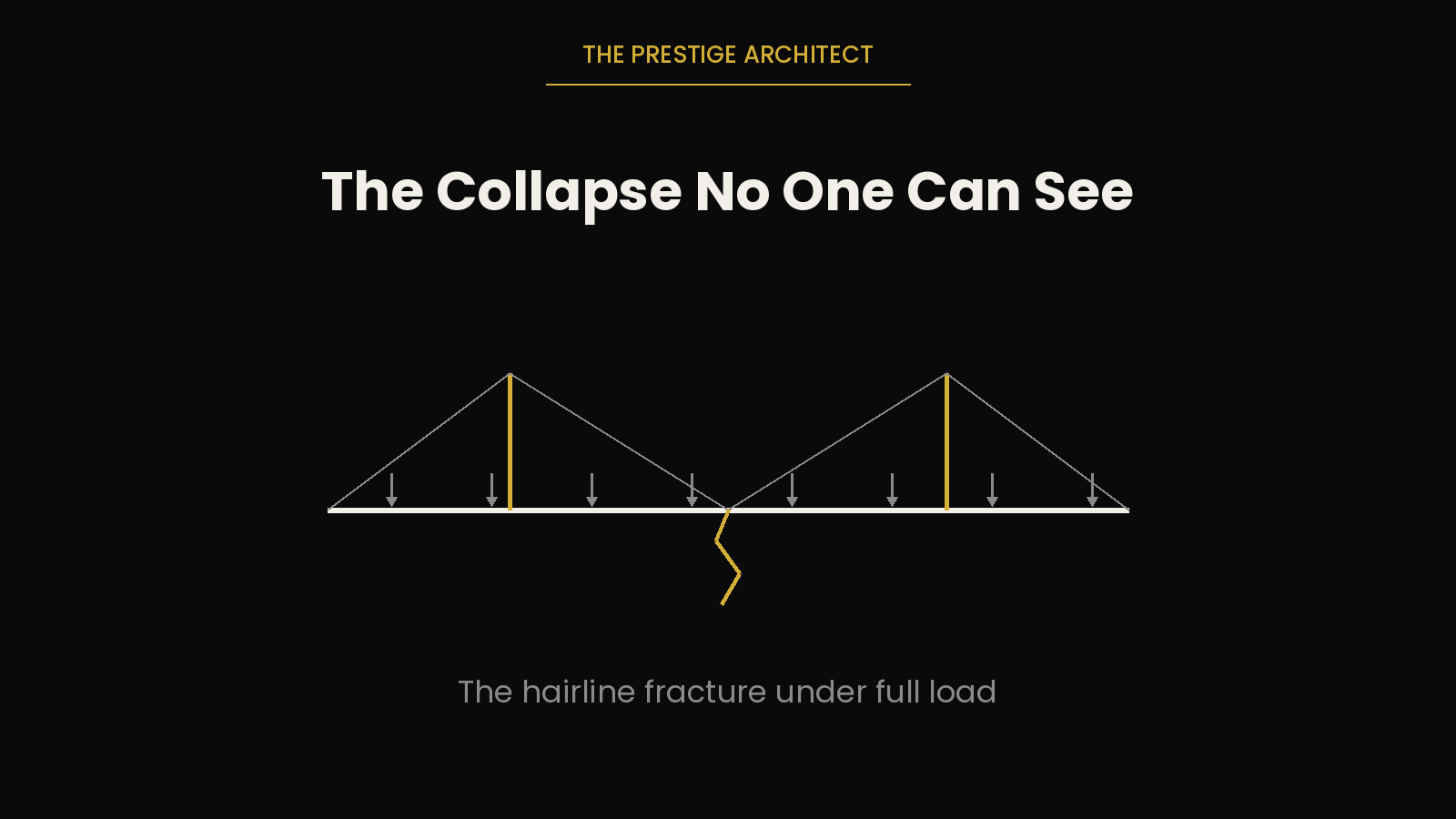
Your nervous system runs both. When threat becomes chronic, the body defaults to output and mutes feeling. This is protection, not weakness. You keep delivering. You stop registering. That gap is Silent Collapse™. Burnout vs breakdown misses it entirely, because the person is still functioning.
I wrote the full pattern down for leaders who recognize themselves in it. Start with the Sovereign Leadership Resource Hub.
The RAMS™ Reframe: Five Pillars
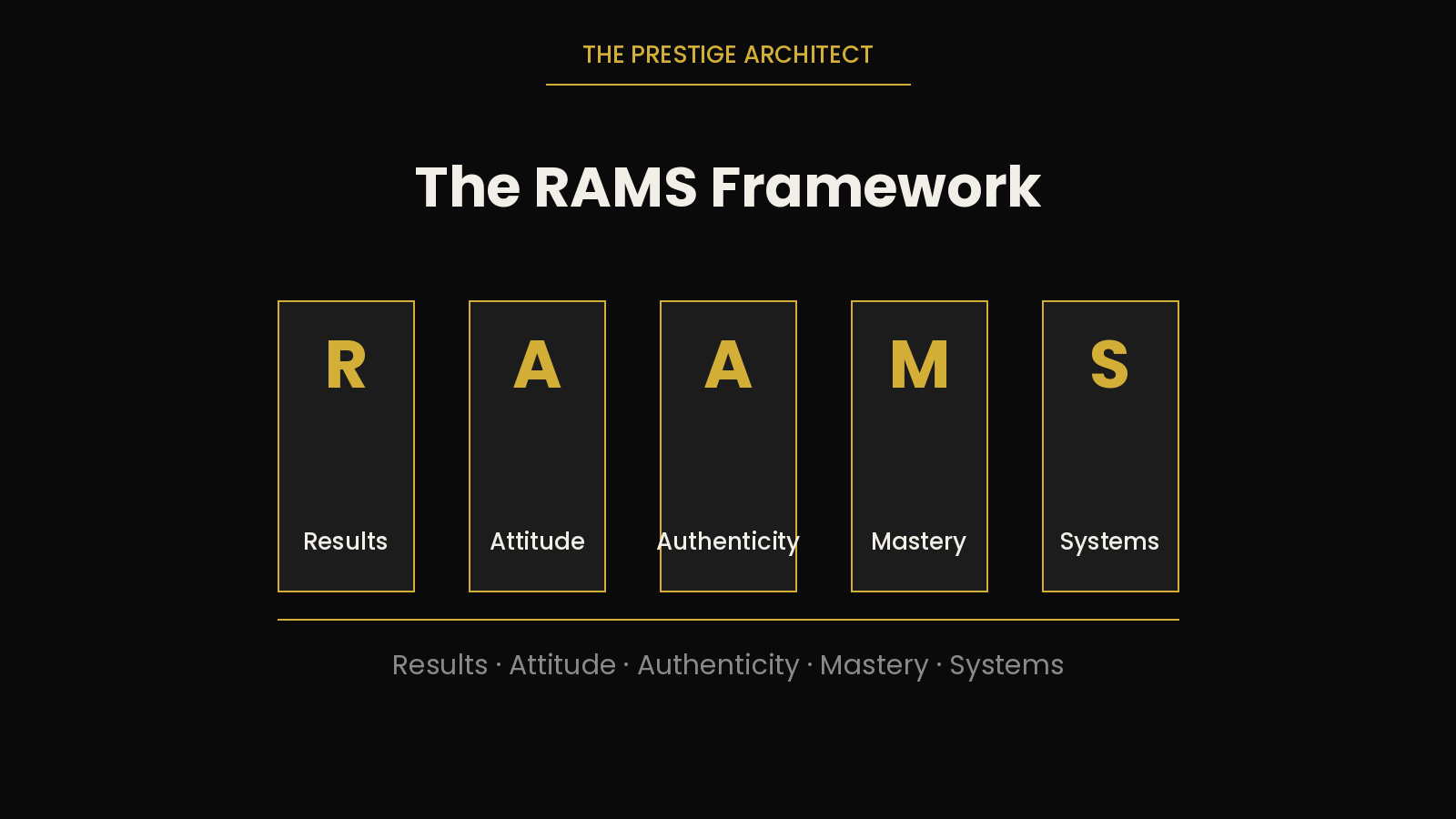
RAMS™ rebuilds the leader before the strategy. Five pillars carry the load: Results, Attitude, Authenticity, Mastery, Systems. Each names one part of the gap between output and identity. This is the core of Sovereign Leadership™ — power without self-erasure.
Burnout is not the cost of caring too much about the work. It is the cost of the work replacing the self.
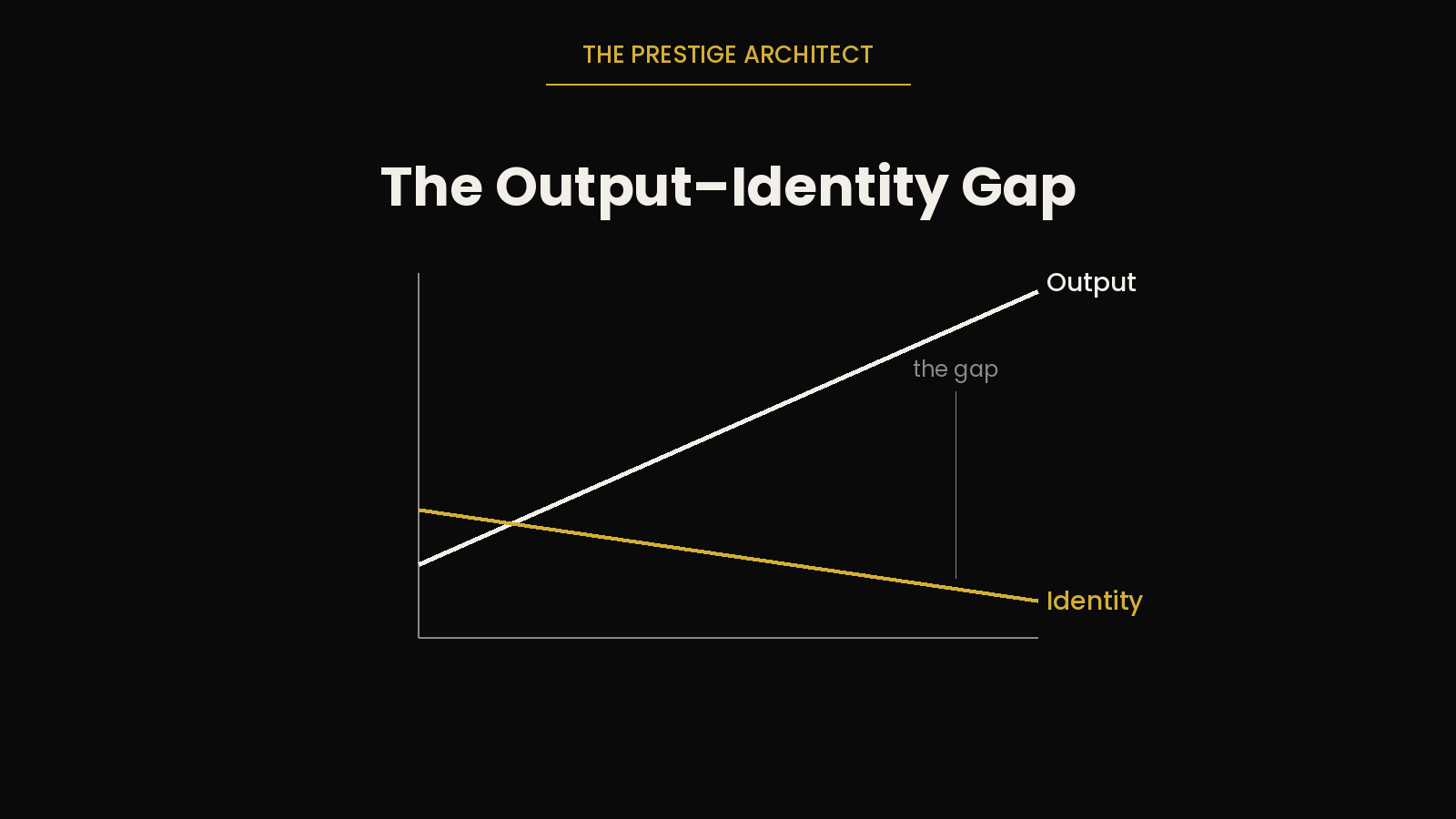
Results: The Output–Identity Gap
Results measure what you produce. They stop measuring you the moment production becomes your only proof of worth. Operational rule: when the numbers rise and the meaning falls, the gap is widening. Track the gap, not just the output.
Attitude: Where Collapse Lives
Attitude is your internal operating system. Collapse lives here first, long before the calendar shows it. The private voice runs a loop: "If I stop, everything falls apart." That loop is not truth. It is a threat response wearing a work ethic.
Authenticity: The Private/Public Divide
The public self performs. The private self disappears. That divide is the engine of Silent Collapse™. The wider the gap between the performed leader and the lived person, the louder the silence underneath.
Public signal: composed, decisive, reliable.
Private reality: flat, distant, unreachable to yourself.
The cost: a leader nobody worries about, and nobody reaches.
Mastery: Skill vs Sovereign Capability
Skill is what you can do. Sovereign capability is what you can do without emptying yourself to do it. Command decision: stop measuring mastery by volume. Measure it by whether you stay intact through the delivery.
Systems: The Architecture of the Return
Systems decide whether the return holds or fades. Rest is a pause. Architecture is a structure. One buys a weekend. The other rebuilds the load path so the steel stops fatiguing.
Collapsed leader vs Sovereign Leadership™ — the five signals:
Proof of worth. Collapsed: output only. Sovereign Leadership™: output plus intact identity.
Response to rest. Collapsed: guilt, then more work. Sovereign Leadership™: recovery built into the system.
Private voice. Collapsed: “If I stop, it all falls apart.” Sovereign Leadership™: “The structure holds without me straining.”
Emotion. Collapsed: muted to keep producing. Sovereign Leadership™: read as data, used as fuel.
Failure mode. Collapsed: Silent Collapse™. Sovereign Leadership™: early signal, early repair.
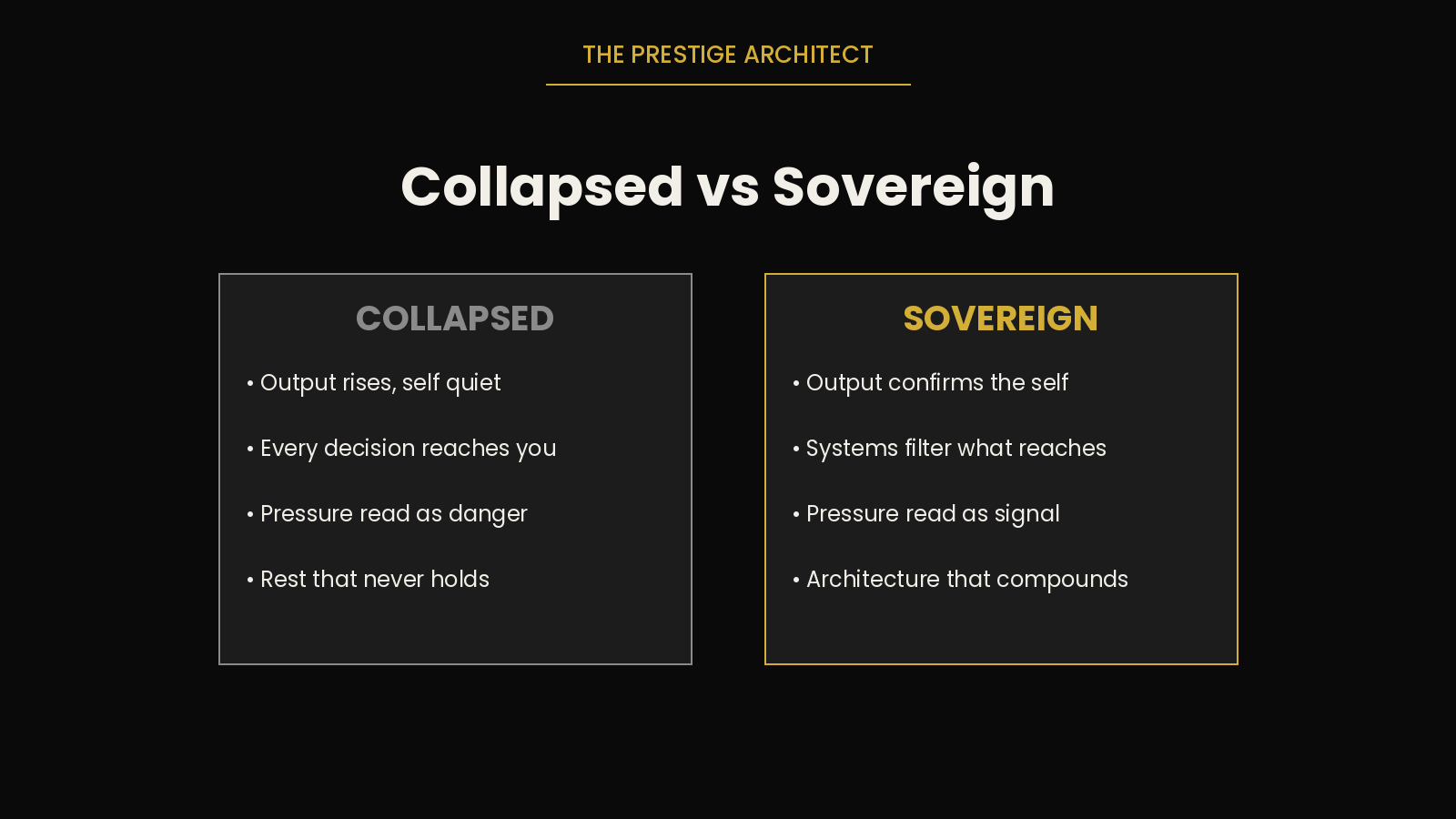
If the collapsed column reads like a mirror, name it before it names you. Take the Silent Collapse Diagnostic.
Case Vignette: The Executive Who Felt Nothing
A founder came to me at record revenue. Every external marker read success. The private report read empty. Rest had not touched it. Two vacations had not touched it. We did not start with feelings. We started with the architecture.
We mapped where output had replaced identity. We rebuilt the decision load so the business stopped running on the founder's nervous system. Within one quarter, the numbers held and the person came back online. The fix was structural, not motivational.
The Architecture of Your Return
Your return is not a mood you find. It is a structure you build. Nervous-system sovereignty means your body no longer treats every day as a threat to survive. The work is architectural: rebuild the load path, close the private/public divide, and let emotion function as information again.
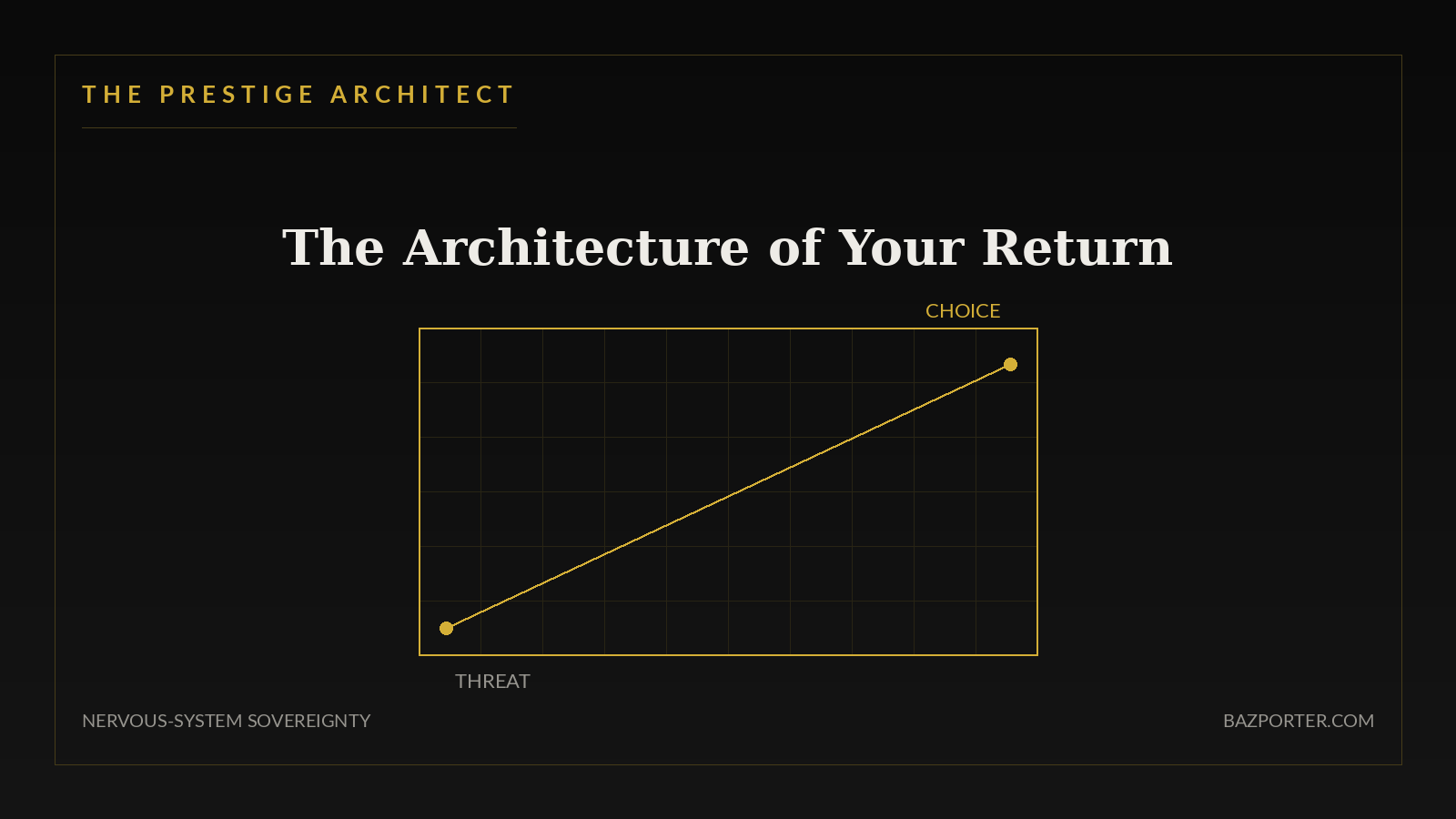
This is not inspiration. It is engineering applied to a leader. You do not need more resolve. You need a system that holds you the way your system currently holds everyone else. That is the work of The Prestige Architect®.
When you are ready to rebuild the architecture underneath the performance, Apply to Work With Baz.
Frequently Asked Questions
Am I burnt out or something worse?
Ask where the strain lives. Burnout stays mostly at work and eases with real rest. A breakdown spreads across daily function and stops it. If you function fully but feel nothing at your own wins, the pattern is Silent Collapse™ — output intact, identity eroding. That state hides between burnout and breakdown and needs a structural repair, not only rest.
What is the difference between burnout and a breakdown?
Burnout is chronic depletion that still functions. A breakdown is a collapse of daily function that halts it. Burnout responds to reduced load and recovery. A breakdown needs clinical support. High performers often sit in neither category and stay unseen, because they keep producing while the self goes quiet.
Why do I feel empty after hitting my goals?
Because output became your only proof of worth. When achievement stops registering, the gap between what you produce and who you are has widened. This is a nervous-system pattern, not a character flaw. The repair closes the gap through architecture, not through another goal.
Can rest fix executive burnout?
Rest treats the symptom. It buys recovery, then the same load returns. For high performers, the cause is structural: a business and an identity running on one nervous system. Architecture treats the cause by rebuilding the load path so the person stops fatiguing under intact performance.
What is Silent Collapse?
Silent Collapse™ is the structural erosion of identity beneath intact performance. You keep delivering. You stop feeling. Standard burnout screens miss it because they measure functional impairment, and you are still functioning. It is the state most high performers are actually in when they ask about burnout vs breakdown.
British military veteran. Two-time international bestselling author. Founder, The Prestige Architect®. Host, Rise From The Ashes podcast, C-Suite Network. Boulder, Colorado.