Why Being Right Isn't Enough to Speak Up
You are usually right. You see it before the room does. And you still say nothing. You have the read, the record, the instinct that built this. Being right used to be enough to make you speak. Now the point sits in your chest while the meeting moves on without it. This is why being right isn't enough to speak up anymore. The authority is intact. The voice went quiet. Baz Porter® calls this state Silent Collapse™, and it has a clear way home that begins in the manifesto.
On this page
- The short answer
- Key takeaways
- The hidden pattern underneath
- The RAMS™ reframe
- What this looks like in a real room
- The architecture of your return
- FAQ
Key takeaways
- Being right is competence. Speaking up is identity. The second one went quiet.
- Silence from a capable leader is rarely about the facts. It is about safety and self-trust.
- Research on organizational silence shows capable people withhold most when a room feels unsafe.
- The first move back is small and self-directed. The deeper cause needs counsel.
- RAMS™ gives five pillars for the return to your own voice.
Why being right isn't enough to speak up
Being right is a fact about the work. Speaking up is a fact about you. Early on, the two moved together. You knew the answer, so you said it. Over time, the cost of being seen rose. Each unbacked opinion, each flat response, each room that moved on taught your nervous system a quiet rule: hold it. So now the answer arrives and the voice does not. Being right is not the problem. The problem is that your voice stopped feeling safe to use. That is a state, not a flaw, and states can be rebuilt.
The hidden pattern underneath
Researchers have a name for this. They call it organizational silence: capable people choosing not to voice what they clearly see. Frances Milliken and Elizabeth Morrison documented how often employees, including senior ones, stay quiet about things they plainly know (Journal of Management Studies, 2003). The reason is rarely ignorance. It is the read that speaking is not safe or not worth the cost.
Amy Edmondson's work at Harvard adds the other half. In teams with low psychological safety, people withhold ideas even when they are right (Administrative Science Quarterly, 1999). The more senior the person, the more they weigh the risk of being wrong in public.
Put together, the pattern is clear. Your silence is not a loss of competence. It is a learned response to a room that stopped feeling safe for your voice. You cannot see the rule from inside it, because you built it to protect yourself.
The RAMS™ reframe: five pillars back to your voice
RAMS™ is the framework Baz Porter® uses to rebuild the self underneath the performance. Five pillars. Run your silence through each.
Results
Being right is a result you already produce. The gap is not output. It is whether that result reaches the room through your voice. Count the calls you read correctly and said nothing. That number is your real cost.
Attitude
You tell yourself you are picking your battles. Underneath is a fear that you would not be backed. Name the real story. You are not choosing silence. You are managing a risk no one else can see.
Authenticity
Your voice is the most honest thing you own. When you hold it, you perform a calmer, smaller version of yourself. The room gets the role, not the person. Authenticity is the return: saying the true read in your own words, without the walk-back.
Mastery
Mastery is not louder. It is cleaner. A mastered voice states the read once, plainly, and stops. No hedging. No rehearsing. The point lands because you trust it enough to leave it there.
Systems
Willpower will not hold this. A system will. Decide in advance the one room this week where your real read gets said first, before you talk yourself out of it. Small system. Repeatable.
Collapsed voice versus sovereign voice
- Collapsed: you wait to be asked. Sovereign: you offer the read first.
- Collapsed: you soften the point until it is safe. Sovereign: you say it clean and let it stand.
- Collapsed: you rehearse what you already know. Sovereign: you trust the knowing and speak.
- Collapsed: silence feels like wisdom. Sovereign: your voice is the wisdom, used.
The room never needed you louder. It needed you unedited. Your silence costs the room the one read it could not get anywhere else.
The first move is yours to make. The deeper cause, the one you cannot see from inside the room, is what the Fast Future Freedom Blueprint™ is built for. It is a free 60-minute identity audit. You leave with the real reason your voice went quiet, named out loud.
What this looks like in a real room
The leaders I sit with who have gone quiet almost always tell the same story. They are the most experienced person at the table. They see the call early. And they wait. They let a weaker read run, watch it cost the quarter, and say nothing until asked. Afterward they call it restraint. Underneath, most trace it to one season when being right in public stopped being safe. A board that turned. A win that got no backing. A room that used their read and gave the credit elsewhere. The voice did not leave. It went underground to protect them. The work is not to push harder. It is to make the room safe for that voice again, from the inside out.
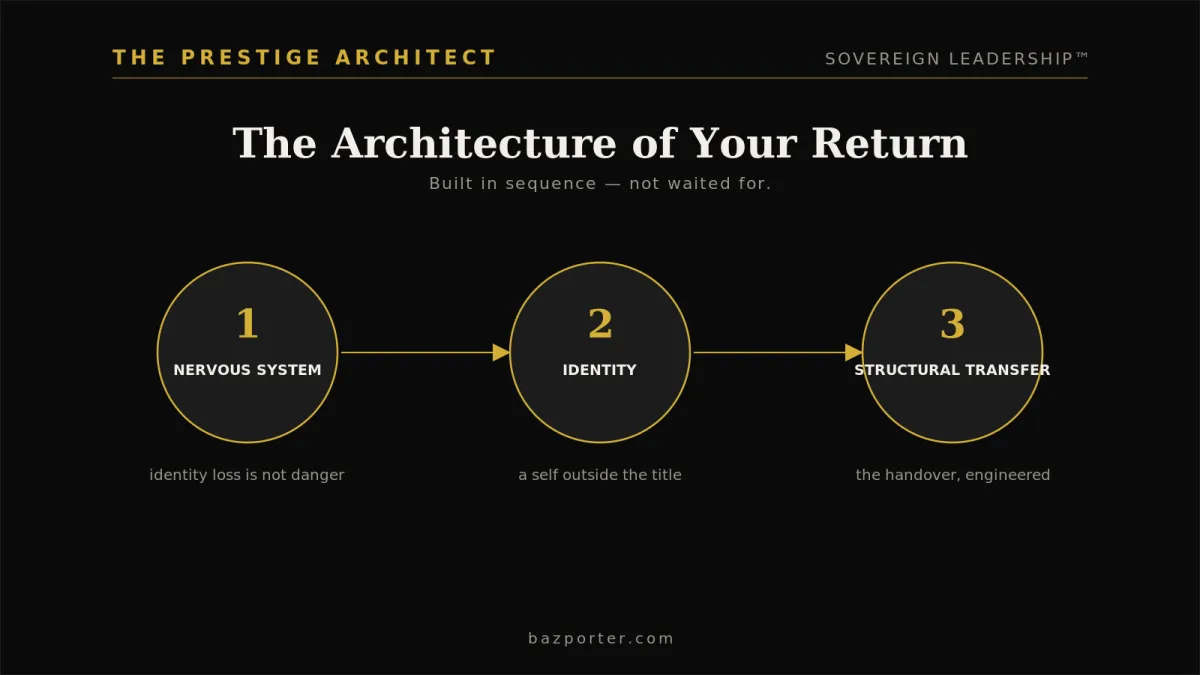
The architecture of your return
You can start the first move alone this week. Say the real read first in one room. That shift is real, and it will not hold on its own. The rule that silenced you was built below the level you can reach by trying harder. Rebuilding it is identity work, not willpower.
This is not a reinvention. It is a return. Coming home to the voice that was always yours.
The Fast Future Freedom Blueprint™ is where the deeper rebuild begins. One free hour. You bring the silence. You leave with the architecture of your return.
FAQ
Why isn't being right enough to make me speak up?
Being right is about the work. Speaking up is about whether your voice feels safe to use. Those are two different systems. When a room has taught you that your read costs more than it returns, the answer arrives and the voice stays down. The repair is rebuilding the safety, not adding more proof.
Is staying quiet in meetings a sign of Silent Collapse?
It can be. Silent Collapse™ is when a capable leader keeps performing while their inner authority erodes. Going quiet in rooms you used to own is one of its clearest signs. The work still gets done. The voice behind it has gone underground.
How do I start speaking up again without forcing it?
Pick one room this week. Say your real read first, before the discussion drifts. Say it once, plainly, and let it stand. One clean offer rebuilds more trust than ten rehearsed speeches.
What is the Fast Future Freedom Blueprint?
It is a free 60-minute identity audit with Baz Porter®. You bring the place your voice went quiet. You leave with the real cause named and a clear first step. It is counsel, not a sales call.
Does this only happen to senior leaders?
No, but it lands on them hardest. The more authority you carry, the more a public miss seems to cost. Research on organizational silence shows experienced people often withhold the most. The weight of the role makes the voice more careful, not less.
About the author
Baz Porter® is The Sovereign Leadership Architect. He rebuilds the identity beneath high performance, so leaders decide, lead, and live from a self that is genuinely their own. He works with accomplished people who look strong on the outside and feel unseen on the inside. His work begins underneath the visible problem, at the level of state of being.